Photo: Wikipedia
Political ClimatePolitical Climate in Crowley, LA
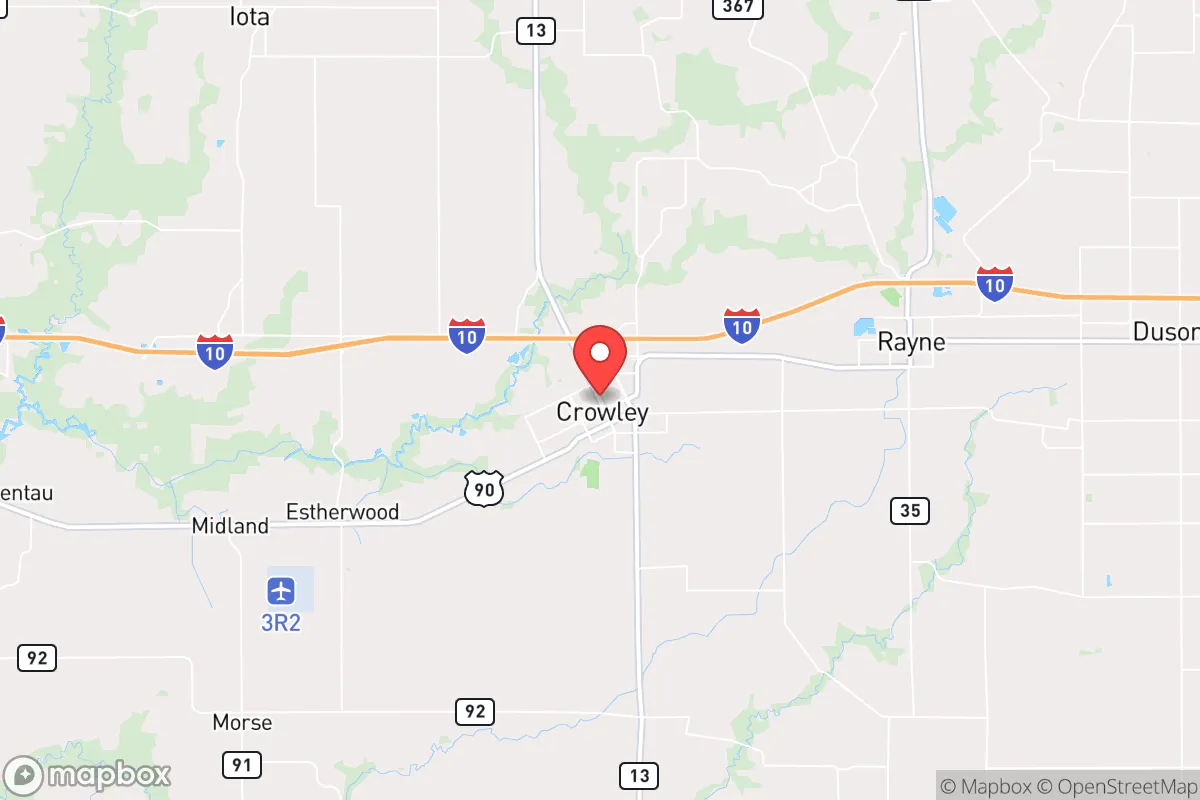
District shown is the primary district for this city’s centroid. Cities may span multiple districts.
Local Political AnalysisPolitical Analysis of Crowley, LA
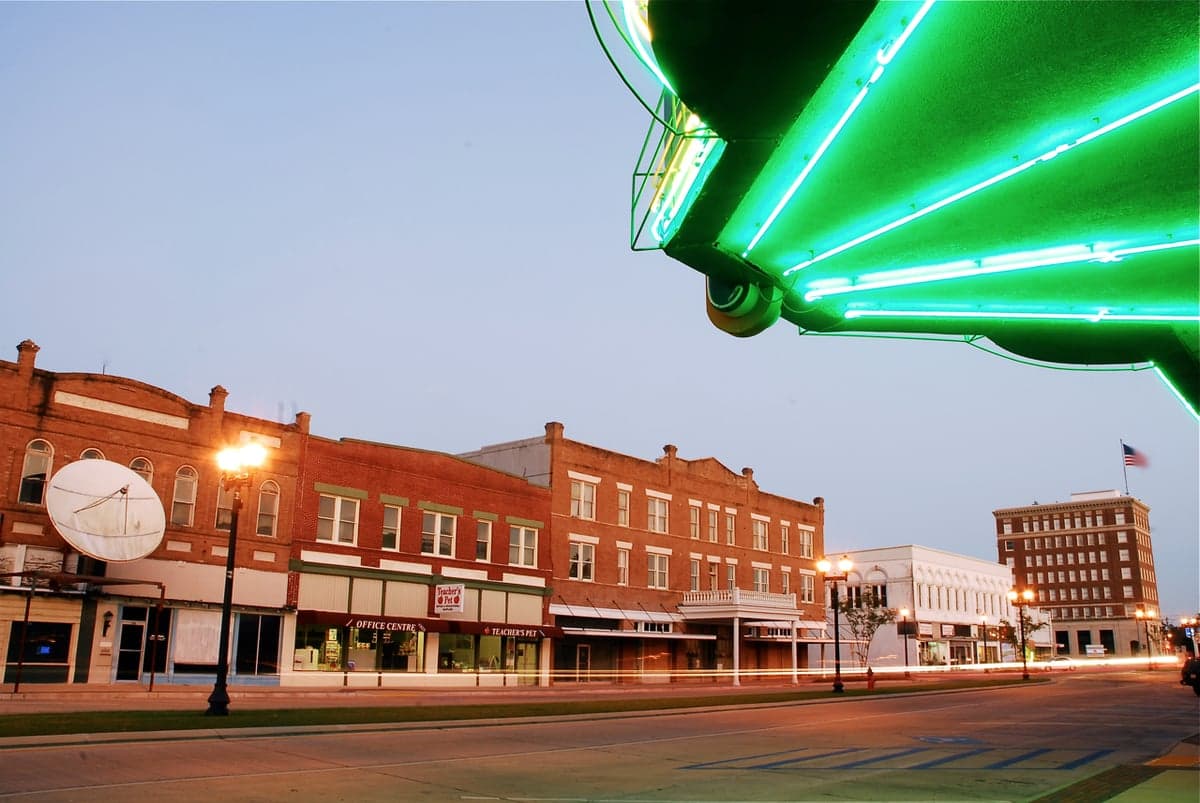
Crowley, Louisiana, sits deep in Acadiana, and its political DNA is as conservative as its Cajun cooking is spicy. The Cook PVI rating of R+22 tells you the hard numbers, but the real story is in the culture: this is a place where folks believe in local control, the Second Amendment, and keeping government out of their business. For decades, Crowley has been a reliable Republican stronghold in a state that's trending redder, and while the surrounding towns like Rayne and Church Point lean the same way, you can feel the difference when you cross into Lafayette, where the politics get a little more mixed and the university influence brings in more progressive ideas. The trajectory here is steady, but there's a growing unease about outside forces trying to change the way things have always been done.
How it compares
Compared to nearby cities, Crowley is a bastion of traditional values. Lafayette, just 25 miles east, has a more diverse economy and a younger population, which has nudged its politics toward the center—you'll see more Harris signs in yards there than you ever would in Crowley. To the south, Abbeville and Kaplan are similarly conservative, but they don't have the same agricultural backbone that keeps Crowley grounded in its rural roots. The real contrast is with New Orleans or Baton Rouge, where you see the kind of big-government policies that make folks here nervous—things like heavy-handed zoning, tax hikes for pet projects, and a general attitude that the state knows better than the local community. In Crowley, the sentiment is simple: we don't need a bureaucrat in Baton Rouge telling us how to run our rice farms or our churches.
What this means for residents
For the people living here, the conservative climate translates into a daily life with fewer government intrusions. You won't find the same level of overreach you see in blue areas—no strict mask mandates that lasted for years, no aggressive business shutdowns, and a general hands-off approach to how you live your life. Property taxes are low, and there's a strong sense that your rights, especially your gun rights, are respected. The local school board and city council are filled with folks who prioritize fiscal responsibility and local decision-making. That said, there's a quiet worry that the progressive wave washing over the rest of the country could eventually lap at Crowley's doorstep. The push for critical race theory in schools or the erosion of parental rights are seen as real threats, and the community is paying close attention to state-level races to make sure those ideas don't take root here.
Culturally, Crowley holds onto its Cajun heritage with a fierce pride, and that heritage is deeply tied to a belief in personal responsibility and limited government. The annual International Rice Festival isn't just a celebration of agriculture; it's a symbol of a community that works hard and expects to keep what it earns. There's no appetite for the kind of social engineering you see in more progressive areas—no talk of defunding the police or reimagining public safety. The local sheriff's department is well-supported, and the community values law and order. Looking ahead, the biggest concern is that as Louisiana's population shifts and younger people move to cities, Crowley could face pressure to adopt policies that don't fit its character. But for now, it remains a place where a conservative worldview isn't just tolerated—it's the standard, and most folks plan to keep it that way.

State Political ClimatePolitical Climate in Louisiana
State Political AnalysisPolitical Environment in the State
Louisiana has long been a reliably red state in federal elections, but its political climate is far more complex than a simple partisan label suggests. The state has voted for the Republican presidential candidate in every election since 2000, with Donald Trump carrying it by nearly 20 points in 2020 and again in 2024. However, the state’s political culture is a unique blend of Deep South conservatism, Cajun libertarianism, and a lingering Democratic machine that still holds sway in local offices and the state legislature. Over the last two decades, the shift has been unmistakable: the state has moved from a competitive purple state with a strong Democratic tradition to a solidly red one, driven by the exodus of white working-class voters from the Democratic Party and the growing influence of the evangelical and suburban vote in places like Baton Rouge, Lafayette, and the North Shore of Lake Pontchartrain.
Urban vs. rural divide
The political map of Louisiana is a textbook example of the urban-rural split. New Orleans, the state’s largest city, remains a deep blue stronghold, consistently delivering 80% or more of its vote to Democratic candidates. The city’s politics are dominated by a coalition of Black voters, progressive activists, and a small but vocal white liberal base. In contrast, the rest of the state is overwhelmingly red. The Baton Rouge metro area is a microcosm of the divide: the city itself leans Democratic, but the surrounding suburbs like Prairieville, Denham Springs, and Central are some of the most conservative areas in the state. Lafayette, the heart of Cajun country, is reliably Republican, though with a strong libertarian streak that often resists government overreach on issues like gun rights and property taxes. The rural parishes of north Louisiana—places like Ouachita Parish (Monroe), Caddo Parish (Shreveport), and the Florida Parishes—are deeply red, driven by evangelical churches, oil and gas interests, and a strong hunting and gun culture. The only real blue pockets outside of New Orleans are Baton Rouge’s urban core, Shreveport’s city limits, and a few river parishes like St. John the Baptist and St. James, where Black voters form a majority. The 2024 election saw nearly every rural parish vote for Trump by margins of 60-80%, while Orleans Parish gave Biden 82%.
Policy environment
Louisiana’s policy environment is a mixed bag for conservatives. On the positive side, the state has no state income tax on corporate income and a relatively low personal income tax rate (a flat 3% as of 2025, down from a progressive top rate of 6% in 2020). Property taxes are among the lowest in the country, thanks to the homestead exemption that shields the first $75,000 of a home’s value from taxation. The state is also a right-to-work state and has a strong tort reform environment, with caps on non-economic damages in medical malpractice cases. However, the state’s sales tax is high (over 9% in many parishes), and the tax burden on the poor is regressive. On social issues, Louisiana has been a leader in the pro-life movement, with a near-total abortion ban triggered after the Dobbs decision. The state also has strong Second Amendment protections, including permitless carry (passed in 2024) and a preemption law that prevents local governments from enacting stricter gun ordinances. Education policy is a bright spot: the state has a robust school choice program, including vouchers and charter schools, and the Louisiana Scholarship Program is one of the oldest in the nation. However, the state’s public school system remains chronically underfunded and ranks near the bottom nationally in test scores. Election laws are solid: voter ID is required, and the state has no widespread mail-in voting, though early voting is available. The biggest red flag for conservatives is the state’s high incarceration rate and the lingering influence of the old Democratic machine in local courthouses and parish governments, which can lead to cronyism and corruption.
Trajectory & freedom
Louisiana is on a trajectory of increasing personal freedom in several key areas, but the pace is uneven. The most significant recent win for liberty was the passage of permitless carry (Act 54 of 2024), which allows any law-abiding adult to carry a concealed firearm without a permit. This was a major victory for gun rights advocates and a direct rebuke to the New Orleans city council, which had tried to impose its own restrictions. On parental rights, the state passed the Parents’ Bill of Rights (Act 466 of 2024), which requires schools to notify parents of any changes to a child’s mental, emotional, or physical health, effectively banning the secret transgender policies that have caused so much controversy elsewhere. Medical freedom saw a win with the passage of Act 123 of 2023, which prohibits COVID-19 vaccine mandates by state and local governments. However, the state still has a high sales tax and a complex tax code that many conservatives view as a drag on economic freedom. Property rights are generally strong, but the state’s coastal erosion crisis has led to some controversial eminent domain cases for levee projects. The biggest threat to freedom in Louisiana is the persistent corruption and inefficiency in local government, particularly in New Orleans and Baton Rouge, where machine politics and crony contracts are still common. The state’s high crime rate, especially in New Orleans, has led to calls for more aggressive policing, which some see as a necessary trade-off for public safety.
Civil unrest & political movements
Louisiana has a history of political activism that is both colorful and, at times, volatile. The most visible flashpoints in recent years have been in New Orleans, where the removal of Confederate monuments in 2017 sparked intense debate and occasional protests from both sides. The city also saw significant unrest during the 2020 George Floyd protests, with some property damage and clashes between protesters and police. However, the state’s conservative majority has largely kept a lid on the kind of widespread civil unrest seen in Portland or Seattle. The most organized political movements in Louisiana are on the right: the Louisiana Family Forum (a Christian conservative group) and the Louisiana Shooting Association (a gun rights group) are powerful lobbying forces. On the left, the Louisiana Progress Action Fund and the New Orleans-based Power Coalition for Equity and Justice organize around voting rights and criminal justice reform. Immigration politics are less heated than in border states, but the state has seen a small influx of migrants, particularly in the New Orleans area, leading to some local tensions. There is no sanctuary city policy in Louisiana; in fact, the state passed a law in 2024 requiring local law enforcement to cooperate with ICE. Election integrity has been a minor issue, with no major controversies in recent cycles, though some activists on the right have raised concerns about the use of electronic voting machines. The most visible political flashpoint for a new resident would likely be the stark contrast between the progressive politics of New Orleans and the conservative values of the rest of the state, especially on issues like crime, policing, and education.
Projection
Over the next 5-10 years, Louisiana is likely to become more conservative, but also more internally divided. The state’s population is slowly declining, with the biggest losses in New Orleans and rural north Louisiana, while the suburbs of Baton Rouge, Lafayette, and the North Shore are growing. This demographic shift will further entrench Republican control at the state level. The in-migration of retirees and remote workers from blue states, particularly to places like Covington and Mandeville, is likely to be small but could bring some libertarian-leaning voters who are fiscally conservative but socially moderate. The biggest wild card is the state’s economy: if the oil and gas industry continues to decline, the state could face a fiscal crisis that forces tax increases, which would be a major blow to the state’s conservative credentials. On the cultural front, the battle over education and parental rights will intensify, with the state likely to pass further school choice expansion and possibly a ban on critical race theory in public schools. The biggest threat to the state’s conservative trajectory is the persistent corruption and inefficiency in local government, which could lead to a backlash from voters who feel the system is rigged. A new resident moving in now should expect to find a state that is deeply red, with a strong sense of local identity and a resistance to federal overreach, but also one that is grappling with economic stagnation, high crime in its major cities, and a political culture that can be frustratingly slow to change.
Bottom line for a new resident: Louisiana offers a high degree of personal freedom on guns, taxes, and parental rights, but you’ll need to navigate a state with a high crime rate in its urban centers, a regressive tax system, and a local government that can be inefficient and corrupt. If you’re looking for a place where your conservative values are the norm and the state government is generally on your side, Louisiana is a solid choice—just be prepared for the humidity, the mosquitoes, and the occasional political circus in Baton Rouge.
* Values derived from national, state, county, city and local statistics and may differ in a specific area. Last updated: 2026-05-01T01:50:43.000Z
Narrative content on this page is AI-generated and may contain mistakes. Verify any details that matter before acting on them.
ReloMaps may earn a commission from affiliate links at no extra cost to you.

