Photo: Wikipedia
Find The Best Places To Live
in Custer
PRO TIP! You can paste a Zillow or Redfin link to get info on that property.
What It's Like Living in Custer, SD
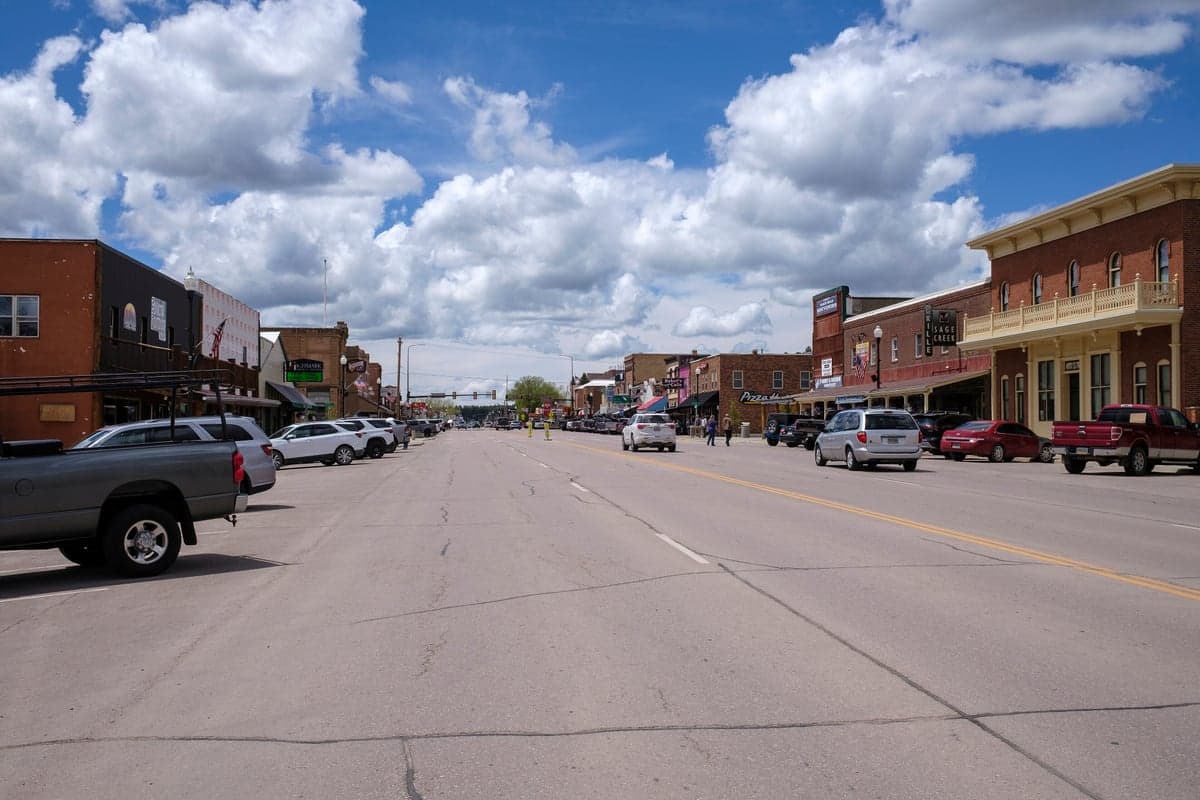
Custer, South Dakota, feels like a small town that grew up around a national park, not the other way around. With just over 2,100 year-round residents, it’s the kind of place where you know your neighbors by name and the local coffee shop is the unofficial town square. Life here moves at a deliberate pace, shaped more by the seasons and the mountain weather than by any rush-hour clock.
The Daily Rhythm in a Tourist Town
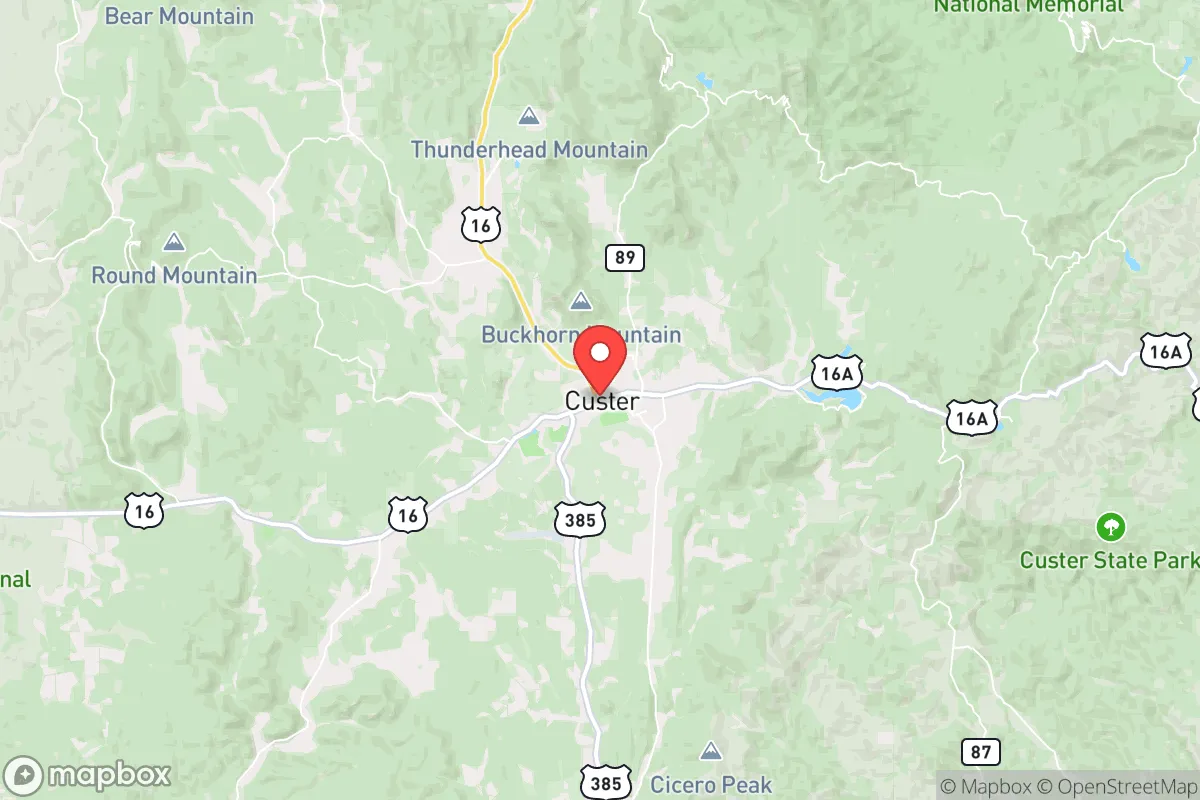
Most mornings in Custer start with a stop at Baker’s Bakery for a cinnamon roll or a breakfast burrito before heading to work. The biggest employers are the school district, the local hospital, and the tourism industry—hotels, restaurants, and guide services that swell with seasonal workers. The average commute is just over 20 minutes, but that’s mostly because people live on the outskirts or in the surrounding hills; driving across town takes maybe five minutes. Grocery shopping means Lee’s Marketplace or the smaller Custer Food Center, and for anything more specialized, a 45-minute drive to Rapid City is the norm. Weekends are often spent on the Mickelson Trail—a 109-mile rail-trail that runs right through town—or grabbing a burger and a beer at The Custer Wolf, a local dive with a loyal following. In summer, the town’s population can triple with tourists heading to Custer State Park and Mount Rushmore, which brings energy but also traffic jams on Highway 16 that locals learn to avoid.
Who Fits In Here
Custer leans heavily toward retirees and empty-nesters—the median age is 54.9, well above the national average. That said, there’s a solid core of families raising kids, drawn by the low crime rate (though the violent crime rate of 293.3 per 100,000 is slightly above the national average, most incidents are property-related and concentrated in tourist areas). The median household income of $80,188 is strong for a town this size, and the cost of living index of 80 means a dollar goes further here than in most of the country. Median home values sit at $229,500, which is affordable compared to the Front Range or the West Coast, but prices have been climbing as remote workers and second-home buyers discover the area. The kind of person who thrives here is someone who values quiet, self-reliance, and outdoor recreation over nightlife or career ambition. It’s not a place for young professionals seeking a fast-paced social scene; it’s a place for people who want to hike before work, know their mail carrier by name, and don’t mind driving an hour for a concert or a shopping mall.
Sports, Festivals, and What People Actually Do for Fun
High school sports are a genuine community anchor. Custer High School Wildcats football and basketball games draw big crowds, especially when they play rival Hill City or Hot Springs. There’s no pro or college team within two hours, so Friday night lights are the main event. Beyond sports, the town’s social calendar revolves around festivals. The Gold Discovery Days in late July celebrate Custer’s mining history with a parade, a rodeo, and a street dance that packs Main Street. The Custer Stampede Rodeo in August is another big draw, bringing in contestants from across the region. For music, the Pageant Hill Amphitheater hosts summer concerts, and the Custer Beacon is a local venue that books folk and bluegrass acts. But the real entertainment is the landscape itself. People spend their free time hiking Harney Peak (now Black Elk Peak), fishing in Stockade Lake, or driving the Wildlife Loop Road in Custer State Park to see bison and burros. It’s a place where “going out” often means building a campfire or watching the sunset from a granite outcropping.
Honest Pros and Cons of Living Here
What longtime residents love: The sense of safety and community—people leave their doors unlocked and look out for each other. The natural beauty is world-class, and you’re never more than 20 minutes from a trailhead or a lake. The cost of living is genuinely low, especially for housing, and the lack of state income tax is a real financial perk. What frustrates them: The tourist crush from May through September can make simple errands feel like a chore. Winters are long and cold—expect snow from October to April, with temperatures often below zero. Healthcare options are limited; serious medical issues mean a trip to Rapid City or even Sioux Falls. And while the schools are decent (with a strong sense of community involvement), the college-educated rate of 30.1% is below the national average, and job opportunities outside of tourism, healthcare, and education are scarce. It’s a trade-off: you get peace and beauty, but you give up convenience and career mobility.
Cultural Quirks and Local Identity
Custer has a distinct Western identity that’s part genuine heritage and part tourist-friendly performance. You’ll see cowboy boots and hats as everyday wear, not just costume. The town’s name itself is a point of contention—Custer is named after George Armstrong Custer, whose expedition discovered gold here in 1874, sparking the Black Hills Gold Rush and displacing the Lakota people. That history is acknowledged but not dwelled upon; the local museum, the 1849 Custer County Courthouse Museum, tells the story matter-of-factly. A notable quirk: the town has a strong conservative streak, and it’s common to see American flags on every porch during the Fourth of July. But it’s not insular—newcomers are welcomed if they make an effort to participate in community life. The unspoken rule is that you don’t move here to change it; you move here because you already like it the way it is.

Similar small towns to Custer
* Values derived from national, state, county, city and local statistics and may differ in a specific area. Last updated: 2026-05-01T05:57:08.000Z
Narrative content on this page is AI-generated and may contain mistakes. Verify any details that matter before acting on them.
ReloMaps may earn a commission from affiliate links at no extra cost to you.

