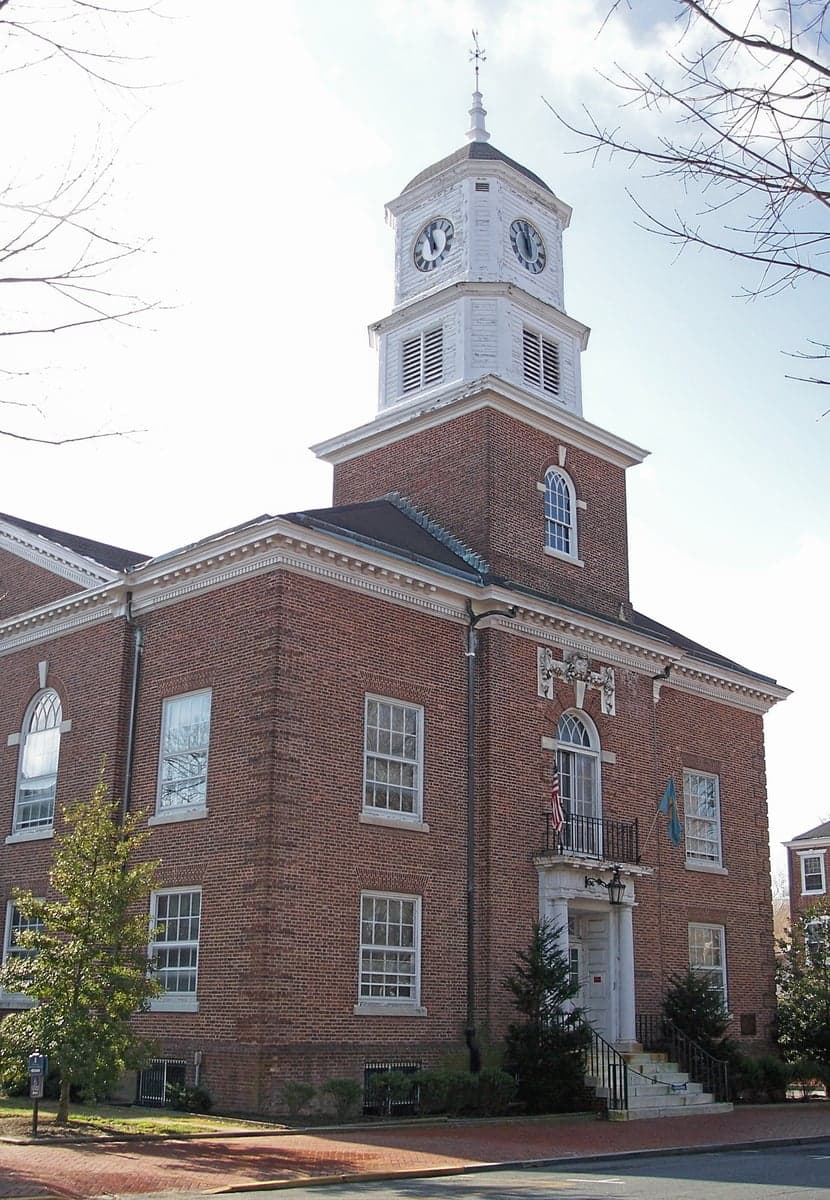
Photo: Wikipedia
Personal Sovereignty in Kent County
Viable for self-reliance. Generally workable, though some barriers may limit total independence.
What does Personal Sovereignty tell us?
Personal Sovereignty measures your capacity for self-reliance and independence with minimal government friction. Higher scores mean fewer barriers between you and the way you want to live... but it assumes you have the space you need and good neighbors.
What does this tell us?
Personal Sovereignty measures your capacity for self-reliance and independence with minimal government friction. Higher scores mean fewer barriers between you and the way you want to live... but it assumes you have the space you need and good neighbors.
State Policy
Energy independence: Importer (2% of energy produced in-state)
Personal Liberty
Homesteading

Personal Liberty Analysis
Kent County, Delaware offers a notably higher degree of personal sovereignty than much of the Mid-Atlantic, but it is not a libertarian free-for-all. The county’s rural character and slower pace of development create a tangible sense of autonomy, yet state-level governance from Dover—the state capital, which sits squarely within the county—imposes a regulatory framework that preppers and conservatives must navigate carefully. For single individuals and parents seeking to maximize self-reliance, the key is understanding where local enforcement diverges from state policy, and which specific towns offer the most breathing room.
Tax burden and regulatory posture in Kent County vs. surrounding areas
Delaware’s tax structure is a double-edged sword for those prioritizing financial sovereignty. The state has no sales tax, which is a significant advantage for large purchases and ongoing living expenses. Property taxes in Kent County are among the lowest in the nation, averaging roughly 0.55% of assessed value, meaning a $300,000 home carries an annual tax bill around $1,650. This is a fraction of what you’d pay in neighboring Maryland or Pennsylvania. However, the state’s personal income tax is progressive, topping out at 6.6% for high earners, and Delaware is aggressive in taxing business entities—including LLCs and trusts—which can complicate off-grid income strategies. Regulatory posture is mixed. Kent County itself has relatively light zoning enforcement outside incorporated towns, but the state’s Department of Natural Resources and Environmental Control (DNREC) has broad authority over land use, wetlands, and well permits. In towns like Dover and Smyrna, building codes and permit requirements are stricter, while unincorporated areas near Felton or Harrington see far less oversight. For a prepper, the regulatory sweet spot is the rural stretch between Clayton and Milford, where county officials are known to be more pragmatic about outbuildings and alternative structures.
Self-defense and gun law specifics for Kent County residents
Delaware is a shall-issue state for concealed carry, but the process is not as streamlined as in constitutional carry states. Kent County residents must apply through the Delaware State Police, submit fingerprints, complete a training course, and pay fees. The state does not recognize permits from all other states, which is a concern for those who travel. However, open carry is legal without a permit for anyone 18 or older who can legally possess a firearm, and this is a common sight in rural areas of the county. The political climate in Kent County is more gun-friendly than in New Castle County to the north. Local sheriffs in towns like Dover and Milford have publicly stated they will not enforce potential future federal overreach on firearms, and the county’s legislative delegation has historically opposed state-level magazine capacity limits. That said, the state legislature in Dover has passed red flag laws and universal background checks, so the legal landscape can shift quickly. For maximum autonomy, preppers often gravitate toward Harrington and Felton, where the local culture is deeply pro-Second Amendment and the sheriff’s office is known for a hands-off approach to lawful gun owners. Range access is excellent, with the Delaware State Sportsmen’s Association range near Middletown and several private clubs in the county.
Self-reliance and homesteading viability: lot sizes, zoning, and off-grid feasibility
Kent County is one of the few places in the Northeast where a family can still buy a few acres and live with minimal interference. Minimum lot sizes in agricultural zones are typically 1 acre, but many parcels in the county’s rural tier—especially around Felton, Harrington, and Clayton—are available in 5- to 20-acre tracts. Zoning is generally permissive for livestock, gardens, and outbuildings, though the state’s well and septic regulations are strict. Drilling a new well requires a permit from DNREC, and the agency has been known to deny permits in areas with shallow aquifers. Off-grid solar is legal, but net metering rules are state-controlled and not as favorable as in some Western states. Rainwater collection is allowed, but large-scale cisterns may trigger building code review. The county does not have a countywide building code for agricultural structures, so a pole barn or workshop can be erected without permits in unincorporated areas. For those serious about self-reliance, the area around Milford offers a good balance: affordable land, a strong Amish and Mennonite presence that normalizes homesteading, and a local government that tends to look the other way on minor code infractions. The biggest challenge is the coastal zone overlay near the Delaware Bay, which imposes additional restrictions on land use in towns like Bowers Beach and Little Creek—avoid those if you want full control over your property.
Personal liberties: parental rights, medical autonomy, speech, and property
Delaware’s state government has a reputation for progressive social policy, which creates friction for conservative families in Kent County. Parental rights are a flashpoint: the state has mandatory K-12 curricula that include comprehensive sex education and social-emotional learning standards, and parents in Dover and Smyrna have reported pushback when trying to opt their children out. Homeschooling is legal but requires annual notification and proof of instruction, which is more bureaucratic than in states like Texas or Idaho. Medical autonomy is similarly constrained. Delaware has a vaccine mandate for school attendance, and the state’s medical freedom index is low compared to the Midwest or South. However, Kent County’s rural culture means many families simply avoid the system by homeschooling and using private providers. Free speech is protected, but the state has broad hate speech statutes that some conservatives view as chilling. Property rights are the strongest pillar of personal sovereignty here. Eminent domain is rarely used for private development, and the county’s comprehensive plan explicitly prioritizes agricultural preservation. In Harrington and Felton, you can put up a political sign, build a fence, or run a small home business without much hassle. The key is to buy land outside the Dover city limits, where the city council has a history of overreaching on rental inspections and noise ordinances.
Overall, Kent County offers a higher degree of personal sovereignty than any other county in Delaware, and it compares favorably to much of the Northeast. The absence of sales tax, low property taxes, and permissive rural zoning create a foundation for self-reliance that is rare within a two-hour drive of Washington, D.C., or Philadelphia. But the state capital’s presence in Dover means that legislative creep is a constant threat. For the prepper or conservative parent, the smart play is to settle in the unincorporated areas around Felton, Harrington, or Clayton, where local culture and enforcement practices provide a buffer against state overreach. If you need to be near the coast, Milford is the best bet—just stay north of the bay’s regulatory zone. This is not a sovereign citizen’s paradise, but for those willing to work within the system and choose their location carefully, Kent County remains one of the last places in the Mid-Atlantic where you can live largely on your own terms.

* Values derived from national, state, county, city and local statistics and may differ in a specific area. Last updated: 2026-06-07T00:50:31.000Z
Narrative content on this page is AI-generated and may contain mistakes. Verify any details that matter before acting on them.
ReloMaps may earn a commission from affiliate links at no extra cost to you.

