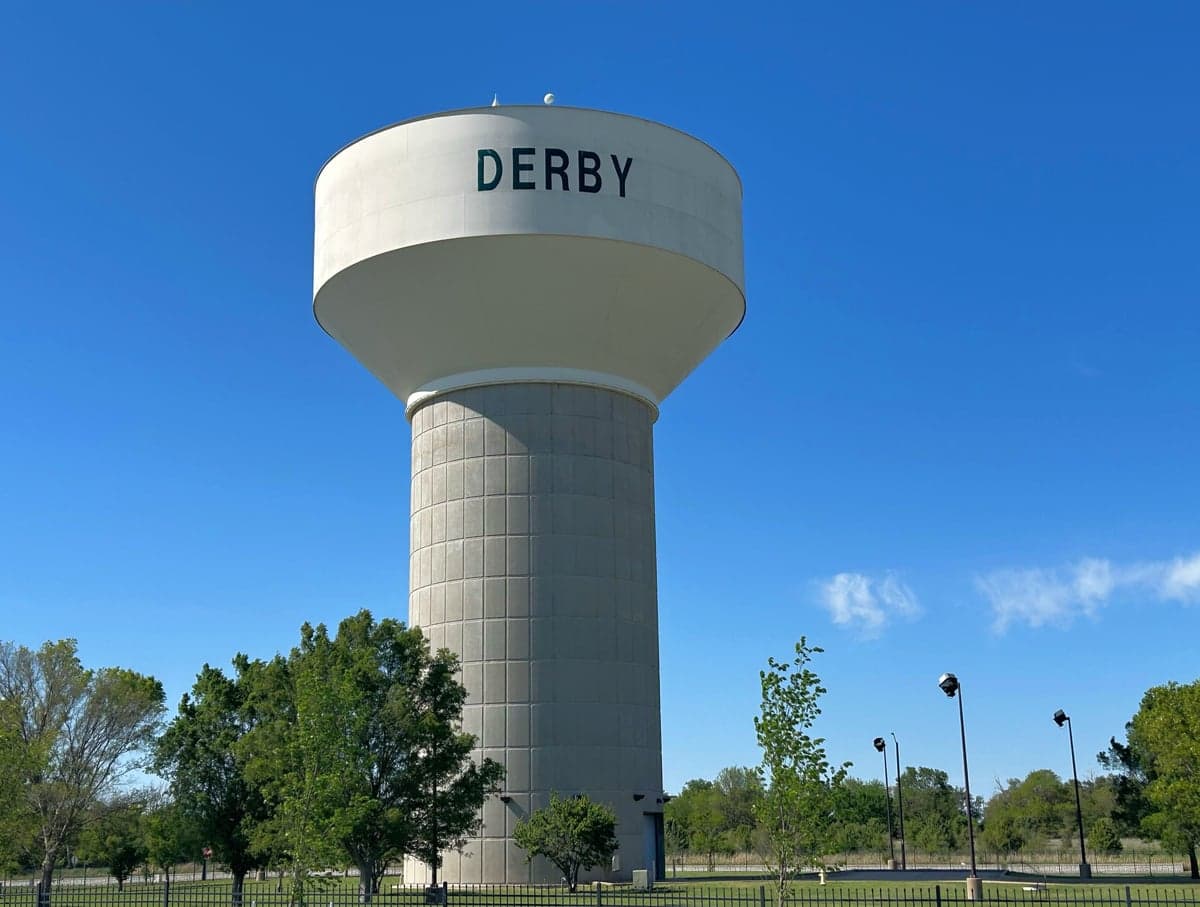
Photo: Wikipedia
Political ClimatePolitical Climate in Derby, KS
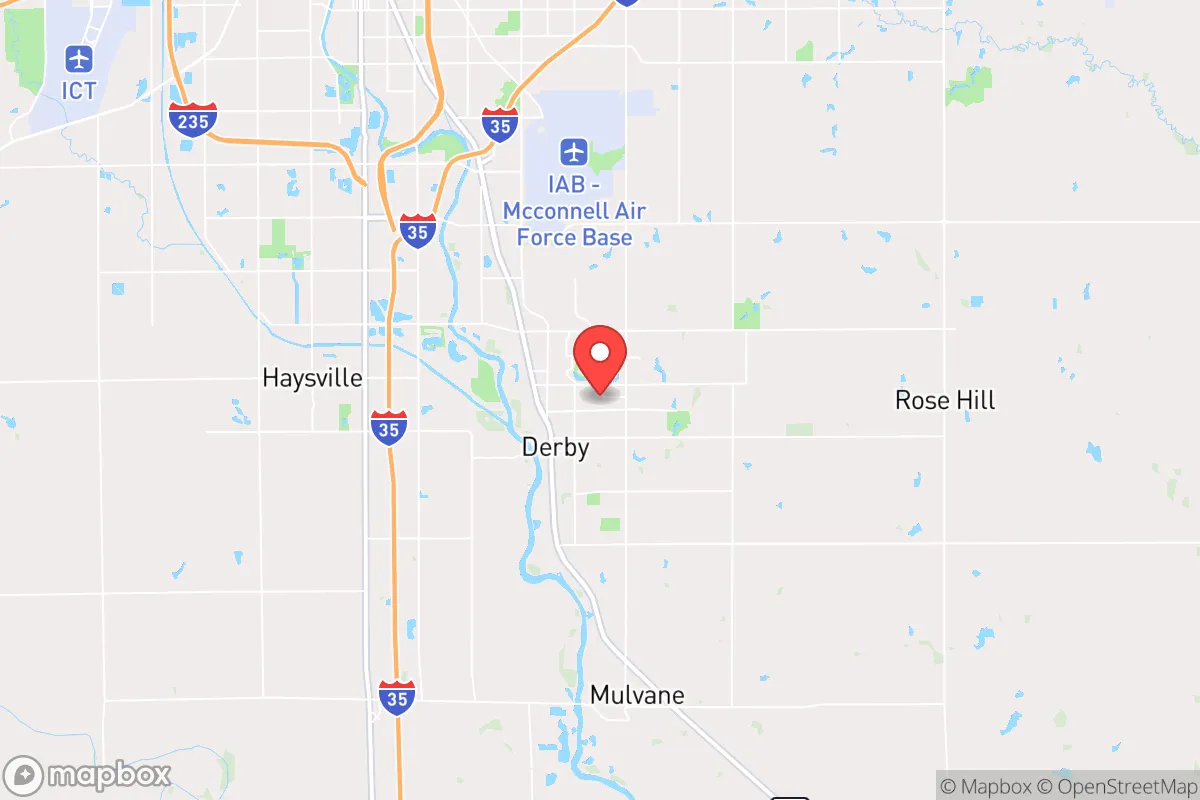
District shown is the primary district for this city’s centroid. Cities may span multiple districts.
Local Political AnalysisPolitical Analysis of Derby, KS
Derby, Kansas, has long been a rock-solid conservative stronghold, and that’s not changing anytime soon. With a Cook Partisan Voting Index of R+12, this community leans heavily Republican, and the voting patterns here reflect a deep-seated belief in limited government, personal responsibility, and traditional values. You can feel it in the air—people here take their freedoms seriously, and they’re not shy about pushing back when they feel those rights are being encroached upon. The trajectory has been steady, but like anywhere else, there’s a quiet concern about creeping progressive influences from the bigger cities nearby, like Wichita just a few miles north.
How it compares
Derby sits in Sedgwick County, which overall leans more moderate—think R+5 or so—thanks to the larger, more diverse population in Wichita. But Derby itself is a different animal. It’s a bedroom community where families and retirees have settled specifically to get away from the urban chaos and the left-leaning policies that often come with it. Compare Derby to a place like Lawrence or Kansas City, Kansas, and the contrast is stark. Those areas have seen a noticeable shift toward progressive ideology in recent years, with higher taxes, more regulations, and a general acceptance of government overreach into personal lives. Derby, on the other hand, has held the line. The city council and school board elections here consistently favor candidates who prioritize fiscal conservatism and individual liberties. It’s a place where you can still have a conversation about property rights or Second Amendment protections without getting a lecture.
What this means for residents
For folks living here, the political climate translates into a daily life that feels more free and less micromanaged. You won’t see the same kind of zoning overreach or business-killing mandates that have popped up in places like Johnson County. The local government tends to stay out of your way, which is exactly how most residents want it. That said, there’s a growing unease about the long-term trend. As Wichita continues to drift left—with its push for higher minimum wages, more public housing, and progressive school curricula—there’s a real fear that those ideas could spill over into Derby. The school board has been a battleground lately, with parents fighting to keep critical race theory and gender ideology out of the classroom. So far, common sense has prevailed, but it’s a constant vigilance. The message from longtime residents is clear: don’t take this place for granted. If you want to keep Derby the way it is, you have to stay involved and vote in every local election.
Culturally, Derby still feels like a slice of old-school Kansas. The annual Derby Days festival, the strong church presence, and the emphasis on youth sports and scouting all reflect a community that values tradition and self-reliance. There’s no push for bike lanes or public art projects that cost a fortune—just practical infrastructure and a focus on keeping taxes low. The biggest policy distinction is the city’s approach to development: they’ve managed to grow without selling out to big-box developers or sacrificing the small-town feel. It’s a balancing act, and so far, they’ve pulled it off. But if you’re looking for a place where the government respects your personal freedoms and doesn’t try to run your life, Derby is still one of the best bets in Kansas. Just keep an eye on the school board meetings and the county commission—that’s where the real fights are happening now.

State Political ClimatePolitical Climate in Kansas
State Political AnalysisPolitical Environment in the State
Kansas has long been a reliably conservative state, but the picture is more nuanced than a simple red-state label suggests. The state’s overall partisan lean is solidly Republican, with the GOP holding every statewide office and supermajorities in both legislative chambers, but the margin has tightened in recent cycles—Donald Trump won Kansas by 15 points in 2020, down from 20 points in 2016, and the 2022 governor’s race saw Democrat Laura Kelly win a second term in a state Trump carried by double digits. Over the past 10-20 years, the dominant coalition has been a mix of rural conservatives, suburban moderates, and a growing libertarian-leaning wing, but demographic shifts in the Kansas City suburbs and the rise of a more organized progressive movement in places like Lawrence and Wyandotte County are slowly reshaping the map.
Urban vs. rural divide
The political geography of Kansas is stark. The eastern third of the state, anchored by the Kansas City metro area (Johnson, Wyandotte, and Leavenworth counties), is the primary battleground. Johnson County, once reliably red, has been trending purple—Biden won it by 8 points in 2020, a dramatic shift from Romney’s 12-point win there in 2012. The city of Overland Park, the state’s second-largest city, now has a Democratic mayor and a city council that leans left on social issues. Meanwhile, Wyandotte County (Kansas City, Kansas) is a deep-blue stronghold, driven by a large minority population and union-heavy industrial base. On the other side, the rural and small-town expanse—places like Garden City, Dodge City, Hays, and the vast wheat fields of western Kansas—votes overwhelmingly Republican, often by margins of 70-80%. The divide is not just urban vs. rural; it’s also suburban vs. exurban. The fast-growing exurbs of Shawnee and Olathe are still reliably red, but they’re seeing an influx of younger families who are more libertarian on social issues and more skeptical of the state’s heavy-handed tax policies.
Policy environment
Kansas’s policy environment is a mixed bag for a conservative audience. On the plus side, the state has no income tax on Social Security benefits, a flat income tax rate of 5.7% (down from a progressive structure in the 1990s), and a relatively low corporate tax rate of 4.0%. Property taxes, however, are a sore spot—Kansas ranks in the top 10 for effective property tax rates, and local levies for schools and infrastructure can be a shock for newcomers from low-tax states like Texas or Florida. The state’s regulatory posture is generally business-friendly, with right-to-work laws in place and a tort reform system that caps non-economic damages in medical malpractice cases. On education, Kansas has a school choice program (the Tax Credit for Low-Income Students Scholarship Program) that allows tax-credit scholarships for private school attendance, but it’s limited in scope compared to states like Florida or Arizona. The state’s healthcare landscape is dominated by a Medicaid expansion debate—Kansas is one of 10 states that has not expanded Medicaid, a position that aligns with conservative fiscal principles but leaves a coverage gap for low-income adults. Election laws are moderately restrictive: voter ID is required, and the state has a 20-day advance voting period, but no-excuse mail-in voting was expanded during COVID and remains in place. The 2021 election integrity law (HB 2183) tightened signature verification and banned ballot harvesting, but it’s less aggressive than laws in Georgia or Texas.
Trajectory & freedom
On the freedom front, Kansas has been a mixed story. The state has a strong Second Amendment culture—constitutional carry was passed in 2015, and there are no state-level magazine capacity limits or assault weapon bans. However, the state’s history of tax policy is a cautionary tale. The infamous “Kansas Experiment” under Governor Sam Brownback (2012-2018) slashed income taxes dramatically, but the resulting budget shortfalls led to cuts in school funding and infrastructure, and the tax cuts were largely reversed in 2017. That episode has left a lingering distrust of supply-side economics among many voters. On parental rights, Kansas passed a 2023 law (HB 2238) that requires schools to notify parents of any changes to a student’s health or well-being, including gender identity or sexual orientation, and prohibits classroom instruction on gender identity and sexual orientation in grades K-3. This is a win for parental rights advocates. On medical autonomy, Kansas has a 2019 law that bans abortion after 22 weeks and requires parental consent for minors, but the state’s 2022 vote on a constitutional amendment to remove abortion protections failed—a sign that even in a red state, voters are wary of total bans. The state also has a robust medical freedom movement, with a 2021 law (SB 40) that prohibits vaccine passports and a 2023 law that bans COVID-19 vaccine mandates for state employees. Property rights are generally strong, with no statewide rent control and a relatively straightforward eminent domain process, but local zoning in Johnson County can be restrictive.
Civil unrest & political movements
Kansas has not seen the level of civil unrest seen in coastal states, but there have been flashpoints. The 2020 George Floyd protests in Kansas City, Kansas, and Lawrence saw some property damage and clashes with police, but they were smaller and shorter-lived than in larger cities. The state has a small but vocal activist left, centered around the University of Kansas in Lawrence and the Kansas City metro, which has pushed for police reform and racial justice. On the right, the Kansas Republican Party has been split between a more establishment wing (associated with Senator Jerry Moran and former Senator Pat Roberts) and a populist, Trump-aligned wing (associated with Senator Roger Marshall and the Kansas Freedom Caucus). The 2022 primary saw several incumbent moderate Republicans lose to more conservative challengers, a trend that is likely to continue. Immigration politics are less heated than in border states, but the city of Garden City has seen tensions over meatpacking plant workers, and the state has a 2011 law (SB 70) that requires law enforcement to check immigration status of anyone arrested. There is no sanctuary city movement in Kansas, and the state’s attorney general has been aggressive in suing the Biden administration over immigration policies. Election integrity remains a live issue—the 2020 election saw Trump’s loss in Johnson County blamed on “irregularities” by some activists, but no major fraud was found. The 2022 law tightening signature verification was a response to those concerns.
Projection
Over the next 5-10 years, Kansas is likely to become more politically competitive, but not necessarily more liberal. The key demographic shift is the continued growth of Johnson County, which is becoming more diverse and more educated—the county’s population is now 15% Hispanic and 10% Asian, and the share of college graduates is above 50%. This group tends to be fiscally conservative but socially moderate, which could push the state toward a more libertarian or “live and let live” posture. At the same time, rural Kansas is depopulating—many western counties have lost 10-20% of their population since 2010—which reduces the GOP’s rural base. The state’s in-migration is coming from blue states like California and Illinois, but these newcomers are often drawn by lower housing costs and a more conservative culture, so they may not shift the state left as much as some fear. The wild card is the state’s tax policy—if the legislature can’t find a way to lower property taxes without blowing a hole in the budget, the state could see a backlash from homeowners. The 2026 governor’s race will be a key test: if a conservative Republican can win back the governor’s office, the state will likely see a push for further tax cuts and school choice expansion. If a Democrat holds the seat, expect more incrementalism on Medicaid expansion and education funding.
For a new resident, the bottom line is this: Kansas offers a solidly conservative foundation with low income taxes, strong gun rights, and a parental rights-friendly education environment, but you’ll pay a premium in property taxes and you’ll need to navigate a state that is still recovering from the Brownback-era fiscal trauma. If you’re moving to Johnson County, expect a more moderate, suburban culture that is increasingly purple; if you’re heading to rural Kansas, you’ll find a deeply red, community-oriented lifestyle with fewer government services. The state is not trending toward the progressive chaos of the coasts, but it’s also not the libertarian paradise some might hope for—it’s a pragmatic, cautious red state that values stability over revolution. Keep an eye on the 2026 elections and the property tax debate; those will tell you where Kansas is really headed.
* Values derived from national, state, county, city and local statistics and may differ in a specific area. Last updated: 2026-05-04T02:58:37.000Z
Narrative content on this page is AI-generated and may contain mistakes. Verify any details that matter before acting on them.
ReloMaps may earn a commission from affiliate links at no extra cost to you.

