Photo: Wikipedia
Demographics of East Ridge, TN
Affluence Level in East Ridge, TN
A middle-class area roughly in line with national averages across income, home values, education, and employment.
People of East Ridge, TN
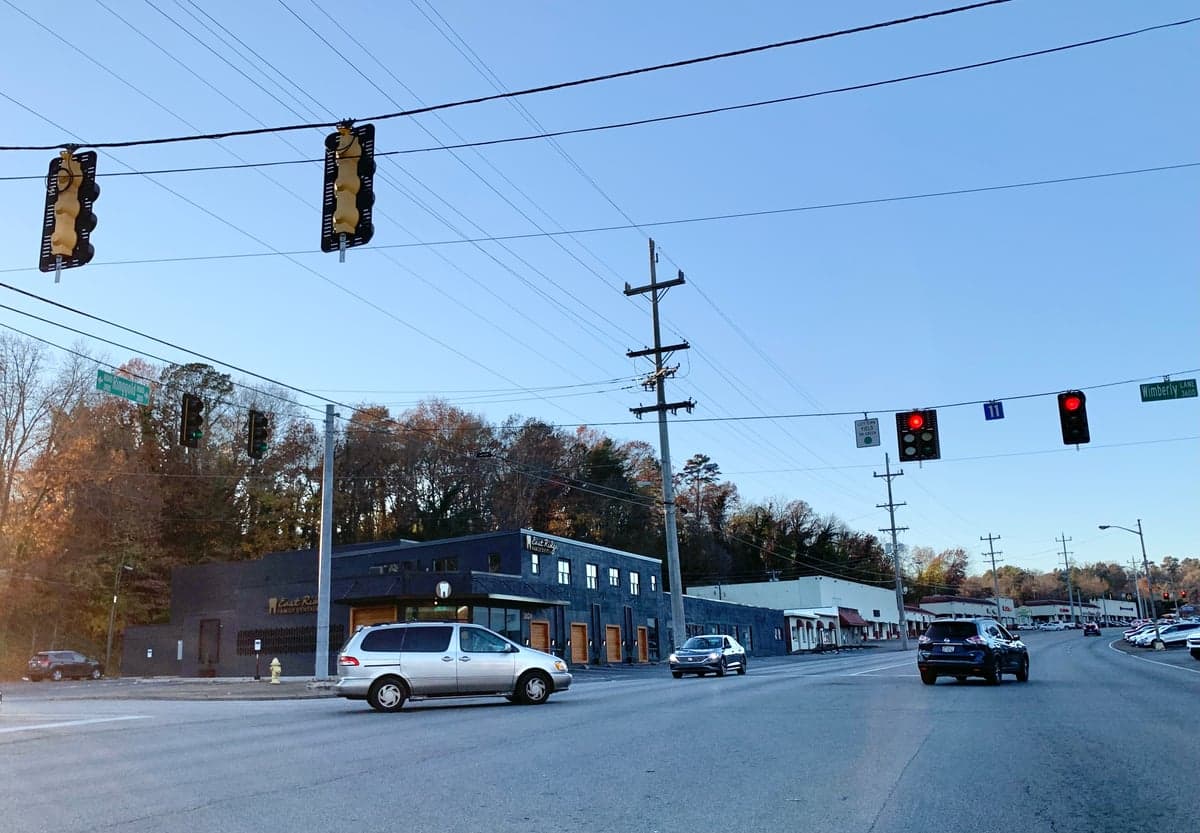
East Ridge, Tennessee, is a compact, family-oriented suburb of Chattanooga with a population of 22,034 that is predominantly white (68.6%) but increasingly diverse, anchored by a growing Hispanic community (15.3%) and a stable Black population (11.6%). The city is characterized by its modest, mid-century housing stock, a strong sense of local identity separate from Chattanooga proper, and a population that is less transient than many Sun Belt suburbs. With only 23.1% of adults holding a college degree, East Ridge leans working-class and practical, attracting residents who value affordability, proximity to Chattanooga jobs, and a slower pace of life.
How the city was settled and grew
East Ridge was not a colonial-era settlement; its development is almost entirely a 20th-century story. The area was originally farmland and scattered rural homesteads until the arrival of the railroad and the expansion of Chattanooga’s industrial base in the early 1900s. The first significant wave of residents were white Appalachian migrants moving down from the surrounding hills and rural Tennessee counties, drawn by factory jobs at companies like the Chattanooga Plow Company and later the DuPont plant in nearby Hixson. These early families built simple frame houses in what is now the Ridgeside neighborhood, a historic district of modest bungalows and cottages that still retains its early-1900s character. A second wave came during and after World War II, when defense industry workers and returning veterans settled in the Belvoir area, a grid of small, affordable homes built quickly to house the growing workforce. By the 1950s, East Ridge had incorporated as a city, and its population was almost entirely native-born white Tennesseans, with a small number of Black families living in the Ringgold Road corridor, a historically separate area near the Georgia line.
Modern era (post-1965)
The post-1965 period brought gradual demographic change. The Immigration and Nationality Act of 1965 had little immediate effect on East Ridge, but the city began to see its first significant non-white populations through domestic migration. Black families moved into the Spring Creek neighborhood and the area around McBrien Road during the 1970s and 1980s, drawn by affordable housing and the desegregation of Chattanooga-area schools. The most transformative shift began in the 1990s and accelerated after 2000: a wave of Hispanic immigrants, primarily from Mexico and Central America, arrived to work in construction, landscaping, and the region’s growing logistics sector. Today, the Hispanic population of 15.3% is concentrated in the Briarwood and Lake Hills neighborhoods, where multi-generational families have bought homes and established small businesses. The East/Southeast Asian population remains tiny at 0.3%, and the Indian-subcontinent population is similarly small at 0.4%, with no distinct ethnic enclave. The foreign-born share of 6.0% is modest but notable for a city of this size, and it is overwhelmingly Hispanic.
The future
East Ridge’s population is heading toward greater Hispanic plurality, though the city is not tribalizing into rigid enclaves. The Hispanic community is growing through both immigration and natural increase, and it is slowly dispersing beyond the Briarwood and Lake Hills cores into previously all-white neighborhoods like Ridgeside. The white population, while still the majority, is aging and declining slightly as younger white families move to newer suburbs like Ooltewah or Collegedale. The Black population has been stable for two decades, with little new in-migration. The city is not homogenizing; rather, it is becoming a more layered, working-class suburb where Hispanic and white families increasingly share the same schools, churches, and retail strips. The next 10-20 years will likely see the Hispanic share rise to 20-25%, the white share fall to around 60%, and the Black and Asian shares remain flat. The city’s low college-attainment rate and modest housing stock will continue to attract families who prioritize cost over prestige.
For someone moving in now, East Ridge is a place where the old Appalachian-rooted white community is slowly giving way to a more Hispanic-influenced working-class culture, but without the sharp ethnic boundaries seen in larger cities. It is a practical, unpretentious suburb where affordability and proximity to Chattanooga are the main draws, and where the demographic future looks more Latino, more family-oriented, and still firmly middle-income.

* Values derived from national, state, county, city and local statistics and may differ in a specific area. Last updated: 2026-04-23T01:26:09.000Z
Narrative content on this page is AI-generated and may contain mistakes. Verify any details that matter before acting on them.
ReloMaps may earn a commission from affiliate links at no extra cost to you.

