Photo: Wikipedia
Political ClimatePolitical Climate in East Ridge, TN
District shown is the primary district for this city’s centroid. Cities may span multiple districts.
Local Political AnalysisPolitical Analysis of East Ridge, TN
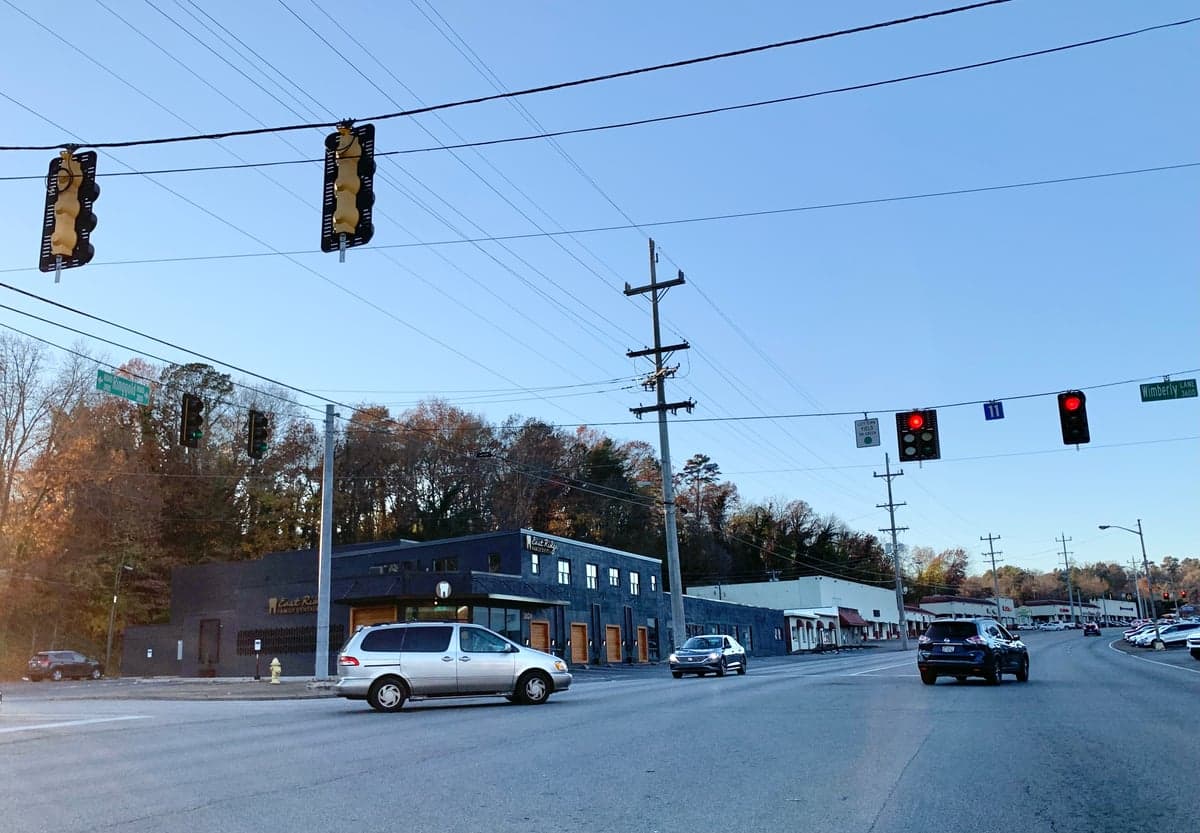
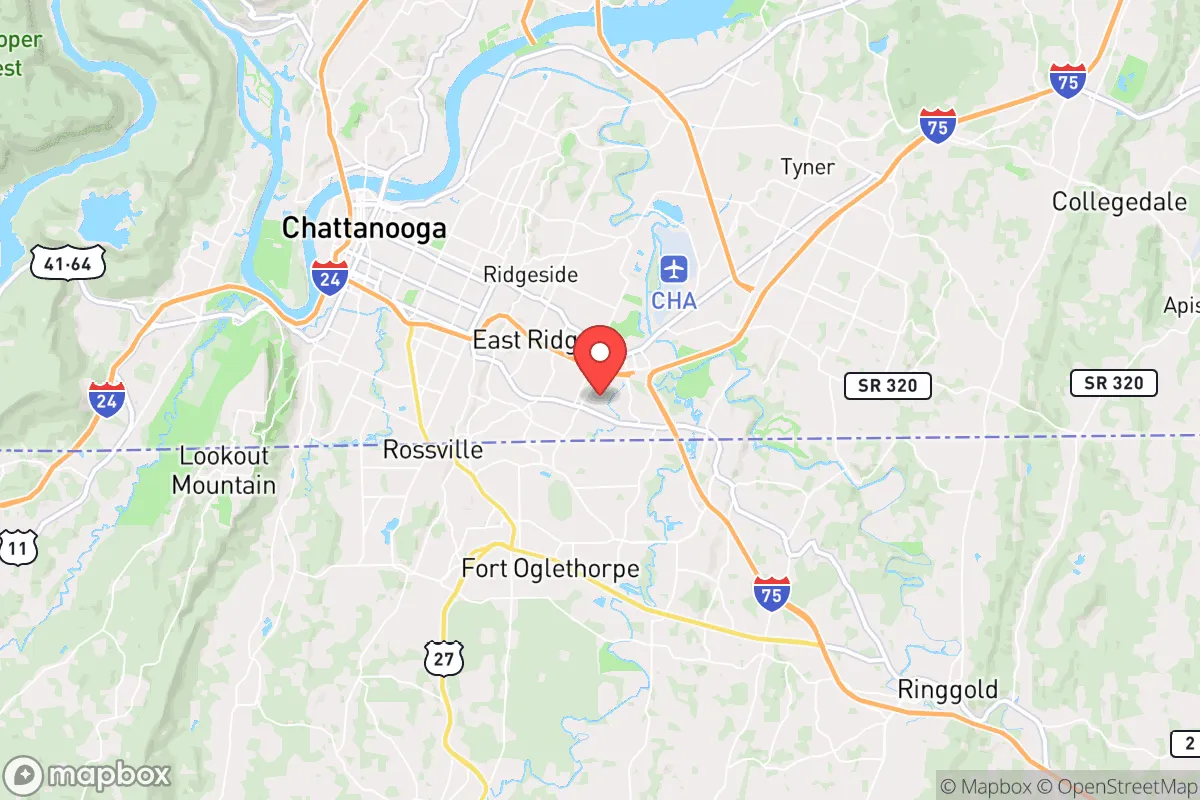
East Ridge, Tennessee, has long been a solidly conservative community, and the numbers back that up with a Cook PVI of R+18. This isn't a place that swings with the national winds; it's a town where traditional values and a live-and-let-live attitude have been the bedrock for generations. You can feel it in the local chatter at the diner and in the way folks here view government—generally, the less of it in their personal lives, the better. The political trajectory here has been steady, but like many places in the Southeast, there's a quiet concern about creeping progressive influence from larger cities like Chattanooga, which sits just a few miles to the west and leans more moderate.
How it compares
When you stack East Ridge up against its neighbors, the contrast is pretty stark. Chattanooga, just across the state line, has seen a noticeable shift toward progressive policies in recent years, with more focus on public transit expansions and social programs that some locals here view as government overreach. Head north toward Red Bank or Signal Mountain, and you'll find a more mixed bag—some areas are still reliably conservative, but others are trending left. East Ridge, though, remains a bastion of fiscal responsibility and personal liberty. The R+18 rating isn't just a number; it reflects a community that consistently votes for lower taxes, fewer regulations, and a government that stays out of the way. Compared to the more liberal enclaves of downtown Chattanooga, East Ridge feels like a place where common sense still rules the day.
What this means for residents
For the folks living here, the political climate translates into a daily life with fewer headaches from bureaucracy. You're not going to see the same kind of zoning fights or overreaching public health mandates that you might in more progressive areas. The local government tends to prioritize public safety and infrastructure over social experiments, which means your rights—especially around property use, business operations, and personal choices—are generally respected. That said, there's a growing unease as the region grows. New developments and an influx of people from out of state are bringing different ideas, and some worry that the next decade could see a push for more government involvement in things like housing regulations or environmental rules. For now, though, East Ridge remains a place where you can pretty much live your life without someone in an office telling you how to do it.
Culturally, East Ridge has a few distinct markers that set it apart. You won't find the same kind of bike lanes or farmer's market activism you see in Chattanooga's North Shore. Instead, the community leans into its Southern roots—church potlucks, high school football on Friday nights, and a general skepticism of any politician promising to "fix" things that aren't broken. There's a strong sense of self-reliance here, and that's reflected in the local policy preferences. The biggest red flag on the horizon is the potential for annexation or regional planning efforts that could dilute the town's conservative character. If you value your freedoms and want to live somewhere that hasn't been overrun by progressive ideology, East Ridge is still a solid bet—but keep an eye on those city council meetings, because the fight to keep it that way is ongoing.

State Political ClimatePolitical Climate in Tennessee
State Political AnalysisPolitical Environment in the State
Tennessee has been a reliably red state for decades, but the political climate here isn’t just about voting Republican—it’s about a deep-seated cultural conservatism that’s been hardening over the last 10-20 years. The state’s overall partisan lean is roughly +14 to +18 points Republican in presidential elections, with the GOP holding supermajorities in both chambers of the legislature and every statewide office. What’s changed recently is the intensity: Tennessee has moved from a “moderate Southern conservative” state to one that actively pushes back against federal overreach, with a growing libertarian streak on issues like gun rights, medical freedom, and taxation. The 2020 and 2024 cycles saw the rural and suburban base solidify, while the major metros—Nashville, Memphis, Knoxville—remain blue islands that are increasingly out of step with the rest of the state.
Urban vs. rural divide
The political map of Tennessee is a textbook example of the urban-rural split. Nashville (Davidson County) is the state’s progressive engine, voting about 65-70% Democratic in recent cycles, driven by a booming tech and healthcare economy that attracts young, college-educated transplants. Memphis (Shelby County) is similarly blue, with a strong African American voting bloc and a Democratic machine that keeps it reliably left. Knoxville (Knox County) is more of a purple-to-light-red city, but the surrounding suburbs like Farragut and Maryville lean heavily Republican. The real red meat is in the rural counties: places like Lincoln County (Fayetteville), Giles County (Pulaski), and the entire Upper Cumberland region (Cookeville, Crossville) vote 75-80% Republican. The most dramatic shift has been in the exurbs of Nashville—counties like Williamson (Franklin) and Rutherford (Murfreesboro) were once swing areas but have moved decisively red as conservative families flee the city. Williamson County, for example, went from a 55-45 Republican lean in 2000 to a 65-35 split by 2024, driven by high-income families who want low taxes and school choice.
Policy environment
Tennessee’s policy environment is aggressively pro-business and pro-liberty on most fronts. There’s no state income tax—just a flat 7% sales tax and property taxes that are among the lowest in the nation. The regulatory posture is light: no state-level OSHA, no prevailing wage laws, and a right-to-work law that keeps unions weak. On education, the state has embraced school choice aggressively—the Education Savings Account program, expanded in 2023, lets parents use state funds for private school tuition, and there’s a growing charter school presence in Memphis and Nashville. Healthcare is a mixed bag: Tennessee refused Medicaid expansion under Obamacare, but the state’s “TennCare” program is relatively efficient. Election laws are strict: voter ID is required, early voting is limited to 14 days, and the state purges inactive voters regularly. The 2021 law banning private funding of election administration (a response to Zuckerberg’s 2020 grants) was a clear signal that Tennessee prioritizes election integrity over convenience. On the downside, the state’s alcohol laws are still archaic—you can’t buy wine in grocery stores in many counties—and the medical marijuana program is virtually nonexistent, which frustrates some libertarian-leaning conservatives.
Trajectory & freedom
Tennessee is becoming more free in several key areas, but there are warning signs. The biggest win for personal liberty was the 2021 permitless carry law (HB 786), which allows any law-abiding adult to carry a handgun without a permit—a major expansion of Second Amendment rights. The 2023 “Tennessee Freedom Act” (SB 1) prohibits any state or local enforcement of federal gun laws that violate the Second Amendment, effectively nullifying potential federal bans. Parental rights got a boost with the 2022 “Parental Bill of Rights” (HB 2670), which requires schools to notify parents of any medical or mental health services offered to their children and bans classroom instruction on sexual orientation in grades K-3. On medical freedom, the 2023 law banning COVID-19 vaccine mandates for private employers (SB 229) was a strong statement. However, the state has also expanded government power in troubling ways: the 2023 law allowing the state to take over the Nashville airport board (HB 1181) was a naked power grab by the legislature, and the 2024 law restricting drag performances (SB 3) raised free speech concerns even among some conservatives. The trajectory is toward more cultural conservatism, but there’s a real tension between libertarian impulses and the desire to use state power to enforce moral norms.
Civil unrest & political movements
Tennessee has seen its share of political flashpoints. The 2023 Nashville Covenant School shooting sparked massive protests at the state capitol, with activists demanding gun control—but the legislature responded by passing a law to arm teachers instead. The “Tennessee Three” expulsions (two Democratic lawmakers who protested on the House floor) became a national story, but in-state, the move was broadly popular among conservatives who saw it as enforcing decorum. Immigration politics are heated: the 2024 law requiring local law enforcement to cooperate with ICE (HB 1604) passed easily, and there’s a growing movement in rural counties to declare themselves “Second Amendment sanctuaries” against federal gun laws. The most visible flashpoint for a new resident would be the constant culture war battles over school boards—places like Williamson County and Rutherford County have seen heated fights over library books, curriculum, and transgender policies. There’s no serious secessionist movement, but nullification rhetoric is common in conservative circles, especially around gun rights and federal environmental regulations. Election integrity remains a top concern: the 2020 audit of Davidson County found irregularities, and the state has since tightened absentee ballot rules and banned ballot drop boxes.
Projection
Over the next 5-10 years, Tennessee will likely become more conservative, not less. The in-migration pattern is overwhelmingly red: people moving from California, Illinois, and New York are coming for low taxes and conservative values, not to turn the state blue. The Nashville metro will continue to grow, but the exurbs (Spring Hill, Mount Juliet, Lebanon) are absorbing most of the new arrivals and voting heavily Republican. The rural counties are aging and shrinking, but their political influence is amplified by the state’s gerrymandered legislative maps. The biggest wildcard is the growing libertarian faction within the GOP—younger conservatives who want to legalize marijuana, reduce property taxes, and stop using government to enforce social norms. If that faction gains power, Tennessee could become a true “live and let live” state. But if the current leadership holds, expect more culture war legislation, more preemption of local ordinances (especially in Nashville and Memphis), and a continued push for school choice and tax cuts. A new resident moving in now should expect a state that is stable, safe, and predictable for conservatives, but with a simmering tension between the Nashville/Memphis blue bubbles and the red supermajority that runs everything.
For a conservative individual or family, Tennessee offers a rare combination: no income tax, strong gun rights, school choice, and a legislature that actively fights federal overreach. The downsides are real—the summer heat, the lack of public transit, and the constant culture war noise—but the bottom line is that this is one of the few states where the political trajectory is actually moving in your favor. If you’re looking for a place where your values are reflected in the laws, where your kids can go to a school that respects parental authority, and where you can keep more of what you earn, Tennessee is a solid bet. Just know that the blue cities are getting bluer, and the red rural areas are getting redder—so choose your county wisely. Williamson, Rutherford, and Hamilton (Chattanooga) are your safest bets for a balanced conservative lifestyle with good schools and jobs.
* Values derived from national, state, county, city and local statistics and may differ in a specific area. Last updated: 2026-04-23T01:26:09.000Z
Narrative content on this page is AI-generated and may contain mistakes. Verify any details that matter before acting on them.
ReloMaps may earn a commission from affiliate links at no extra cost to you.

