Photo: Wikipedia
Demographics of Eastpointe, MI
Affluence Level in Eastpointe, MI
A low-income area with significant economic hardship. Household wealth and educational attainment are well below national averages.
People of Eastpointe, MI
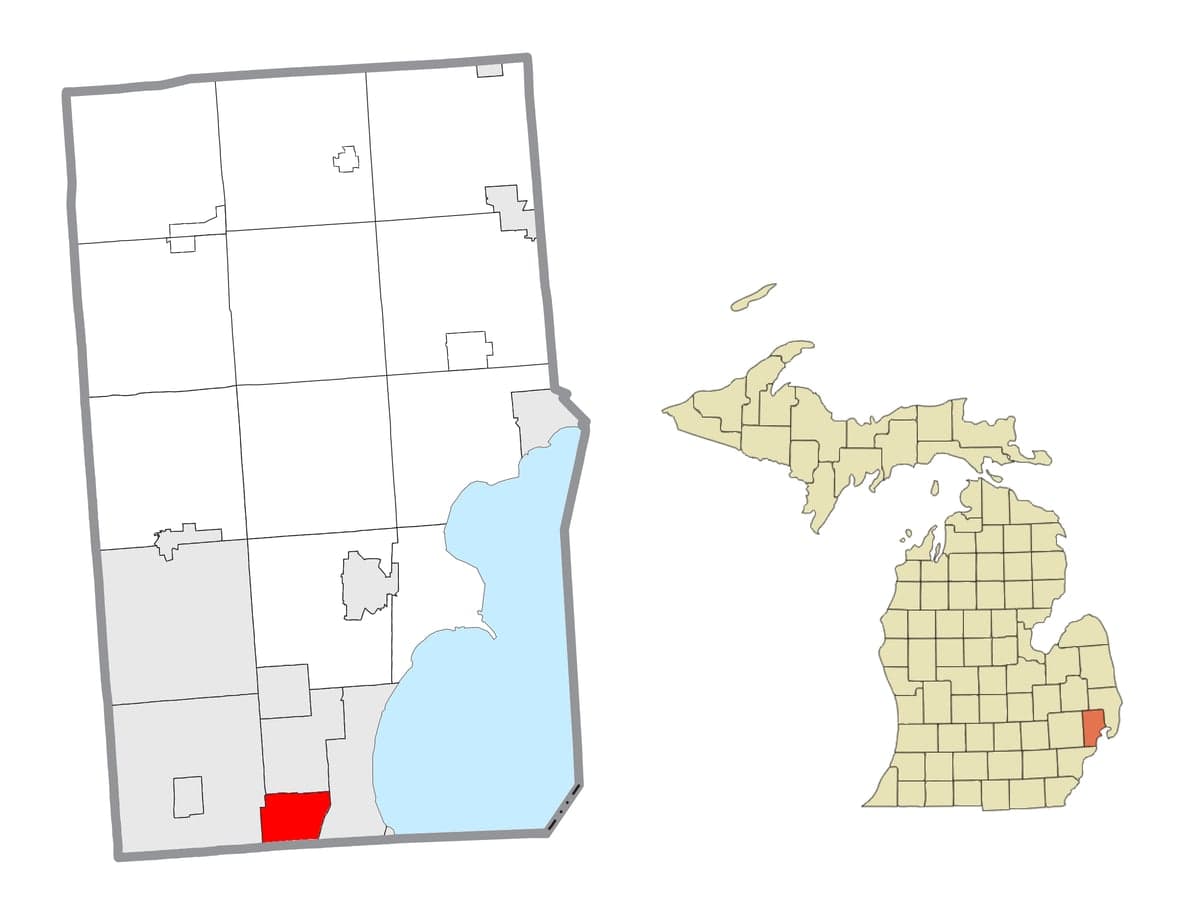
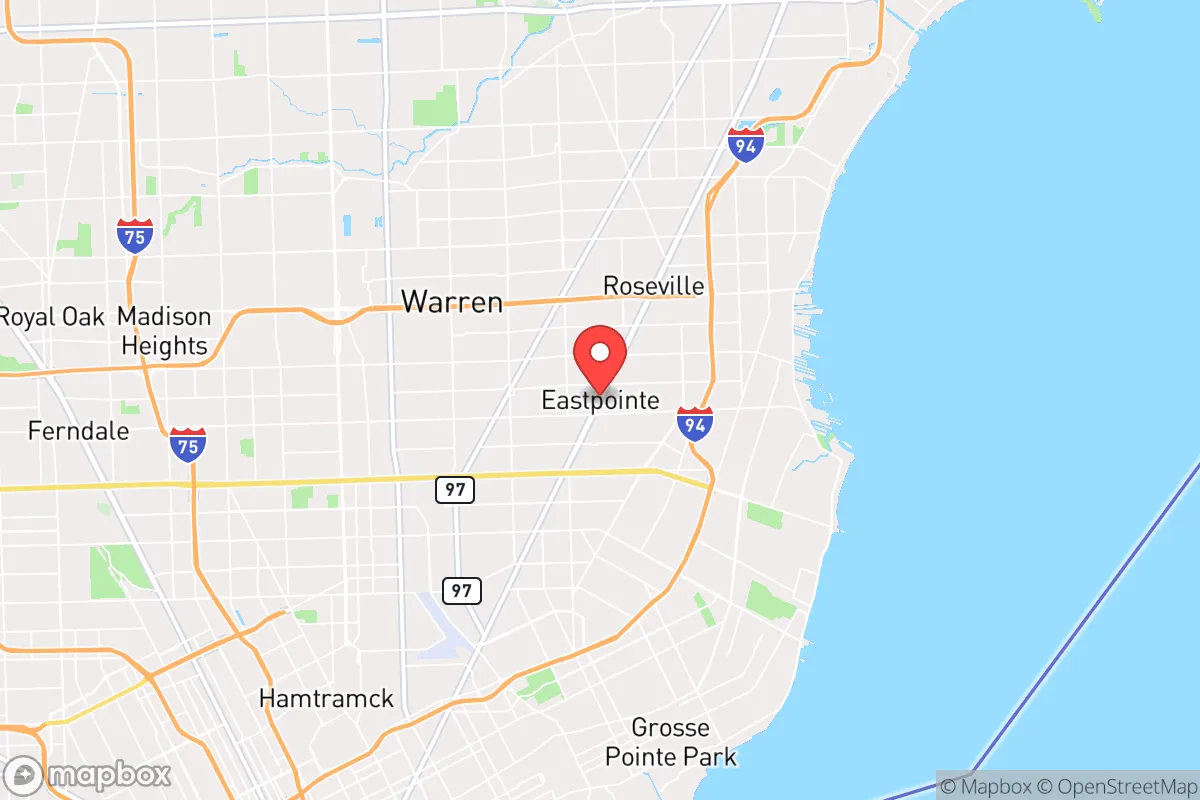
Eastpointe, Michigan, is a densely settled inner-ring suburb of Detroit with 34,003 residents, characterized by a predominantly Black population (53.0%) and a shrinking White population (38.5%). The city is notably homogeneous in other respects: only 0.9% of residents are foreign-born, and Hispanic and Asian communities each account for less than 1% of the population. With just 14.8% of adults holding a college degree, Eastpointe is a working-class community where homeownership rates are moderate and the median household income trails the state average. The city’s identity is shaped by its rapid mid-20th-century growth, a dramatic racial transition since the 1990s, and a population that is now stabilizing after decades of decline.
How the city was settled and grew
Eastpointe was originally part of Erin Township, settled by German and Irish farmers in the 1830s and 1840s. The area remained rural until the early 20th century, when Detroit’s industrial boom drew European immigrants—primarily Polish, Italian, and German—to work in auto plants and factories. The village of East Detroit was incorporated in 1929, and its population exploded after World War II as returning veterans and their families sought affordable housing within commuting distance of Detroit’s auto plants. The Gratiot Avenue corridor became the commercial spine, while neighborhoods like Kelly Park (north of 10 Mile Road) and Eastland (near the Eastland Center mall) filled with modest bungalows and Cape Cods built for the postwar boom. By 1960, the population had surged past 45,000, overwhelmingly White and Catholic, with strong ties to the auto industry and local parishes like St. Veronica and St. Basil.
Modern era (post-1965)
The 1967 Detroit riot and subsequent white flight reshaped Eastpointe’s demographics. Through the 1970s and 1980s, the city remained a predominantly White, working-class enclave, but by the 1990s, Black families began moving east from Detroit along the 8 Mile Road and 9 Mile Road corridors. The racial transition accelerated sharply after 2000: the Black share of the population rose from roughly 15% in 1990 to over 50% by 2010, while the White share fell from 80% to 40% over the same period. This shift concentrated in the southern and western neighborhoods—particularly south of 10 Mile Road and around Kelly Park—while the northern edge near 11 Mile Road retained a larger White population. The foreign-born population remained negligible throughout, with no significant immigrant wave replacing the departing White families. The city’s population also declined from a peak of 38,000 in 1970 to 34,003 today, as housing stock aged and younger families moved to outer suburbs.
The future
Eastpointe’s demographic trajectory points toward continued racial stabilization rather than further rapid change. The Black population share has plateaued around 53%, and the White share has stabilized near 38% after decades of decline. The city is not tribalizing into distinct ethnic enclaves—rather, it is becoming a more uniformly Black-majority suburb with a significant White minority. The foreign-born population is unlikely to grow substantially given the city’s low housing turnover and lack of immigrant-serving institutions. The Indian and East/Southeast Asian communities remain tiny (0.2% and 0.6% respectively) and show no signs of expanding. Over the next 10–20 years, Eastpointe will likely see modest population decline as older homeowners age in place and younger families choose newer suburbs, though the city’s affordable housing stock and proximity to Detroit may attract a new wave of first-time homebuyers if regional job growth resumes.
For a conservative-leaning individual or family considering relocation, Eastpointe offers a stable, working-class community with low crime relative to Detroit and a strong sense of local identity. The city is becoming more racially homogeneous rather than more diverse, and its low college-attainment rate and negligible immigrant population mean it lacks the cosmopolitan character of some other inner-ring suburbs. Prospective residents should expect a straightforward, blue-collar environment where neighborhood character varies more by age of housing than by ethnic composition, and where the most vibrant commercial areas remain along Gratiot Avenue and near the Eastland Center.

* Values derived from national, state, county, city and local statistics and may differ in a specific area. Last updated: 2026-04-19T09:20:09.000Z
Narrative content on this page is AI-generated and may contain mistakes. Verify any details that matter before acting on them.
ReloMaps may earn a commission from affiliate links at no extra cost to you.

