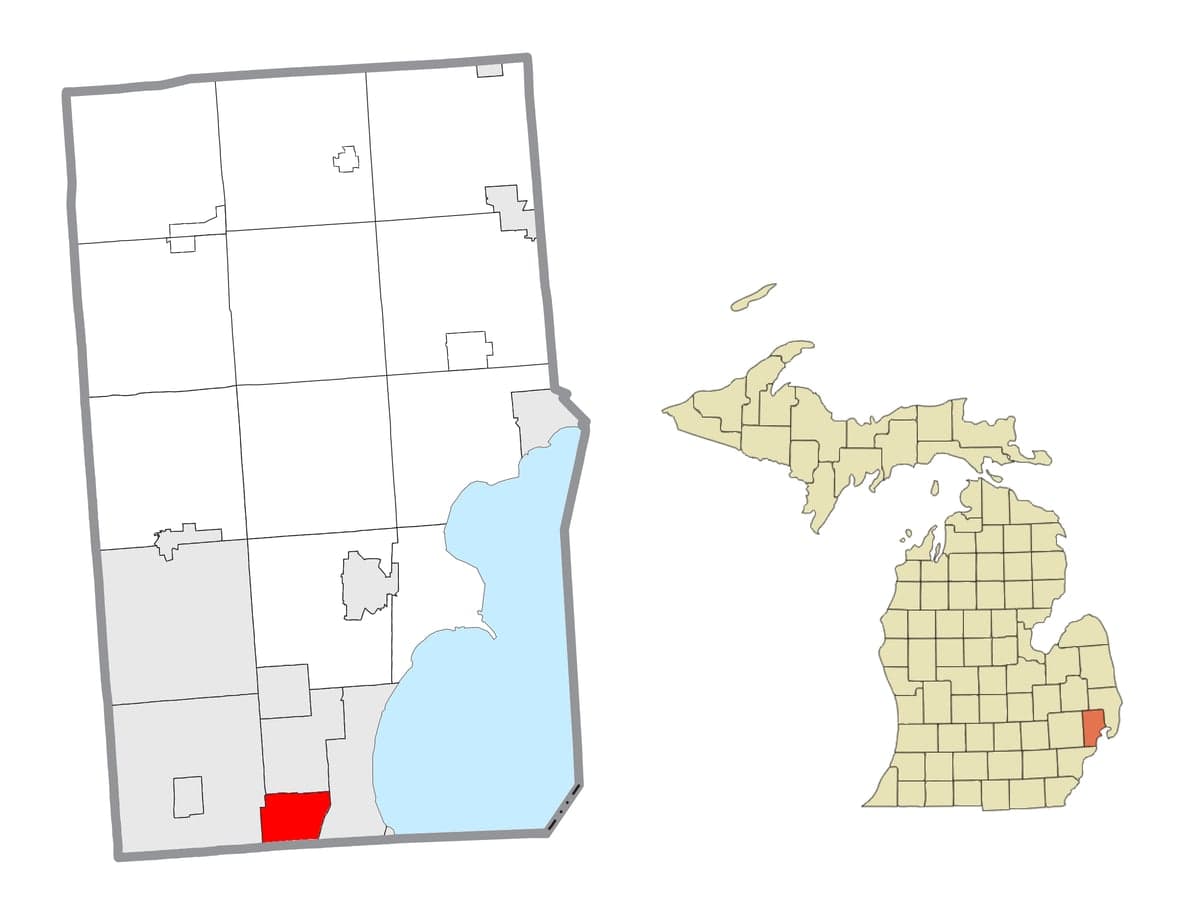
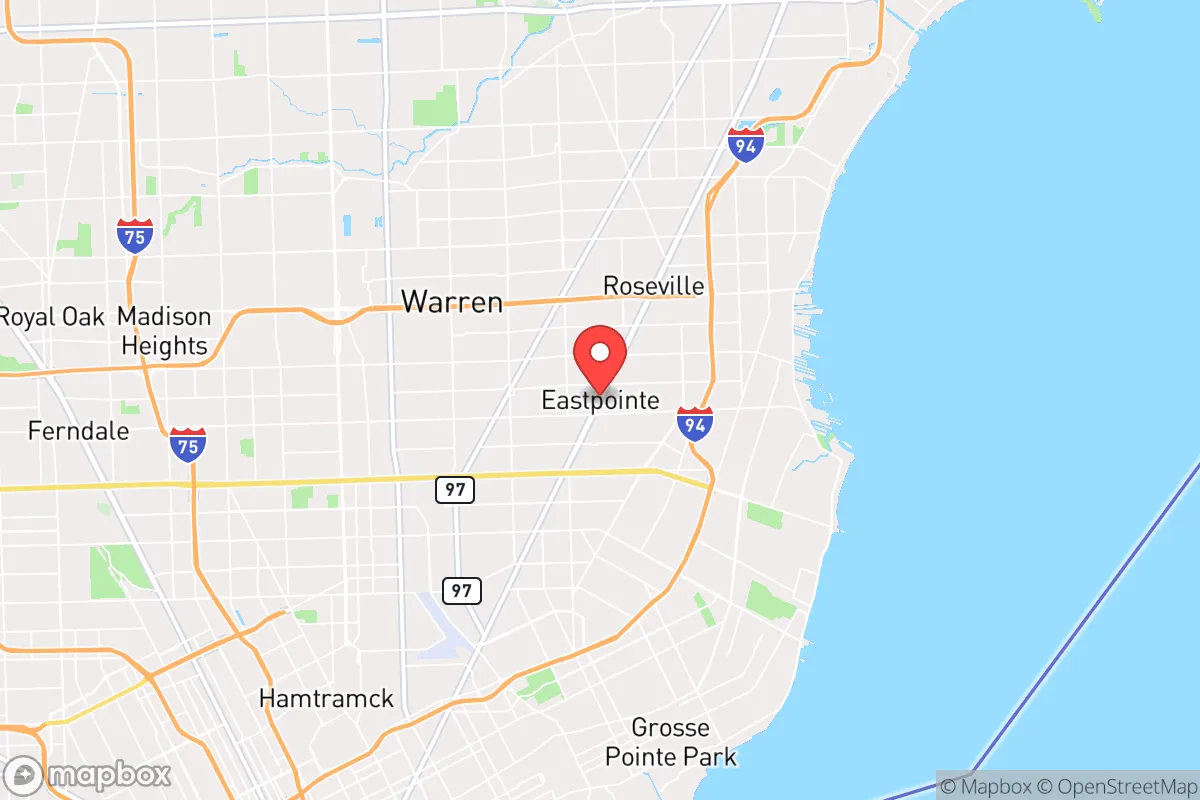
Photo: Wikipedia
Political ClimatePolitical Climate in Eastpointe, MI
District shown is the primary district for this city’s centroid. Cities may span multiple districts.
Local Political AnalysisPolitical Analysis of Eastpointe, MI
Eastpointe, Michigan, has a political climate that’s been shifting under our feet, and not necessarily for the better. For a long time, this was a reliably blue-collar, Democratic stronghold, but the Cook PVI of R+3 tells you the ground is moving—it’s now a lean-Republican district, which reflects a broader trend in Macomb County. But don’t let that number fool you into thinking things are settled; the real story is how the local government and school boards have been drifting toward progressive policies that feel out of step with the folks I’ve known here for decades.
How it compares
If you drive ten minutes north to St. Clair Shores or east to Roseville, you’ll find a similar working-class vibe with a healthy skepticism of big government. But Eastpointe stands out because it’s been quicker to embrace the kind of top-down social engineering that makes you wonder who’s really in charge. Compare that to places like Warren or Sterling Heights, where the politics are more straightforwardly conservative—you don’t see the same push for things like diversity, equity, and inclusion initiatives in the schools or zoning changes that prioritize density over single-family homes. In Eastpointe, the city council has flirted with policies that feel like they’re imported from Ann Arbor or Detroit, not from a community where people just want to be left alone to raise their families and keep their property values stable. The contrast is stark: while neighboring communities are holding the line on fiscal responsibility and personal liberty, Eastpointe’s leadership seems more interested in checking boxes for state grants than listening to residents who don’t want their kids taught about gender ideology in elementary school.
What this means for residents
For the average person living here, the political drift means you have to stay vigilant. Property taxes are already a burden, and when the city starts pushing for more “affordable housing” mandates or bike lanes that nobody asked for, you know that money’s coming out of your pocket. The real concern is government overreach into your personal life—whether it’s mask mandates that lasted longer than necessary or the school board’s quiet adoption of critical race theory-adjacent curriculum, there’s a pattern of decisions being made without much public input. I’ve seen neighbors get frustrated at city council meetings, only to be told their concerns are “misinformation.” That’s a red flag. If you value your Second Amendment rights or want to run a small business without a dozen new regulations, you’ll need to pay attention to local elections because the progressive wing is organized and they show up. The R+3 PVI gives us a fighting chance, but it’s not a guarantee that Eastpointe won’t slide further left if people get complacent.
Culturally, Eastpointe still has that old-school Michigan feel—backyard barbecues, high school football on Fridays, and a general distrust of politicians who promise too much. But the policy differences are starting to show. For instance, the city’s approach to policing has been cautious, but there’s pressure from activist groups to defund or redirect resources, which is a non-starter for most of the folks I know. The long-term trajectory depends on whether the silent majority wakes up and votes like their freedoms depend on it—because they do. If you’re thinking of moving here, just know it’s a battleground, not a safe haven. You’ll have to work to keep the government out of your business, but it’s still a place where a good job and a decent house are within reach, as long as you’re willing to fight for the kind of community you want.

State Political ClimatePolitical Climate in Michigan
State Political AnalysisPolitical Environment in the State
Michigan has shifted from a reliably purple battleground to a state where Democrats now hold unified control of the governorship, legislature, and Supreme Court, driven largely by the explosive growth of the Detroit metro area and a collapse of rural Republican turnout in key regions. Over the past 10-20 years, the state has moved from a toss-up that went for Trump in 2016 by 0.2 points to a state that voted for Biden by 2.8 points in 2020 and then solidified that shift in 2022 by handing Democrats a trifecta for the first time in four decades. For a conservative considering relocation, the warning signs are clear: the political center of gravity is pulling hard left, and the state’s policy environment is following suit.
Urban vs. rural divide
The political map of Michigan is a tale of two states. The urban core of Detroit, along with its inner-ring suburbs like Southfield and Dearborn, votes overwhelmingly Democratic, often delivering margins of 80% or more for the party. This is the engine that powers the state’s blue lean. The second major metro, Grand Rapids, was once a conservative stronghold but has been trending leftward for a decade, with Kent County flipping to Biden in 2020 and then electing a Democratic county executive in 2022. Meanwhile, the rural thumb and northern Lower Peninsula—places like Midland, Traverse City, and the Upper Peninsula—remain deeply red, but their populations are shrinking and aging, diluting their electoral weight. The most telling shift is in Macomb County, a classic Reagan Democrat stronghold north of Detroit that went for Trump twice but then voted for Democratic Governor Gretchen Whitmer in 2022, signaling that cultural conservatism there is being overridden by economic pragmatism and union loyalty. The divide isn’t just geographic; it’s generational, with younger voters in college towns like Ann Arbor and East Lansing driving the leftward trend.
Policy environment
The policy environment under the current Democratic trifecta has become a red flag for anyone valuing limited government. In 2023, the legislature repealed Michigan’s right-to-work law, which had been a cornerstone of the state’s economic competitiveness since 2012, and reinstated prevailing wage mandates on public construction projects. The state income tax was temporarily cut from 4.25% to 4.05% due to a 2015 automatic trigger law, but Democrats are actively working to repeal that trigger to prevent further cuts. Property taxes remain high, with the average effective rate around 1.5%, and the state’s Headlee Amendment caps on revenue growth are under constant assault from progressive groups. On education, Michigan has adopted a universal school choice program that includes charter schools and inter-district open enrollment, but the new administration has signaled hostility to charters and is pushing for more centralized control. Healthcare policy has expanded Medicaid under the Affordable Care Act, and the state now mandates coverage for abortion and gender transition procedures in all insurance plans. Election laws were dramatically overhauled in 2022 via Proposal 2, which enshrined nine days of early voting, automatic voter registration, and no-excuse absentee voting—changes that conservatives argue weaken ballot integrity.
Trajectory & freedom
Michigan is becoming less free by any standard measure, and the pace is accelerating. The most alarming recent legislation is the 2023 repeal of the state’s preemption law for firearm regulations, which had prevented local governments from passing their own gun control ordinances. Now, cities like Ann Arbor and Ferndale are rushing to enact red flag laws, magazine capacity bans, and safe storage requirements, creating a patchwork of restrictions that law-abiding gun owners must navigate. Parental rights took a hit with the passage of a comprehensive LGBTQ+ nondiscrimination law that critics say can be used to override parental consent for school-based health services and curriculum. Medical autonomy was curtailed when the state imposed strict COVID-19 vaccine mandates for healthcare workers and school employees, and while those mandates have been lifted, the precedent remains. Property rights are under pressure from a new state-level environmental justice law that gives local activists more power to block development. On the positive side, Michigan still has no state-level income tax on pensions or Social Security, which is a draw for retirees, and the state’s Right to Farm Act offers some protection for agricultural property owners against nuisance lawsuits from new suburban neighbors.
Civil unrest & political movements
Michigan has been a flashpoint for political unrest, most notably the 2020 lockdown protests at the state capitol in Lansing, where armed demonstrators opposed Governor Whitmer’s stay-at-home orders—an event that drew national attention and led to the foiled kidnapping plot against the governor. Since then, the state has seen a rise in organized activism on both sides. On the left, groups like Michigan United and Progress Michigan have been instrumental in pushing the repeal of right-to-work and the passage of the gun control package. On the right, the Michigan Freedom Fund and local county-level Republican parties have mobilized around election integrity, with some counties like Antrim County becoming a national symbol of voting machine concerns after a 2020 software error initially flipped results. Immigration politics are relatively quiet compared to border states, but the city of Detroit has declared itself a sanctuary city, and the state has a law prohibiting local law enforcement from inquiring about immigration status in most situations. The most visible flashpoint for a new resident would be the constant tension over school curriculum and library books, with conservative parents in places like Midland and Traverse City organizing against what they see as indoctrination in public schools.
Projection
Over the next 5-10 years, Michigan is likely to continue its leftward drift, driven by three factors: the continued urbanization of the Detroit metro, the in-migration of younger, more progressive professionals to cities like Grand Rapids and Ann Arbor, and the demographic decline of rural areas. The Democratic trifecta is unlikely to be broken soon, as the state’s new independent redistricting commission has drawn maps that favor Democrats in the legislature and congressional delegation. Expect further erosion of gun rights, including a likely statewide red flag law and possibly a ban on certain semi-automatic firearms. The tax burden will likely increase as the automatic income tax cut trigger is repealed and property taxes rise to fund new spending on education and infrastructure. The one wild card is the potential for a mass exodus of conservatives from the state, which would accelerate the political shift. For someone moving in now, the realistic expectation is that Michigan will look more like Illinois or New York within a decade—a high-tax, heavily regulated state where personal freedoms are increasingly subject to government approval.
For a conservative considering relocation, Michigan offers some genuine advantages—great natural beauty, affordable housing outside the major metros, and a strong manufacturing base—but the political trajectory is unmistakably hostile to the values of limited government, personal responsibility, and individual liberty. If you’re looking for a state where your vote will matter and your way of life will be respected, you’ll want to look at the rural counties in the thumb or the Upper Peninsula, but even those areas are losing political influence every year. The bottom line: Michigan is a state in transition, and the transition is not in your favor. Come for the lakes and the low cost of living, but be prepared to fight for your freedoms every election cycle.
* Values derived from national, state, county, city and local statistics and may differ in a specific area. Last updated: 2026-04-19T09:20:09.000Z
Narrative content on this page is AI-generated and may contain mistakes. Verify any details that matter before acting on them.
ReloMaps may earn a commission from affiliate links at no extra cost to you.

