Photo: Wikipedia
Demographics of Enterprise, NV
Affluence Level in Enterprise, NV
A middle-class area roughly in line with national averages across income, home values, education, and employment.
People of Enterprise, NV
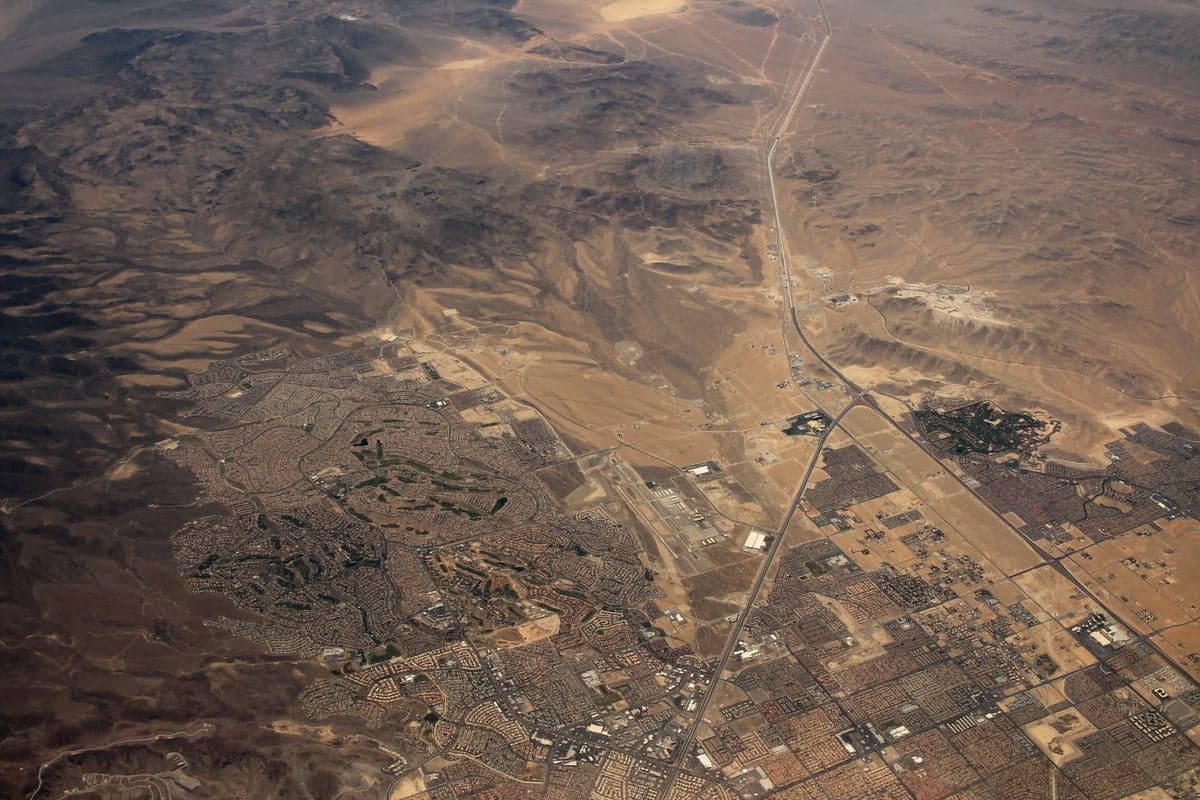
Enterprise, Nevada, is a sprawling, unincorporated suburb of Las Vegas with a population of 232,043 that is strikingly diverse and distinctly middle-class. Its residents are overwhelmingly families and working professionals drawn by affordable housing and proximity to the Strip, creating a community where no single ethnic group holds a majority. The city’s character is defined by its rapid, planned growth, a high rate of college-educated adults (35.2%), and a demographic profile that reflects both domestic migration and targeted international immigration, particularly from East and Southeast Asia.
How the city was settled and grew
Enterprise did not exist as a settlement until the late 20th century. The area was originally part of the vast, arid Las Vegas Valley ranchlands, with no significant population until the 1980s. The city was formally incorporated only in 1996, making it a pure product of the Sun Belt’s post-1990 suburban boom. The first major wave of residents were middle-class families moving from other parts of Clark County and California, drawn by new master-planned communities. The earliest neighborhoods, such as Spring Valley (which later became its own unincorporated town) and the southern sections of Paradise, were built on former desert scrubland. These areas initially attracted a predominantly white, domestic population working in the hospitality and construction industries that fueled Las Vegas’s expansion.
Modern era (post-1965)
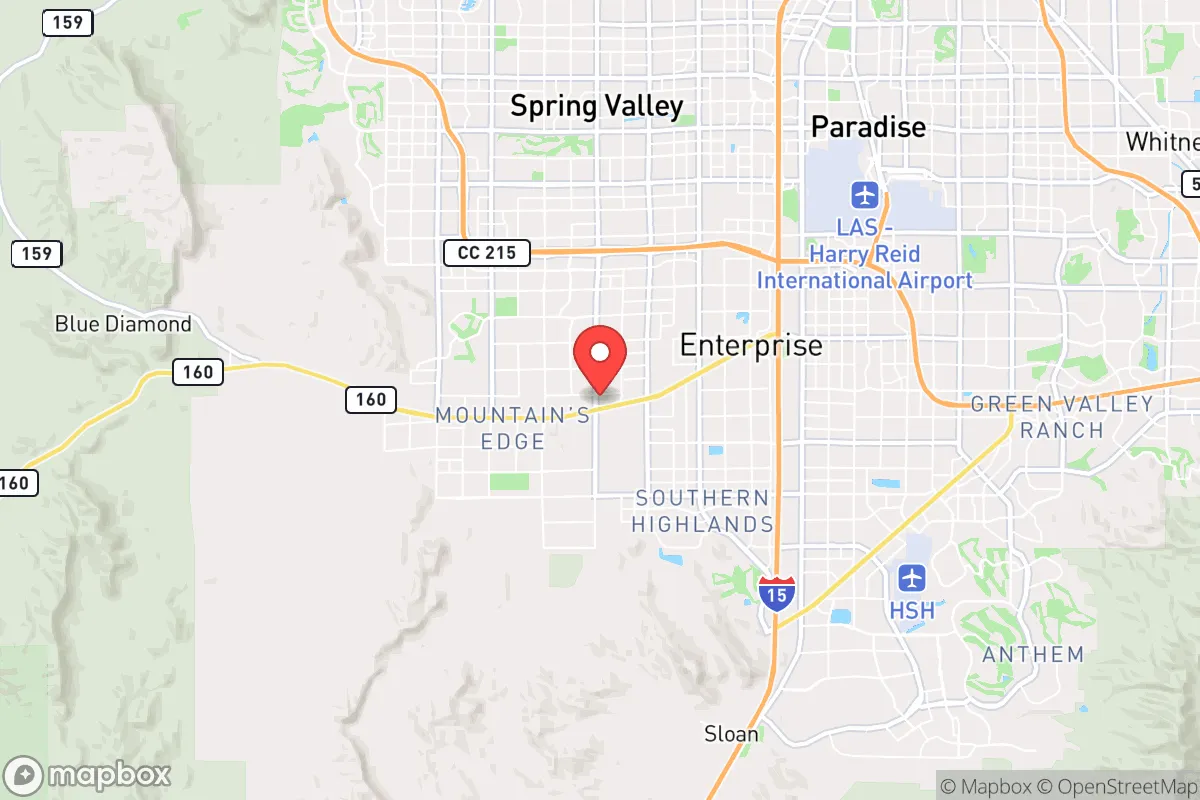
Enterprise’s modern demographic transformation began in earnest after 2000, driven by two forces: continued domestic in-migration from the West Coast and a surge in international immigration, particularly from East and Southeast Asia. The 1965 Hart-Cellar Act’s effects rippled outward, but it was the post-2008 economic recovery and the rise of Las Vegas as a logistics and tech-adjacent hub that reshaped Enterprise. The Southwest Las Vegas district, centered around the 215 Beltway, became a magnet for Filipino and Vietnamese families, who now anchor many of the area’s Catholic and Buddhist communities. The Silverado Ranch neighborhood, with its large, newer homes, attracted a significant Chinese and Korean population, reflected in the proliferation of Asian grocery stores and language schools. Today, East/Southeast Asian residents make up 21.7% of Enterprise’s population, a share far higher than the national average. The Hispanic population (18.4%) is concentrated in older, more affordable pockets near the Strip’s service corridors, while the Black population (11.4%) is more evenly distributed but has visible clusters in the Mountain’s Edge master-planned community. The Indian-subcontinent population (1.2%) is smaller but growing, with families often settling in the same newer subdivisions as East Asian residents. The white population (37.5%) remains the largest single group but is declining as a share, as domestic out-migration from California slows and international arrivals diversify the base.
The future
Enterprise is not homogenizing; it is tribalizing into distinct, amenity-rich enclaves. The foreign-born share (7.3%) is moderate but growing, driven by chain migration from the Philippines and China. The East/Southeast Asian communities are the most likely to continue expanding, as Las Vegas becomes a secondary hub for Asian-American professionals priced out of California. The Hispanic population is plateauing, with second-generation families assimilating into the broader suburban culture. The white population is aging in place, with younger white families increasingly choosing newer exurbs like Summerlin or Henderson. Over the next 10–20 years, Enterprise will likely become a majority-minority city where no single group exceeds 30% of the population. The Southern Highlands area, with its golf courses and gated communities, will remain a bastion of affluent, mostly white families, while Rhodes Ranch will continue to attract a mix of Asian and Hispanic professionals. The city’s growth is slowing as land runs out, but infill development and higher-density housing near the 215 will sustain a steady influx of new residents.
For a conservative-leaning individual or parent moving in now, Enterprise offers a stable, family-oriented environment with strong schools and low crime relative to the Las Vegas core. The demographic trajectory points toward a more diverse, but not fragmented, community—one where distinct ethnic neighborhoods coexist within a shared suburban identity. The key consideration is neighborhood choice: the character of daily life varies significantly between the older, more transient areas near the Strip and the newer, more established master-planned communities to the south and west.

* Values derived from national, state, county, city and local statistics and may differ in a specific area. Last updated: 2026-04-23T04:10:24.000Z
Narrative content on this page is AI-generated and may contain mistakes. Verify any details that matter before acting on them.
ReloMaps may earn a commission from affiliate links at no extra cost to you.

