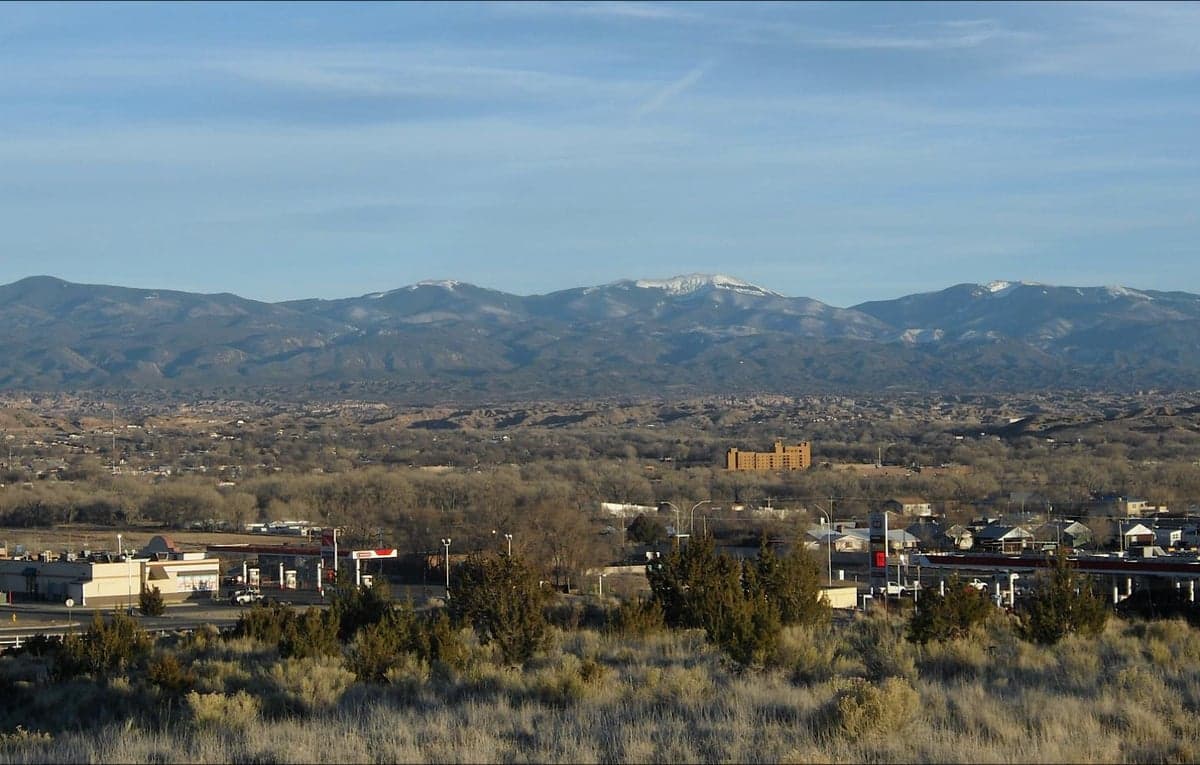
Photo: Wikipedia
Political ClimatePolitical Climate in Espanola, NM
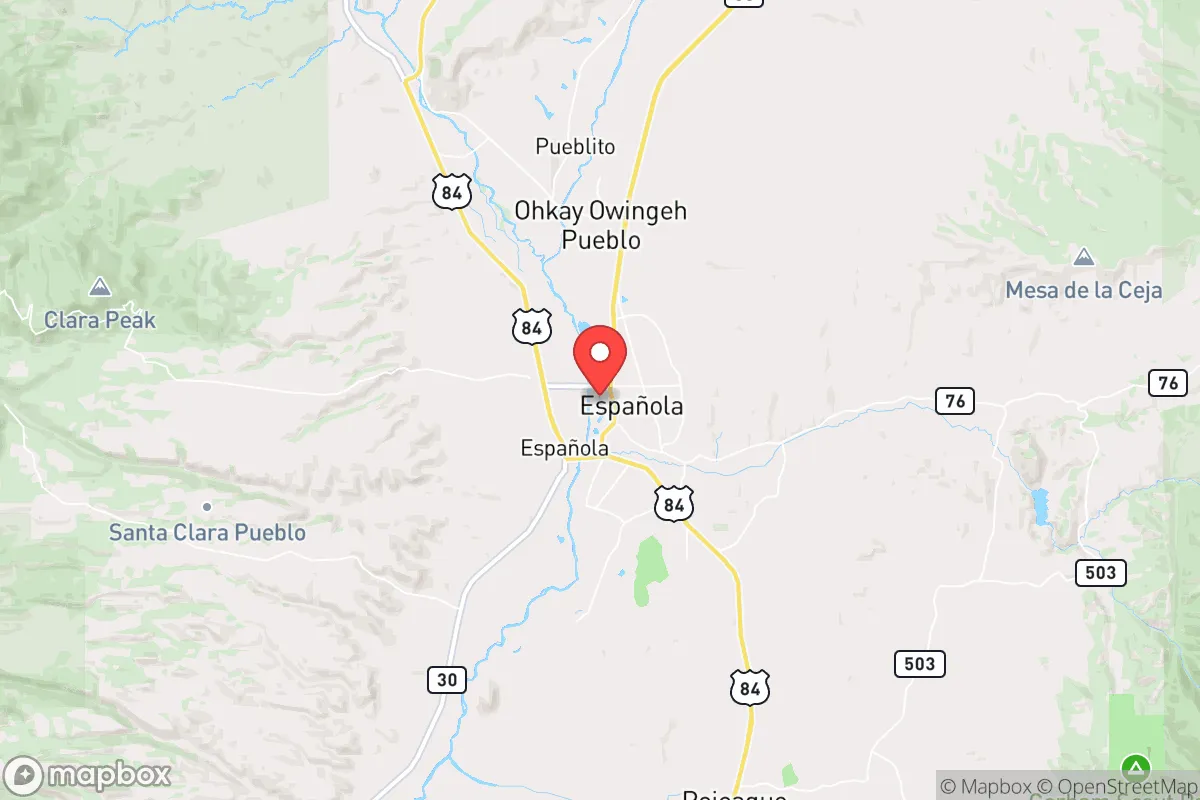
District shown is the primary district for this city’s centroid. Cities may span multiple districts.
Local Political AnalysisPolitical Analysis of Espanola, NM
Espanola leans reliably Democratic, with a Cook PVI of D+3, but that number doesn't tell the whole story of what it's like to live here. The area has been trending more progressive over the last decade, and while it's not as far-left as Santa Fe or Albuquerque, the shift is real and noticeable to those of us who've been around a while. If you're looking for a place where local government stays out of your business and respects traditional values, you'll want to pay close attention to how things are changing.
How it compares
Drive 30 minutes south to Santa Fe, and you're in a whole different world—think D+20 or worse, with city councils pushing green energy mandates and rent control experiments that sound good on paper but end up squeezing small landlords. Head north to Taos, and it's even more artsy and activist-heavy. The contrast is stark: in Espanola, you still see folks flying American flags and hunting on public land without someone telling them it's bad for the planet. But the surrounding Rio Arriba County has been voting more blue each cycle, and the local school board and county commission have picked up a few loud voices pushing diversity initiatives and climate resolutions that feel like they came from a Boulder playbook. The nearby towns of Los Alamos and White Rock lean conservative by comparison, mostly because of the lab workers and retired military folks, but they're small and don't offset the broader trend.
What this means for residents
For those of us who value personal freedom and don't want the government breathing down our necks, the creeping progressive influence is a real concern. Property taxes have inched up as the county adds new fees for "sustainability" programs, and there's talk of stricter building codes that would make it harder to put up a shed or add a room without a dozen permits. The local police department has been pressured to adopt "de-escalation" training that sounds reasonable but often ties officers' hands when dealing with real troublemakers. On the plus side, the Second Amendment is still respected here—you can carry openly without sideways looks, and there's no assault weapons ban like you'd see in Santa Fe. But if the current trajectory holds, expect more regulations on everything from short-term rentals to water usage, all sold as "community well-being" but feeling like government overreach.
Culturally, Espanola still holds onto its rural, working-class roots—people know their neighbors, and the annual fiestas and rodeos draw big crowds. But the policy distinctions are growing: the county has adopted a "sanctuary" stance that limits cooperation with federal immigration enforcement, which rubs many locals the wrong way. The long-term outlook depends on who shows up to vote in the next few cycles. If you're thinking of moving here, keep an eye on the school board elections and county commission races—those are where the real battles over your rights and wallet will play out.

State Political ClimatePolitical Climate in New Mexico
State Political AnalysisPolitical Environment in the State
New Mexico has long been a reliably blue state in presidential elections, voting Democratic in every contest since 2004, but its internal politics are far more nuanced than the statewide label suggests. The dominant coalition is a mix of urban progressives in Albuquerque and Santa Fe, organized labor, and a significant Hispanic electorate that historically leaned conservative on social issues but has shifted left in recent cycles. Over the past 10-20 years, the state has moved from a purple swing state—where Republicans held the governor’s office as recently as 2018—to a solidly Democratic stronghold, driven by rapid growth in the Albuquerque metro and a steady exodus of rural conservatives to Texas and Arizona.
Urban vs. rural divide
The political map of New Mexico is a textbook case of urban-rural polarization. The Albuquerque metro area, home to roughly half the state’s population, is the engine of Democratic dominance—Bernalillo County alone delivered 57% of its votes to Joe Biden in 2020. Santa Fe County is even more progressive, routinely giving Democrats 70-80% of the vote, while Las Cruces in Doña Ana County adds another reliable blue bloc. In contrast, the eastern plains and southeastern oil patch—places like Hobbs, Carlsbad, and Roswell—vote overwhelmingly Republican, often by margins of 70% or more. The rural northwest, including Farmington and the Four Corners area, also leans red, though less intensely. The divide is stark: you can drive 30 minutes east of Albuquerque into Torrance County and watch the political landscape flip from deep blue to deep red. This geographic split means that while Democrats control statewide offices, Republicans hold most county commissions outside the urban cores, and the state legislature has only a narrow Democratic majority in the House.
Policy environment
New Mexico’s policy environment has shifted sharply leftward since 2019, when Democrats gained full control of the governorship and both legislative chambers. The state’s tax structure is moderately progressive: a graduated income tax tops out at 5.9% for high earners, while the gross receipts tax—essentially a sales tax on nearly all services—can push 9% in some cities. Property taxes are among the lowest in the nation, a rare bright spot for conservatives. On education, the state has embraced expansive early childhood programs and universal pre-K, funded by a new annual withdrawal from the Land Grant Permanent Fund, but K-12 outcomes remain near the bottom nationally. Healthcare policy is dominated by Medicaid expansion and a push toward a state-run public option, which has raised concerns about provider shortages and wait times. Election laws are among the most permissive in the country: same-day voter registration, no-excuse absentee voting, and automatic voter registration are all in place, with no voter ID requirement beyond a signature match. This has fueled ongoing debates about election integrity, particularly in rural counties where officials have flagged inconsistencies in voter rolls.
Trajectory & freedom
Over the past five years, New Mexico has become less free by most conservative metrics. The 2021 repeal of the state’s preemption law on firearms—which had previously prevented local governments from enacting their own gun restrictions—was a major blow to Second Amendment rights. Albuquerque and Santa Fe immediately passed ordinances banning firearms in public buildings and parks, and a 2023 law requiring background checks on private sales further tightened restrictions. On parental rights, the 2023 passage of the Reproductive and Gender-Autonomy Act codified abortion access and removed parental notification requirements for minors seeking reproductive care, a move that alarmed many conservative families. Property rights have been eroded by a 2022 law allowing local governments to impose rent control, and the state’s energy transition office has aggressively pushed renewable mandates that threaten the oil and gas industry, which provides a third of the state’s revenue. The only area where freedom has expanded is cannabis: recreational use was legalized in 2021, and the market is now fully operational, though with heavy regulation and high taxes.
Civil unrest & political movements
Political activism in New Mexico is intense but localized. Santa Fe and Albuquerque have seen frequent protests around immigration policy, with the state’s sanctuary law—which limits cooperation between local law enforcement and federal immigration authorities—a constant flashpoint. In 2023, a caravan of rural sheriffs from counties like Otero and Lea drove to the state capitol to protest the law, arguing it hindered their ability to detain criminal illegal aliens. The 2020 election integrity controversy was particularly heated in rural areas: the Otero County Commission initially refused to certify primary results in 2022 over concerns about Dominion voting machines, leading to a standoff with the secretary of state. On the left, the “Abolish ICE” movement has a vocal presence in Albuquerque, and the 2020 protests over the killing of George Floyd saw significant property damage downtown. More recently, the push for a state-level “Green New Deal” has mobilized both environmental activists and oil industry workers, with clashes at public hearings in Carlsbad and Farmington. A new resident would notice the stark contrast between the progressive activism in the urban centers and the quiet, church-based conservatism of the rural towns.
Projection
Looking ahead 5-10 years, New Mexico’s political trajectory is likely to continue leftward, driven by demographic trends. The state’s Hispanic population, which makes up nearly 50% of residents, is younger and more progressive than older generations, and in-migration from California and Colorado is accelerating—especially to Santa Fe and Las Cruces. The oil and gas industry, which has historically anchored rural conservatism, faces an uncertain future as federal policies shift toward electrification and as the state’s own renewable mandates take effect. This could hollow out the economic base of red counties like Eddy and Lea, accelerating the rural exodus. However, there are countervailing forces: the state’s high crime rates and poor educational outcomes are driving some families to leave, and if the Democratic majority overreaches on issues like gun control or energy regulation, a backlash could flip a few legislative seats. For a conservative moving in now, the realistic expectation is that the state will become more progressive over the next decade, with tighter gun laws, higher taxes on the wealthy, and continued expansion of government healthcare. The rural areas will remain red, but their political influence will shrink as the urban centers grow.
For a conservative considering relocation, New Mexico offers low property taxes and wide-open spaces, but the political climate is increasingly hostile to traditional values. If you value Second Amendment rights, parental control over education, and limited government, you’ll find yourself swimming against the current in Santa Fe or Albuquerque. The eastern plains around Clovis and Portales offer a more conservative enclave, but you’ll still be subject to state-level policies that feel like they’re written in Santa Fe. Bottom line: New Mexico is a beautiful state with a rich culture, but it’s trending in a direction that will likely frustrate conservatives who want to see their values reflected in law. If you’re willing to fight for your rights at the local level, you can find a home here—but don’t expect the state government to have your back.
* Values derived from national, state, county, city and local statistics and may differ in a specific area. Last updated: 2026-05-01T07:07:48.000Z
Narrative content on this page is AI-generated and may contain mistakes. Verify any details that matter before acting on them.
ReloMaps may earn a commission from affiliate links at no extra cost to you.

