Photo: Wikipedia
Strategic Assessment of Espanola, NM
Workable tactical position. Some exposure to population density or targets, but generally defensible in a crisis.
What does the Strategic Assessment tell us?
Our Strategic Assessment grades tactical survivability of an area. Major population centers, military targets, fallout zones, natural disasters, and border exposure all drive risk — lower exposure means a more defensible position in a crisis.
This is heavily inspired by Joel Skousen's Strategic Relocation book. Highly recommended you checkout the book ($)What does this tell us?
Our Strategic Assessment grades tactical survivability of an area. Major population centers, military targets, fallout zones, natural disasters, and border exposure all drive risk — lower exposure means a more defensible position in a crisis.
This is heavily inspired by Joel Skousen's Strategic Relocation book. Highly recommended you checkout the book ($)Strategic Pillars

Key Distances
Regional Safe Places
Below is our recommended "safe zones" in New Mexico and the surrounding area based on our strategic heuristics. For most people, it's unrealistic to live in a “safe zone” full-time due to work, family or other personal reasons. They tend to be more rural. However, many of these areas are perfect for second homes and retreat properties that double as a vacation home or even a short-term rental.

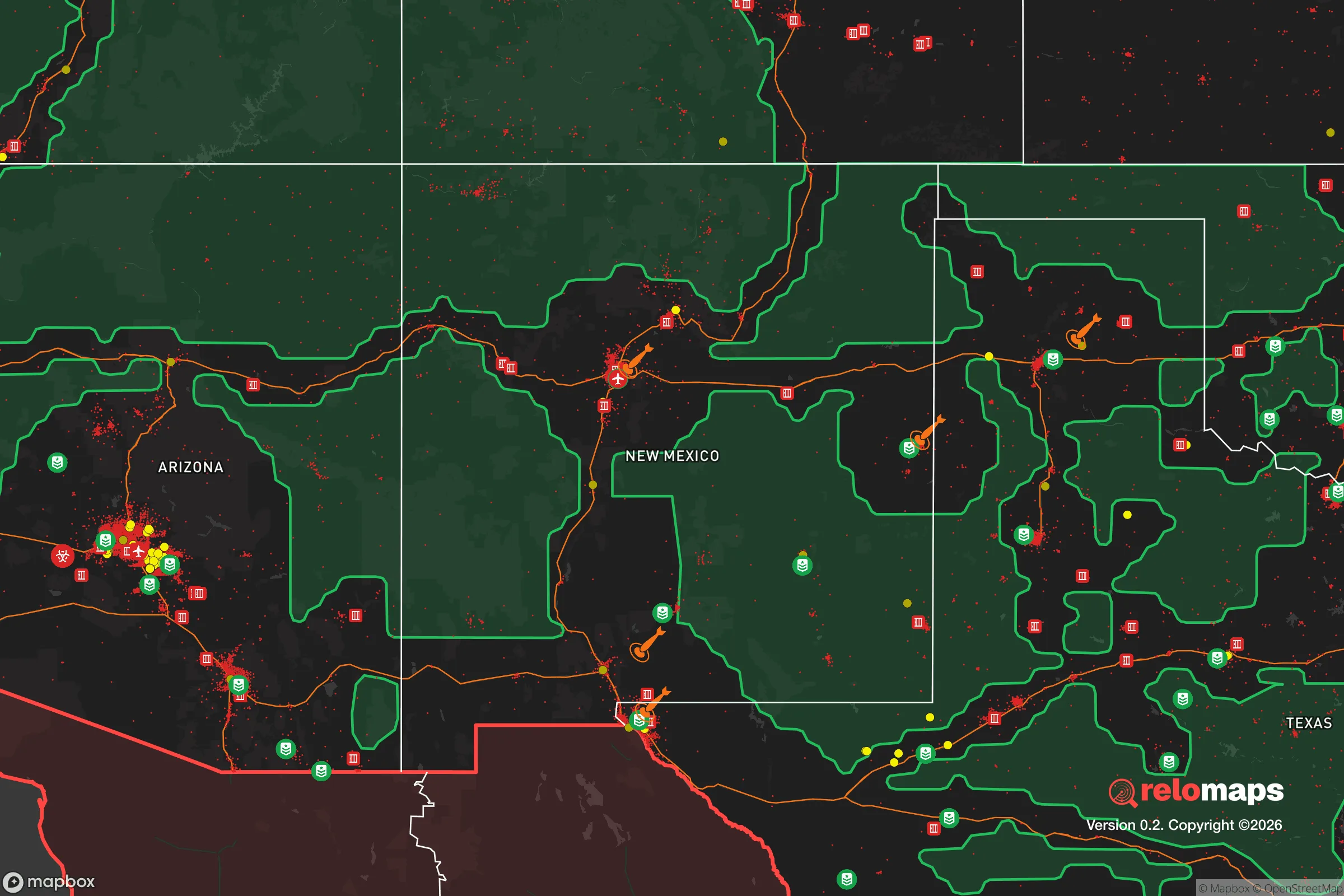


Important Note: For informational purposes only. This does not mean nothing bad ever happens in the green zones. Please use common sense. This is based on public data and modeled with AI. We tried to take a conservative approach but mistakes happen. We update this regularly as new information becomes available.
Solar Generator Recommendations
Backup power matters more here than in safer locations. We've picked three solar generators across budgets and capacity tiers — start with the budget unit if you only need a few essentials, or step up if you want to run a fridge and HVAC for days at a time.

Jackery Portable Power Station Explorer 300
Budget OptionPower on the Go: Weighing only 11 lbs, it's convenient to set up and store with book-sized foldable solar panels

BLUETTI Portable Power Station AC180
Designed for both indoor and outdoor scenarios, AC180 is highly capable as it has a robost capacity and continuous output power.

EF ECOFLOW DELTA Pro Ultra Power Station
Upgraded PickEcoFlow DELTA Pro Ultra is a whole-home energy system designed to grow with your family. Integrated with the Smart Home Panel 2, it scales to meet your evolving energy needs — keeping your home powered, intelligent, and secure through every stage of life.
We earn a commission, at no additional cost to you.
Strategic Assessment Analysis
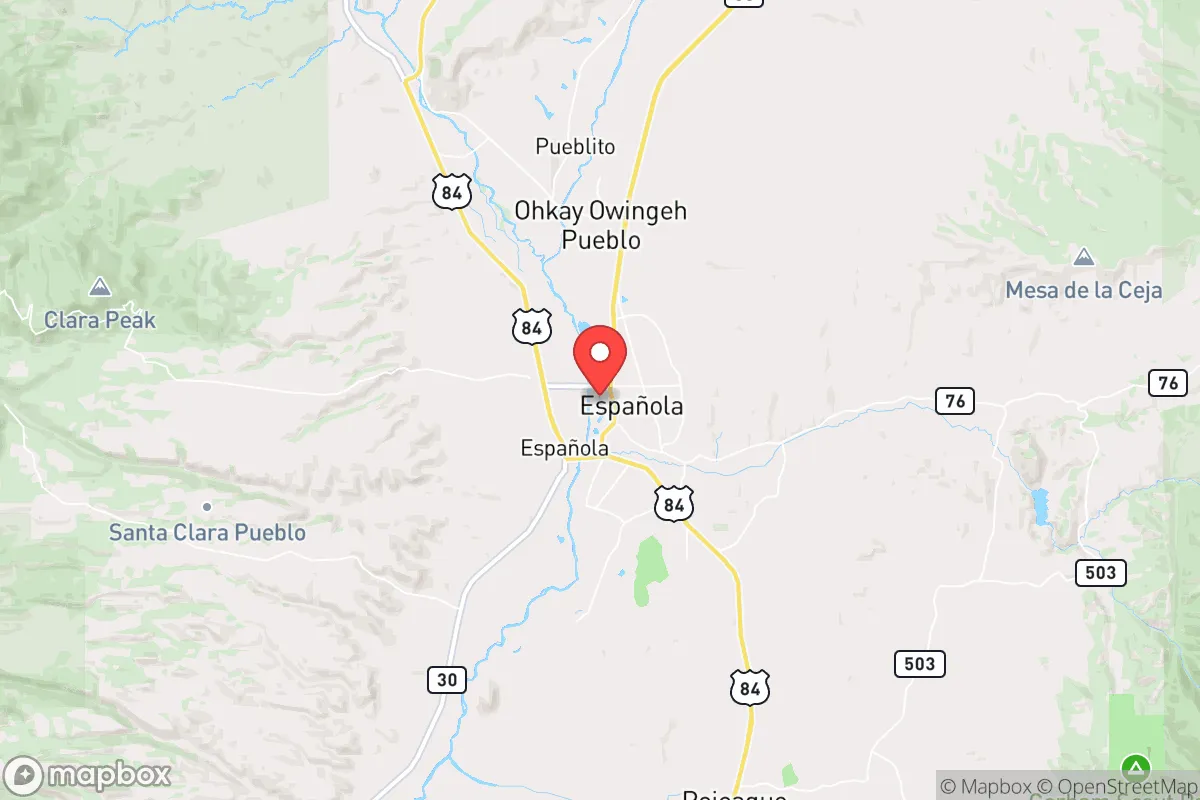
Espanola, New Mexico, sits at a strategic crossroads that offers a unique blend of isolation and access, making it a compelling but nuanced option for those prioritizing long-term resilience. Its position in the Rio Grande Valley, roughly 25 miles north of Santa Fe and 90 miles from Albuquerque, places it far enough from major population centers to avoid the immediate fallout of urban unrest, yet close enough to supply routes and regional resources. For a relocator with a prepper mindset, the area’s primary advantage is its relative obscurity—it’s not a target-rich environment like Denver or Phoenix, and its high desert terrain provides natural buffers against both human and environmental threats.
Geographic position and natural advantages for long-term security
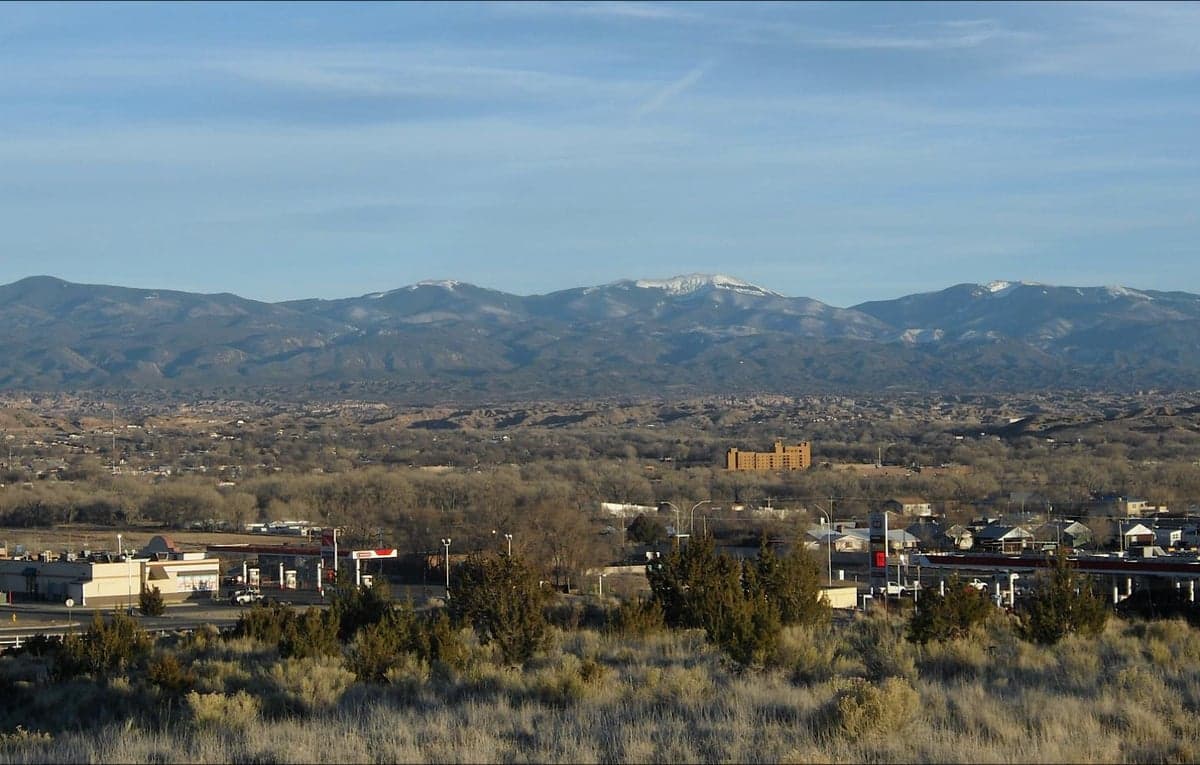
Espanola’s geography is defined by the Rio Grande and the surrounding mesas and mountains, which create a natural defensive perimeter. The area sits at an elevation of roughly 5,600 feet, offering cooler temperatures than lower desert regions and reducing the risk of extreme heat events that can strain infrastructure. The Sangre de Cristo Mountains to the east and the Jemez Mountains to the west provide rugged terrain that limits easy access from major highways, particularly if those routes become compromised during a crisis. The Rio Grande itself is a perennial water source, a critical asset in a region where drought is a recurring concern. For a relocator, this means a reliable water supply for irrigation and basic needs, though it requires treatment and management. The valley’s agricultural history—Espanola was a Spanish colonial farming hub—means the soil is capable of supporting small-scale food production, especially with careful water management. The area’s low population density (roughly 10,000 in the city proper, with about 40,000 in Rio Arriba County) reduces competition for resources during a breakdown, but it also means fewer immediate support networks, so self-reliance is non-negotiable.
Risks, exposures, and proximity to fallout-relevant landmarks
The most significant risk for Espanola is its proximity to Los Alamos National Laboratory, roughly 30 miles to the southwest. Los Alamos is a high-value target for any adversary—state or non-state—and a direct strike or major accident there could produce catastrophic fallout. The prevailing winds in the region generally blow from the southwest, meaning a plume from Los Alamos would likely move northeast, away from Espanola in many scenarios, but this is not guaranteed. A secondary concern is the San Juan Generating Station, a coal-fired plant near Farmington about 120 miles west, which, while not a nuclear site, represents a potential industrial hazard. The area also sits near the Rio Grande Rift, a seismic zone that, while not highly active, could produce moderate earthquakes that disrupt infrastructure like bridges and water lines. For the prepper, these risks mean that a relocation to Espanola must include a robust fallout shelter plan—preferably with a basement or shielded structure—and a stockpile of potassium iodide and air filtration systems. The proximity to Los Alamos is a double-edged sword: it brings high-tech jobs and federal investment, but it also makes the area a potential secondary target in a wider conflict.
Practical resilience for a relocator: food, water, energy, and defensibility
Water is the linchpin of any resilience strategy in Espanola. The Rio Grande provides a surface water source, but it’s heavily managed by federal and state compacts, and during a crisis, access could be contested. A well is the gold standard here—depths vary from 100 to 300 feet in the valley, and drilling costs are moderate compared to the Southwest. Rainwater catchment is viable, with annual precipitation averaging 10-12 inches, but it’s not enough for full self-sufficiency without storage. Food production is feasible but labor-intensive: the growing season runs from May to October, and crops like beans, squash, corn, and chiles thrive with irrigation. Local farmers’ markets and co-ops exist, but they’re small-scale, so a relocator should plan to establish a garden and possibly raise small livestock like chickens or goats. Energy is a bright spot: New Mexico averages over 300 sunny days per year, making solar power highly effective. Off-grid solar setups are common in the area, and net metering is available through the local utility, Jemez Mountains Electric Cooperative. For defensibility, the terrain offers natural chokepoints—the narrow valley and limited road access (primarily US 84/285 and NM 68) mean that a small group could monitor and control approach routes. However, the area’s history of drug trafficking and property crime means that a visible security posture—fencing, cameras, and a well-maintained firearm—is prudent. The local culture is independent and somewhat distrustful of outside authority, which aligns with a prepper mindset but also means that building trust with neighbors takes time.
The overall strategic picture for Espanola is one of high potential tempered by real vulnerabilities. It’s not a bug-out location for the unprepared—the climate is harsh, the economy is weak (median household income around $40,000, with high poverty rates), and the social fabric is strained by substance abuse and crime. But for a disciplined relocator who can invest in water infrastructure, solar power, and a fallout shelter, it offers a defensible position with access to a major river and distance from the worst urban chaos. The key is to treat it as a long-term homestead, not a quick escape. The proximity to Los Alamos is the deal-breaker for some, but for others, it’s a calculated risk—one that can be mitigated with proper preparation. If you’re looking for a place where you can hunker down, grow your own food, and avoid the worst of what’s coming, Espanola deserves a serious look, but only if you’re ready to work for it.

* Values derived from national, state, county, city and local statistics and may differ in a specific area. Last updated: 2026-05-01T07:07:48.000Z
Narrative content on this page is AI-generated and may contain mistakes. Verify any details that matter before acting on them.
ReloMaps may earn a commission from affiliate links at no extra cost to you.

