Photo: Wikipedia
Demographics of Flowood, MS
Affluence Level in Flowood, MS
A middle-class area roughly in line with national averages across income, home values, education, and employment.
People of Flowood, MS
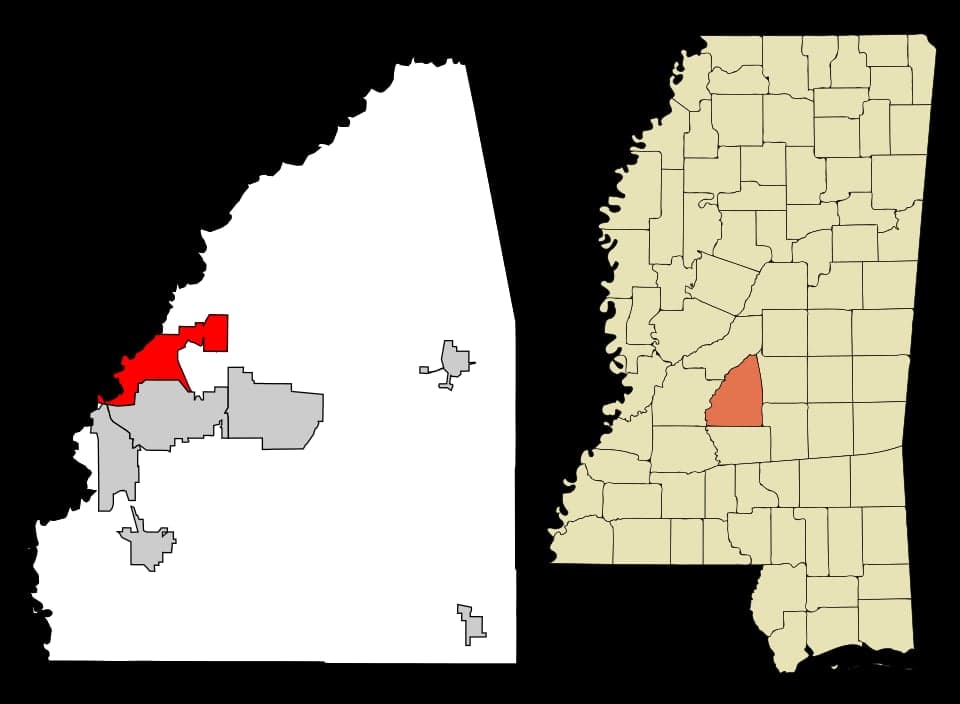
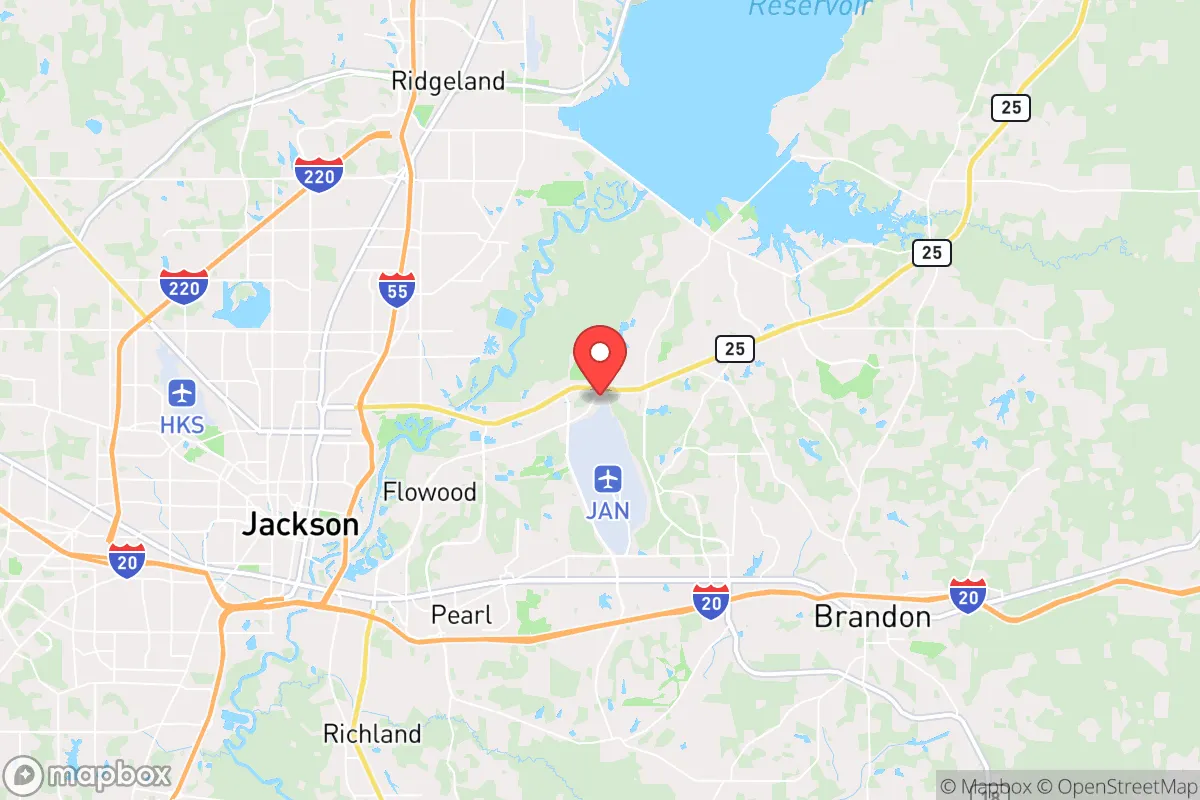
Flowood, Mississippi, is a fast-growing, predominantly white suburban city of 10,384 residents that has transformed from a rural crossroads into a commercial and residential hub for the Jackson metro area. The city is characterized by a high proportion of college-educated professionals (50.6%), a significant Black minority (25.7%), and small but distinct Indian (2.5%) and East/Southeast Asian (1.8%) communities. Its identity is shaped by a blend of established families in older neighborhoods and newcomers drawn to new subdivisions and the city's pro-business, low-tax environment.
How the city was settled and grew
Flowood's human history begins not with colonial settlement but with post-Civil War agricultural development. The area was originally part of Rankin County's rural farmland, with the first permanent residents being white farming families who worked cotton and timber land. The community's name derives from the "Flowood" plantation, established in the 1850s, and the population remained sparse and almost entirely white through the early 1900s. The first significant growth wave came after World War II, when returning veterans and their families sought affordable land near Jackson. The Old Flowood neighborhood, centered along Old Fannin Road, became the original residential core, settled by white working-class families who built modest homes on former farmland. The 1950s and 1960s saw the construction of Lake Harbour and Northshore, two of the city's earliest planned subdivisions, which attracted middle-class white families from Jackson seeking larger lots and lower taxes. These neighborhoods remain predominantly white today, with many original families still in residence.
Modern era (post-1965)
The post-1965 era brought two major demographic shifts. First, the completion of the U.S. 49 and I-55 interchange in the 1970s made Flowood a prime location for commercial development, drawing white professionals from across the metro area. The Reunion subdivision, developed in the 1990s, became a magnet for upper-middle-class white families, with its golf course and large homes. Second, the 2000s saw the beginning of Black suburbanization from Jackson, as middle-class Black families moved into neighborhoods like Spillway Landing and River Oaks. These areas are now racially mixed, with Black residents making up roughly a quarter of the city's population. The Indian and East/Southeast Asian communities are newer arrivals, primarily professionals employed at the University of Mississippi Medical Center and local hospitals. They tend to concentrate in newer subdivisions like The Township at Flowood, a mixed-use development that has attracted a diverse, college-educated population. The foreign-born share (4.4%) is modest but growing, with Indian families representing the largest immigrant group.
The future
Flowood's population is trending toward continued growth and modest diversification. The city's annexation of commercial corridors along Airport Road and Lakeland Drive is expected to bring more residents, particularly white and Asian professionals employed in the expanding medical and logistics sectors. The Black population share appears stable, with most growth occurring through natural increase rather than new in-migration. The Indian community, while small, is likely to grow as medical and tech jobs expand, but it is not large enough to create a distinct ethnic enclave. The East/Southeast Asian population is plateauing, with most families assimilating into predominantly white neighborhoods. The city is not tribalizing into separate ethnic enclaves; rather, it is homogenizing around a professional-class identity, with income and education level becoming stronger predictors of neighborhood than race. The next decade will likely see Flowood become slightly more diverse but remain overwhelmingly white and politically conservative, with a growing emphasis on high-end housing and commercial development.
For a conservative-leaning mover, Flowood offers a stable, low-crime environment with excellent schools and a strong tax base. The city is becoming more professional and less rural, but it retains a family-oriented, community-focused character. New arrivals will find a place where demographic change is gradual and largely driven by economic opportunity rather than cultural conflict, making it a safe bet for those seeking a predictable, growing suburb.

* Values derived from national, state, county, city and local statistics and may differ in a specific area. Last updated: 2026-04-21T11:02:00.000Z
Narrative content on this page is AI-generated and may contain mistakes. Verify any details that matter before acting on them.
ReloMaps may earn a commission from affiliate links at no extra cost to you.

