Photo: Wikipedia
Political ClimatePolitical Climate in Flowood, MS
District shown is the primary district for this city’s centroid. Cities may span multiple districts.
Local Political AnalysisPolitical Analysis of Flowood, MS
Flowood, Mississippi, is about as solidly conservative as it gets, with a Cook PVI of R+14 that tells you everything you need to know about the local political DNA. This isn't a place that's flipped or flirted with progressive ideas—it's been a Republican stronghold for decades, and the trajectory is holding steady, maybe even hardening. You don't see the kind of suburban drift toward the left that's hit places like Atlanta or Charlotte; instead, Flowood feels like a quiet bulwark where traditional values and limited-government thinking still carry the day. The local elections and county-level votes consistently reflect that, with candidates who talk about cutting taxes, protecting Second Amendment rights, and pushing back against federal overreach winning easily.
How it compares
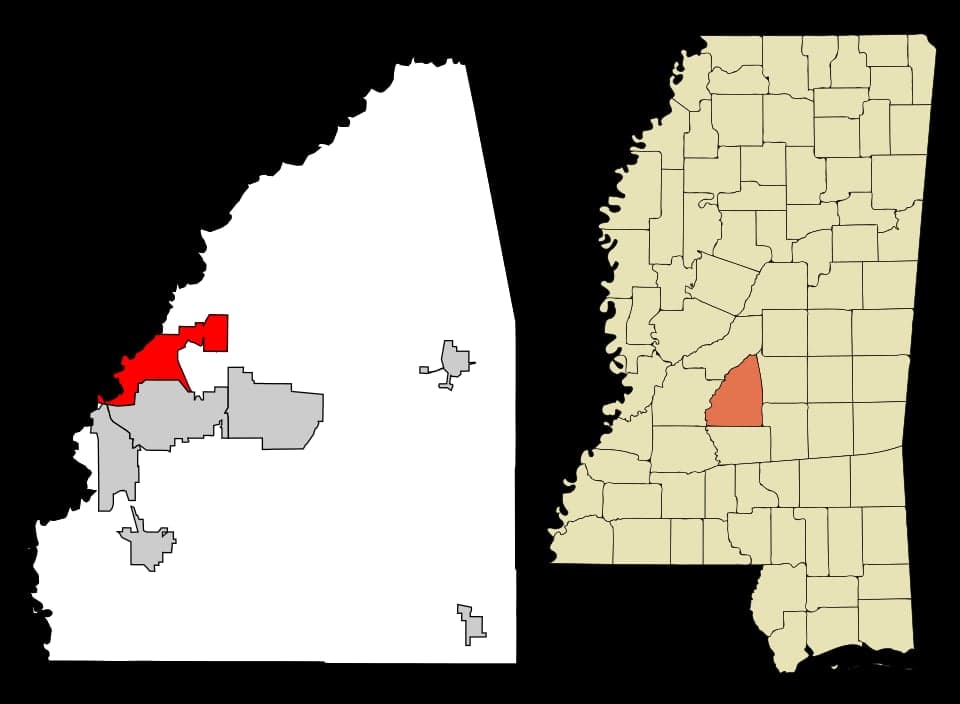
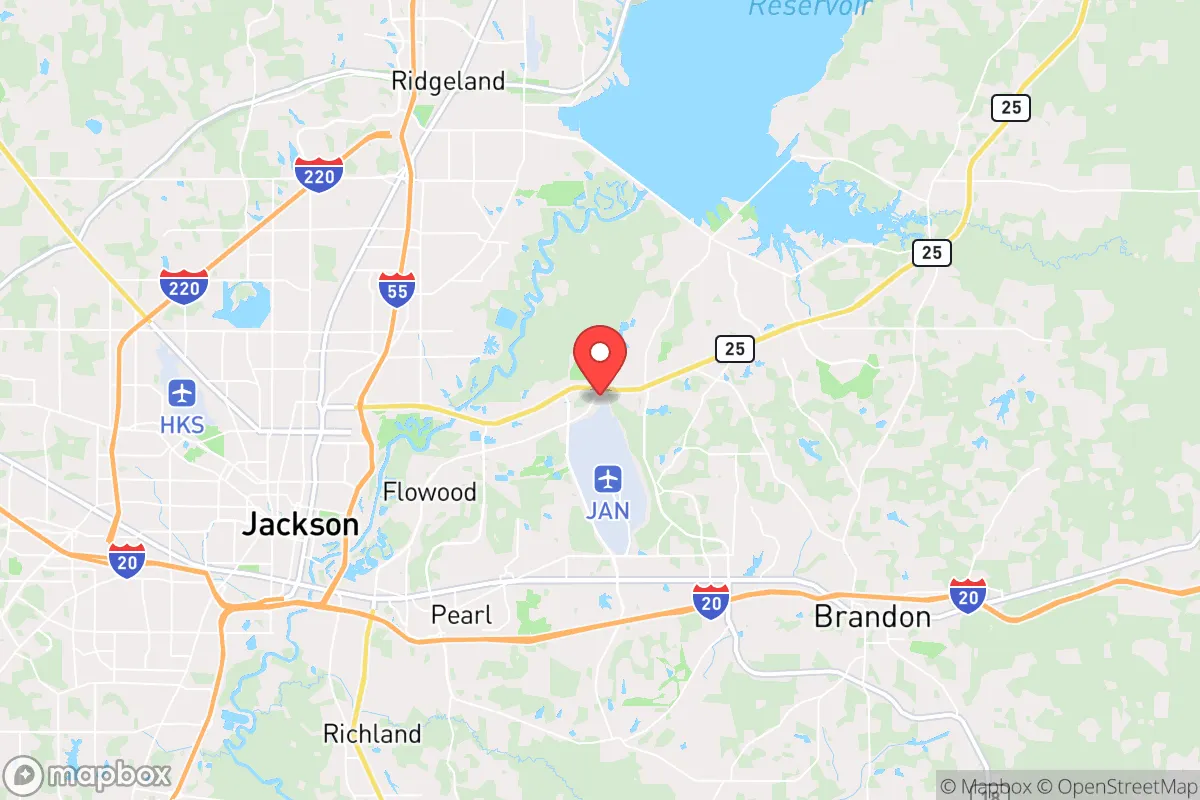
If you drive ten miles west into Jackson, you're in a completely different world—politically and culturally. Jackson leans heavily Democratic, with a very different set of priorities around spending, policing, and regulation. Flowood, by contrast, is part of Rankin County, which is one of the most reliably red counties in the state. The contrast is stark: Jackson has seen crime spikes and a shrinking tax base, while Flowood has grown steadily, with new retail and residential development that reflects confidence in local governance. Other nearby towns like Brandon and Pearl share Flowood's conservative bent, but Flowood stands out for its business-friendly zoning and a local government that generally stays out of people's lives. You won't find the kind of progressive policy experiments here that you see in some Mississippi college towns like Oxford or Hattiesburg—Flowood is more about common-sense, hands-off governance.
What this means for residents
For someone living here, the political climate translates into a few concrete realities. First, property taxes are relatively low compared to what you'd pay in Jackson or even some parts of Madison County, because the local leadership prioritizes keeping the tax burden light. Second, there's a strong sense that your personal freedoms—whether it's how you run your business, what you teach your kids, or how you handle your firearms—aren't under constant threat from local ordinances. You don't see the kind of overreach like mask mandates or business shutdowns that plagued other areas during the pandemic; Flowood's leaders generally trusted residents to make their own choices. The downside is that if you're hoping for big government programs or rapid social change, you'll be disappointed. But for most folks here, that's a feature, not a bug.
One cultural distinction worth noting: Flowood has a noticeable libertarian streak beneath its mainstream conservatism. People here don't just vote Republican—they actively resent government intrusion into daily life. You see it in the way the city handles zoning (minimal red tape for small businesses) and in the local chatter about state-level issues like Medicaid expansion or education mandates. There's a wariness of any policy that looks like it's coming from D.C. or even the state capitol in Jackson. Looking ahead, the biggest concern among longtime residents is that as the area grows—and it is growing, with new subdivisions and retail popping up—there's a risk of importing the kind of progressive activism that's diluted conservative values elsewhere. So far, though, Flowood has held the line, and the political climate remains one where personal responsibility and local control are the guiding principles.

State Political ClimatePolitical Climate in Mississippi
State Political AnalysisPolitical Environment in the State
Mississippi is one of the most reliably conservative states in the country, with a Republican lean that has only deepened over the past two decades. The state has not voted for a Democratic presidential candidate since 1976, and in 2024, Donald Trump carried it by roughly 17 points. The dominant coalition is a mix of rural white evangelicals, suburban families in the Jackson and Gulf Coast exurbs, and a growing number of conservative-leaning transplants from other Southern states. Over the last 10-20 years, the shift has been steady: Democrats once held a majority of state legislative seats as late as 2010, but today Republicans hold supermajorities in both chambers, and every statewide elected office is held by the GOP.
Urban vs. rural divide
The political map of Mississippi is starkly divided between a handful of urban centers and the vast rural countryside. The Jackson metro area, including Hinds, Madison, and Rankin counties, is the state's only reliably blue stronghold, driven by a large African American population and the presence of state government and Jackson State University. Hinds County voted for Joe Biden by 55 points in 2020. But just a few miles north, Madison County — home to the affluent suburbs of Ridgeland and Madison — is solidly red, voting for Trump by 18 points. The Gulf Coast cities of Biloxi and Gulfport lean Republican but are more competitive, often swinging based on local economic concerns like tourism and fishing. The Delta region, including Greenville and Clarksdale, is heavily Democratic due to its majority-Black population, but turnout there is low. Meanwhile, the northeastern corner around Tupelo and the Pine Belt around Hattiesburg are deeply conservative, with Hattiesburg's university population providing a slight moderating influence. The rural counties in the central and southern parts of the state — places like Jones, Lamar, and Pearl River counties — routinely vote 70-80% Republican.
Policy environment
Mississippi's policy environment is among the most conservative in the nation, with a strong emphasis on limited government and traditional values. The state has no state income tax on Social Security benefits and a flat personal income tax rate of 4.7% that is scheduled to phase down to 4.0% by 2026. There is no state property tax, though local property taxes vary widely. The regulatory posture is business-friendly, with a right-to-work law and no state-level minimum wage above the federal $7.25. Education policy has shifted toward school choice: the Mississippi Education Scholarship Account program, expanded in 2024, allows parents to use state funds for private school tuition, tutoring, or homeschooling. Healthcare remains a flashpoint — Mississippi has not expanded Medicaid under the Affordable Care Act, leaving roughly 75,000 working-age adults in a coverage gap. Election laws are strict: voter ID is required, and the state has no early voting or no-excuse absentee voting, though in-person absentee voting is allowed for specific reasons. The state also has a near-total abortion ban, with no exceptions for rape or incest, which was triggered by the Dobbs decision in 2022.
Trajectory & freedom
On balance, Mississippi has been moving toward greater personal freedom in several key areas, though not without some concerning countercurrents. The most significant expansion of liberty in recent years has been in gun rights: in 2024, the state passed a constitutional carry law, allowing any adult who can legally possess a firearm to carry it openly or concealed without a permit. This was a major win for Second Amendment advocates. Parental rights have also been strengthened: the 2023 "Parents' Bill of Rights" (SB 2439) requires schools to notify parents of any medical or mental health services offered to their children and prohibits instruction on sexual orientation or gender identity in K-3 classrooms. On the medical autonomy front, Mississippi has banned gender-affirming care for minors (SB 2025, 2023) and maintains strict limits on telehealth abortion prescriptions. However, there are areas where government overreach remains a concern. The state's medical marijuana program, passed by voter initiative in 2020 but then gutted by the legislature, was only restored in 2023 after a long court battle — a reminder that the state's political class can be resistant to direct democracy. Property rights are generally strong, but eminent domain battles occasionally flare up, particularly around infrastructure projects in the Delta.
Civil unrest & political movements
Mississippi has a relatively low level of visible civil unrest compared to other states, but there are active political movements on both sides. On the right, the Mississippi Freedom Caucus, a group of hardline conservative state legislators, has pushed for further tax cuts, school choice expansion, and restrictions on local government authority. They have clashed with more moderate Republicans, particularly over budget priorities. On the left, the Mississippi Poor People's Campaign and the NAACP have organized around Medicaid expansion and voting rights, though these movements have limited electoral impact. Immigration politics are less heated here than in border states, but there is a growing concern among conservatives about the influx of migrants into the Gulf Coast region, particularly in the Biloxi area, where the fishing and hospitality industries rely on immigrant labor. There are no sanctuary cities in Mississippi; in fact, a 2024 state law (HB 1234) requires local law enforcement to cooperate with federal immigration authorities. Election integrity has been a recurring topic: the state's voter ID law is widely accepted, but there have been controversies over the closure of polling places in majority-Black counties, which the state has defended as cost-saving measures. A new resident would notice that political signs and flags are common in rural areas, but actual street-level protests are rare outside of Jackson.
Projection
Over the next 5-10 years, Mississippi is likely to become even more conservative, driven by two demographic trends. First, the state's rural white population is aging and shrinking, but those who remain are becoming more politically active and more conservative. Second, in-migration from other Southern states — particularly Texas, Florida, and Tennessee — is bringing in families who are fleeing higher taxes and more progressive policies elsewhere. These newcomers tend to settle in the suburbs of Madison, Ridgeland, and the Gulf Coast, reinforcing the existing Republican lean. The Delta and Jackson will continue to lose population, reducing the Democratic base. The most likely policy trajectory includes further income tax cuts (possibly moving toward a flat 3-4% rate), expanded school choice, and continued resistance to Medicaid expansion. The biggest wildcard is the state's economy: if the manufacturing and logistics sectors (especially along the I-69 corridor) continue to grow, the tax base will support further cuts. If not, the state may face pressure to raise revenue, which could create internal GOP divisions. A new resident moving in now should expect to find a state that is culturally and politically stable, with a government that is skeptical of federal overreach and generally protective of individual liberties — but also one where the political class can be insular and resistant to change.
Bottom line for a new resident: Mississippi offers a low-tax, low-regulation environment with strong protections for gun rights, parental authority, and religious freedom. The political climate is overwhelmingly conservative, and you will find like-minded neighbors in most places outside of Jackson and the Delta. The trade-offs are limited healthcare access, a weak social safety net, and a state government that can be slow to adapt. If you value personal liberty and local control over government services, Mississippi is a solid bet — just know that the pace of change is slow, and the politics are deeply rooted in tradition.
* Values derived from national, state, county, city and local statistics and may differ in a specific area. Last updated: 2026-04-21T11:02:00.000Z
Narrative content on this page is AI-generated and may contain mistakes. Verify any details that matter before acting on them.
ReloMaps may earn a commission from affiliate links at no extra cost to you.

