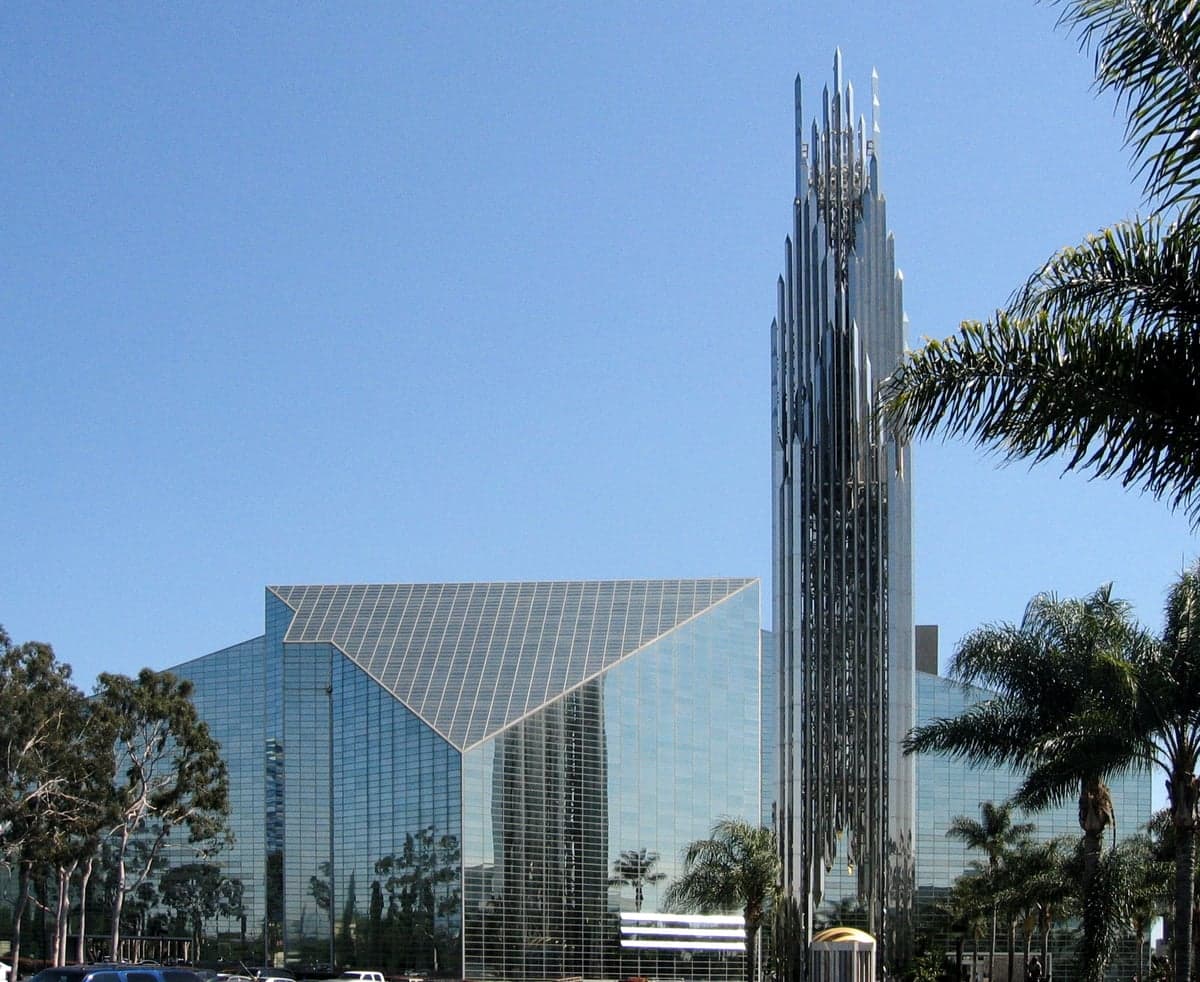
Photo: Wikipedia
Strategic Assessment of Garden Grove, CA
High tactical risk. This location is likely close to major population centers, strategic targets, or sits in a high-disaster corridor. A retreat property and careful exit planning is required.
What does the Strategic Assessment tell us?
Our Strategic Assessment grades tactical survivability of an area. Major population centers, military targets, fallout zones, natural disasters, and border exposure all drive risk — lower exposure means a more defensible position in a crisis.
This is heavily inspired by Joel Skousen's Strategic Relocation book. Highly recommended you checkout the book ($)What does this tell us?
Our Strategic Assessment grades tactical survivability of an area. Major population centers, military targets, fallout zones, natural disasters, and border exposure all drive risk — lower exposure means a more defensible position in a crisis.
This is heavily inspired by Joel Skousen's Strategic Relocation book. Highly recommended you checkout the book ($)Strategic Pillars

Key Distances
Regional Safe Places
Below is our recommended "safe zones" in California and the surrounding area based on our strategic heuristics. For most people, it's unrealistic to live in a “safe zone” full-time due to work, family or other personal reasons. They tend to be more rural. However, many of these areas are perfect for second homes and retreat properties that double as a vacation home or even a short-term rental.

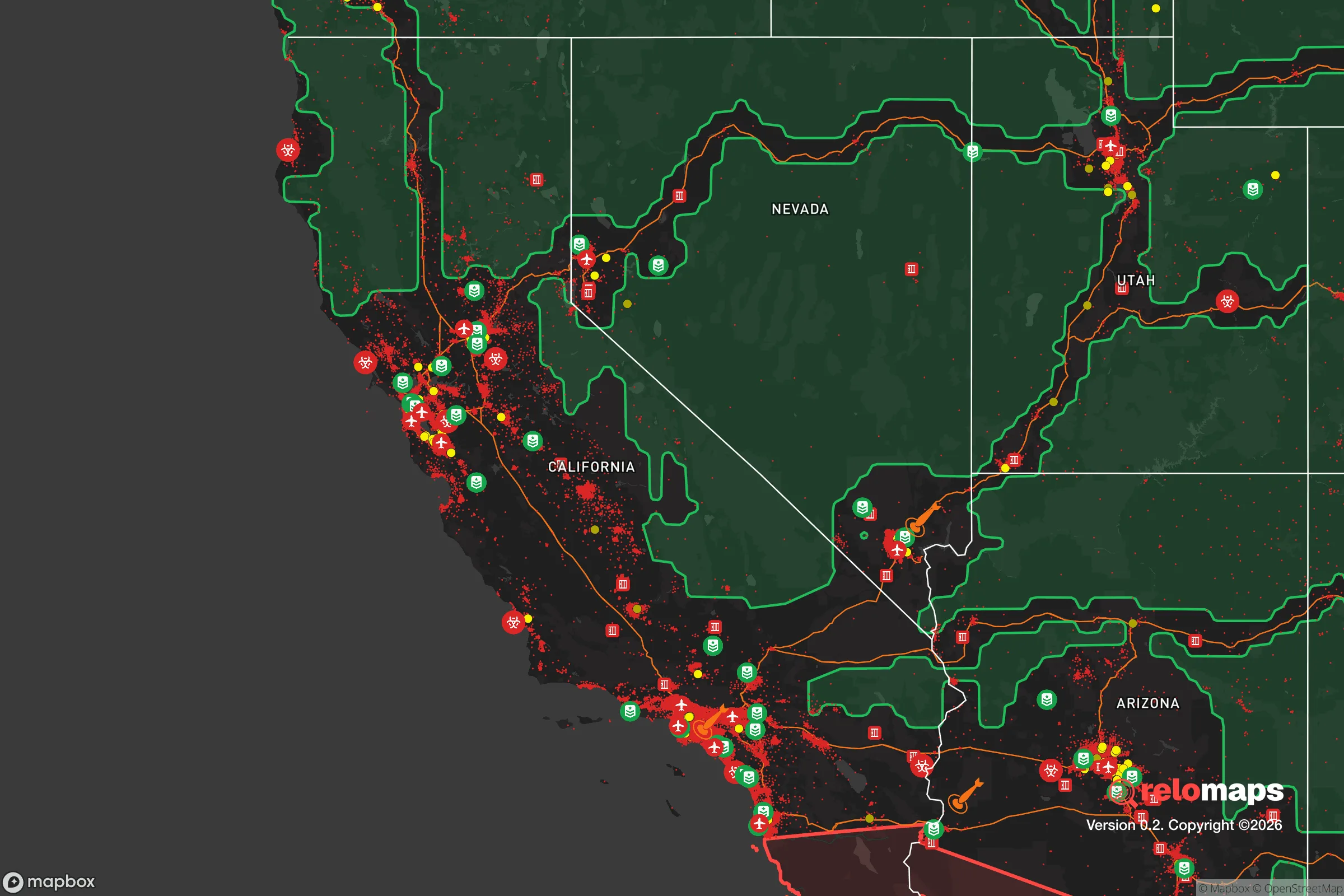


Important Note: For informational purposes only. This does not mean nothing bad ever happens in the green zones. Please use common sense. This is based on public data and modeled with AI. We tried to take a conservative approach but mistakes happen. We update this regularly as new information becomes available.
Solar Generator Recommendations
Backup power matters more here than in safer locations. We've picked three solar generators across budgets and capacity tiers — start with the budget unit if you only need a few essentials, or step up if you want to run a fridge and HVAC for days at a time.

Jackery Portable Power Station Explorer 300
Budget OptionPower on the Go: Weighing only 11 lbs, it's convenient to set up and store with book-sized foldable solar panels

BLUETTI Portable Power Station AC180
Designed for both indoor and outdoor scenarios, AC180 is highly capable as it has a robost capacity and continuous output power.

EF ECOFLOW DELTA Pro Ultra Power Station
Upgraded PickEcoFlow DELTA Pro Ultra is a whole-home energy system designed to grow with your family. Integrated with the Smart Home Panel 2, it scales to meet your evolving energy needs — keeping your home powered, intelligent, and secure through every stage of life.
We earn a commission, at no additional cost to you.
Strategic Assessment Analysis
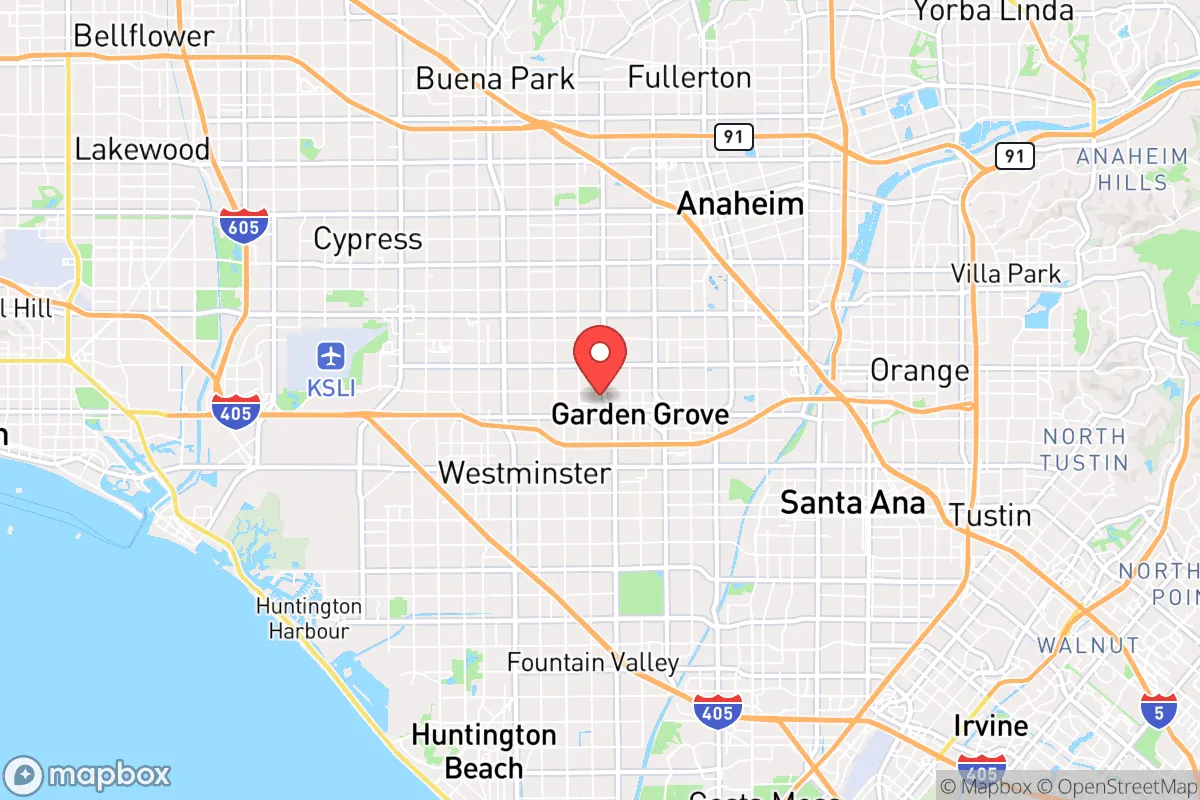
Garden Grove, California, sits in a precarious strategic position that demands a hard look from anyone serious about long-term preparedness. Located in the heart of Orange County, roughly 30 miles southeast of downtown Los Angeles and 10 miles inland from the Pacific, this city of roughly 170,000 offers some genuine resilience advantages—but also exposes a relocator to the kind of dense, target-rich environment that makes survivalists uneasy. The area’s climate, infrastructure, and relative economic stability are real assets, but they come wrapped in the risks of being within striking distance of major military, industrial, and population centers that could become flashpoints in a crisis. For a conservative-leaning individual or family weighing relocation, the calculus here is about balancing the benefits of a mild, defensible microclimate against the vulnerabilities of proximity to chaos.
Geographic position and natural advantages for long-term survival
Garden Grove’s location offers a few hard-to-ignore natural perks. The city sits on a flat coastal plain with a Mediterranean climate—average highs in the 70s year-round, minimal rainfall (about 12 inches annually), and virtually no risk of hurricanes, blizzards, or tornadoes. This means you can count on stable growing conditions for a home garden, and you won’t be fighting extreme weather when infrastructure fails. The Santa Ana Mountains rise about 20 miles to the east, providing a potential bug-out zone with higher elevation, forest cover, and water sources like the Cleveland National Forest. To the west, the Pacific Ocean is a 15-minute drive, offering fishing and desalination potential if you have the gear. The area’s groundwater basin, the Orange County Groundwater Basin, is managed by the Orange County Water District and supplies about 75% of local demand—a significant resilience factor compared to cities reliant on imported water from the Colorado River or State Water Project. For a prepper, the ability to tap into local aquifers and the year-round mild weather are genuine strategic assets. The flat terrain also makes it easy to navigate on foot or by bicycle if roads are blocked, though it offers little natural cover or defensible high ground within the city itself.
Risks, exposures, and proximity to fallout-relevant landmarks
Here’s where the picture gets sobering. Garden Grove is within a 30-mile radius of several high-value targets that could draw military or terrorist attention. Los Angeles International Airport (LAX), the Port of Long Beach, and the Port of Los Angeles—the busiest container port complex in the Western Hemisphere—are all within 25 miles. These are choke points for the national supply chain and obvious targets for disruption. The city is also 10 miles from Joint Forces Training Base Los Alamitos, a U.S. Army Reserve and Air National Guard installation, and about 20 miles from Marine Corps Base Camp Pendleton to the south. In a major conflict or civil unrest scenario, these bases could become staging areas or targets themselves. The San Onofre Nuclear Generating Station, though decommissioned, sits 40 miles south and still houses spent nuclear fuel—a potential radiological hazard if compromised. On the civilian side, Garden Grove is surrounded by dense suburban sprawl: Anaheim (Disneyland, convention centers), Santa Ana (county seat, federal buildings), and Huntington Beach (beach tourism, oil fields). The 405 and 5 freeways, which run through or near the city, are evacuation routes that will gridlock in minutes during a crisis. For a survivalist, the biggest red flag is population density: Orange County has over 3 million people, and Garden Grove itself packs about 9,500 people per square mile. In a collapse scenario, that many people competing for limited resources—food, water, fuel, medical care—creates a powder keg. The city’s diversity (roughly 40% Asian, 35% Hispanic, 15% white) is a social strength, but in a crisis, language barriers and cultural divides can complicate mutual aid.
Practical resilience for a relocator: food, water, energy, and defensibility
Let’s get tactical. Water is the single biggest vulnerability in Garden Grove. The city gets its tap water from a mix of local groundwater (about 75%) and imported water from the State Water Project and Colorado River. If the grid goes down, electric pumps stop, and you’re looking at a 72-hour window before pressure drops. A well is not an option for most residential lots—the water table is shallow (20-40 feet) but permits are strict, and many homes are on slab foundations. Your best bet is storing at least 2-3 gallons per person per day for a minimum of two weeks, plus a Berkey or similar gravity filter for surface water from the Santa Ana River (which runs along the city’s eastern edge) or local parks. Rainwater catchment is viable but limited—12 inches of rain means a 1,000-square-foot roof yields about 7,500 gallons per year, enough for a family of four if stored properly. Food resilience is better: the city has dozens of Asian and Latino markets with bulk rice, beans, and canned goods, and the year-round growing season means you can keep a vegetable garden producing 10 months out of the year. Backyard chickens are legal in most residential zones, though roosters are not. Energy is a mixed bag. Southern California Edison provides power, and outages are common during Santa Ana wind events (fire risk) or heat waves. Solar panels with battery storage (Tesla Powerwall or similar) are a smart investment—the area gets 280+ sunny days a year, and net metering policies are still favorable. Natural gas is reliable for cooking and heating, but a propane backup for a generator is wise. Defensibility is the weak link. Garden Grove is a flat, grid-pattern suburb with no natural chokepoints. Your best defense is a well-fortified home: reinforced doors, security film on windows, a fence with locking gates, and a neighborhood watch network. The city’s police department is well-funded (about 200 sworn officers) but response times will stretch thin in a citywide emergency. Consider a rural property in the nearby foothills (e.g., Silverado Canyon or Trabuco Canyon) as a secondary bug-out location—30-45 minutes east, with better water, cover, and defensibility.
Overall, Garden Grove offers a strategic paradox. It’s a solid base for a prepper who values climate stability, local water resources, and access to diverse food supplies, but it demands serious investment in water storage, energy independence, and home hardening. The proximity to Los Angeles, military bases, and critical infrastructure means you’re living in a potential blast zone—but also in a region with the economic and logistical depth to recover faster than most. For a conservative relocator, the key is to treat Garden Grove as a forward operating base, not a final redoubt. Build your supplies, cultivate a network of like-minded neighbors, and have a bug-out plan for the mountains or inland desert. If you can manage the density and the target risk, the mild climate and local resources make it a viable option for weathering the next decade’s storms. Just don’t mistake comfort for safety—this is Orange County, not the wilderness. Prepare accordingly.

* Values derived from national, state, county, city and local statistics and may differ in a specific area. Last updated: 2026-04-24T07:53:42.000Z
Narrative content on this page is AI-generated and may contain mistakes. Verify any details that matter before acting on them.
ReloMaps may earn a commission from affiliate links at no extra cost to you.

