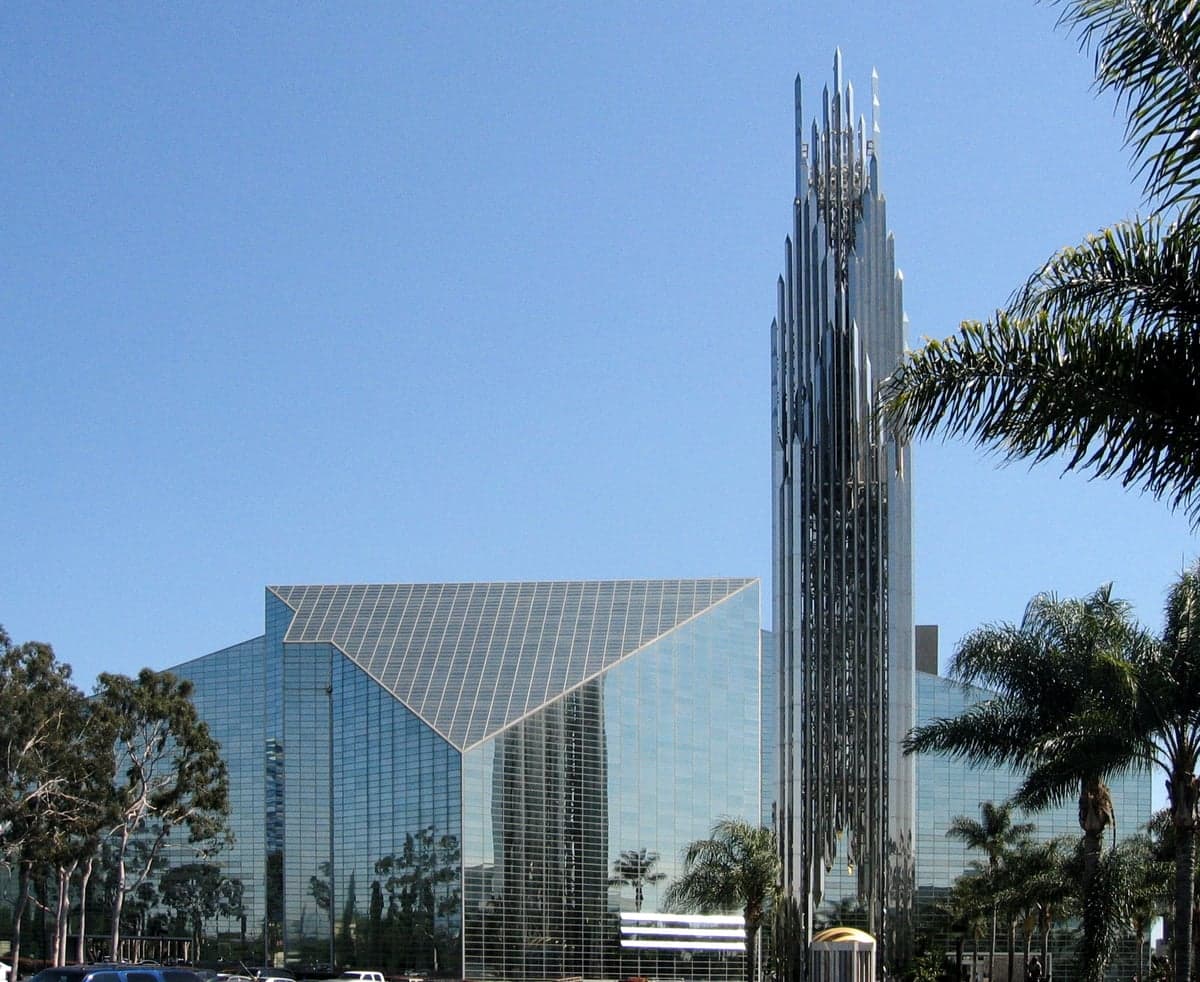
Photo: Wikipedia
Demographics of Garden Grove, CA
Affluence Level in Garden Grove, CA
A middle-class area roughly in line with national averages across income, home values, education, and employment.
People of Garden Grove, CA
The people of Garden Grove, California, today form a dense, majority-minority city of 170,603 residents where East and Southeast Asian communities (40.7%) and Hispanic residents (37.6%) together make up over three-quarters of the population. White non-Hispanic residents account for 16.8%, while the foreign-born share sits at 15.8% — lower than many neighboring Orange County cities, indicating a population that is increasingly U.S.-born second and third generation. The city’s identity is shaped by its role as a working- and middle-class suburban hub, with a 24.9% college-educated rate that trails the county average, and a notable concentration of Vietnamese American cultural and commercial life centered on the Little Saigon district.
How the city was settled and grew
Garden Grove was originally part of the vast Rancho Los Nietos Mexican land grant, but its modern settlement began after the 1868 arrival of the Southern Pacific Railroad. The city was formally founded in 1874 by Alonzo Cook, a Presbyterian minister who subdivided 80 acres into small farm plots. Early residents were predominantly white Midwestern farmers drawn by the region’s citrus and walnut orchards. The original core, now known as the Historic Main Street district, grew around the railroad depot and remained a small agricultural town through the 1920s. A second wave arrived during the 1940s and 1950s, when defense industry jobs at nearby Douglas Aircraft and Hughes Aircraft attracted white working-class families from the Midwest and South. These newcomers settled in the West Garden Grove neighborhoods west of the Santa Ana Freeway (I-5), where tract homes built by developers like the Rossmoor Corporation created a classic postwar suburb. By 1960, the city’s population had surged to 84,238, and it was overwhelmingly white (over 95%).
Modern era (post-1965)
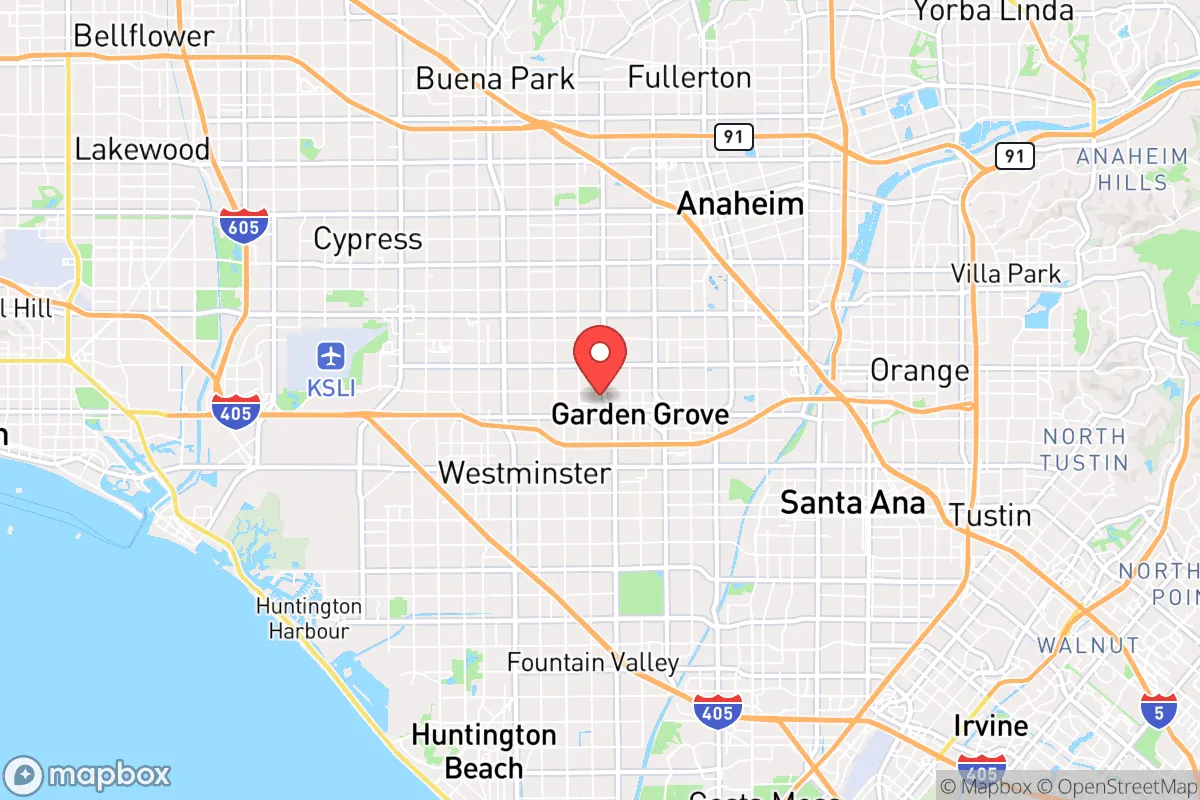
The Immigration and Nationality Act of 1965 fundamentally reshaped Garden Grove’s population. The first major non-white group to arrive were Vietnamese refugees after the fall of Saigon in 1975. Many settled in the Little Saigon area along Bolsa Avenue, which straddles the border with Westminster and became the commercial and cultural heart of Orange County’s Vietnamese community. By the 1990s, Vietnamese Americans had established a dense cluster of businesses, churches, and community organizations in the Garden Park and South Garden Grove neighborhoods south of the 22 Freeway. Simultaneously, Hispanic migration — both from Mexico and from other parts of the U.S. — accelerated during the 1980s and 1990s, with families settling in the East Garden Grove neighborhoods near the 5 and 22 interchange, as well as in the older Historic Main Street area. White flight to outlying suburbs like Irvine and Mission Viejo accelerated after 1990, and by 2010 the white share had fallen to 26.8%. The Asian share rose from 25.7% in 2000 to 40.7% today, driven primarily by continued Vietnamese immigration and secondary migration from other parts of California, along with smaller Korean and Chinese populations. The Hispanic share has remained relatively stable since 2000, hovering around 37-38%, while the Black population has consistently been below 2%.
The future
Garden Grove’s population is likely to continue its gradual shift toward a majority Asian plurality, with the Hispanic share remaining steady and the white share declining further. The Vietnamese American community is increasingly U.S.-born and English-dominant, which may reduce the intensity of ethnic enclave dynamics in Little Saigon over the next decade. However, the area’s affordable housing stock — relative to coastal Orange County — will likely continue to attract new immigrant families from both Asia and Latin America. The city is not homogenizing into a single identity; instead, distinct enclaves persist: Little Saigon remains heavily Vietnamese, East Garden Grove is predominantly Hispanic, and the West Garden Grove postwar tracts retain a higher white share (around 25-30%). The college-educated rate, while low, is rising slowly as second-generation Asian and Hispanic residents pursue higher education. The biggest demographic wildcard is whether rising housing costs push out working-class families or whether the city’s stock of older, smaller homes keeps it accessible.
For a conservative-leaning individual or family considering a move, Garden Grove offers a dense, ethnically diverse, and politically moderate environment — the city leans Democratic but is less progressive than coastal Orange County cities. The population is stable in size, family-oriented, and increasingly native-born, with strong community institutions anchored by churches (both Catholic and Protestant) and Vietnamese Buddhist temples. The key trade-off is affordability versus schools: Garden Grove Unified School District performs below county averages, which is a primary reason many upwardly mobile families eventually leave for Westminster, Fountain Valley, or Irvine.

* Values derived from national, state, county, city and local statistics and may differ in a specific area. Last updated: 2026-04-24T07:53:42.000Z
Narrative content on this page is AI-generated and may contain mistakes. Verify any details that matter before acting on them.
ReloMaps may earn a commission from affiliate links at no extra cost to you.

