
Photo: Wikipedia
Personal Sovereignty in Henry County
Viable for self-reliance. Generally workable, though some barriers may limit total independence.
What does Personal Sovereignty tell us?
Personal Sovereignty measures your capacity for self-reliance and independence with minimal government friction. Higher scores mean fewer barriers between you and the way you want to live... but it assumes you have the space you need and good neighbors.
What does this tell us?
Personal Sovereignty measures your capacity for self-reliance and independence with minimal government friction. Higher scores mean fewer barriers between you and the way you want to live... but it assumes you have the space you need and good neighbors.
State Policy
Energy independence: Importer (12% of energy produced in-state)
Personal Liberty
Homesteading

Personal Liberty Analysis
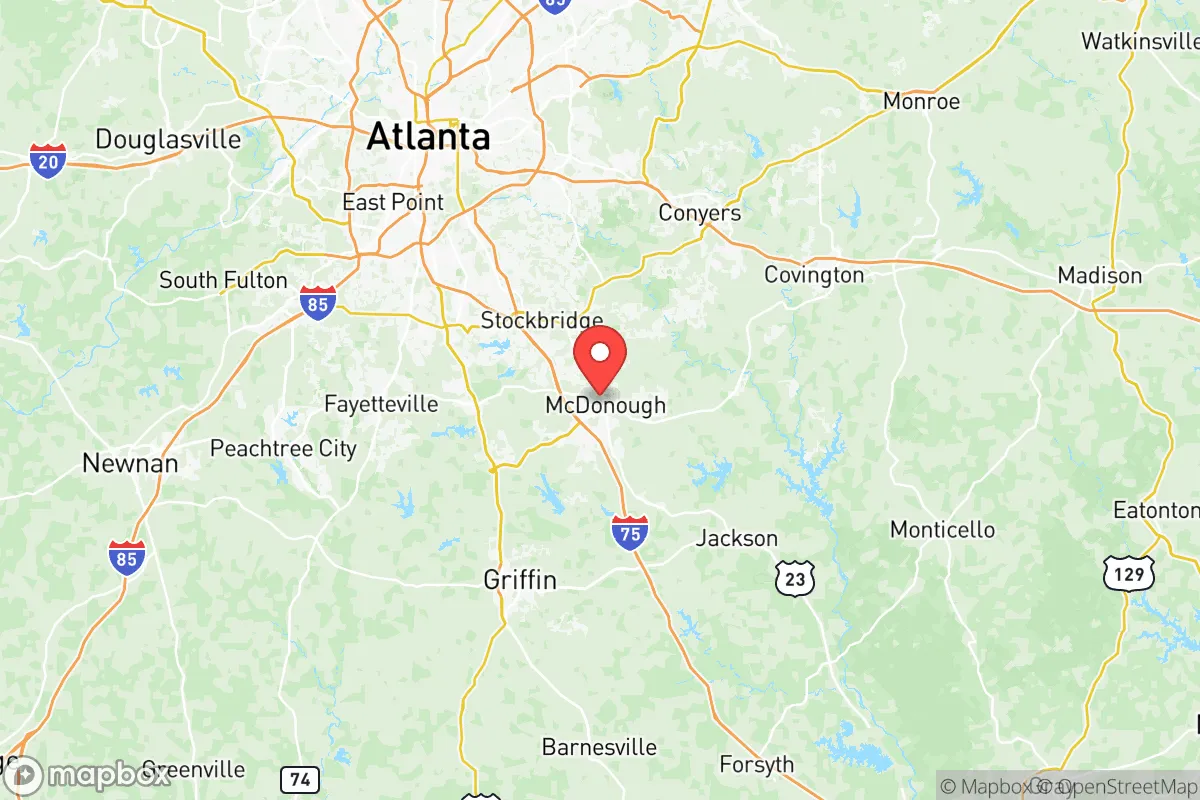
Henry County, Georgia, offers a notably strong environment for personal sovereignty compared to metro Atlanta counties, but it is not a libertarian free-for-all. The county’s conservative lean, combined with Georgia’s relatively light state-level regulatory touch, creates a zone where individual autonomy—on taxes, self-defense, and property use—is generally respected, though local zoning and school board policies introduce meaningful variation. For a single individual or parent prioritizing self-reliance and minimal government overreach, Henry County presents a strategic middle ground: far freer than DeKalb or Fulton, but with more oversight than deep-rural counties like Pike or Meriwether.
Tax burden and regulatory posture: How Henry County compares to metro Atlanta
Georgia’s state-level tax structure is favorable to personal sovereignty, with a flat 5.49% income tax (as of 2026) and no state-level property tax on vehicles. Henry County’s local property tax millage rate hovers around 12.5 mills for the unincorporated area, which is moderate for metro Atlanta—lower than Clayton County’s 14.5 mills but higher than Spalding County’s 10.2 mills. The county’s regulatory posture is business-friendly but not lax: the zoning code in unincorporated areas allows for home-based businesses and limited agricultural uses (like keeping chickens or bees) without a special permit, but Stockbridge and McDonough impose stricter setback and noise ordinances that can frustrate homesteaders. The city of Hampton is notably more permissive, with fewer restrictions on accessory structures and livestock, making it a better fit for those seeking to minimize bureaucratic entanglements. The county’s development authority actively courts light industrial and logistics employers, which keeps the tax base broad and reduces pressure to hike rates—a plus for anyone wary of government fiscal expansion.
Self-defense and gun law specifics: What Henry County allows and restricts
Georgia is a constitutional carry state, meaning no permit is required to carry a firearm openly or concealed for anyone 21 or older who can legally possess a gun. Henry County does not impose any local ordinances that restrict this right—no magazine capacity bans, no waiting periods, and no “sensitive places” beyond state-mandated ones like courthouses and schools. The county sheriff’s office, led by Sheriff Reginald Scandrett (a Republican), is known for issuing weapons carry licenses (WCLs) efficiently for those who want reciprocity in other states; wait times are typically under 30 days. Stand-your-ground laws apply fully, with no duty to retreat in any place where a person is lawfully present. For parents, this means you can legally defend your home or vehicle without fear of prosecution, provided the threat is credible. The only notable restriction is that Locust Grove and Hampton have city parks where firearms are prohibited by local ordinance—a minor but real infringement that preppers should note when choosing a neighborhood. Overall, Henry County is one of the most gun-friendly areas within an hour of Atlanta, with strong community support for the Second Amendment.
Self-reliance and homesteading viability: Lot sizes, zoning, and off-grid feasibility
Homesteading viability in Henry County varies sharply by location. In unincorporated areas, minimum lot sizes range from 1 to 3 acres in the county’s RA (Residential Agricultural) zoning district, which allows for gardens, small livestock (goats, chickens, rabbits), and even a single horse per acre. The city of Hampton and the rural pockets near Jenkinsburg are the most homestead-friendly, with many properties on 2–5 acres and neighbors who keep bees or raise poultry. Off-grid feasibility is limited: Georgia’s state building code requires connection to a septic system (no composting toilets without a variance), and the county enforces well-drilling permits. Solar panels are allowed without special permits in unincorporated areas, but McDonough and Stockbridge have HOA-heavy subdivisions that ban visible panels or require roof-integrated systems. Rainwater collection is legal and encouraged by the state, but Henry County’s water authority does not allow full disconnection from municipal water in areas with existing service—a clear infringement on self-reliance. For serious preppers, the best bet is a property in the southern part of the county, near Ola or Luella, where zoning is looser and neighbors are more likely to mind their own business.
Personal liberties: Parental rights, medical autonomy, speech, and property
Parental rights in Henry County are relatively strong, thanks to Georgia’s 2022 “Parents’ Bill of Rights” law, which requires school districts to notify parents of any medical or mental health services offered to students and to obtain consent for non-emergency care. The Henry County School Board has a conservative majority and has resisted controversial curriculum mandates, though Stockbridge and McDonough have seen heated school board meetings over library book content. Medical autonomy is a mixed bag: Georgia has no state-level vaccine mandate for adults, but Henry County’s hospitals (Piedmont Henry and WellStar) follow CDC guidelines for staff and patients, which some view as overreach. COVID-era mandates are gone, but the county health department still pushes vaccination campaigns aggressively. Free speech is well-protected; the county has no local ordinances restricting political signs or public assembly, and the sheriff’s office generally does not interfere with peaceful protests. Property rights are solid: Georgia’s eminent domain laws require “public use” (not just economic development), and Henry County has not abused condemnation powers in recent years. However, the county’s comprehensive plan includes future road widenings and utility easements that could affect rural landowners—something to check before buying near Highway 155 or I-75.
Overall, Henry County ranks as a strong “B+” for personal sovereignty in the metro Atlanta region. It lacks the total regulatory freedom of rural Georgia counties like Pike or Lamar, where you can live off-grid with minimal oversight, but it offers far more autonomy than the urban core. For a conservative-leaning individual or parent who wants good schools, proximity to Atlanta jobs, and a government that mostly stays out of your way—especially on guns, taxes, and parental rights—Henry County is a solid strategic choice. Just avoid the HOA-heavy subdivisions in Stockbridge and McDonough, and aim for the unincorporated areas near Hampton or Ola if self-reliance is your priority.

* Values derived from national, state, county, city and local statistics and may differ in a specific area. Last updated: 2026-05-22T18:46:41.000Z
Narrative content on this page is AI-generated and may contain mistakes. Verify any details that matter before acting on them.
ReloMaps may earn a commission from affiliate links at no extra cost to you.

