Political ClimatePolitical Climate in Glenbrook, NV
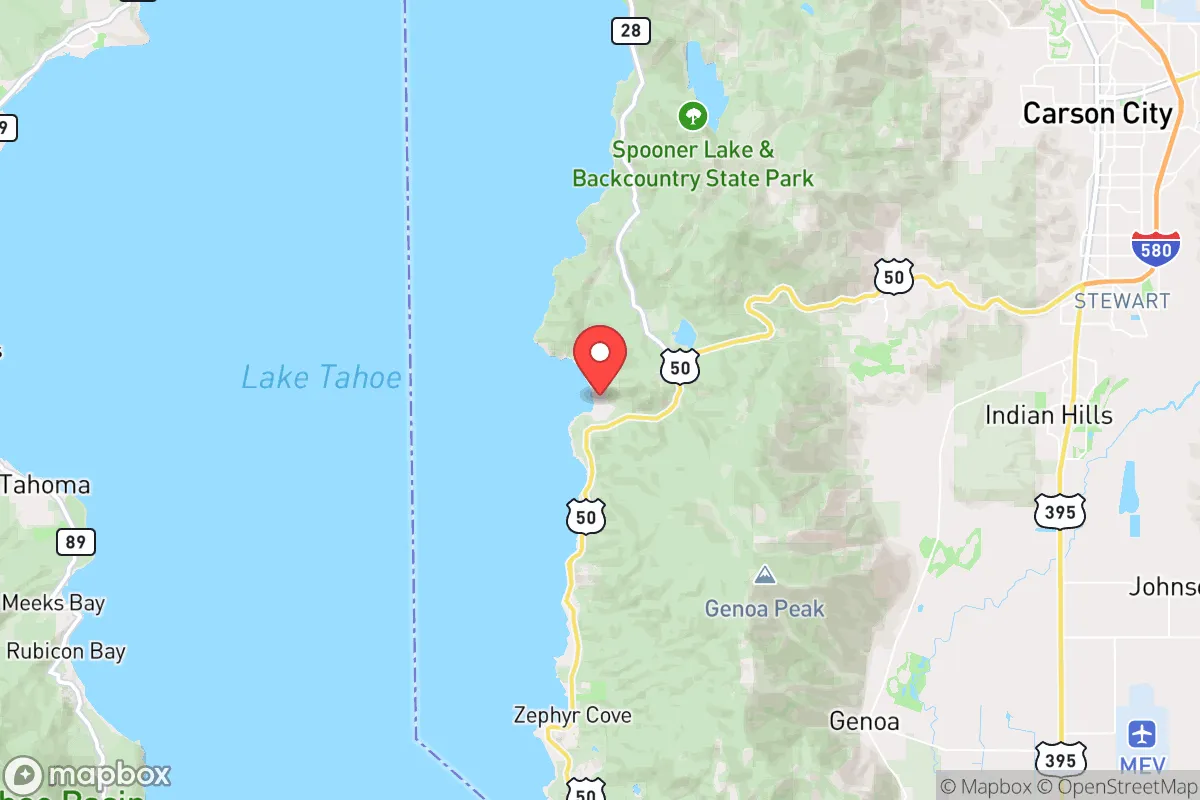
District shown is the primary district for this city’s centroid. Cities may span multiple districts.
Local Political AnalysisPolitical Analysis of Glenbrook, NV
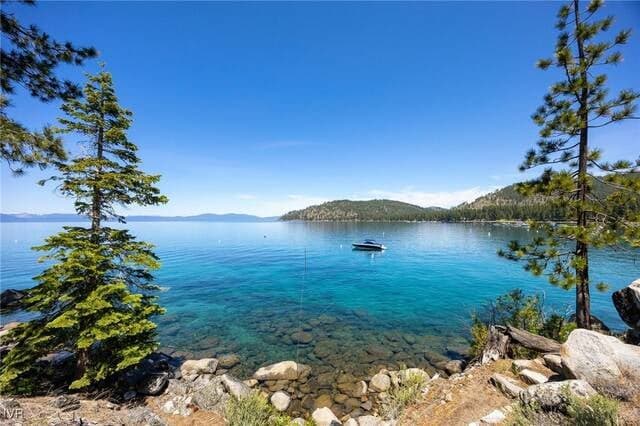
Glenbrook, Nevada, sits solidly in conservative territory, carrying a Cook PVI of R+7 that reflects its deep-rooted preference for limited government and personal responsibility. This isn't a place that's suddenly flipped; it's been a reliably red community for decades, with local elections often decided in the primary and national races rarely competitive here. The real story, though, is the subtle pressure from the west—folks moving in from the Tahoe basin and the Reno-Sparks corridor, bringing with them a more progressive set of priorities that have started to chafe against the area's traditional live-and-let-live ethos.
How it compares
Drive ten miles west into Incline Village or up to Truckee, California, and you'll feel the political temperature shift dramatically—those areas lean blue, with higher taxes and stricter land-use regulations that many Glenbrook residents see as a cautionary tale. Head east toward Carson City or south to Douglas County, and you're back in familiar red territory, but the contrast is stark: Glenbrook's R+7 rating puts it squarely in the middle of Nevada's conservative belt, but it's not as deep red as rural counties like Elko or White Pine. What sets Glenbrook apart is its proximity to Lake Tahoe's environmental activism—there's constant pressure from regional boards and state-level mandates on water quality, building codes, and short-term rentals that feel like government overreach to locals who just want to manage their own property without a dozen permits. The nearby town of Zephyr Cove has a similar vibe, but Glenbrook's smaller population means every new regulation hits harder, and there's less of a buffer against outside influence.
What this means for residents
For the people who live here year-round, the biggest concern is that the slow creep of progressive policies from the Tahoe Regional Planning Agency and the Nevada Legislature will erode the freedoms that make Glenbrook worth the high cost of living. Property rights are the flashpoint—new restrictions on shoreline access, building setbacks, and even the types of boats you can launch feel like the government telling you how to live your life on land you own outright. The local school board and county commission races have become battlegrounds, with candidates who promise to push back against state overreach winning by comfortable margins, but the worry is that the demographic shift will eventually tip the scales. If you value being left alone to hunt, fish, or just enjoy your cabin without a stack of compliance forms, Glenbrook still delivers, but you have to stay engaged—complacency is how you end up with California-style rules in a Nevada town.
Culturally, Glenbrook has a distinct policy quirk that reflects its conservative DNA: it's one of the few places around the lake where you can still own a private pier without a decade-long permitting battle, and the local homeowners' association has historically fought hard to keep that autonomy. That said, the long-term trajectory is concerning—the same forces that turned nearby South Lake Tahoe into a high-tax, high-regulation zone are knocking on Glenbrook's door, and the only thing standing between the current way of life and a bureaucratic nightmare is a voting bloc that shows up every election cycle. If you're thinking of moving here, understand that the political climate is stable for now, but it's a stability that requires constant defense, not a guarantee.

State Political ClimatePolitical Climate in Nevada
State Political AnalysisPolitical Environment in the State
Nevada’s political climate has shifted dramatically over the past two decades, evolving from a classic swing state into a reliably blue-leaning battleground where Democrats hold a structural advantage. The state’s overall partisan lean is now roughly D+3 to D+5, driven by the explosive growth of the Las Vegas metro area and the union-heavy workforce that dominates Clark County. While the state voted for Hillary Clinton in 2016 and Joe Biden in 2020, Donald Trump came within 2.4 points in 2020 and 2.7 in 2024, signaling that the Republican base in the rural counties and the growing exurban fringe is hardening. The long arc is concerning for conservatives: a state that once prided itself on libertarian-leaning independence has seen a steady march toward progressive governance, particularly in the legislature and executive branch.
Urban vs. rural divide
The political map of Nevada is a tale of two vastly different worlds. Clark County, home to Las Vegas and 73% of the state’s population, is the Democratic engine room. The Las Vegas Strip’s hospitality unions—Culinary Workers Union Local 226 and the Bartenders Union—are arguably the most powerful political force in the state, turning out massive get-out-the-vote operations for Democrats. Within Clark, Henderson has become a key battleground; once a reliably red suburb, it has trended purple-to-blue as California transplants and younger families have moved in. North Las Vegas is heavily Democratic and majority-minority. Reno and Sparks in Washoe County are the second major Democratic stronghold, though Washoe is more competitive than Clark—it flipped from Obama to Trump in 2016 and back to Biden in 2020. The rural counties tell a different story. Elko, Eureka, White Pine, and Nye counties vote 70-80% Republican, driven by mining, ranching, and a fierce independent streak. Lyon County, east of Reno, is a growing conservative exurb where families flee the high taxes and regulations of California and the Reno-Sparks area. The divide is stark: the urban corridor (Las Vegas to Reno) controls nearly 90% of the vote, leaving rural conservatives with little statewide influence.
Policy environment
Nevada’s policy environment is a mixed bag that leans increasingly progressive. On the plus side, there is no state income tax, which remains a major draw for conservatives and businesses. The sales tax is moderate (around 8.25% in Clark County), and property taxes are capped by the 2005 “Nevada Taxpayers Bill of Rights” (TABOR-like limits), keeping them relatively low compared to California. However, the state’s regulatory posture has shifted left. In 2019, the legislature passed SB 143, which created a “red flag” law allowing courts to temporarily seize firearms from individuals deemed a risk—a major concern for Second Amendment advocates. Education policy is a flashpoint: Nevada ranks near the bottom nationally in K-12 outcomes, yet the state has expanded funding for public schools while resisting school choice. The Education Savings Account program, passed in 2015, was struck down by the state Supreme Court in 2016, and a 2023 attempt to revive it failed. Healthcare policy has moved left with the expansion of Medicaid under the Affordable Care Act and a 2023 law (SB 394) that codified abortion access into state law, removing waiting periods and parental notification requirements. Election laws are a major concern: Nevada has universal mail-in voting (passed in 2021 via AB 321), same-day voter registration, and automatic voter registration at the DMV—policies that conservatives argue erode ballot integrity. The 2020 and 2022 elections saw numerous allegations of irregularities, though no court-ordered changes.
Trajectory & freedom
Nevada is becoming less free for conservatives, particularly on gun rights, parental rights, and election integrity. The 2023 legislative session was a watershed for progressive overreach. AB 355 banned the sale of semiautomatic firearms to anyone under 21, a direct challenge to the Second Amendment. SB 171 created a “safe storage” law that critics argue could be used to prosecute gun owners. On parental rights, SB 404 (2023) expanded “affirming care” for minors, allowing gender transition procedures without parental consent in certain circumstances—a huge red flag for families. The state also passed AB 99, which prohibits schools from notifying parents if a child changes their gender identity or pronouns, effectively undermining parental authority. On the positive side, Nevada remains a right-to-work state, and the 2024 election saw voters approve a constitutional amendment requiring a two-thirds legislative vote to raise taxes (Question 2), a win for fiscal conservatives. However, the overall trajectory is concerning: the legislature has been controlled by Democrats since 2017, and the governor’s office flipped to Republican Joe Lombardo in 2022, but he has been unable to stop the progressive agenda due to veto-proof majorities in the Assembly and Senate.
Civil unrest & political movements
Nevada has seen its share of political flashpoints. The 2020 election was a powder keg, with the Clark County election department facing lawsuits over ballot signature verification and chain-of-custody issues. The “Stop the Steal” movement was active in Las Vegas and Reno, with large rallies outside the Clark County Government Center. On the left, the Culinary Union has been a dominant force, organizing massive protests against Republican policies and for higher minimum wages. The 2020 Black Lives Matter protests in Las Vegas turned violent, with looting on the Strip and clashes with police. Immigration politics are a constant undercurrent: Nevada is a “sanctuary state” in practice, with state law (AB 67, 2019) prohibiting local law enforcement from cooperating with federal immigration authorities in most cases. The Rural Nevada counties have pushed back, with Nye and Elko counties passing resolutions declaring themselves “Second Amendment sanctuaries.” The Washoe County school board has been a battleground for parental rights, with conservative parents clashing with progressive board members over critical race theory and mask mandates. The 2022 midterms saw a surge in Republican activism, particularly in the suburbs of Henderson and Sparks, but it wasn’t enough to flip the legislature.
Projection
Over the next 5-10 years, Nevada is likely to continue its leftward drift, driven by demographic shifts and in-migration from California. The state is adding about 40,000 new residents annually, many from California, and they tend to bring their progressive voting habits with them. The Las Vegas metro area will continue to grow, further diluting rural conservative influence. The Republican Party’s best hope lies in the exurban and rural growth of places like Lyon County and Pahrump (Nye County), where families are fleeing California and the Reno-Sparks area. However, the structural advantages for Democrats—union power, mail-in voting, and the Clark County machine—are formidable. The 2024 election showed that Trump can still win rural Nevada by huge margins, but he can’t overcome the Clark County turnout. A new resident moving in now should expect to see more progressive policies on guns, education, and parental rights, with little chance of reversal unless a national Republican wave flips the legislature. The tax structure will remain favorable, but the cultural and regulatory environment will feel increasingly like a blue state.
Bottom line for a new resident: Nevada offers genuine financial advantages—no income tax, low property taxes, and a right-to-work economy—but the political climate is trending in a direction that should concern conservatives. If you value Second Amendment rights, parental authority, and election integrity, you’ll find yourself fighting an uphill battle in the legislature. The rural counties and exurbs offer a more conservative lifestyle, but you’ll be politically outmatched by the Las Vegas machine. It’s a state where you can keep more of your money, but you’ll need to stay engaged to protect your freedoms.
* Values derived from national, state, county, city and local statistics and may differ in a specific area. Last updated: 2026-04-23T04:14:55.000Z
Narrative content on this page is AI-generated and may contain mistakes. Verify any details that matter before acting on them.
ReloMaps may earn a commission from affiliate links at no extra cost to you.

