Photo: Wikipedia
Strategic Assessment of Gonzales, LA
Meaningful friction. Expect exposure to either population pressure, blast zones, or natural disaster risk. Consider buying a retreat property.
What does the Strategic Assessment tell us?
Our Strategic Assessment grades tactical survivability of an area. Major population centers, military targets, fallout zones, natural disasters, and border exposure all drive risk — lower exposure means a more defensible position in a crisis.
This is heavily inspired by Joel Skousen's Strategic Relocation book. Highly recommended you checkout the book ($)What does this tell us?
Our Strategic Assessment grades tactical survivability of an area. Major population centers, military targets, fallout zones, natural disasters, and border exposure all drive risk — lower exposure means a more defensible position in a crisis.
This is heavily inspired by Joel Skousen's Strategic Relocation book. Highly recommended you checkout the book ($)Strategic Pillars

Key Distances
Regional Safe Places
Below is our recommended "safe zones" in Louisiana and the surrounding area based on our strategic heuristics. For most people, it's unrealistic to live in a “safe zone” full-time due to work, family or other personal reasons. They tend to be more rural. However, many of these areas are perfect for second homes and retreat properties that double as a vacation home or even a short-term rental.

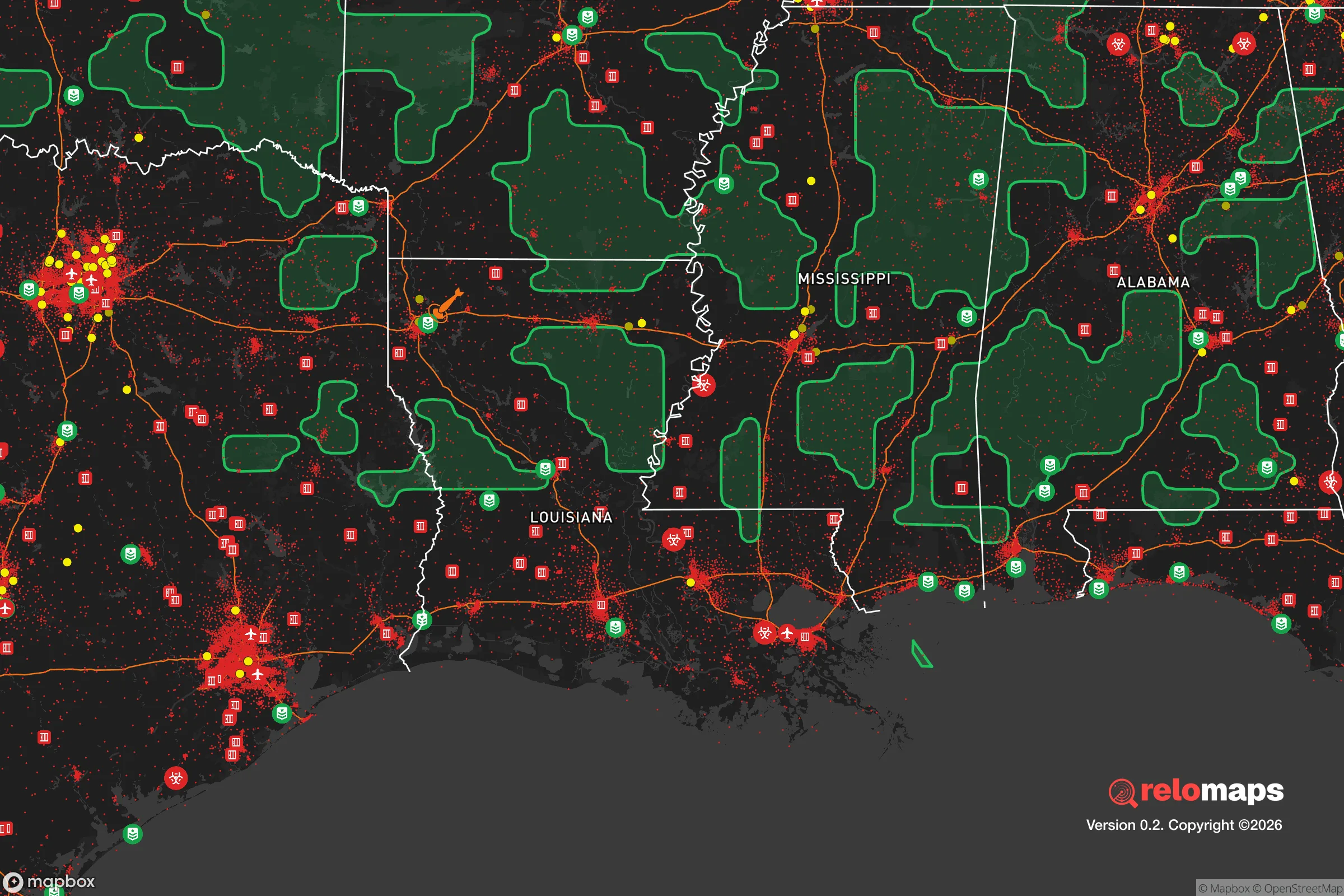


Important Note: For informational purposes only. This does not mean nothing bad ever happens in the green zones. Please use common sense. This is based on public data and modeled with AI. We tried to take a conservative approach but mistakes happen. We update this regularly as new information becomes available.
Solar Generator Recommendations
Backup power matters more here than in safer locations. We've picked three solar generators across budgets and capacity tiers — start with the budget unit if you only need a few essentials, or step up if you want to run a fridge and HVAC for days at a time.

Jackery Portable Power Station Explorer 300
Budget OptionPower on the Go: Weighing only 11 lbs, it's convenient to set up and store with book-sized foldable solar panels

BLUETTI Portable Power Station AC180
Designed for both indoor and outdoor scenarios, AC180 is highly capable as it has a robost capacity and continuous output power.

EF ECOFLOW DELTA Pro Ultra Power Station
Upgraded PickEcoFlow DELTA Pro Ultra is a whole-home energy system designed to grow with your family. Integrated with the Smart Home Panel 2, it scales to meet your evolving energy needs — keeping your home powered, intelligent, and secure through every stage of life.
We earn a commission, at no additional cost to you.
Strategic Assessment Analysis
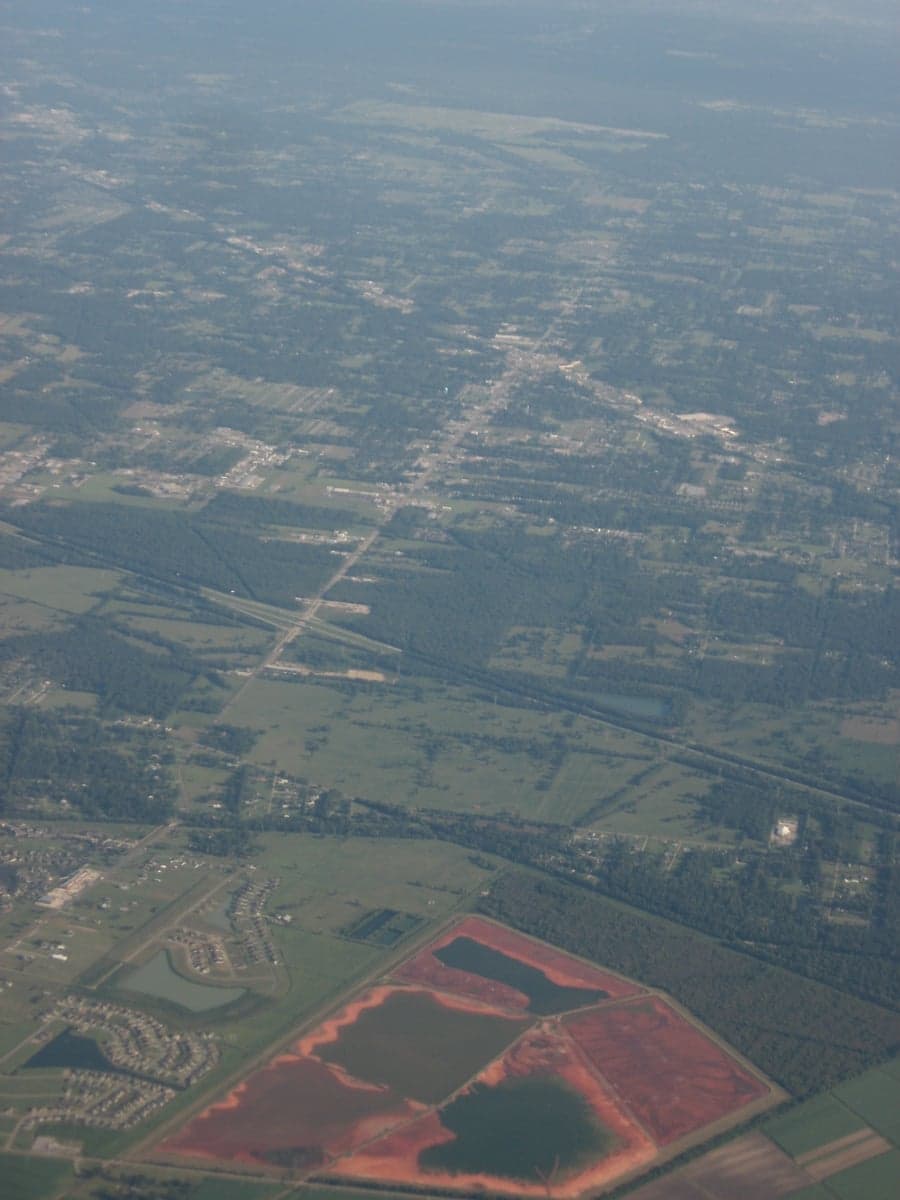
Gonzales, Louisiana, sits in a position that demands a hard look from anyone serious about strategic relocation. It’s not a bunker in the mountains, but it offers a mix of practical advantages and real, calculable risks that a prepper or survivalist needs to weigh. The town’s location along the I-10 corridor between Baton Rouge and New Orleans gives it access to resources, but that same corridor is a double-edged sword when you consider evacuation routes, supply chains, and the potential for civil unrest spilling out of those larger cities. For a conservative-leaning individual or family looking for a place that balances economic opportunity with a realistic shot at riding out disruptions, Gonzales deserves a sober assessment.
Geographic position and natural advantages for long-term stability
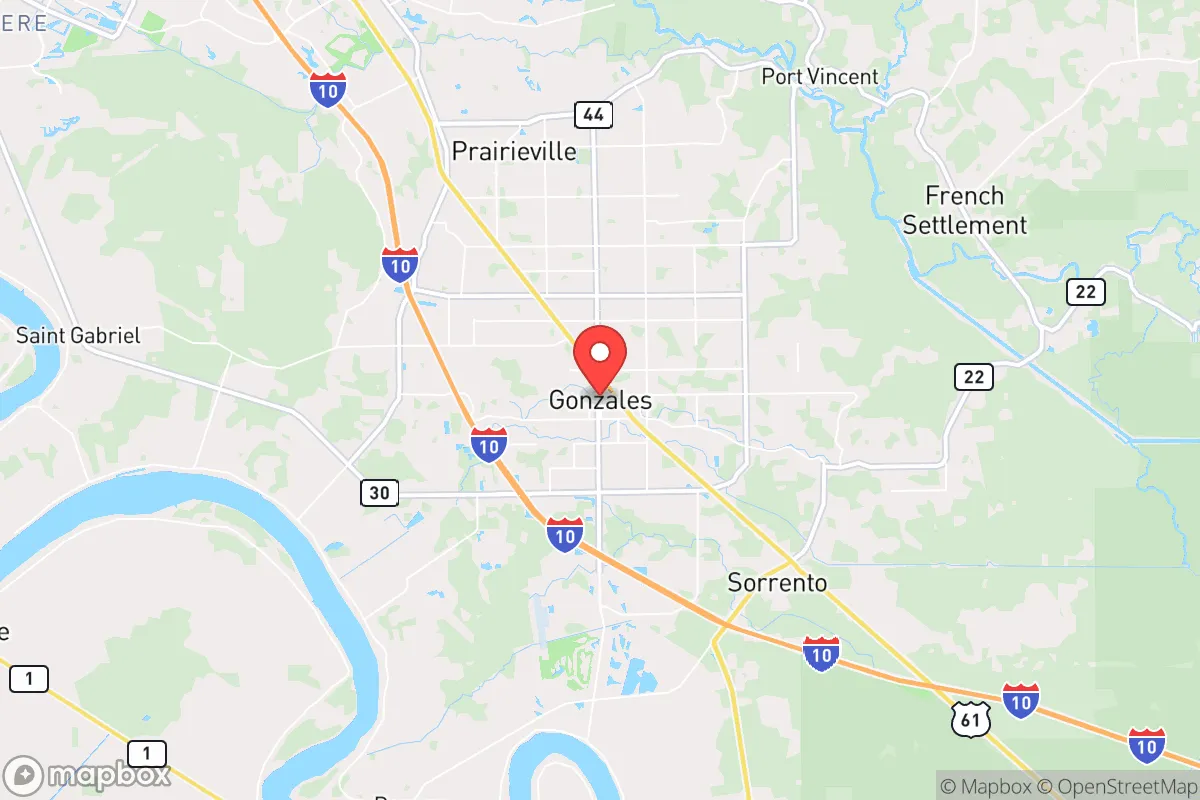
Gonzales sits in Ascension Parish, roughly 25 miles southeast of Baton Rouge and 50 miles northwest of New Orleans. That puts it far enough from the urban cores to avoid the worst of a city’s collapse—riots, supply chain failures, or a mass casualty event—but close enough to tap into medical infrastructure and heavy industry if things hold together. The area is part of the Florida Parishes, a region that historically has had a more independent, rural character than the rest of south Louisiana. The Mississippi River runs just west of town, and the surrounding landscape is flat, with bayous, swamps, and agricultural land. That means water is abundant, both surface and groundwater, which is a critical resource for any long-term plan. The climate is humid subtropical, with hot summers and mild winters, so growing food year-round is feasible with some planning. The soil in the river bottoms is rich, and there’s a strong local farming culture—sugarcane, soybeans, and cattle operations are common. For a relocator, that means local food production is not a hypothetical; it’s already happening at scale. The area’s elevation is low, averaging around 20 feet above sea level, which introduces flood risk, but the natural drainage through bayous and the Mississippi River levee system provides a degree of control that many other low-lying areas lack.
Risks, exposures, and proximity to fallout-relevant landmarks
Let’s be direct: Gonzales is not a remote survival retreat. It’s in the hurricane zone, and that’s the most obvious natural threat. A direct hit from a Category 3 or higher storm would test any prepper’s plans—power outages, flooding, and supply chain interruptions are near certain. The 2021 Hurricane Ida showed that even well-prepared areas can be without power for weeks. But the bigger concern for a strategic relocator is man-made risk. Baton Rouge is home to multiple chemical plants and refineries, including the ExxonMobil Baton Rouge Refinery, one of the largest in the country. A major industrial accident or a deliberate attack on that infrastructure could produce a toxic plume or a fire that would make the downwind areas—including Gonzales—uninhabitable for days or weeks. Similarly, the Mississippi River is a chokepoint for barge traffic carrying chemicals, grain, and fuel. A bridge collapse or a deliberate blockage at the Sunshine Bridge (which crosses the river just west of Gonzales) could cut off access to the west and create a logistical nightmare. On the plus side, Gonzales is not near any known nuclear power plants—the closest is Waterford 3 in Killona, about 30 miles downriver—and it’s not a primary target for any strategic strike. But the I-10 corridor itself is a vulnerability: in a mass evacuation scenario from New Orleans or Baton Rouge, Gonzales would become a bottleneck. Plan for the possibility of being trapped in place if the highways clog, which they will.
Practical resilience for a relocator: food, water, energy, and defensibility
For a family or individual serious about self-sufficiency, Gonzales offers a mixed bag. Water is the easiest win: the area’s high water table means shallow wells are viable in many parts of the parish, and rainwater collection is straightforward given the 60+ inches of annual rainfall. A simple cistern system or a hand pump on a well can secure a household’s water supply independent of municipal systems. Food is also workable. The growing season runs from March to November, and the soil supports vegetables, fruit trees (citrus, figs, pecans), and even rice in the right spots. Local farmers’ markets and feed stores are common, and there’s a strong hunting culture—deer, wild hogs, and waterfowl are abundant in the surrounding swamps and woodlands. A prepper with a garden, a few chickens, and a hunting license could realistically produce a significant portion of their own calories. Energy is trickier. The grid is vulnerable to hurricanes and ice storms (the 2021 winter storm knocked out power across the parish), so solar with battery backup is a smart investment. The area gets about 215 sunny days per year, which is decent but not ideal—cloud cover from storms can reduce output for days at a time. A backup generator running on propane or natural gas is a practical supplement. Defensibility is the weak point. Gonzales is a suburban town of about 12,000 people, with a typical layout of subdivisions, strip malls, and highways. There’s no natural chokepoint or high ground to defend. A determined group of looters or a mob from Baton Rouge could move through the area easily. OPSEC (operational security) is critical here: keep a low profile, don’t advertise supplies, and build relationships with neighbors who share your mindset. A rural property on the outskirts, away from the main roads, is far more defensible than a house in a subdivision near the interstate.
The overall strategic picture for Gonzales is one of calculated trade-offs. It’s not a fortress, and it’s not a remote homestead. But for a relocator who wants to stay within striking distance of Gulf Coast resources—medical care, industrial supplies, and a network of like-minded people—while maintaining a realistic ability to weather short-term disruptions, it’s a viable option. The key is to treat Gonzales as a base of operations, not a final redoubt. Have a bug-out plan for hurricane season, store at least 90 days of supplies, and invest in water and energy independence. The local culture is conservative, church-going, and family-oriented, which means you’re more likely to find neighbors who will help than in a coastal city. But don’t mistake that for safety. The threats are real, and the area’s advantages—water, food, and access—come with the price of exposure to storms, industrial hazards, and the chaos that can spill out of the cities to the east and west. If you’re willing to work the land, keep your head down, and plan for the worst, Gonzales can work. If you’re looking for a place where you can relax and forget about the state of the world, keep looking.

* Values derived from national, state, county, city and local statistics and may differ in a specific area. Last updated: 2026-04-19T23:16:06.000Z
Narrative content on this page is AI-generated and may contain mistakes. Verify any details that matter before acting on them.
ReloMaps may earn a commission from affiliate links at no extra cost to you.

