 Popular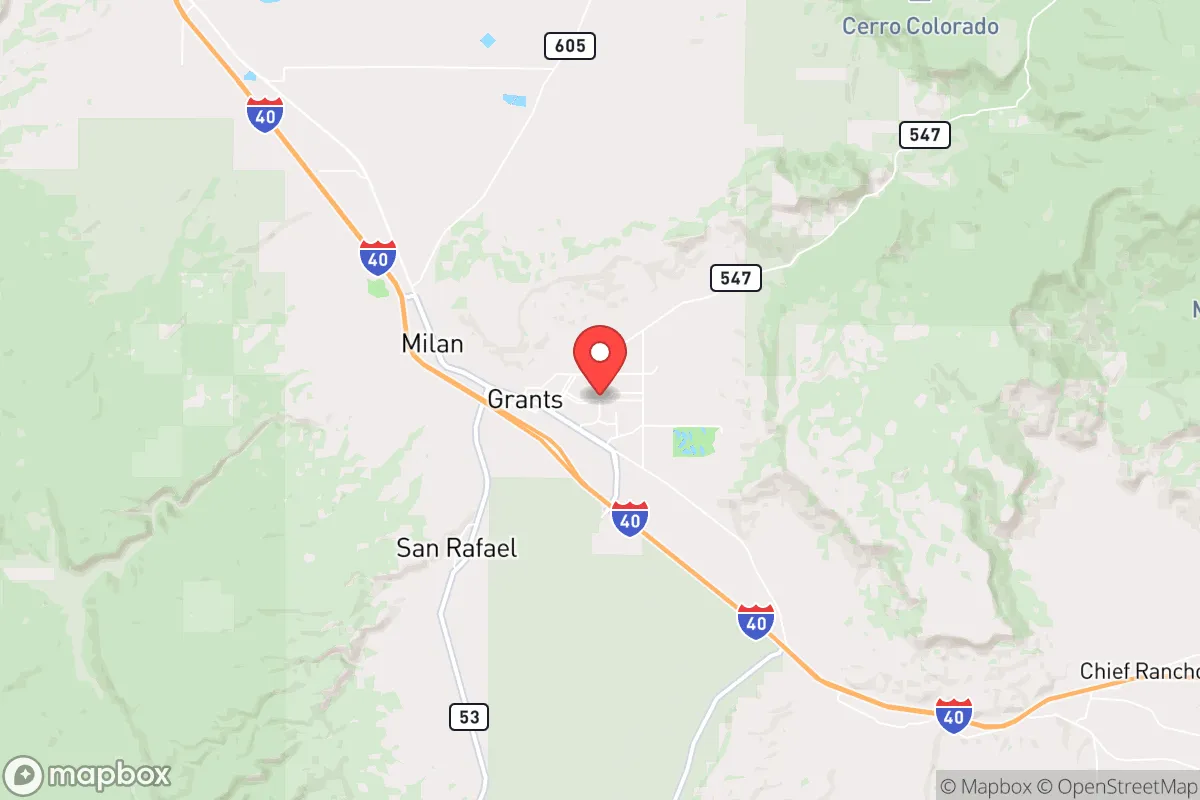
Political ClimatePolitical Climate in Grants, NM
District shown is the primary district for this city’s centroid. Cities may span multiple districts.
Local Political AnalysisPolitical Analysis of Grants, NM
Grants, New Mexico, sits in a unique political spot that’s been shifting under our feet for a while now. The area’s Cook PVI rating of EVEN tells you it’s a true battleground, but if you’ve lived here as long as I have, you know the old conservative roots are getting tested. Historically, this was a solidly blue-collar, pro-Second Amendment, keep-government-out-of-your-business kind of place, anchored by mining and railroad families. Lately, though, you’re seeing more folks from Albuquerque and Santa Fe moving in, bringing progressive ideas about land use, energy, and local control that just don’t sit right with a lot of us. The trajectory is concerning: we’re not deep blue yet, but the margin is tightening every election cycle, and the cultural drift is real.
How it compares
Drive 45 minutes east to Albuquerque, and you’re in a completely different world — solidly Democratic, with city policies that feel like they’re written by people who’ve never changed their own oil. Head west to Gallup, and you’ll find a similar working-class vibe to Grants, but with a stronger Native American influence that leans more Democratic in national races. The real contrast is south toward Silver City or north to Farmington: Farmington is still reliably conservative, with a “live and let live” attitude that reminds me of Grants twenty years ago. Here in Cibola County, we’re the swing district, and that means every election feels like a knife fight over whether we’ll keep our local character or get swallowed up by the state’s progressive agenda. The state legislature in Santa Fe keeps pushing mandates on everything from oil and gas restrictions to school curriculum, and Grants is caught in the crossfire.
What this means for residents
For those of us who value personal freedom, the biggest red flag is how fast local government is adopting state-level progressive policies without much pushback. You’re seeing more zoning restrictions that make it harder to run a small business out of your garage, and talk of “equity” initiatives in the school district that sound an awful lot like government overreach into how we raise our kids. Property taxes are creeping up, and there’s a growing sense that your voice at town hall matters less than it used to. On the flip side, if you’re a conservative who keeps your head down, you can still find your people — the gun range is busy on weekends, churches are full, and most folks still wave hello. But the long-term trend is worrying: younger families moving in often bring a “we know better” attitude, and the old-timers who remember when Grants was a place where you minded your own business are getting outvoted.
Culturally, one of the biggest distinctions here is the tension between traditional resource extraction — uranium mining, logging, and now some oil and gas — and the push for green energy projects that the state is subsidizing heavily. You’ll see solar farms going up on land that used to support ranching families, and the local economy is being reshaped by grants and incentives that come with strings attached. The Second Amendment is still strong, but you can feel the pressure from state-level red flag laws and magazine capacity limits that make you wonder how long that will last. If you’re looking for a place where you can still live free without a lot of bureaucratic nonsense, Grants is hanging on, but it’s a fight. My advice: get involved in local elections, because the city council and county commission are where the real battles over your rights are happening now.

State Political ClimatePolitical Climate in New Mexico
State Political AnalysisPolitical Environment in the State
New Mexico has long been a reliably blue state in presidential elections, but its political landscape is far more nuanced than a simple partisan label suggests. The state’s dominant coalition is a mix of urban progressives, Hispanic and Native American voters, and a small but influential liberal establishment centered in Santa Fe and Albuquerque. Over the past 10-20 years, the state has shifted leftward on social and economic issues, but a strong, culturally conservative rural and exurban population—particularly in the eastern plains and southern counties—keeps the state from being a monolithic progressive stronghold. The 2020 election saw Joe Biden win the state by 11 points, but down-ballot races often reveal a more competitive, and at times, deeply divided electorate.
Urban vs. rural divide
The political map of New Mexico is a textbook case of urban-rural polarization. Albuquerque (Bernalillo County) and Santa Fe (Santa Fe County) are the state’s progressive engines, delivering massive Democratic margins that swamp the rest of the state. In 2020, Santa Fe County gave Biden 77% of the vote, while Bernalillo County gave him 59%. These two counties alone account for nearly half the state’s population. In contrast, the rural eastern plains—counties like Lea (Hobbs), Roosevelt (Portales), and Curry (Clovis)—are deeply conservative, often voting 70-80% Republican. The southern counties, including Doña Ana (Las Cruces) and Otero (Alamogordo), are more mixed. Las Cruces, home to New Mexico State University, leans left, but the surrounding agricultural and military communities are reliably red. The state’s most politically distinct suburb is Rio Rancho, a fast-growing exurb of Albuquerque that has trended purple but still leans slightly right, offering a more family-oriented, lower-tax alternative to the city. The divide is stark: drive 30 minutes east of Albuquerque, and you’re in a world of pickup trucks and “Don’t Tread on Me” flags; drive 30 minutes north, and you’re in a world of art galleries and electric vehicles.
Policy environment
New Mexico’s policy environment is a mixed bag that should give conservative newcomers pause. The state has a progressive income tax structure with rates ranging from 1.7% to 5.9%, but it also has a gross receipts tax (GRT) that functions like a sales tax and can exceed 8% in some municipalities, making everyday purchases expensive. The corporate tax rate is a relatively low 5.9%, but the regulatory burden is high, particularly in the oil and gas sector, which is the state’s economic lifeblood. On education, the state has seen a push for more funding and teacher pay raises, but school choice remains limited, and the powerful teachers’ union in Santa Fe has blocked most charter school expansion. Healthcare is dominated by the state’s Medicaid expansion, which covers nearly half the population, and the state has moved to codify abortion access into law, including the 2023 Reproductive and Gender Affirming Health Care Act, which removed many restrictions. Election laws are a concern: New Mexico has no voter ID requirement, same-day voter registration, and automatic voter registration at the DMV, which critics argue undermines election integrity. The state also has a “sanctuary” policy that limits local law enforcement’s cooperation with federal immigration authorities, a flashpoint for many conservatives.
Trajectory & freedom
Over the past five years, New Mexico has become less free in several key areas, particularly for conservatives. The 2021 passage of the Energy Transition Act effectively mandated a phase-out of coal-fired power plants, hurting rural communities like Farmington and Gallup that depend on mining jobs. The 2023 repeal of the state’s preemption law on local gun ordinances allowed cities like Albuquerque and Santa Fe to pass their own restrictions, including “red flag” laws and bans on firearms in public buildings. Parental rights have been eroded by the state’s 2019 adoption of the “Indian Family Protection Act” and the 2023 expansion of “gender-affirming care” protections for minors, which prevents parents from challenging certain medical decisions. Property rights are under pressure from the state’s “land use” planning initiatives, which have been used to block development in rural areas. On the positive side, the state has no personal property tax on vehicles or business inventory, and the state’s Right-to-Work law remains intact, though unions are pushing hard to repeal it. The overall trajectory is concerning: the state government in Santa Fe is actively expanding its reach into areas that were once considered local or personal.
Civil unrest & political movements
New Mexico has seen its share of political flashpoints. The 2020 protests in Albuquerque and Santa Fe were large and occasionally violent, with the toppling of a statue of Spanish conquistador Juan de Oñate in Albuquerque’s Old Town. The state’s sanctuary policies have led to ongoing tensions between local law enforcement and federal immigration authorities, particularly in Las Cruces and Deming, where border crossings are a daily reality. The “New Mexico Civil Guard,” a militia group that emerged during the 2020 protests, has been a visible but fringe presence. On the right, the “New Mexico Freedom” group has organized against vaccine mandates and school closures, and there is a growing “constitutional sheriff” movement in rural counties like Catron and Harding. Election integrity remains a hot-button issue: the 2020 election saw a number of irregularities in the state’s mail-in ballot system, leading to a 2021 audit that found no widespread fraud but did highlight vulnerabilities. A new resident will notice that political signs and bumper stickers are common, and conversations about politics can turn heated quickly, especially in mixed company.
Projection
Looking ahead 5-10 years, New Mexico is likely to continue its leftward drift, driven by in-migration of progressive retirees and remote workers to Santa Fe and Albuquerque, and the growing political power of the state’s Native American population, which tends to vote Democratic. The oil and gas boom in the Permian Basin (southeastern New Mexico) has brought in a wave of conservative workers to places like Hobbs and Carlsbad, but these are small populations relative to the urban centers. The state’s high poverty rate and reliance on federal funding make it vulnerable to economic downturns, which could shift the political calculus. A conservative moving in now should expect to see continued expansion of state power, higher taxes, and more restrictive gun laws. The best bet for a like-minded individual is to look at the eastern plains or the southern exurbs, where the culture is more traditional and the government is less intrusive. But even there, the long arm of Santa Fe is reaching.
For a conservative considering a move to New Mexico, the bottom line is this: you will find like-minded communities in the rural and exurban areas, but you will be fighting an uphill battle against a state government that is increasingly progressive and interventionist. The state’s natural beauty and low cost of living are real draws, but the political climate is one of constant friction. If you value personal freedom, low taxes, and a government that stays out of your life, you’ll need to pick your location carefully—and be prepared to stay engaged in local politics to protect what you have.
* Values derived from national, state, county, city and local statistics and may differ in a specific area. Last updated: 2026-05-01T08:29:48.000Z
Narrative content on this page is AI-generated and may contain mistakes. Verify any details that matter before acting on them.
ReloMaps may earn a commission from affiliate links at no extra cost to you.

