 Popular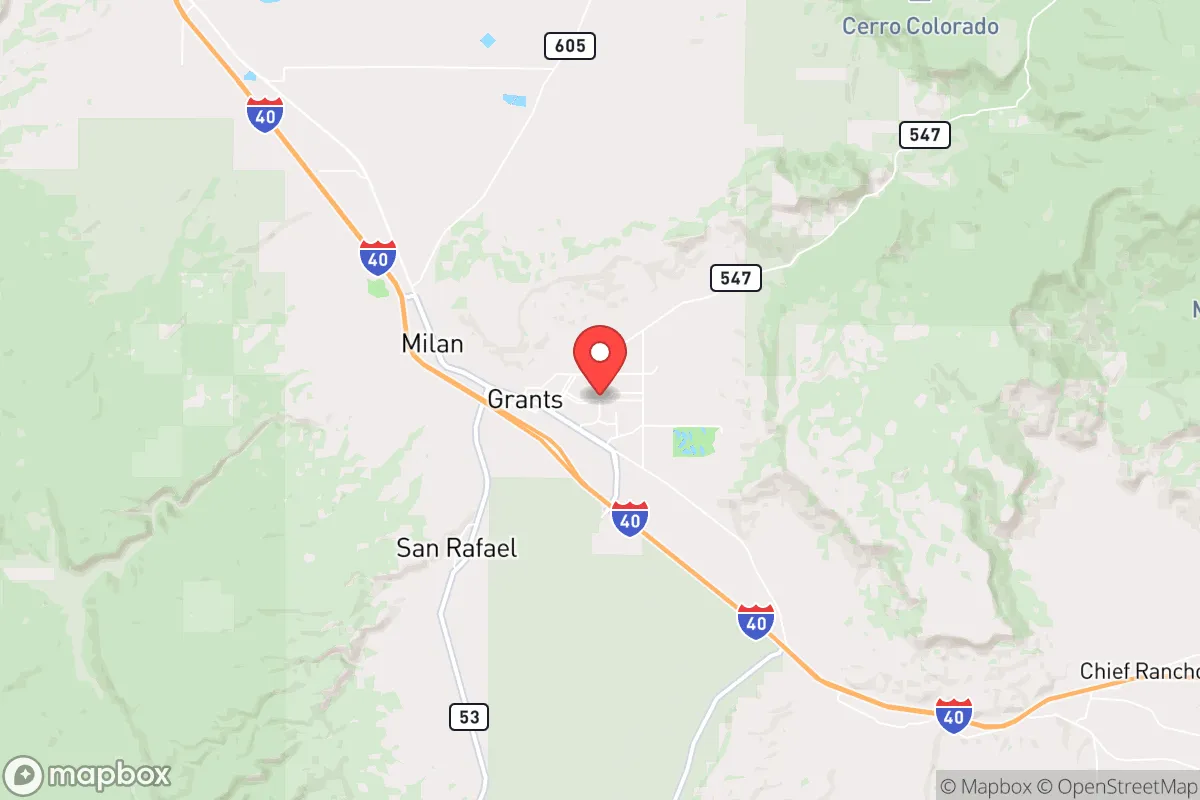
Strategic Assessment of Grants, NM
Workable tactical position. Some exposure to population density or targets, but generally defensible in a crisis.
What does the Strategic Assessment tell us?
Our Strategic Assessment grades tactical survivability of an area. Major population centers, military targets, fallout zones, natural disasters, and border exposure all drive risk — lower exposure means a more defensible position in a crisis.
This is heavily inspired by Joel Skousen's Strategic Relocation book. Highly recommended you checkout the book ($)What does this tell us?
Our Strategic Assessment grades tactical survivability of an area. Major population centers, military targets, fallout zones, natural disasters, and border exposure all drive risk — lower exposure means a more defensible position in a crisis.
This is heavily inspired by Joel Skousen's Strategic Relocation book. Highly recommended you checkout the book ($)Strategic Pillars

Key Distances
Regional Safe Places
Below is our recommended "safe zones" in New Mexico and the surrounding area based on our strategic heuristics. For most people, it's unrealistic to live in a “safe zone” full-time due to work, family or other personal reasons. They tend to be more rural. However, many of these areas are perfect for second homes and retreat properties that double as a vacation home or even a short-term rental.

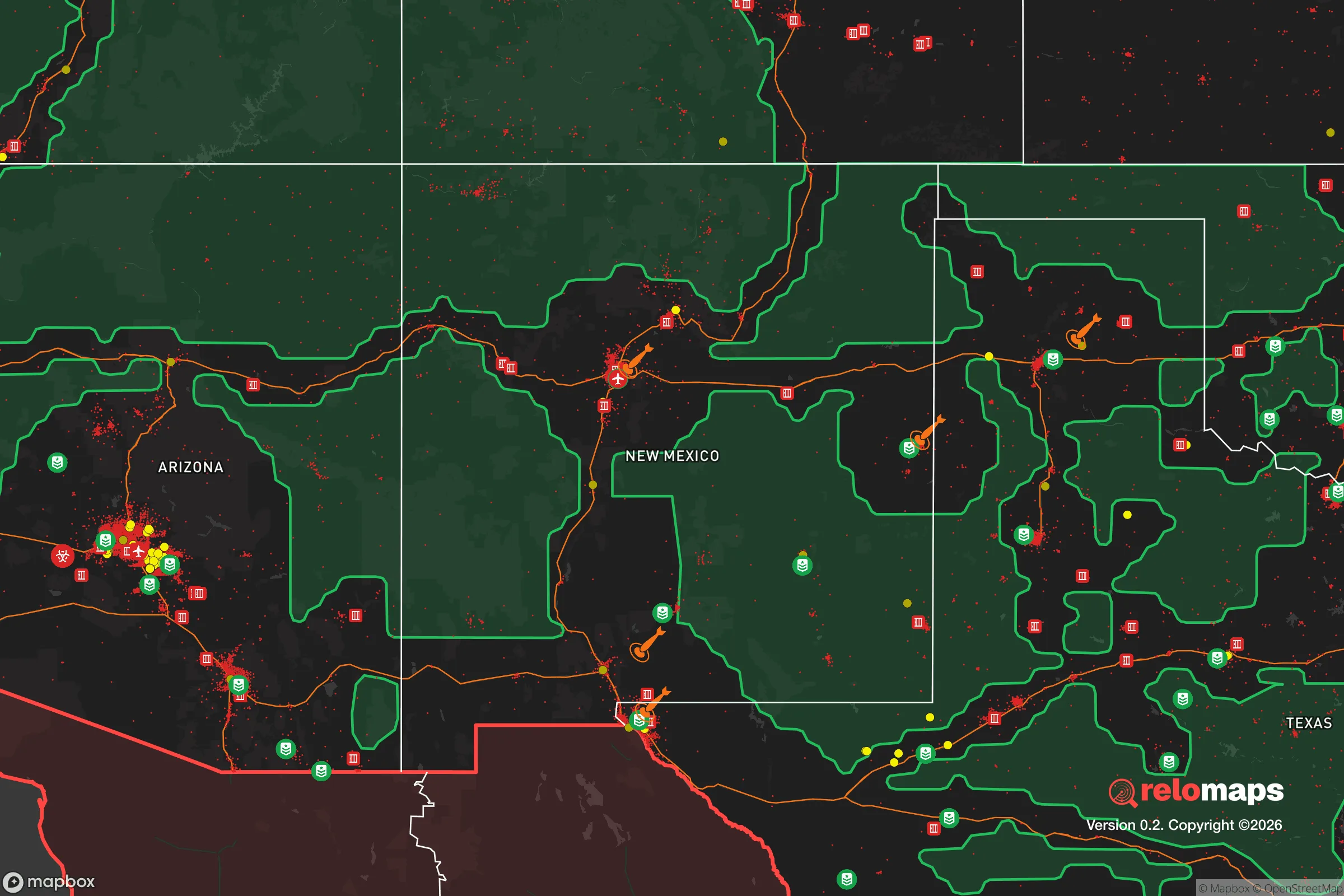


Important Note: For informational purposes only. This does not mean nothing bad ever happens in the green zones. Please use common sense. This is based on public data and modeled with AI. We tried to take a conservative approach but mistakes happen. We update this regularly as new information becomes available.
Solar Generator Recommendations
Backup power matters more here than in safer locations. We've picked three solar generators across budgets and capacity tiers — start with the budget unit if you only need a few essentials, or step up if you want to run a fridge and HVAC for days at a time.

Jackery Portable Power Station Explorer 300
Budget OptionPower on the Go: Weighing only 11 lbs, it's convenient to set up and store with book-sized foldable solar panels

BLUETTI Portable Power Station AC180
Designed for both indoor and outdoor scenarios, AC180 is highly capable as it has a robost capacity and continuous output power.

EF ECOFLOW DELTA Pro Ultra Power Station
Upgraded PickEcoFlow DELTA Pro Ultra is a whole-home energy system designed to grow with your family. Integrated with the Smart Home Panel 2, it scales to meet your evolving energy needs — keeping your home powered, intelligent, and secure through every stage of life.
We earn a commission, at no additional cost to you.
Strategic Assessment Analysis
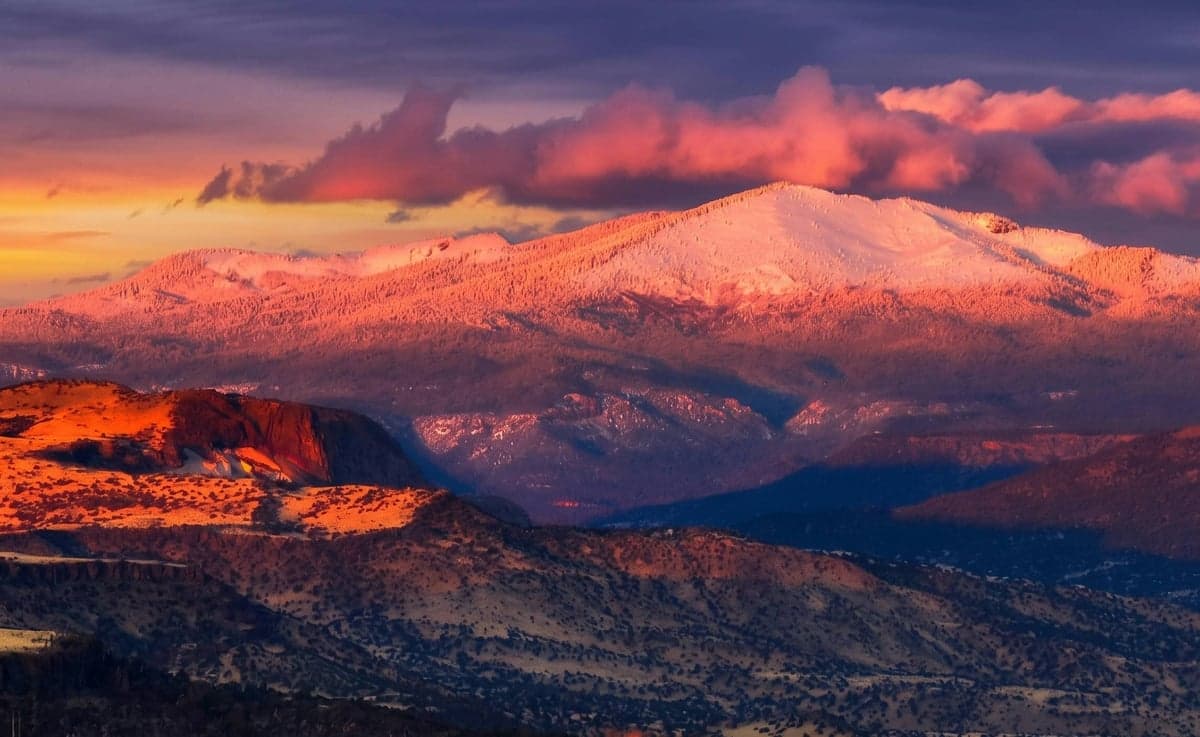
Grants, New Mexico, sits at a strategic crossroads for those prioritizing resilience and self-sufficiency in an uncertain future. Located roughly 80 miles west of Albuquerque along Interstate 40, this former uranium mining hub offers a unique blend of geographic isolation, access to critical natural resources, and a low population density that makes it a serious contender for a relocation focused on preparedness. Its position on the Colorado Plateau, with the Zuni Mountains to the south and the Continental Divide nearby, provides natural barriers and a climate that supports off-grid living, while its distance from major metropolitan centers reduces exposure to the cascading effects of civic unrest or infrastructure collapse. For the conservative-minded prepper or survivalist, Grants represents a base camp that balances accessibility with a buffer from the chaos of urban centers.
Geographic position and natural advantages for long-term survival
Grants’ location is its primary strategic asset. Sitting at an elevation of roughly 6,500 feet, the area benefits from a semi-arid climate that reduces the risk of catastrophic flooding, hurricanes, or wildfires common in other regions. The surrounding landscape is dominated by the Cibola National Forest and the Mount Taylor volcanic field, offering ample public land for hunting, foraging, and retreat. The Continental Divide, which runs just west of town, provides a natural watershed boundary, and the area’s groundwater resources—historically tapped by the uranium industry—are generally reliable, though testing is advised for contaminants. The Zuni Mountains and the Malpais lava flows create natural chokepoints and defensible terrain, making it harder for large-scale population movements or looters to approach undetected. For a relocator, this means a property in the outlying areas can offer significant tactical advantages: limited access roads, high ground for observation, and a climate that supports year-round gardening with proper planning.
Risks, exposures, and proximity to fallout-relevant landmarks
No location is without vulnerabilities, and Grants has specific exposures that must be weighed. The most significant is its proximity to the legacy of uranium mining and milling. The Grants Mineral Belt, which fueled the nation’s nuclear arsenal during the Cold War, left behind dozens of abandoned mines and mill sites, some of which still pose radiological hazards. While the EPA and state agencies have remediated many areas, the risk of residual contamination in soil and water is real—especially for those planning to drill wells or garden. The nearby Rio Puerco Valley has documented elevated levels of uranium and arsenic in groundwater, so thorough testing is non-negotiable. Additionally, Grants sits roughly 80 miles from Albuquerque, a city of over 560,000 that could become a source of refugee flow during a collapse scenario. Interstate 40 is a direct artery, meaning any major event in the Southwest could push traffic through Grants. On the positive side, the area is far from major military installations, nuclear power plants, or strategic targets like dams or refineries. The nearest significant fallout risk would be from a strike on Kirtland Air Force Base or Sandia National Laboratories near Albuquerque, but prevailing winds typically blow east, reducing direct fallout exposure for Grants. Still, a relocator should plan for at least a 100-mile buffer from any major target, and Grants barely meets that threshold.
Practical resilience for a relocator: food, water, energy, and defensibility
For the individual or family serious about self-sufficiency, Grants offers a mixed but workable picture. Water is the primary concern. Annual precipitation averages only 10-12 inches, so rainwater catchment systems must be sized aggressively—a 1,000-square-foot roof can yield roughly 6,000 gallons per year, but storage and filtration are essential. The area’s shallow aquifers are accessible but require deep wells (200-400 feet) and regular testing for heavy metals. Food production is possible but challenging. The short growing season (May to September) and alkaline soils favor cold-hardy crops like potatoes, beans, squash, and leafy greens. Greenhouse or hoop house construction is strongly recommended to extend the season. Local game includes mule deer, elk, and turkey, and the Cibola National Forest allows hunting with proper permits. Energy is a bright spot: Grants averages over 280 sunny days per year, making solar power highly viable. Off-grid solar setups with battery storage are common in the area, and local contractors are familiar with the technology. Wood heating is also practical, given the proximity to national forest lands, but firewood permits and sustainable harvesting are required. Defensibility is excellent in the outlying areas. Properties in the Zuni Mountains or near the lava flows offer natural cover and limited access. The town itself has a small police force and a county sheriff’s office, but response times in rural areas can exceed 30 minutes. A relocator should plan for a layered security approach: perimeter fencing, reinforced doors, and a neighborhood watch network. The local population is small (roughly 9,000 in the city proper) and largely conservative, with a strong independent streak—a cultural fit for those seeking like-minded neighbors.
The overall strategic picture for Grants is one of cautious optimism for the prepared relocator. It offers genuine advantages in isolation, natural resources, and a climate that supports off-grid living, but it demands serious upfront investment in water security and contamination testing. Its proximity to Albuquerque is a double-edged sword—close enough for supply runs but close enough for refugee flow. For the survivalist who values low profile, defensible terrain, and a community that doesn’t ask too many questions, Grants is a strong candidate. It is not a bug-out location for the unprepared; it is a long-term homestead for those willing to dig wells, build greenhouses, and store ammunition. If the goal is to ride out the coming storms in a place that offers both buffer and opportunity, Grants deserves a hard look.

* Values derived from national, state, county, city and local statistics and may differ in a specific area. Last updated: 2026-05-01T08:29:48.000Z
Narrative content on this page is AI-generated and may contain mistakes. Verify any details that matter before acting on them.
ReloMaps may earn a commission from affiliate links at no extra cost to you.

