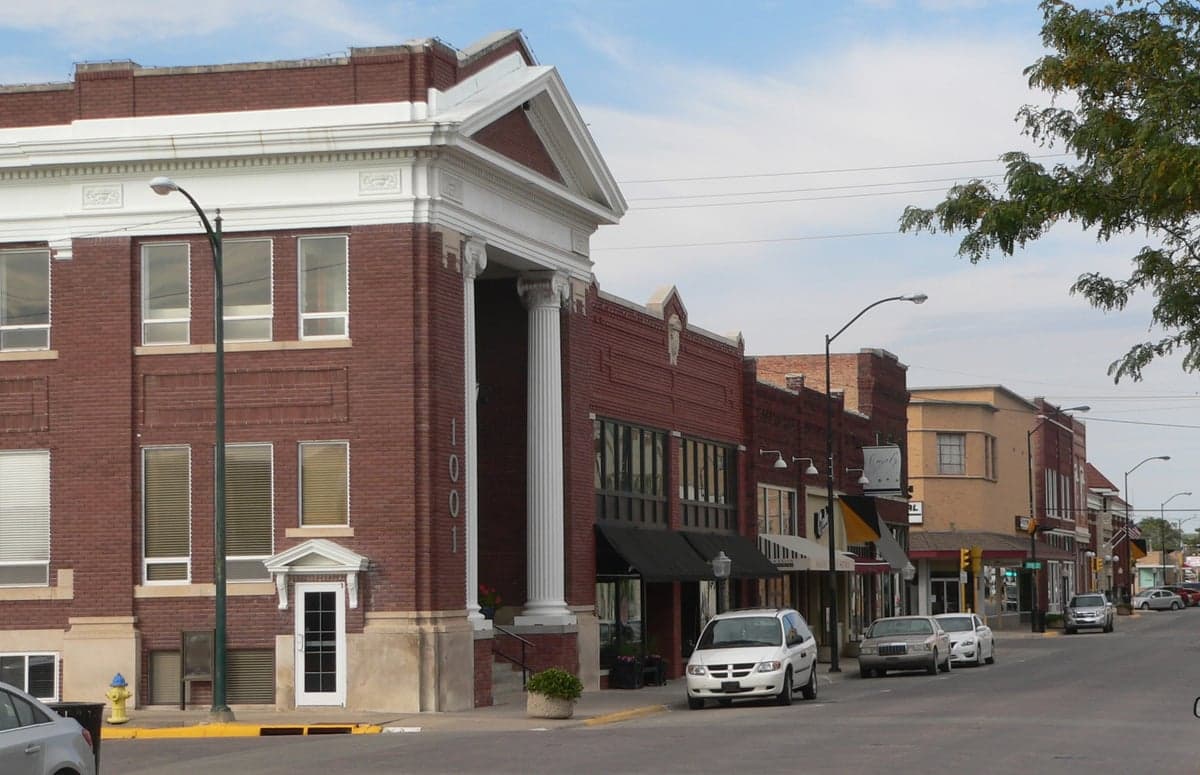
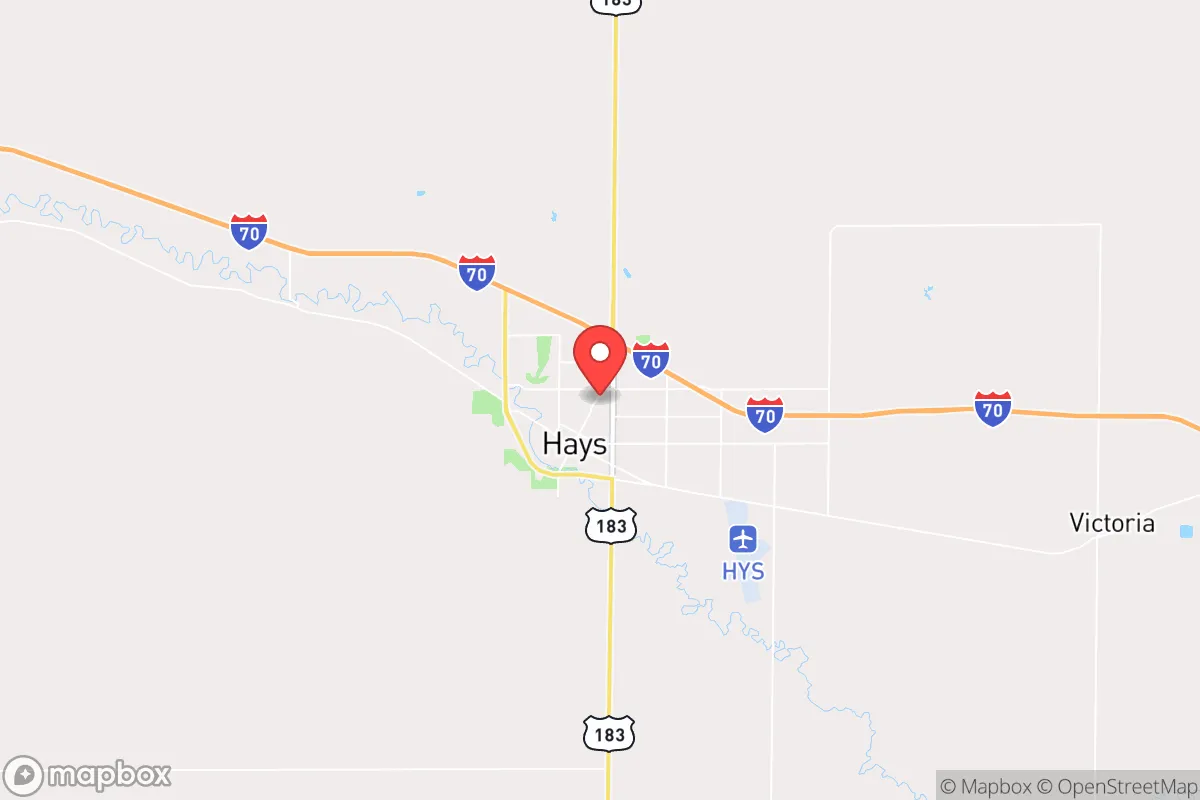
Photo: Wikipedia
Strategic Assessment of Hays, KS
Workable tactical position. Some exposure to population density or targets, but generally defensible in a crisis.
What does the Strategic Assessment tell us?
Our Strategic Assessment grades tactical survivability of an area. Major population centers, military targets, fallout zones, natural disasters, and border exposure all drive risk — lower exposure means a more defensible position in a crisis.
This is heavily inspired by Joel Skousen's Strategic Relocation book. Highly recommended you checkout the book ($)What does this tell us?
Our Strategic Assessment grades tactical survivability of an area. Major population centers, military targets, fallout zones, natural disasters, and border exposure all drive risk — lower exposure means a more defensible position in a crisis.
This is heavily inspired by Joel Skousen's Strategic Relocation book. Highly recommended you checkout the book ($)Strategic Pillars

Key Distances
Regional Safe Places
Below is our recommended "safe zones" in Kansas and the surrounding area based on our strategic heuristics. For most people, it's unrealistic to live in a “safe zone” full-time due to work, family or other personal reasons. They tend to be more rural. However, many of these areas are perfect for second homes and retreat properties that double as a vacation home or even a short-term rental.
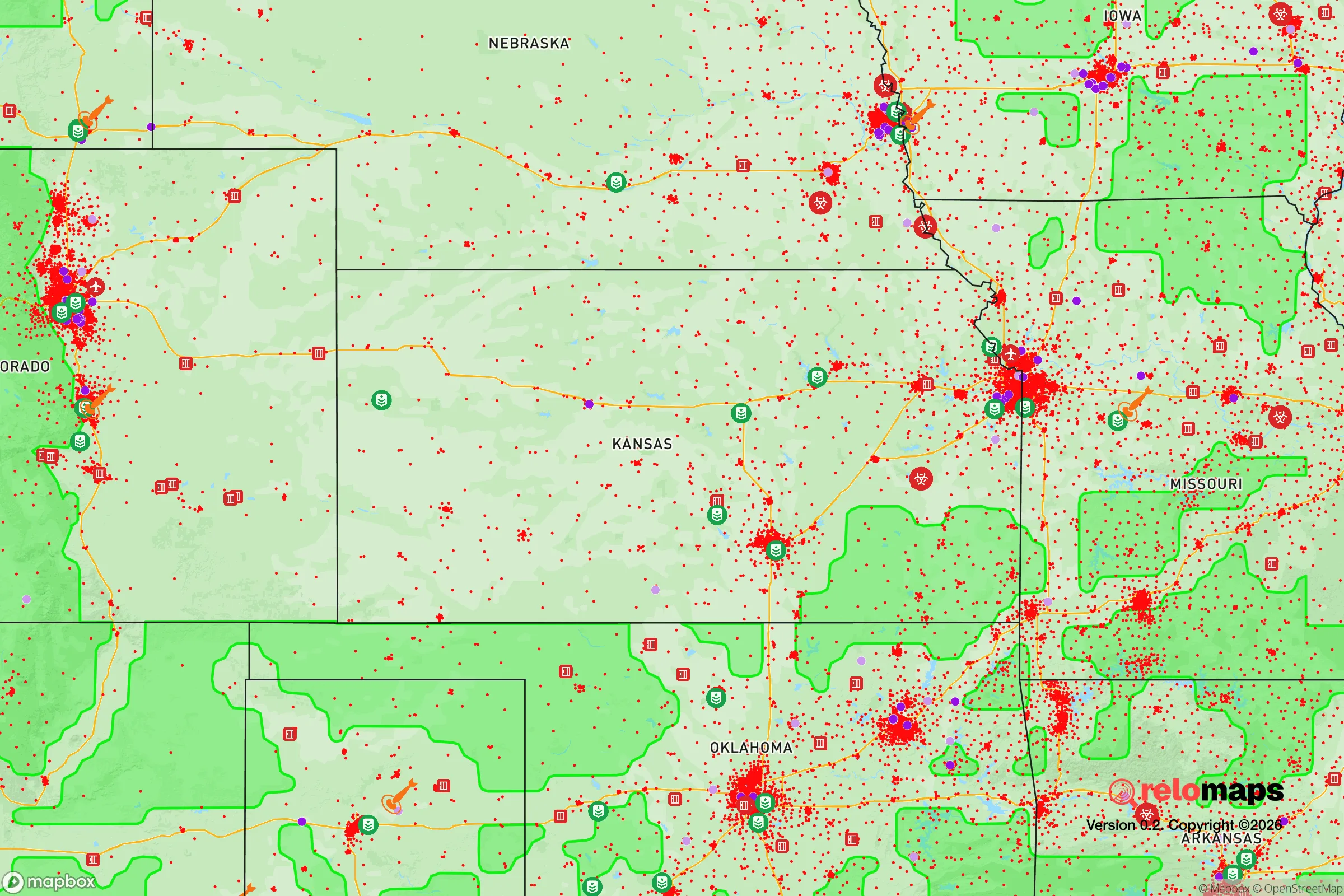
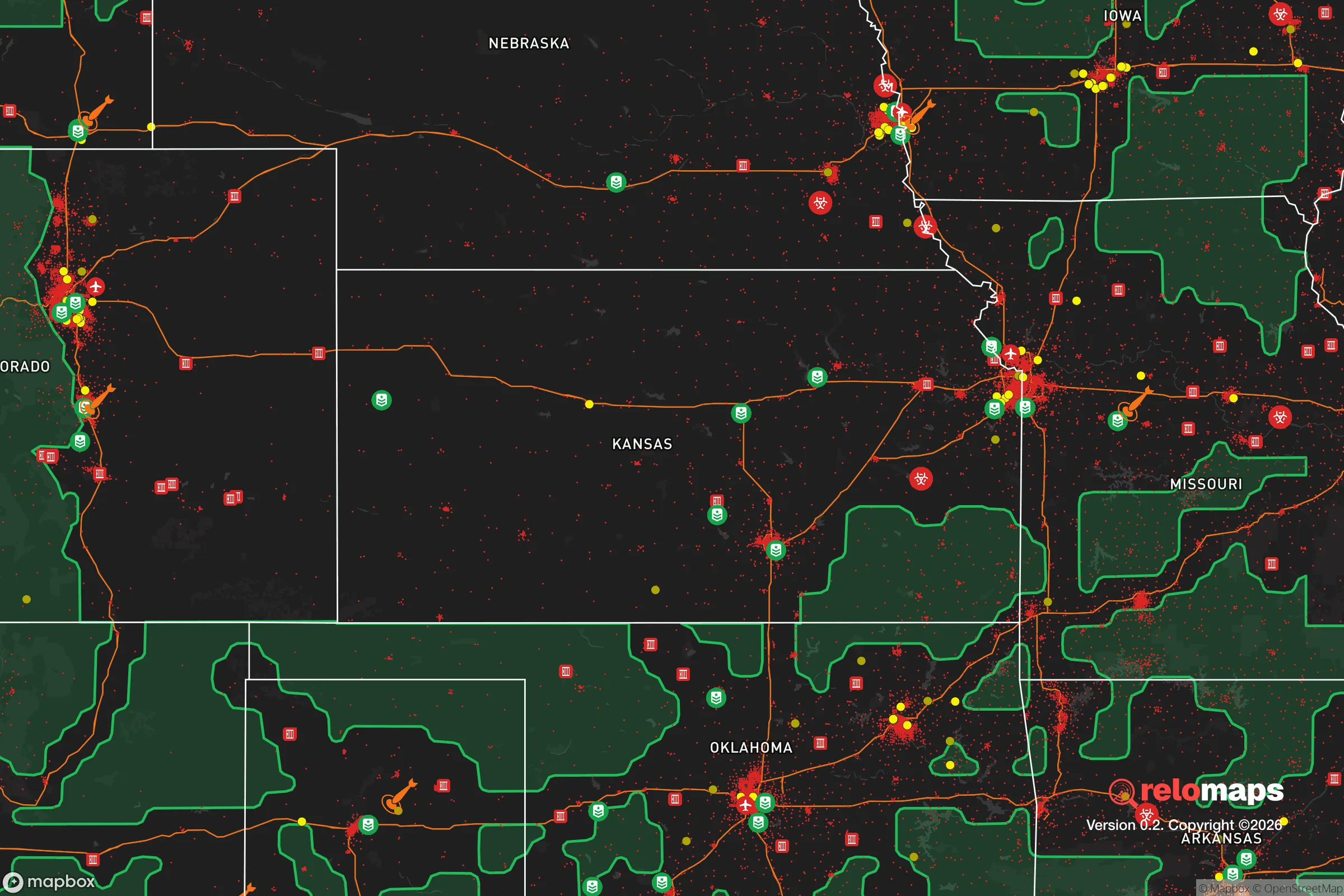


Important Note: For informational purposes only. This does not mean nothing bad ever happens in the green zones. Please use common sense. This is based on public data and modeled with AI. We tried to take a conservative approach but mistakes happen. We update this regularly as new information becomes available.
Solar Generator Recommendations
Backup power matters more here than in safer locations. We've picked three solar generators across budgets and capacity tiers — start with the budget unit if you only need a few essentials, or step up if you want to run a fridge and HVAC for days at a time.

Jackery Portable Power Station Explorer 300
Budget OptionPower on the Go: Weighing only 11 lbs, it's convenient to set up and store with book-sized foldable solar panels

BLUETTI Portable Power Station AC180
Designed for both indoor and outdoor scenarios, AC180 is highly capable as it has a robost capacity and continuous output power.

EF ECOFLOW DELTA Pro Ultra Power Station
Upgraded PickEcoFlow DELTA Pro Ultra is a whole-home energy system designed to grow with your family. Integrated with the Smart Home Panel 2, it scales to meet your evolving energy needs — keeping your home powered, intelligent, and secure through every stage of life.
We earn a commission, at no additional cost to you.
Strategic Assessment Analysis
Hays, Kansas, sits as a strategic outlier on the High Plains—a resilient island of relative stability in a state increasingly defined by the pull of larger, more vulnerable metros. Its location along Interstate 70, roughly midway between Denver and Kansas City, offers a unique blend of isolation and connectivity that appeals to those thinking about long-term security. For a conservative-leaning relocator concerned with civic unrest, supply chain disruptions, or mass casualty events, Hays presents a compelling case: a community that is geographically buffered, economically grounded in agriculture and energy, and culturally predisposed to self-reliance. This assessment digs into the specific factors that make Hays a serious consideration for anyone prioritizing preparedness and strategic depth.
Geographic position and natural advantages for long-term security
Hays occupies a sweet spot on the map that is hard to replicate. It sits in Ellis County, in the Smoky Hills region, which provides slightly more varied terrain than the flat tablelands to the west—think rolling hills, limestone outcrops, and the Saline River valley. This topography offers modest natural defensibility and better water drainage than flatter areas prone to flooding. The city is over 200 miles from the nearest major population center (Wichita, Denver, Kansas City), placing it well outside the immediate fallout zone of any large-scale urban disaster, whether natural or man-made. The surrounding area is sparsely populated, with a county population density of roughly 20 people per square mile. That low density means fewer targets, less competition for resources in a crisis, and a reduced risk of being caught in a mass evacuation corridor. The local climate is semi-arid, with about 20 inches of annual precipitation—enough to support dryland farming and grazing, but not so much that flooding or mold becomes a chronic issue. Winters are cold but manageable, and summers are hot and dry, which simplifies long-term food storage and water management compared to humid regions.
Risks, exposures, and proximity to fallout-relevant landmarks
No location is without vulnerabilities, and Hays has a few that demand attention. The most obvious is its position along Interstate 70, a major east-west artery. In a national emergency—whether a pandemic, civil unrest, or a coordinated attack—I-70 could become a chokepoint or a vector for displaced populations. Hays sits about 150 miles from the geographic center of the continental US, which is near Lebanon, Kansas. That central location is a double-edged sword: it's far from coastal targets, but it also places the region within plausible range of Minuteman III missile silos in western Kansas and Nebraska. While the silos themselves are hardened, a nuclear exchange would create fallout patterns that could affect the High Plains depending on wind direction. The nearest major military installation is Fort Riley, about 120 miles east, which is a significant asset in terms of regional stability but also a potential target. On the plus side, Hays is far from any major petrochemical refineries, nuclear power plants, or large-scale industrial complexes that would be primary targets in a conflict. The local economy is anchored by Fort Hays State University and the Hays Medical Center, both of which are resilient institutions that would remain operational in most scenarios. The biggest day-to-day risk is probably severe weather—tornadoes, hail, and occasional blizzards—but these are manageable with proper preparation and are not existential threats.
Practical resilience for a relocator: food, water, energy, and defensibility
For someone serious about self-sufficiency, Hays offers a strong baseline. The city sits atop the Ogallala Aquifer, one of the largest freshwater aquifers in the world. While the aquifer is being depleted in parts of western Kansas, the Hays area still has reliable access to groundwater, and the city's municipal water supply is drawn from wells that tap into this resource. That means a well on your property—if you buy land outside city limits—can provide a secure, independent water source. The region is also a major agricultural hub: Ellis County produces significant wheat, corn, and sorghum, and there is a strong ranching presence. Local farmers' markets, co-ops, and direct-from-producer meat sales are common, making it feasible to build a local food network without relying on national supply chains. Energy is another strong point. Kansas is a net exporter of electricity, and the local grid is served by Midwest Energy, a cooperative that has invested in distributed generation and grid hardening. Natural gas is widely available, and the area has excellent solar potential—over 260 sunny days per year—making off-grid solar a realistic option. For defensibility, the terrain offers natural chokepoints along the river valleys and limestone ridges. The community itself is tight-knit, with a strong culture of volunteerism and mutual aid, particularly through churches and local agricultural organizations. The Ellis County Sheriff's Office and Hays Police Department are well-regarded and maintain good community relations, which is a stabilizing factor in times of stress. The biggest practical challenge is the lack of dense forest cover for timber or concealment, but the open landscape also means you can see threats coming from a long way off.
The overall strategic picture for Hays is one of calculated trade-offs. It is not a fortress, nor is it a remote bunker in the mountains. It is a functioning small city with a resilient economic base, a conservative cultural fabric, and a geographic position that buffers it from the worst of what a collapsing urban system might produce. The risks—proximity to I-70, the Ogallala's long-term viability, and the theoretical fallout from a nuclear exchange—are real but manageable with planning. For the relocator who values community, self-reliance, and a lower profile, Hays offers a solid foundation. It is the kind of place where you can build a life that is prepared without being paranoid, where the local hardware store still stocks what you need, and where your neighbors will notice if you haven't been seen in a few days. That is a form of security that no amount of stockpiling can replace.

* Values derived from national, state, county, city and local statistics and may differ in a specific area. Last updated: 2026-04-30T04:32:43.000Z
Narrative content on this page is AI-generated and may contain mistakes. Verify any details that matter before acting on them.
ReloMaps may earn a commission from affiliate links at no extra cost to you.

