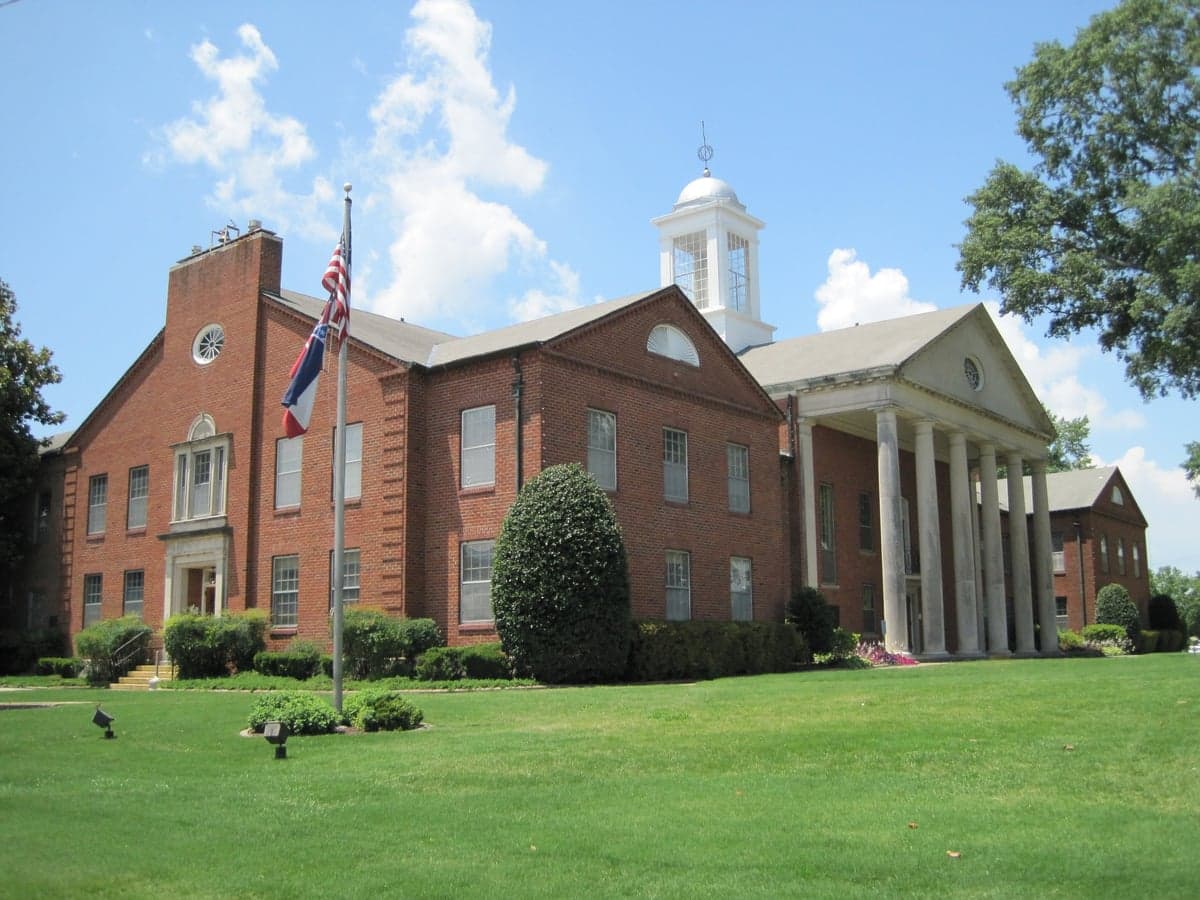
Photo: Wikipedia
Political ClimatePolitical Climate in Hernando, MS
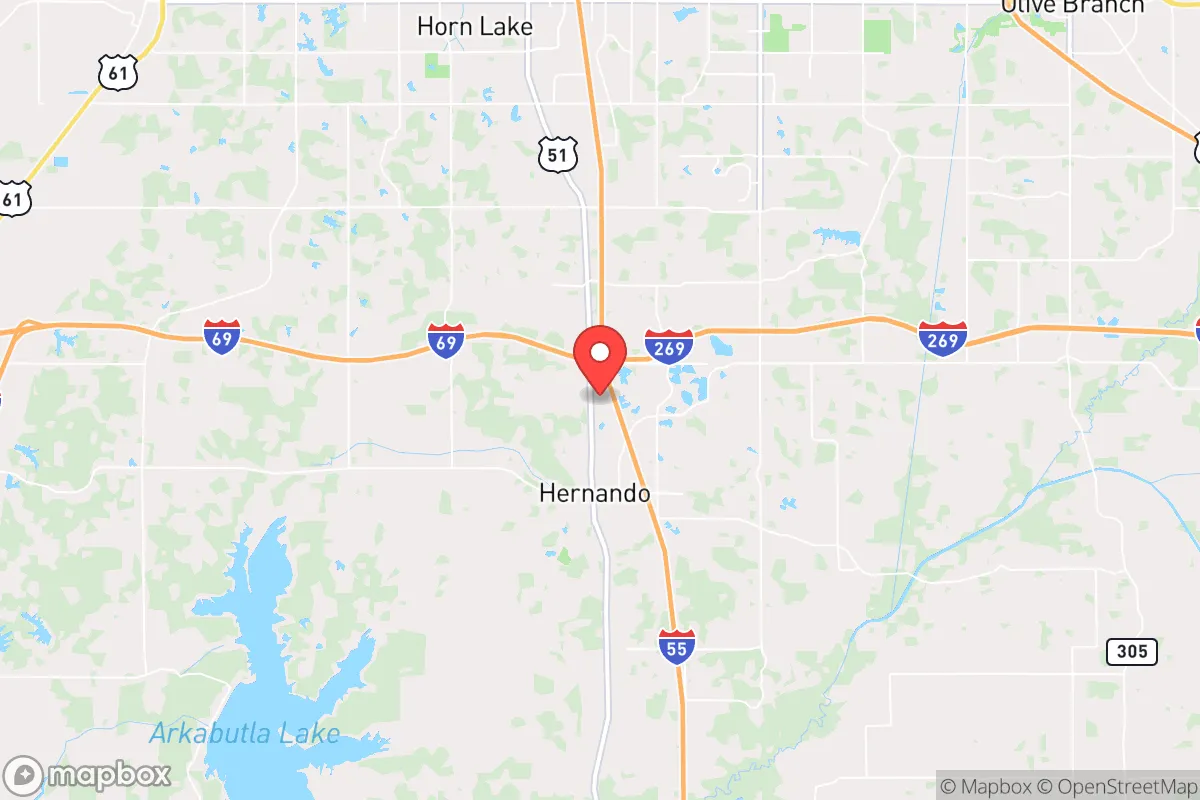
District shown is the primary district for this city’s centroid. Cities may span multiple districts.
Local Political AnalysisPolitical Analysis of Hernando, MS
Hernando, Mississippi, sits squarely in one of the most reliably conservative corners of the country, with a Cook PVI of R+18 that tells you almost everything you need to know about the local voting patterns. This isn't a purple area that flips back and forth—it's deep red territory where Republican candidates routinely win by double digits, and the political culture reflects that stability. If you've been around here long enough, you remember when DeSoto County was even more rural and the politics were just as consistent, but the growth from Memphis spillover has actually reinforced the conservative bent rather than diluted it. The trajectory is steady: Hernando remains a place where traditional values and limited-government thinking aren't just tolerated, they're expected.
How it compares
Drive twenty minutes north into Memphis, Tennessee, and you're in a completely different political universe—Shelby County votes reliably Democratic, with a Cook PVI of D+28, making the contrast between Hernando and its big-city neighbor about as stark as it gets in the Mid-South. Closer to home, towns like Olive Branch and Southaven lean conservative too, but Hernando has a slightly more small-town, slower-growth feel that keeps the politics even more grounded in local control and personal responsibility. The real eye-opener is when you look at what's happening in places like Oxford or Jackson—those areas have shifted noticeably leftward in recent cycles, with progressive policies creeping into school boards and county commissions. Hernando has largely resisted that drift, and most folks here see that as a good thing, a sign that the community still values common sense over the latest ideological fads coming out of Washington or state capitals elsewhere.
What this means for residents
For someone moving here, the political climate means you can expect a government that mostly stays out of your business—low taxes, minimal red tape on property and business, and a school system that hasn't been hijacked by the kind of curriculum battles you see in blue states. The downside, if you can call it that, is that if you're hoping for rapid progressive change on social issues or a big expansion of public programs, you'll be frustrated; the county supervisors and state legislators here are elected precisely because they promise to keep things lean and local. Property taxes in DeSoto County are among the lowest in the Memphis metro area, and there's no city income tax, which is a direct reflection of the fiscal conservatism that voters demand. Long-term, the concern among long-time residents is that the continued influx from Memphis could eventually bring more progressive voting blocs, but so far the newcomers tend to be families looking for better schools and safer neighborhoods, which usually means they align with the existing conservative majority.
Culturally, Hernando stands out for its emphasis on Second Amendment rights and local autonomy—you won't find the kind of restrictive gun ordinances or business mandates that are common just across the state line. The city council and county board have consistently pushed back against state-level overreach when it comes to property rights and zoning, preferring to let neighborhoods and homeowners make their own decisions. One notable policy distinction is that DeSoto County remains a stronghold for school choice and parental rights in education, with minimal interference from state-level curriculum mandates that have caused headaches in other parts of Mississippi. If you value a community where the government's default answer is "no" unless there's a clear, limited reason to say "yes," Hernando delivers that in spades. The long-term outlook depends on whether the area can maintain its character as more people discover it, but for now, the political climate here is about as stable and freedom-oriented as you'll find in the Mid-South.

State Political ClimatePolitical Climate in Mississippi
State Political AnalysisPolitical Environment in the State
Mississippi is one of the most reliably conservative states in the country, with a Republican lean that has only deepened over the past two decades. The state voted for Donald Trump by 16 points in 2024, and every statewide elected office is held by a Republican. The dominant coalition is a mix of rural white voters, evangelical Christians, and a growing number of suburban families fleeing the chaos of larger metros. The trajectory since the early 2000s has been a steady march rightward: Democrats held the governorship as recently as 2003, but today the party is effectively non-competitive outside of a handful of majority-Black counties and the city of Jackson.
Urban vs. rural divide
The political map of Mississippi is starkly divided between its rural expanses and its few urban centers. The state’s largest metro, the Jackson area (Hinds, Madison, and Rankin counties), is a microcosm of the national divide. Hinds County, which includes most of Jackson proper, is deeply Democratic and heavily Black, voting for Biden by 50 points in 2020. But drive 15 minutes north to Madison County, and you’re in one of the most reliably Republican suburbs in the South — it went for Trump by 30 points. The Gulf Coast cities of Biloxi and Gulfport lean more moderate, but the surrounding Harrison County has been trending red since 2016. The DeSoto County suburbs near Memphis — places like Southaven and Olive Branch — are solidly Republican, fueled by families who want Tennessee-style politics without the state income tax. Meanwhile, the Mississippi Delta, including towns like Greenville and Clarksdale, remains a Democratic stronghold due to its large Black population, but these areas are shrinking fast. The real story is the rural-to-exurban belt: counties like Lamar, Lee, and Rankin are growing and voting 70-80% Republican, pulling the state’s center of gravity further right every cycle.
Policy environment
Mississippi’s policy environment is aggressively conservative by design. The state has a flat income tax that was cut from 5% to 4% in 2022, with a phase-down to zero by 2032 — making it one of the few states on a path to full income tax elimination. Property taxes are among the lowest in the nation, and there is no estate or inheritance tax. The regulatory climate is business-friendly, with a right-to-work law and minimal zoning restrictions outside of a few cities. On education, Mississippi has leaned into school choice: the state expanded its Education Scholarship Account program in 2024 to cover nearly all students, allowing parents to use public funds for private school, homeschooling, or tutoring. Healthcare is a mixed bag — the state has not expanded Medicaid under Obamacare, which keeps premiums lower for private plans but leaves a coverage gap for low-income adults. Election laws are secure: voter ID is required, absentee ballot drop boxes are banned, and same-day voter registration does not exist. The state also passed a 2023 law banning ranked-choice voting before it could gain traction. For a conservative family, the policy environment is about as friendly as it gets — low taxes, school choice, and election integrity are baked into the code.
Trajectory & freedom
Mississippi is moving in the direction of more personal freedom, not less, especially when measured against the national trend. The 2024 permitless carry law (HB 413) allows any law-abiding adult to carry a concealed firearm without a license, joining 25 other states. Parental rights were strengthened with the 2023 Parents’ Bill of Rights (SB 2695), which requires schools to notify parents of any medical or mental health services offered to their child and bans classroom instruction on sexual orientation or gender identity through sixth grade. Medical freedom took a hit during COVID — the state had mask mandates and business closures — but the legislature responded by passing a 2023 law banning vaccine mandates for state employees and contractors. Property rights are strong: Mississippi has no statewide zoning code, and counties are limited in their ability to impose land-use restrictions. The biggest threat to freedom in the state is arguably the overreach of local governments in a few cities — Jackson’s water crisis, for example, was a failure of municipal governance, not state policy. Overall, the state legislature has been proactive in rolling back federal overreach and protecting individual rights, and the trend is accelerating.
Civil unrest & political movements
Mississippi has seen relatively little civil unrest compared to other states, but there have been flashpoints. The 2020 George Floyd protests in Jackson and Oxford turned violent, with property damage and clashes with police, but they were small compared to Portland or Seattle. The state’s political movements are dominated by grassroots conservative activism: the Mississippi Freedom Caucus, a group of hardline state legislators, has pushed for further tax cuts, school choice expansion, and election integrity measures. On the left, the Mississippi Poor People’s Campaign and the NAACP have organized around Medicaid expansion and criminal justice reform, but they have little legislative success. Immigration politics are muted — Mississippi has a small foreign-born population (about 2.5%), and the state passed a 2011 law (HB 56) modeled on Arizona’s SB 1070, requiring police to check immigration status during lawful stops. There is no sanctuary city movement; in fact, the state banned sanctuary policies in 2019. Election integrity controversies have been minimal, though the 2020 gubernatorial race saw a brief dispute over absentee ballot counting in Hinds County. A new resident would notice that political signs are everywhere — especially in rural areas — and that local politics is a common topic of conversation, but the tone is generally civil and focused on policy rather than personal attacks.
Projection
Over the next 5-10 years, Mississippi will likely become even more conservative. The demographic trends favor the GOP: the white population is aging in place, while the Black population is slowly declining due to out-migration to Atlanta and other Southern metros. The fastest-growing counties are DeSoto, Lamar, and Rankin — all Republican strongholds. In-migration is modest but positive, with new residents coming from California, Illinois, and New York, drawn by low taxes and a slower pace of life. These newcomers tend to be conservative-leaning, though some bring moderate suburban views on issues like marijuana legalization (medical cannabis was legalized in 2022, but recreational use remains illegal). The biggest wildcard is the state’s economy: if the tax cuts to zero income tax succeed in attracting business investment, the growth could accelerate and bring more diverse political views. But given the current trajectory, a family moving to Mississippi in 2026 should expect to find a state that is more conservative in 2036 than it is today — lower taxes, more school choice, stronger gun rights, and a culture that values personal responsibility over government solutions.
For a new resident, the bottom line is this: Mississippi offers a political environment where conservative values are not just tolerated but actively protected by state law. You will find low taxes, secure elections, strong parental rights, and a culture that respects individual freedom. The trade-offs are real — the state has high poverty rates, poor health outcomes in some areas, and limited urban amenities — but if your priority is living in a place where the government stays out of your life and your family’s decisions, Mississippi is one of the best bets in the country. Just know that the politics are not evenly distributed: stick to the suburbs and rural areas if you want to avoid the dysfunction of Jackson, and you’ll find a community that shares your values.
* Values derived from national, state, county, city and local statistics and may differ in a specific area. Last updated: 2026-04-30T15:31:29.000Z
Narrative content on this page is AI-generated and may contain mistakes. Verify any details that matter before acting on them.
ReloMaps may earn a commission from affiliate links at no extra cost to you.

