Photo: Wikipedia
Strategic Assessment of Hoffman Estates, IL
Multiple tactical vulnerabilities. Population density, target proximity, or disaster risk are likely compounding. A retreat property and exit planning is required.
What does the Strategic Assessment tell us?
Our Strategic Assessment grades tactical survivability of an area. Major population centers, military targets, fallout zones, natural disasters, and border exposure all drive risk — lower exposure means a more defensible position in a crisis.
This is heavily inspired by Joel Skousen's Strategic Relocation book. Highly recommended you checkout the book ($)What does this tell us?
Our Strategic Assessment grades tactical survivability of an area. Major population centers, military targets, fallout zones, natural disasters, and border exposure all drive risk — lower exposure means a more defensible position in a crisis.
This is heavily inspired by Joel Skousen's Strategic Relocation book. Highly recommended you checkout the book ($)Strategic Pillars

Key Distances
Regional Safe Places
Below is our recommended "safe zones" in Illinois and the surrounding area based on our strategic heuristics. For most people, it's unrealistic to live in a “safe zone” full-time due to work, family or other personal reasons. They tend to be more rural. However, many of these areas are perfect for second homes and retreat properties that double as a vacation home or even a short-term rental.
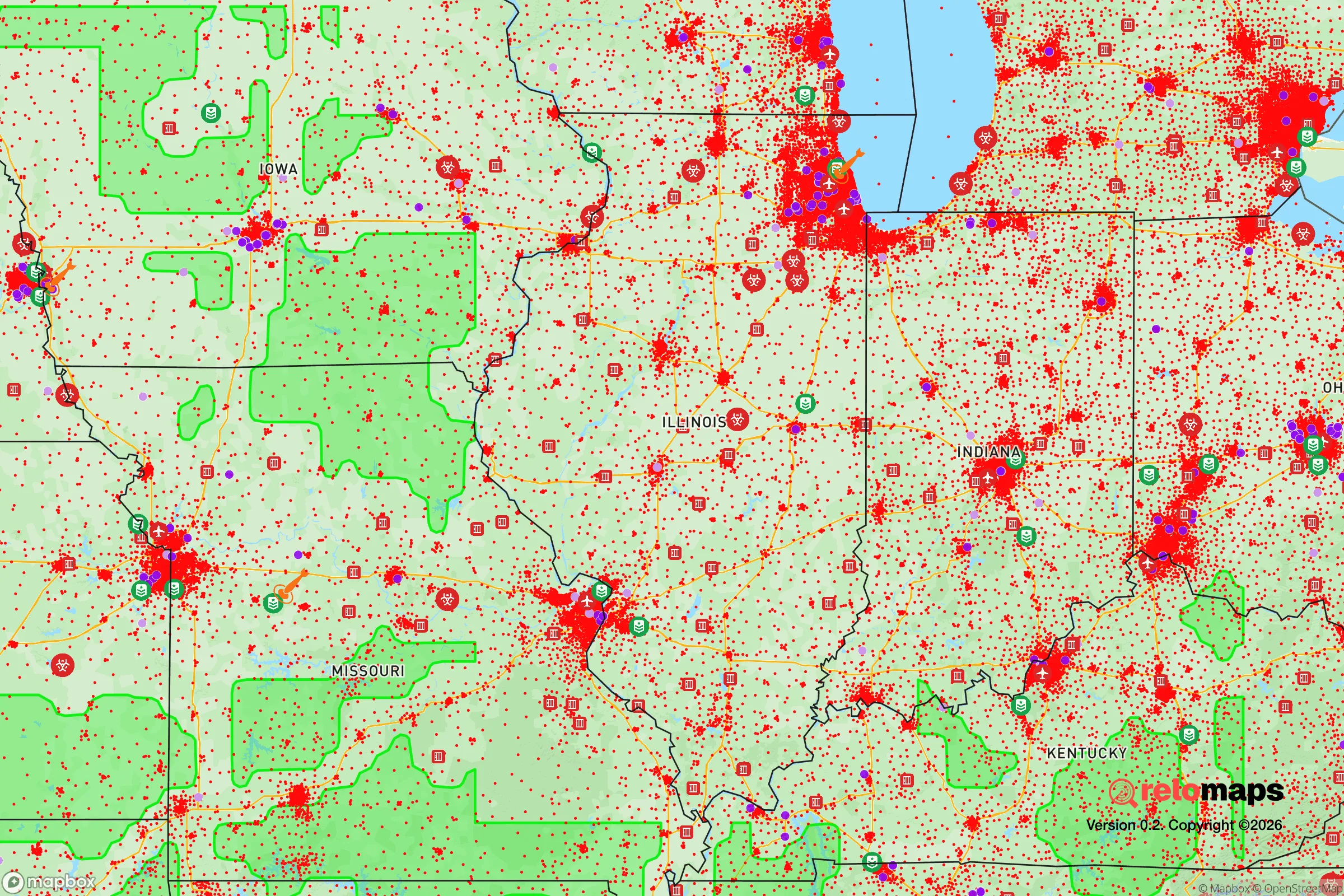
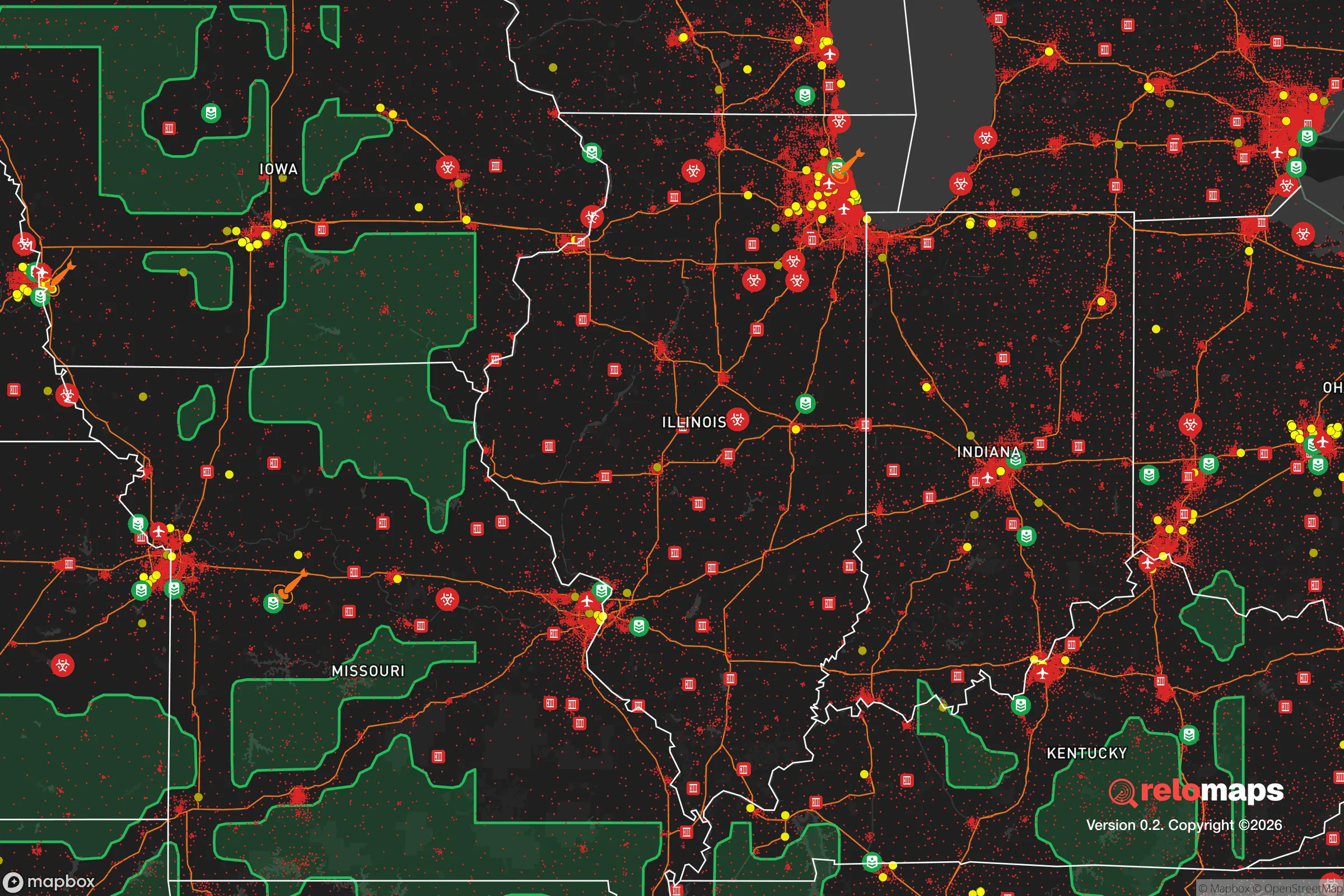


Important Note: For informational purposes only. This does not mean nothing bad ever happens in the green zones. Please use common sense. This is based on public data and modeled with AI. We tried to take a conservative approach but mistakes happen. We update this regularly as new information becomes available.
Solar Generator Recommendations
Backup power matters more here than in safer locations. We've picked three solar generators across budgets and capacity tiers — start with the budget unit if you only need a few essentials, or step up if you want to run a fridge and HVAC for days at a time.

Jackery Portable Power Station Explorer 300
Budget OptionPower on the Go: Weighing only 11 lbs, it's convenient to set up and store with book-sized foldable solar panels

BLUETTI Portable Power Station AC180
Designed for both indoor and outdoor scenarios, AC180 is highly capable as it has a robost capacity and continuous output power.

EF ECOFLOW DELTA Pro Ultra Power Station
Upgraded PickEcoFlow DELTA Pro Ultra is a whole-home energy system designed to grow with your family. Integrated with the Smart Home Panel 2, it scales to meet your evolving energy needs — keeping your home powered, intelligent, and secure through every stage of life.
We earn a commission, at no additional cost to you.
Strategic Assessment Analysis
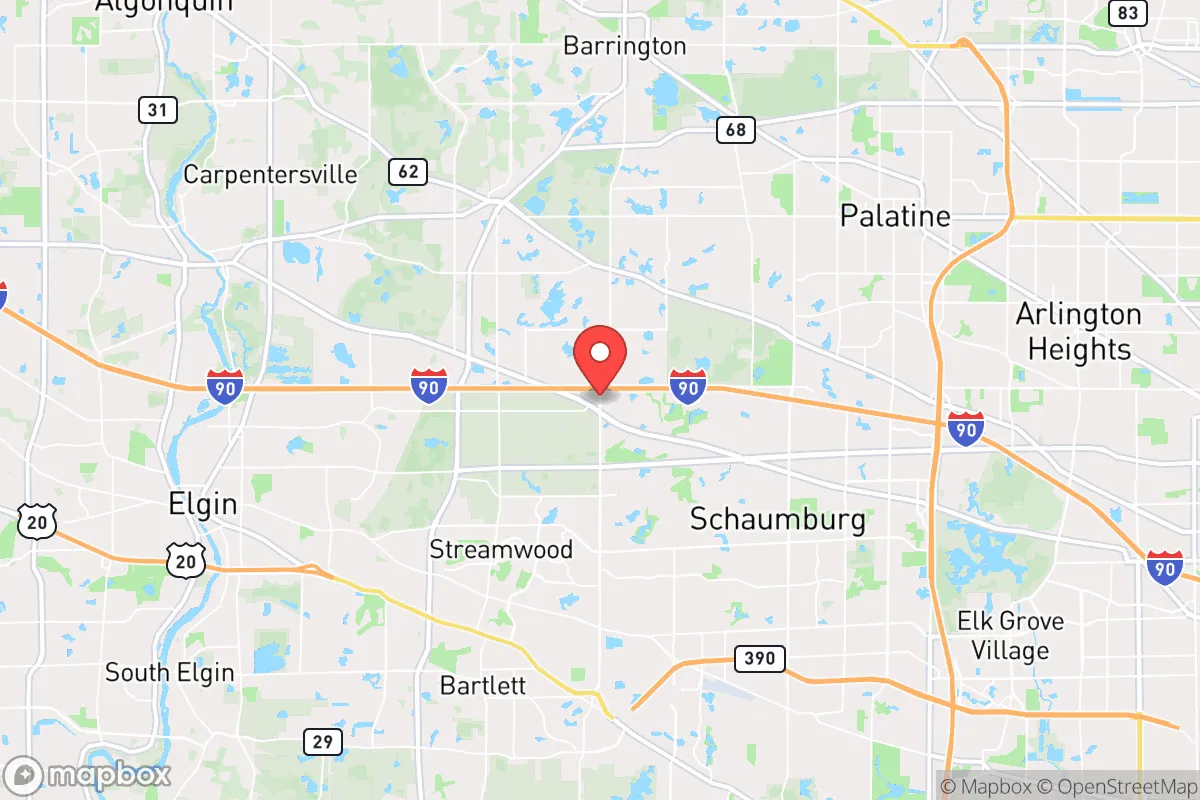
Hoffman Estates, Illinois, sits in a precarious but potentially advantageous position for the strategic relocator. Located roughly 30 miles northwest of Chicago’s Loop, it offers a buffer from the immediate blast radius of a major urban catastrophe while still being close enough to leverage the region’s infrastructure for supply runs or medical access in a non-crisis scenario. The village’s post-2000 development boom, anchored by the massive Sears Centre arena and corporate campuses like those of AT&T and Zurich Insurance, has created a suburban grid with decent road networks and a mix of older, tree-covered residential pockets and newer, more exposed subdivisions. For someone thinking in terms of resilience, the key question isn’t whether Hoffman Estates is a bunker—it isn’t—but whether it provides a workable base for a family or individual to ride out the first 72 hours to two weeks of a major disruption, and then transition to a more sustainable posture.
Geographic position and natural advantages for a survival scenario
Hoffman Estates benefits from its location on the edge of the suburban sprawl, where the built environment begins to give way to the agricultural flatlands of Kane and McHenry counties. The village sits on a high point in the region—the Valparaiso Moraine—which means drainage is generally good and flooding risks are lower than in the river towns to the west. The nearby Poplar Creek Forest Preserve and the larger Busse Woods to the east provide pockets of cover, game (deer, turkey, small game), and potential water sources, though none are reliable for long-term subsistence. The area’s natural advantages are modest: the flat terrain makes defensive positioning difficult, but the lack of dense forest also means fewer ambush points for a hostile group. The soil is decent for small-scale gardening if you have a south-facing plot, but the growing season is short (roughly 150 days) and the winters are brutal—January averages around 18°F, with wind chills that can kill an unprepared person in hours. For a prepper, the key natural advantage is the proximity to the Fox River (about 10 miles west) and the Chain O’Lakes region (about 20 miles north), which offer secondary water sources and fishing opportunities, but these are also likely to be contested zones in a collapse scenario.
Risks, exposures, and proximity to fallout-relevant landmarks
The single biggest risk for a Hoffman Estates relocator is the proximity to Chicago’s O’Hare International Airport, roughly 12 miles east as the crow flies. O’Hare is a Tier 1 target for any strategic strike—conventional or nuclear—and a major chokepoint for air traffic that could become a refugee funnel in a crisis. The village also sits within 20 miles of the Argonne National Laboratory (a DOE research facility) and the Fermi National Accelerator Laboratory, both of which are potential secondary targets or sources of radiological contamination in a worst-case event. The I-90 corridor, which runs along the northern edge of Hoffman Estates, is a double-edged sword: it provides rapid egress west toward Rockford and the Mississippi River, but it will also be the primary evacuation route for hundreds of thousands of Chicagoans, meaning it will gridlock within hours of any major event. The village itself has no major industrial hazards—no chemical plants, no refineries—but the nearby Medline Industries distribution center and the large data centers along the corridor could become looting targets for electronics and medical supplies. The biggest exposure is demographic: Hoffman Estates has a population of about 52,000, with a median household income around $80,000, making it a middle-to-upper-middle-class suburb that would attract desperate people from the city in a crisis. The village’s police force is competent but small (around 70 sworn officers), and mutual aid agreements with neighboring towns like Schaumburg and Palatine would be strained in a regional emergency.
Practical resilience for a relocator: food, water, energy, and defensibility
For a family or individual looking to hunker down for two to four weeks, Hoffman Estates offers a mixed bag. Water is the most critical vulnerability: the village draws from Lake Michigan via the Chicago water system, which means any disruption to the city’s infrastructure—pump failure, contamination, or sabotage—would leave Hoffman Estates dry within days. A prepper should plan on storing at least 14 gallons per person (the standard two-week minimum) and have a backup plan for rainwater collection or a well-drilling service, though most residential lots are too small for a private well. Food is less of a concern in the short term: the area is dense with grocery stores (Jewel-Osco, Mariano’s, Aldi) and big-box retailers (Costco, Walmart, Target), all within a 10-minute drive. The problem is that these will be stripped bare within hours of a panic event, so a prepper needs to have a 30-day supply already in place. Energy is a bright spot: the grid is relatively modern, with underground power lines in many newer subdivisions, and natural gas is widely available for heating and cooking. Solar panels are viable—the area gets about 4.5 peak sun hours per day—but homeowners associations (HOAs) in many Hoffman Estates neighborhoods restrict visible panels, so a ground-mounted or detached garage setup may be necessary. Defensibility is the weak point: most homes are on quarter-acre lots with open sightlines, and the street grid is a predictable suburban pattern that offers few natural chokepoints. A corner lot with a fence and a reinforced front door is about the best you can do without drawing attention. The village’s location on the edge of the sprawl does offer one strategic advantage: you can bug out west on back roads (Roselle Road, Barrington Road) to reach rural areas like Hampshire or Genoa within 45 minutes, where the population density drops and the land opens up for more sustainable living.
The overall strategic picture for Hoffman Estates is one of calculated risk. It is not a survivalist paradise—it lacks the water security, defensible terrain, and low population density that a true retreat would offer. But for a relocator who is not ready to go full off-grid, it provides a workable middle ground: close enough to Chicago to access jobs and medical care in normal times, but far enough to avoid the worst of a city-scale disaster. The key is to treat Hoffman Estates as a staging ground, not a final destination. A prepper here should have a bug-out vehicle prepped, a cache of supplies at a secondary location west of the Fox River, and a network of contacts in the rural counties. The village’s biggest strength is its ordinariness—it doesn’t scream “prepper” and won’t attract attention in a crisis. Its biggest weakness is that ordinariness also means it will be a target for refugees and looters when the system breaks. If you’re willing to put in the work on water storage, perimeter security, and a solid evacuation plan, Hoffman Estates can work as a base for the first few weeks. After that, you’ll want to be somewhere with a well, a garden, and a lot more space between you and the next person.

* Values derived from national, state, county, city and local statistics and may differ in a specific area. Last updated: 2026-04-23T08:20:35.000Z
Narrative content on this page is AI-generated and may contain mistakes. Verify any details that matter before acting on them.
ReloMaps may earn a commission from affiliate links at no extra cost to you.

