Demographics of Huntington Woods, MI
Affluence Level in Huntington Woods, MI
An upper-middle-class area. Household wealth, education levels, and homeownership run ahead of national benchmarks.
People of Huntington Woods, MI
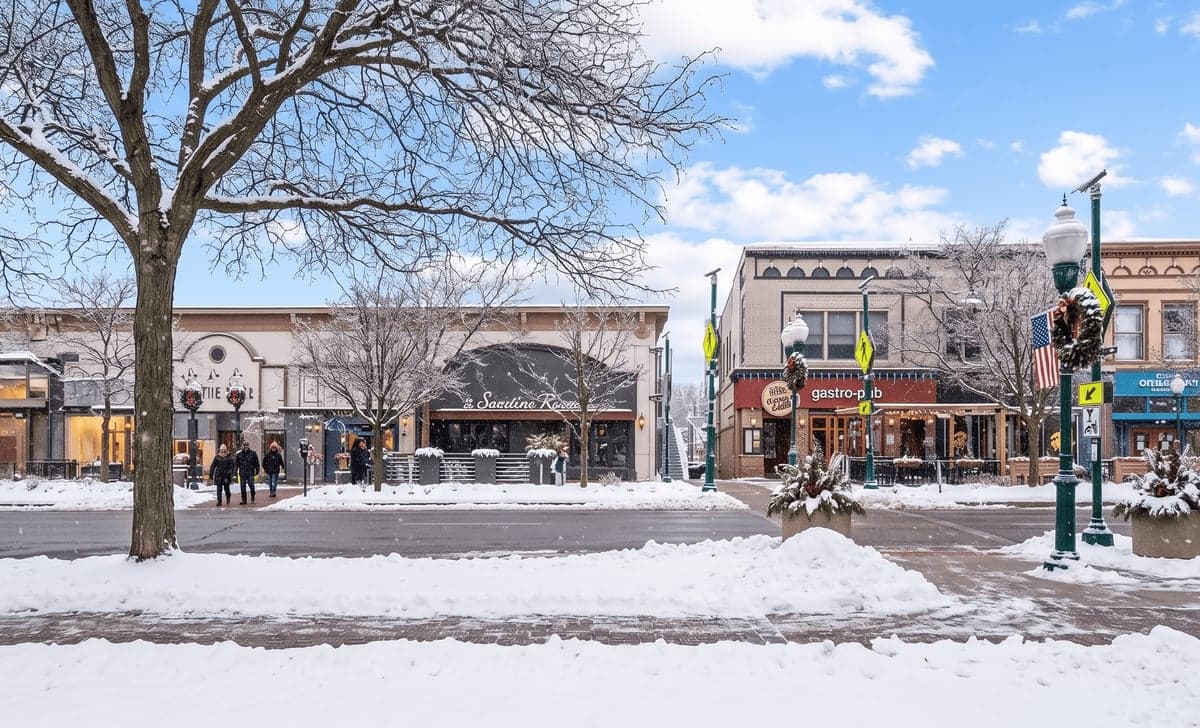
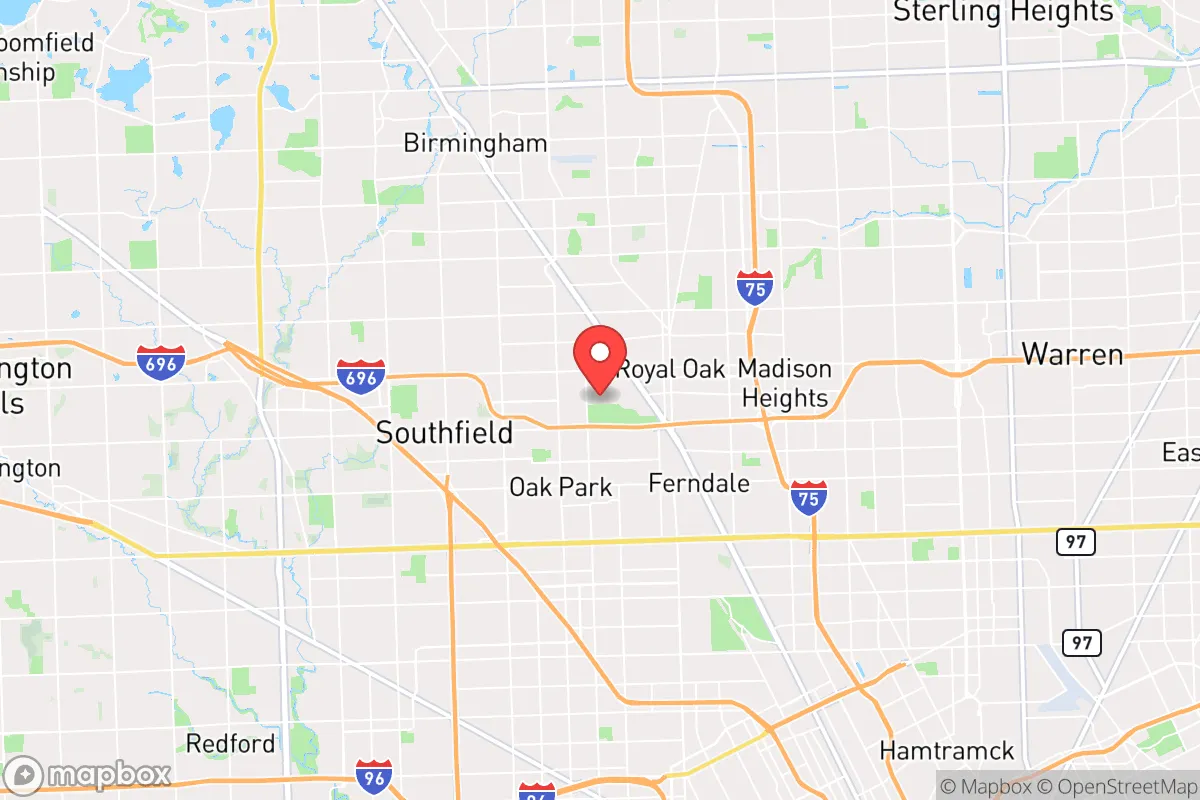
Huntington Woods, Michigan, is a small, densely settled city of 6,322 residents, characterized by a highly educated population (82.2% college-educated) and a predominantly White demographic (93.5%). The city is a tight-knit, family-oriented enclave within Oakland County, known for its mid-century ranch homes, tree-lined streets, and a strong sense of local identity that sets it apart from the larger neighboring cities of Royal Oak and Ferndale. Its population is notably homogeneous, with a foreign-born share of just 1.0%, reflecting a community that has been shaped more by domestic in-migration and generational stability than by international immigration.
How the city was settled and grew
Unlike many older Michigan cities, Huntington Woods was not a 19th-century industrial or agricultural settlement. The area was originally part of Royal Oak Township, sparsely populated through the early 1900s. Its transformation began in the 1920s, when Detroit's booming auto industry created demand for suburban housing. The city's first major development wave was the Huntington Woods subdivision, platted in the 1920s, which attracted middle-class professionals and skilled tradesmen seeking larger lots and modern homes away from the city's congestion. The Woodward Avenue corridor, just east of the city, provided direct access to Detroit's jobs. The Great Depression slowed growth, but the post-World War II era brought a second, larger wave. From the late 1940s through the 1960s, developers built out the central and western neighborhoods—areas like Lincolnshire and the area around Scotia and Cumberland streets—with ranch-style homes and Cape Cods. These homes were marketed to returning GIs and young families, many of them second- and third-generation European Americans (Polish, German, Italian, and Irish) moving out of Detroit's ethnic neighborhoods. The city incorporated in 1930, but its population and character were firmly set by the 1960s as a stable, White, middle-to-upper-middle-class suburb.
Modern era (post-1965)
The post-1965 era, marked by the Hart-Cellar Act and broader suburbanization, had a muted effect on Huntington Woods compared to many other Metro Detroit suburbs. The city did not experience significant international immigration. Instead, its demographic story is one of domestic continuity and modest turnover. The eastern neighborhoods near Coolidge Highway saw some in-migration of Jewish families from Detroit's northwest side during the 1970s and 1980s, adding to the city's existing Jewish community. The southern section, bordering Royal Oak, attracted empty-nesters and young professionals drawn to the city's excellent school system (Berkeley School District) and low crime rates. The city's Black population has remained very small (1.0%), and its Hispanic (1.4%) and East/Southeast Asian (0.9%) shares are minimal. The Indian subcontinent population is 0.6%. These groups are dispersed rather than concentrated in any single neighborhood, reflecting the city's overall homogeneity. The most notable demographic shift has been the aging of the population, with many original post-war homeowners aging in place, while younger families—often priced out of trendier nearby areas—have moved into the ranch-heavy central district for the larger lots and quiet streets.
The future
Huntington Woods is likely to remain a demographically stable, predominantly White, and highly educated community over the next 10–20 years. The city's small size, high property values, and lack of new housing development act as barriers to rapid demographic change. The foreign-born population is unlikely to grow significantly, as the city offers few rental units or entry-level housing that typically attracts new immigrants. The East/Southeast Asian and Indian subcontinent populations may see modest increases as professionals working in Oakland County's tech and healthcare sectors seek good school districts, but these groups will likely remain small and assimilated. The city is not tribalizing into distinct ethnic enclaves; rather, it is homogenizing around a shared socioeconomic profile of high-income, college-educated families. The main pressure point will be generational turnover: as older residents sell their homes, younger families—often from Royal Oak, Ferndale, and Detroit—will move in, potentially increasing the city's already high education levels and slightly diversifying its political leanings, but not its racial composition.
For someone moving in now, Huntington Woods offers a stable, safe, and academically rigorous environment with a strong sense of community. It is a place where the population is not changing rapidly, and where the dominant culture is one of established, well-educated families who value privacy, property, and proximity to Detroit's cultural and employment centers. The city is not becoming more diverse in any meaningful sense; it is refining its existing character as a quiet, affluent, and predominantly White suburb.

* Values derived from national, state, county, city and local statistics and may differ in a specific area. Last updated: 2026-04-27T18:05:20.000Z
Narrative content on this page is AI-generated and may contain mistakes. Verify any details that matter before acting on them.
ReloMaps may earn a commission from affiliate links at no extra cost to you.

