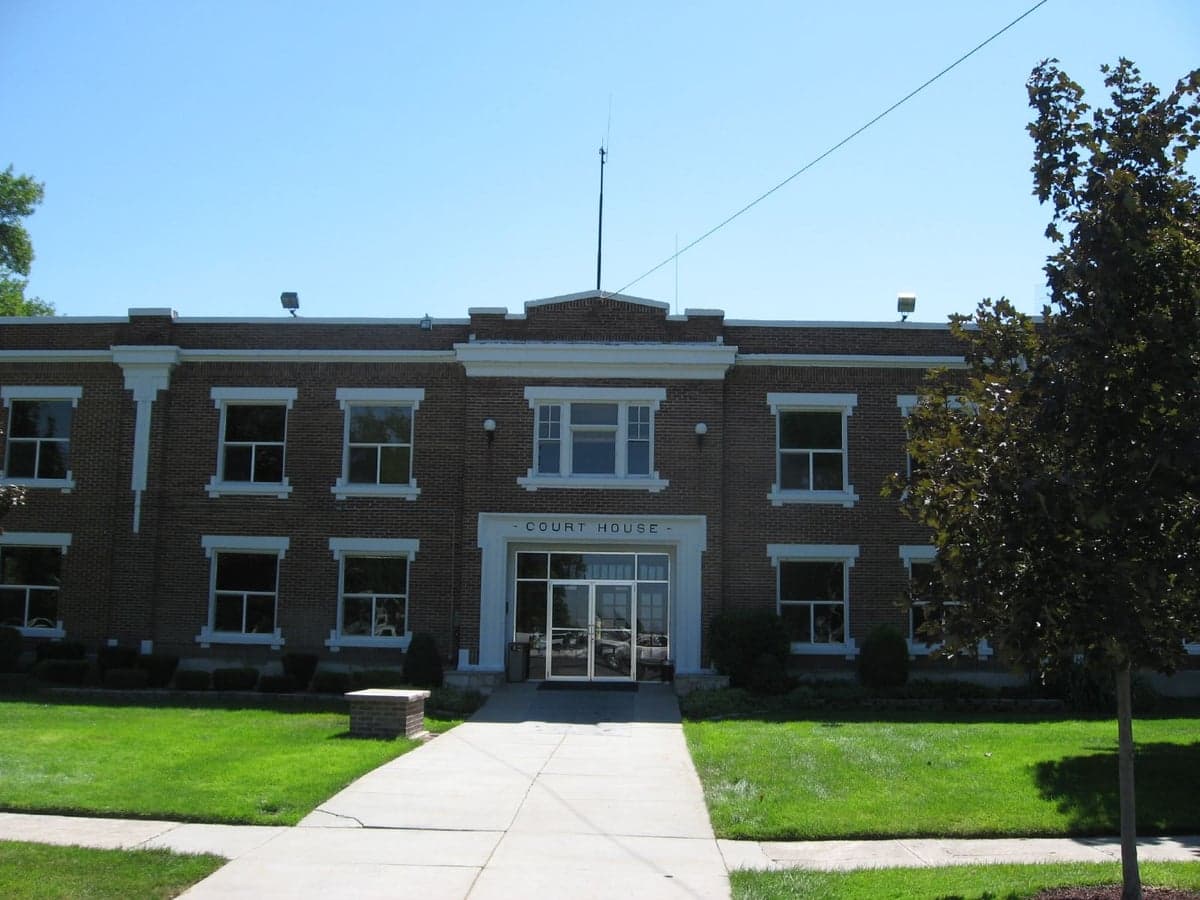
Photo: Wikipedia
Demographics of Power County
Affluence Level in Power County
A middle-class area roughly in line with national averages across income, home values, education, and employment.
People of Power County
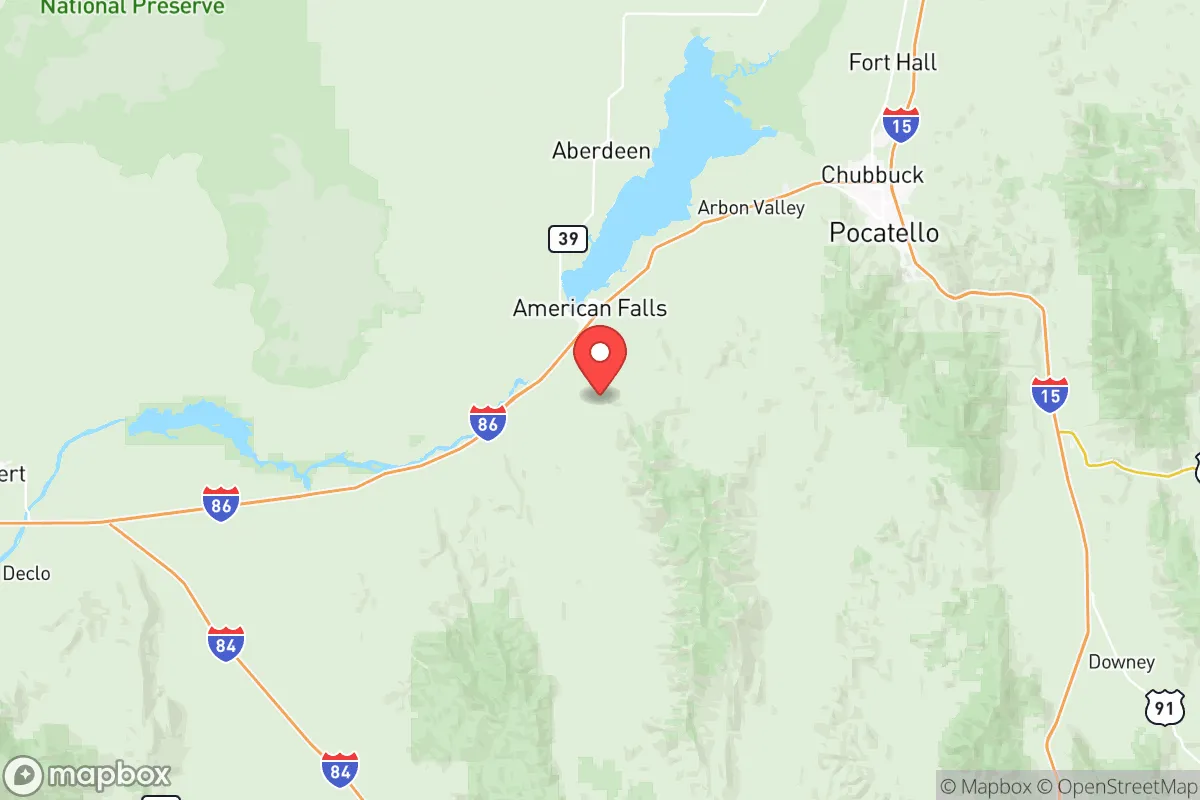
Power County, Idaho, is a rural, sparsely populated region of just over 8,000 residents, defined by its agricultural roots and a significant Hispanic population that now makes up a third of the county. The county seat, American Falls, is the primary population center, with smaller communities like Arbon Valley, Rockland, and Pauline scattered across the landscape. The county’s identity is a blend of a long-standing white, native-born farming community and a growing, largely Mexican-American workforce tied to the region’s dairy and potato industries, creating a demographic profile that is both traditional and rapidly diversifying.
Settlement & growth (pre-1960)
The area now known as Power County was originally inhabited by the Shoshone and Bannock peoples, who followed the seasonal migrations of bison and fish along the Snake River. The first permanent American settlers arrived in the 1860s and 1870s, drawn by the promise of land under the Homestead Act and the lure of the Oregon Trail, which passed directly through the region. These early pioneers were predominantly of Northern European stock—English, Scots-Irish, and German—who established ranches and dryland farms near the Snake River, founding the town of American Falls in 1878 as a stagecoach stop and trading post.
The county’s population and economy were transformed by the construction of the American Falls Dam, completed in 1927. The massive irrigation project, part of the Minidoka Project, turned arid sagebrush plains into fertile farmland, attracting a new wave of settlers. During the 1930s and 1940s, Dust Bowl refugees from Oklahoma, Texas, and the Great Plains—often called “Okies”—moved into the area, finding work in the expanding sugar beet and potato fields. These migrants, largely of white, Protestant stock, settled in Rockland and the newly irrigated areas around Arbon Valley, reinforcing the county’s rural, conservative character. The town of Pauline, founded in the early 1900s, also grew as a farming hub. By 1960, Power County’s population was overwhelmingly white, native-born, and employed in agriculture, with a small but established Mexican-American community that had begun arriving as seasonal laborers during World War II under the Bracero Program.
Modern era (post-1965)
The 1965 Hart-Cellar Act, which ended national-origin quotas, had a direct and lasting impact on Power County by enabling a steady stream of legal immigration from Mexico. What had been a seasonal, temporary workforce in the 1940s and 1950s became a permanent, settled community. By the 1980s and 1990s, Mexican-American families had established deep roots in American Falls and the surrounding agricultural areas, working in the county’s booming dairy industry and potato processing plants. The construction of the J.R. Simplot Company’s potato processing facility in the 1970s further cemented the need for a stable labor force, drawing additional Hispanic families to the area.
Domestic migration during this period was minimal. Power County did not experience the Sun Belt or Rocky Mountain growth booms seen elsewhere in Idaho. Instead, the county’s population remained relatively stable, with the white population aging and the Hispanic population growing through both immigration and higher birth rates. The 2020 Census data reflects this shift: 60.9% of the county is now white, while 33.8% is Hispanic. The Black population remains negligible at 0.9%, and there are no measurable East/Southeast Asian or Indian subcontinent communities. The foreign-born share stands at 7.9%, nearly all of whom are Mexican-born. The county’s educational attainment is low—only 16.7% of adults hold a college degree—reflecting the predominance of agricultural and blue-collar employment. The small towns of Arbon Valley and Rockland remain overwhelmingly white and native-born, while American Falls has become the most diverse community, with a significant Hispanic population concentrated in the older, central neighborhoods near the processing plants.
The future
Power County’s demographic trajectory points toward continued Hispanic growth and a gradual, but not rapid, diversification. The white population is aging and declining in absolute numbers, while the Hispanic population is younger and has higher fertility rates. This trend is likely to continue for the next 10–20 years, with the Hispanic share potentially approaching 40–45% by 2040. However, the county is not experiencing the kind of rapid, transformative in-migration seen in Boise or the Treasure Valley. There is no significant influx of out-of-state retirees, remote workers, or new immigrant groups from Asia or Africa. The county’s economy remains anchored in agriculture and food processing, which limits its appeal to highly educated or service-sector workers.
Culturally, the county is not tribalizing into distinct, isolated enclaves. Instead, there is a degree of integration, particularly in American Falls, where Hispanic and white families share schools, churches, and community events. The local Catholic church and public schools serve as primary points of contact. However, the rural, conservative identity of the county remains dominant, and the Hispanic population—largely Catholic and family-oriented—has largely assimilated into that cultural framework rather than creating a separate, parallel society. The small towns of Pauline and Rockland are likely to remain overwhelmingly white and native-born, while American Falls will continue to be the demographic and economic hub, with a growing bilingual and bicultural character.
For someone moving into Power County today, the region offers a stable, slow-changing environment where agricultural rhythms and conservative values still define daily life. The population is not booming, and the cultural identity is not being radically reshaped by outside forces. Instead, the county is experiencing a gradual, organic demographic transition—one that is being absorbed into its existing rural fabric rather than disrupting it. The kind of person who will thrive here is someone comfortable with a small-town, blue-collar lifestyle, who values community stability over rapid change, and who is prepared for a community where Spanish is increasingly heard in schools and workplaces, but where the overall political and social character remains deeply rooted in the traditions of the American West.

* Values derived from national, state, county, city and local statistics and may differ in a specific area. Last updated: 2026-05-22T15:39:14.000Z
Narrative content on this page is AI-generated and may contain mistakes. Verify any details that matter before acting on them.
ReloMaps may earn a commission from affiliate links at no extra cost to you.

