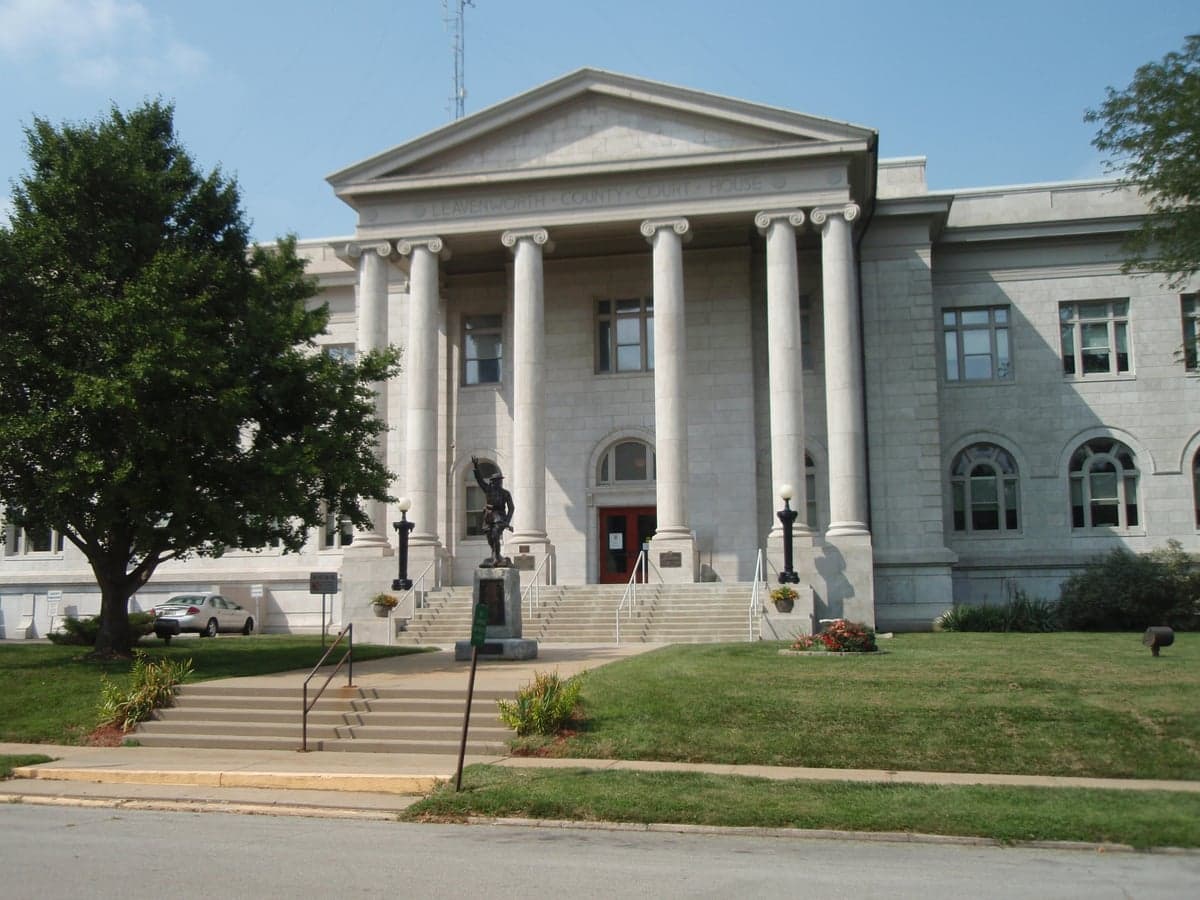
Photo: Wikipedia
Personal Sovereignty in Leavenworth County
Viable for self-reliance. Generally workable, though some barriers may limit total independence.
What does Personal Sovereignty tell us?
Personal Sovereignty measures your capacity for self-reliance and independence with minimal government friction. Higher scores mean fewer barriers between you and the way you want to live... but it assumes you have the space you need and good neighbors.
What does this tell us?
Personal Sovereignty measures your capacity for self-reliance and independence with minimal government friction. Higher scores mean fewer barriers between you and the way you want to live... but it assumes you have the space you need and good neighbors.
State Policy
Energy independence: Self-sufficient (80% of energy produced in-state)
Personal Liberty
Homesteading

Personal Liberty Analysis
Leavenworth County, Kansas, offers a notably higher degree of personal sovereignty than much of the Kansas City metro area, functioning as a buffer zone between the regulatory density of Johnson County and the more permissive rural expanses further west. For individuals and families prioritizing autonomy—particularly those with a survivalist or prepper mindset—the county presents a mixed but generally favorable environment where state-level preemptions on firearms and property rights provide a legal backbone, though local municipal codes in cities like Leavenworth and Lansing can introduce friction. The key is understanding where the county’s rural character ends and where its suburban encroachment begins, as the balance of freedom shifts noticeably from Tonganoxie to Basehor.
Tax burden and regulatory posture in Leavenworth County vs. surrounding areas
Kansas maintains a relatively light regulatory touch compared to neighboring Missouri, and Leavenworth County benefits from this state-level posture. The county’s property tax mill levy is moderate—around 140 mills combined for county, school, and city services—which is lower than Johnson County’s 160+ mills but higher than the most rural western Kansas counties. There is no county-level income tax, and the state’s flat income tax rate of 5.7% (as of 2026) is competitive. More importantly for sovereignty-minded residents, Kansas has strong state preemption laws that prevent cities and counties from enacting their own business regulations, rental restrictions, or agricultural ordinances that exceed state law. This means that in unincorporated areas like Rural Leavenworth County near Linwood or Jarbalo, you can operate a home-based business, keep livestock, or park an RV on your property without the kind of municipal harassment seen in cities like Lawrence or Overland Park. However, the incorporated cities—particularly Leavenworth proper and Lansing—have their own zoning codes that can be restrictive. Leavenworth’s city code, for example, limits the number of vehicles you can park on residential property and requires permits for accessory structures over 120 square feet. The regulatory sweet spot is the unincorporated township areas, where county zoning is minimal and enforcement is complaint-driven rather than proactive.
Self-defense and gun law specifics in Leavenworth County
Kansas is a constitutional carry state, meaning no permit is required to carry a concealed firearm for anyone legally allowed to possess one. Leavenworth County’s sheriff, as of 2026, is known for a pro-Second Amendment stance and does not impose additional restrictions beyond state law. This is a stark contrast to the anti-gun policies seen in Douglas County (Lawrence) or Jackson County, Missouri (Kansas City). The county has no local magazine capacity bans, no waiting periods, and no red flag law—Kansas has not passed a red flag statute, and local efforts to enact one have been consistently defeated. For preppers, this means you can legally stockpile firearms and ammunition without fear of confiscation orders. However, there is a practical consideration: Leavenworth city limits have a municipal ordinance prohibiting discharge of firearms within city limits, which means you cannot legally target shoot on a standard residential lot inside town. For that, you need acreage in the unincorporated areas—Easton, Linwood, or the rural stretches near the Missouri River bluffs—where you can shoot on your own property as long as you’re not creating a public nuisance. The county also has a strong culture of gun ownership; the Leavenworth Gun Show at the Riverfront Community Center is a regular event, and local gun shops like Arms Room in Leavenworth report steady business. For those concerned about government overreach, the county’s status as a Second Amendment sanctuary—the commission passed a resolution affirming this in 2021—provides a layer of political protection against future state-level infringements.
Self-reliance and homesteading viability across Leavenworth County
Homesteading feasibility varies dramatically depending on where you land in the county. The minimum lot size in unincorporated areas is typically 1 acre for a single-family home, but many parcels are available in 5- to 40-acre tracts, particularly in the northern and western parts of the county near McLouth and Ozawkie. These areas have sandy loam soil suitable for gardens and small-scale agriculture, and the county’s agricultural zoning allows for livestock, beekeeping, and even small poultry operations without special permits. Off-grid living is legally possible but practically challenging: Kansas law does not require connection to municipal water or sewer if you have a well and a septic system, and solar panels are permitted statewide without HOA interference in unincorporated areas. However, the county does enforce building codes for new construction, including foundation and electrical standards, which means you cannot legally build a primitive cabin without permits. The real constraint is water: the county sits atop the Missouri River alluvial aquifer, but well depths vary from 50 to 200 feet, and drilling costs can run $5,000-$10,000. For preppers, the rural areas near the Kansas River in the southern part of the county offer the best combination of water access, soil quality, and low population density. In contrast, Basehor and Tonganoxie are increasingly suburban, with HOAs that restrict everything from chicken coops to clotheslines. The rule of thumb: if you want true self-reliance, stay north of K-192 highway and west of Leavenworth city.
Personal liberties in Leavenworth County: parental rights, medical autonomy, speech, and property
Kansas has strong parental rights protections under state law, including the Parental Bill of Rights (K.S.A. 72-6131), which gives parents the right to direct their children’s education, medical care, and moral upbringing. Leavenworth County school districts—particularly Leavenworth USD 453 and Tonganoxie USD 464—have been relatively restrained on controversial curriculum issues compared to districts in Johnson County, though parents should still attend school board meetings to stay vigilant. Medical autonomy is also favorable: Kansas does not have a state-level vaccine mandate for adults, and the county’s health department does not enforce any local mandates beyond state requirements. For those concerned about medical privacy, the county has no centralized health data sharing agreements that would flag alternative treatments. Free speech is protected under the Kansas Constitution, which has its own free speech clause that courts have interpreted as broader than the First Amendment in some cases. Property rights are strong: Kansas is a “right to farm” state, meaning agricultural operations are protected from nuisance lawsuits if they predate nearby residential development. This is critical for homesteaders who want to raise animals or run equipment without fear of being sued by new neighbors. The county’s planning and zoning department is understaffed and generally responsive to property owners, though the permitting process for new structures can take 4-6 weeks. For those who value privacy, the county’s rural areas have no streetlights and limited law enforcement patrols, which is a double-edged sword—you have more freedom but also more responsibility for your own security.
Overall, Leavenworth County ranks as one of the more sovereignty-friendly areas within commuting distance of Kansas City, offering a legal environment that respects gun rights, parental authority, and property autonomy better than any urban or suburban alternative in the region. It is not a libertarian paradise—the county still collects property taxes, enforces building codes, and has municipal restrictions in its cities—but for the strategic relocator who wants to be within 45 minutes of metropolitan infrastructure while maintaining a high degree of personal control over their life, it is a strong contender. Compared to the regulatory overreach seen in Douglas County or the urban decay of Wyandotte County, Leavenworth County provides a workable middle ground where a prepared individual can live with minimal government interference, provided they choose their specific location wisely.

* Values derived from national, state, county, city and local statistics and may differ in a specific area. Last updated: 2026-05-27T22:22:45.000Z
Narrative content on this page is AI-generated and may contain mistakes. Verify any details that matter before acting on them.
ReloMaps may earn a commission from affiliate links at no extra cost to you.

