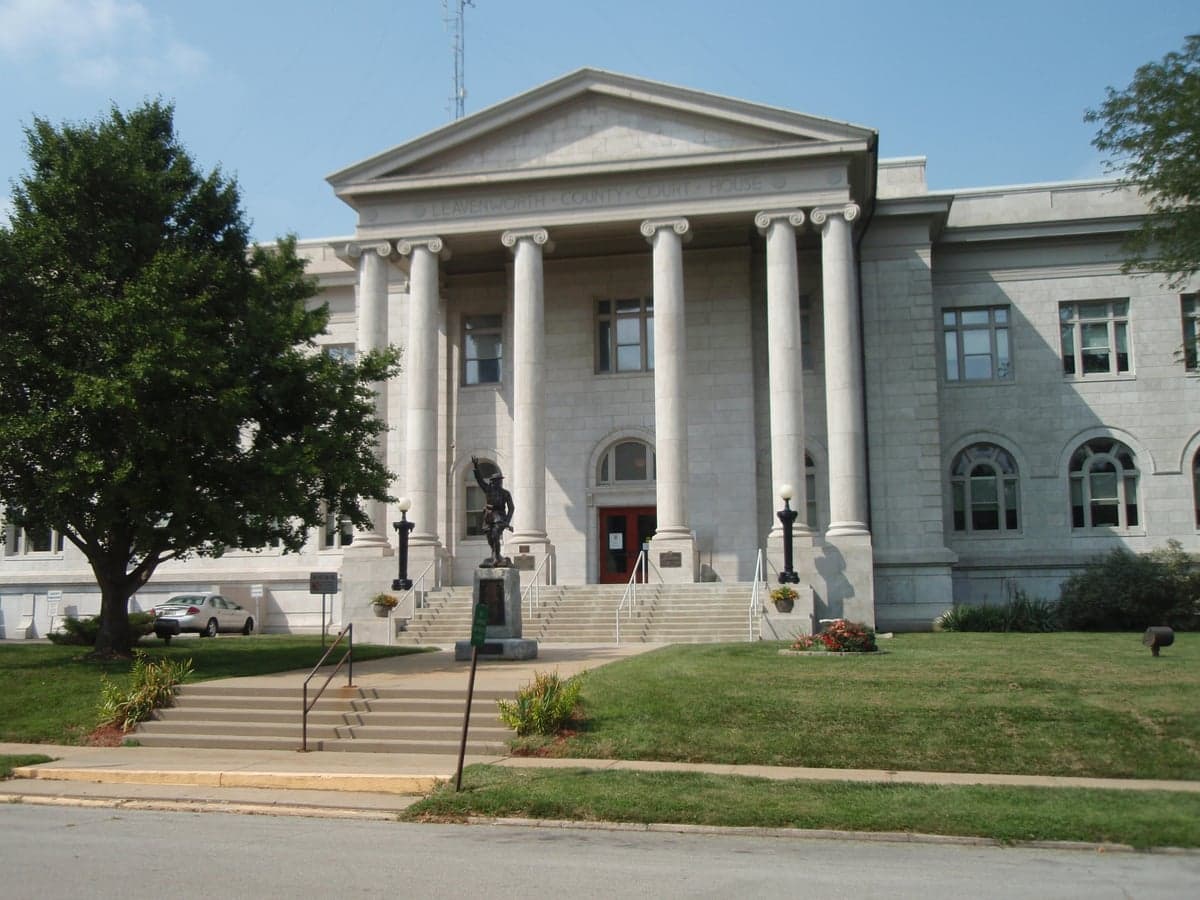
Photo: Wikipedia
Quality of Life in Leavenworth County
A livable area that tracks near national norms for affordability, walkability, and neighborhood health.
What does Quality of Life tell us?
Quality of Life measures an area by evaluating factors like cost of living, nearby amenities, country club access, airport proximity, socioeconomic signals and neighborhood character. For large states, this is a general average — quality of life can vary dramatically between metro areas, suburbs, and rural communities within the same state.
What does this tell us?
Quality of Life measures an area by evaluating factors like cost of living, nearby amenities, country club access, airport proximity, socioeconomic signals and neighborhood character. For large states, this is a general average — quality of life can vary dramatically between metro areas, suburbs, and rural communities within the same state.
Cost of Living
4% below national average
117%
The Real Cost of Living in Leavenworth County for 2026
| Tier | Individual | Family (4) |
|---|---|---|
| Survival | $18k | $34k |
| Comfortable | $51k | $74k |
| Luxury | $126k+ | $195k+ |
| Elite (Top 5%) | $148k+ | $230k+ |
Quality-of-Life Analysis
Leavenworth County, Kansas, offers a broad quality-of-life spectrum that ranges from the historic, walkable riverfront of Leavenworth city to the quiet, agricultural expanses of communities like Tonganoxie and Basehor. The county’s character is defined by this contrast: it draws professionals and military families seeking proximity to Fort Leavenworth and Kansas City, alongside retirees and rural residents who value land, lower density, and a slower pace. With a cost-of-living index of 96 (100 being the U.S. average), the county remains more affordable than the national norm, though housing costs and lifestyle options vary significantly by location.
Largest town(s) & population centers
Leavenworth city, the county seat and largest municipality (population roughly 37,000), is the primary population center. Daily life here centers on a compact downtown with historic brick storefronts, the Fort Leavenworth military installation (a major employer), and the Leavenworth Riverfront Community Center. The city offers a mix of older single-family homes, apartments, and some new subdivisions, with a median home value of $260,600 and median rent of $1,138. Commute times average 23.6 minutes, reflecting the city’s role as a bedroom community for jobs in Kansas City (about 30 minutes east) and the fort. Lansing (population ~12,000), immediately south, is a secondary hub with newer retail corridors, the Lansing Correctional Facility, and a growing suburban feel, attracting families with its Lansing High School and access to K-7 highway.
Smaller towns & rural pockets
Beyond the main towns, the county contains distinct smaller communities. Tonganoxie (population ~5,500) sits in the southwestern corner, offering a small-town Main Street, a strong sense of community, and proximity to the Tonganoxie Lake and park system. Basehor (population ~6,500) is a fast-growing exurban area with newer subdivisions and a rural character, popular with families seeking larger lots and lower property taxes than nearby Johnson County. Easton (population ~500) and Linwood (population ~400) are unincorporated hamlets with minimal services, where residents rely on well water and septic systems, and commute to Leavenworth or Kansas City for work. The rural areas between these towns are dominated by row-crop agriculture, with scattered farmsteads and few commercial amenities.
Cost & lifestyle range
The cost-of-living index of 96 masks a wide internal spread. At the higher end, newer subdivisions in Basehor and Lansing see home values often exceeding $350,000, with homeowners paying higher property taxes for newer schools and infrastructure. At the lower end, older homes in Leavenworth city’s historic districts or in Easton can be found for under $200,000, though these may require renovation or lack modern amenities. Renters in Leavenworth city pay a median of $1,138, while rural rentals are scarce and often tied to agricultural properties. Lifestyle options mirror this: Leavenworth city offers restaurants, a brewery, and the Leavenworth Public Library, while Tonganoxie provides a quieter, family-oriented environment with a local grocery and a few eateries. Rural residents typically drive 20-30 minutes for groceries or medical care, with the nearest major hospital in Leavenworth city.
This county is best suited for those who value a mix of historic character, military-connected employment, and access to rural land without being fully isolated. Families and professionals who work at Fort Leavenworth or commute to the Kansas City metro will find the most convenience in Leavenworth city or Lansing. Those seeking a slower, land-based lifestyle with lower housing costs will gravitate toward Tonganoxie, Basehor, or the unincorporated areas. The county’s diversity of settings means that the right fit depends heavily on tolerance for commute distance, desire for walkable amenities, and preference for new construction versus older, established neighborhoods.

Crime in Leavenworth County
Crime rates similar to the national median for U.S. locations.
Violent CrimeViolent Crime Analysis
Property CrimeProperty Crime Analysis
Crime Analysis
Leavenworth County, Kansas, presents a mixed safety profile that demands careful attention from prospective residents. With a violent crime rate of 389.4 per 100,000 residents and a property crime rate of 1,587.4 per 100,000, the county sits above national averages in both categories. These figures are heavily influenced by the presence of the Lansing Correctional Facility and the U.S. Disciplinary Barracks at Fort Leavenworth, which skew official statistics, but the lived experience for residents in cities like Leavenworth, Lansing, and Tonganoxie varies significantly by neighborhood and local law enforcement effectiveness.
Crime in context
Leavenworth County’s violent crime rate of 389.4 per 100K is roughly 10% higher than the national average of approximately 380 per 100K, and significantly above the Kansas state average of about 340 per 100K. Property crime at 1,587.4 per 100K also exceeds the national benchmark of roughly 1,950 per 100K, but is notably lower than the Kansas state average of around 2,100 per 100K. The county’s numbers are pulled upward by incidents in the city of Leavenworth itself, where concentrated poverty and the transient population associated with the prison system create localized crime clusters. By contrast, Tonganoxie and Basehor report substantially lower crime rates, often comparable to safer suburban communities in Johnson County. The Leavenworth County Sheriff’s Office and the Leavenworth Police Department both maintain active community policing programs, but the county’s proximity to the Kansas City metro area means it also experiences spillover crime from urban centers like Kansas City, Kansas and Kansas City, Missouri.
What residents experience
For daily life, the most pressing concern is property crime—particularly vehicle break-ins, theft from porches, and burglary in unincorporated areas. Violent crime, while statistically elevated, is often concentrated in specific blocks of downtown Leavenworth and near the prison complex, not in residential subdivisions. Residents in Lansing report a generally safe environment, though the presence of the state prison means occasional incidents involving released offenders or contraband-related activity. Tonganoxie residents enjoy a small-town feel with very low violent crime, though property crime has ticked up since 2022. The county’s judicial system, overseen by the Leavenworth County District Attorney’s office, has historically taken a moderate approach to prosecution. However, like many counties in the Kansas City region, there is growing concern among residents about progressive sentencing reforms and diversion programs that some believe reduce accountability for repeat offenders. The 1st Judicial District, which covers Leavenworth County, has seen debates over bail reform and drug court expansion—policies that critics argue prioritize rehabilitation over public safety, potentially leading to more criminals on the street and undermining justice for victims.
Neighborhood-level variation is stark. The safest areas are generally the newer subdivisions in Basehor and the rural outskirts of Tonganoxie, where crime rates are a fraction of the county average. The most challenging areas are the older neighborhoods near downtown Leavenworth, particularly around 4th Street and Metropolitan Avenue, and the area immediately adjacent to the Lansing Correctional Facility. For families, the Leavenworth School District and Lansing School District both have active safety protocols, but parents should check specific school crime reports. Overall, Leavenworth County is not a high-crime area by national standards, but the data and local trends warrant a cautious, neighborhood-specific approach for anyone considering relocation.
* Values derived from national, state, county, city and local statistics and may differ in a specific area. Last updated: 2026-05-27T22:22:45.000Z
Narrative content on this page is AI-generated and may contain mistakes. Verify any details that matter before acting on them.
ReloMaps may earn a commission from affiliate links at no extra cost to you.

