Demographics of Kemmerer, WY
Affluence Level in Kemmerer, WY
A middle-class area roughly in line with national averages across income, home values, education, and employment.
People of Kemmerer, WY
Kemmerer, Wyoming, is a small, predominantly white community of 2,788 residents where 91.9% of the population identifies as white alone, and the foreign-born share sits at just 1.1%. The city’s character is shaped by its historic role as a coal-mining and railroad hub, with a blue-collar, self-reliant ethos that remains central to local identity. Density is low, and the population is notably homogenous, with Hispanic residents making up 2.9% and East/Southeast Asian communities accounting for 0.4% of the total. For a conservative-leaning audience, Kemmerer represents a stable, traditional Western town where family roots run deep and newcomers are expected to integrate into an established social fabric.
How the city was settled and grew
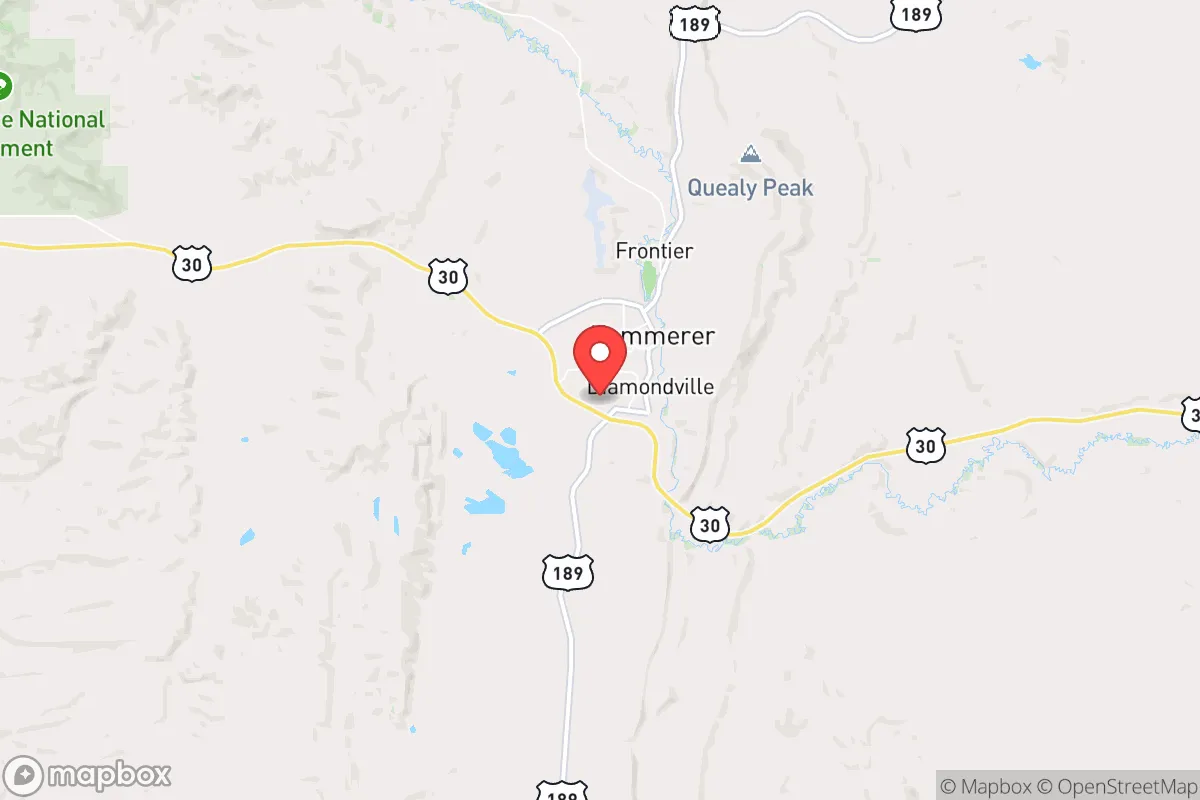
Kemmerer was founded in 1897 as a company town for the Kemmerer Coal Company, which drew the first wave of settlers—primarily European immigrants and American-born miners seeking work in the region’s rich coal seams. The arrival of the Oregon Short Line Railroad in 1899 cemented the town’s role as a supply and shipping hub, attracting a second wave of railroad workers, merchants, and tradesmen. The original population clustered in Old Town Kemmerer, the historic core along Pine Avenue, where miners’ cottages and boarding houses housed a mix of Welsh, Irish, and Scandinavian laborers. By the 1910s, a small but distinct Coalville District emerged south of the tracks, home to many of the railroad families and later the site of the J.C. Penney Mother Store (Penney himself founded his first store here in 1902). The town grew steadily through the mid-20th century, peaking at around 3,000 residents in the 1950s, as coal mining and the nearby Frontier Mine sustained generations of workers. No significant non-white settlement occurred during this period; the population remained overwhelmingly white and native-born, with the small Hispanic share arriving later as seasonal labor.
Modern era (post-1965)
After the 1965 Hart-Cellar Act, Kemmerer saw virtually no immigration-driven diversification. The foreign-born share has never exceeded 2%, and the city’s demographic profile has remained static compared to national trends. Domestic in-migration since the 1970s has been modest, driven largely by workers at the Bridger Coal Mine (opened 1974) and the nearby Naughton Power Plant. These newer arrivals settled in the South Kemmerer subdivision, a post-1980s development of single-family homes on larger lots, which attracted younger families and commuters to the mine. The Hams Fork River corridor saw some infill housing in the 1990s, but no distinct ethnic enclaves formed. The Hispanic population (2.9%) is dispersed, with no concentrated neighborhood, and the East/Southeast Asian share (0.4%) is negligible—likely tied to a handful of professionals at the power plant or local healthcare. The city’s college-educated rate of 27.4% is below the national average, reflecting the enduring blue-collar base. No Indian-subcontinent population is recorded.
The future
Kemmerer’s population is projected to remain stable or decline slightly, as the coal industry faces long-term headwinds and younger residents leave for larger cities. The 2020 census recorded 2,788 residents, down from 2,656 in 2010—a modest gain that masks an aging demographic. The Frontier Mine closure in 2023 eliminated about 100 jobs, and the Naughton plant is slated for conversion to natural gas, which may reduce the local workforce. No significant immigrant growth is expected; the foreign-born share will likely stay below 2%. The city is homogenizing rather than tribalizing, with no emerging ethnic enclaves. The Old Town area is seeing some reinvestment in tourism (tied to the J.C. Penney museum and fossil dig sites), but residential growth is concentrated in South Kemmerer and the newer East Bench subdivision, which attract retirees and remote workers seeking affordable housing (median home value ~$180,000). Over the next 10-20 years, Kemmerer will likely become older, whiter, and more dependent on tourism and energy-transition jobs.
For someone moving in now, Kemmerer offers a stable, low-crime environment with a strong sense of community, but limited economic opportunity and minimal diversity. The city is becoming a quiet, retirement-oriented town for those who value space, safety, and traditional Western values over career mobility or cultural variety. New residents should expect to integrate into an established, insular social structure where long-time families still dominate civic life.

* Values derived from national, state, county, city and local statistics and may differ in a specific area. Last updated: 2026-04-21T11:35:45.000Z
Narrative content on this page is AI-generated and may contain mistakes. Verify any details that matter before acting on them.
ReloMaps may earn a commission from affiliate links at no extra cost to you.

