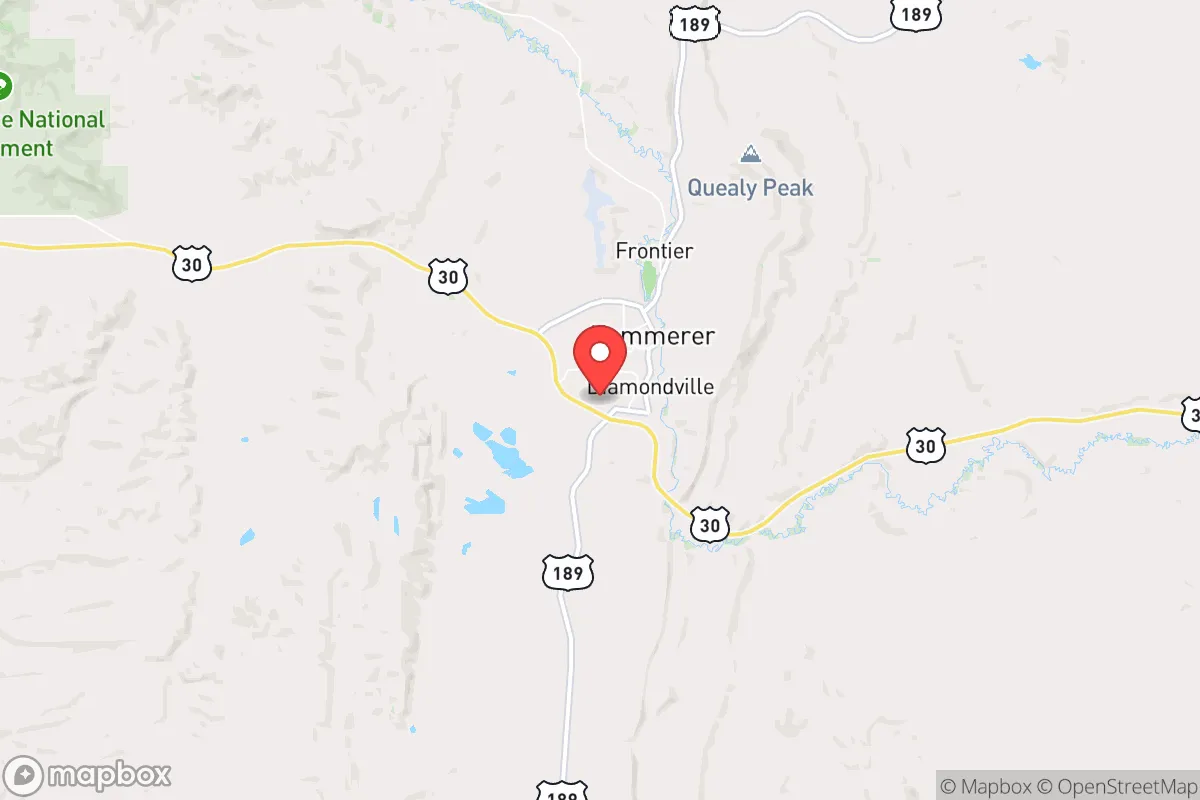
Strategic Assessment of Kemmerer, WY
Strong survivability profile. Good buffer from population centers, with manageable environmental and tactical risks.
What does the Strategic Assessment tell us?
Our Strategic Assessment grades tactical survivability of an area. Major population centers, military targets, fallout zones, natural disasters, and border exposure all drive risk — lower exposure means a more defensible position in a crisis.
This is heavily inspired by Joel Skousen's Strategic Relocation book. Highly recommended you checkout the book ($)What does this tell us?
Our Strategic Assessment grades tactical survivability of an area. Major population centers, military targets, fallout zones, natural disasters, and border exposure all drive risk — lower exposure means a more defensible position in a crisis.
This is heavily inspired by Joel Skousen's Strategic Relocation book. Highly recommended you checkout the book ($)Strategic Pillars

Key Distances
Regional Safe Places
Below is our recommended "safe zones" in Wyoming and the surrounding area based on our strategic heuristics. For most people, it's unrealistic to live in a “safe zone” full-time due to work, family or other personal reasons. They tend to be more rural. However, many of these areas are perfect for second homes and retreat properties that double as a vacation home or even a short-term rental.
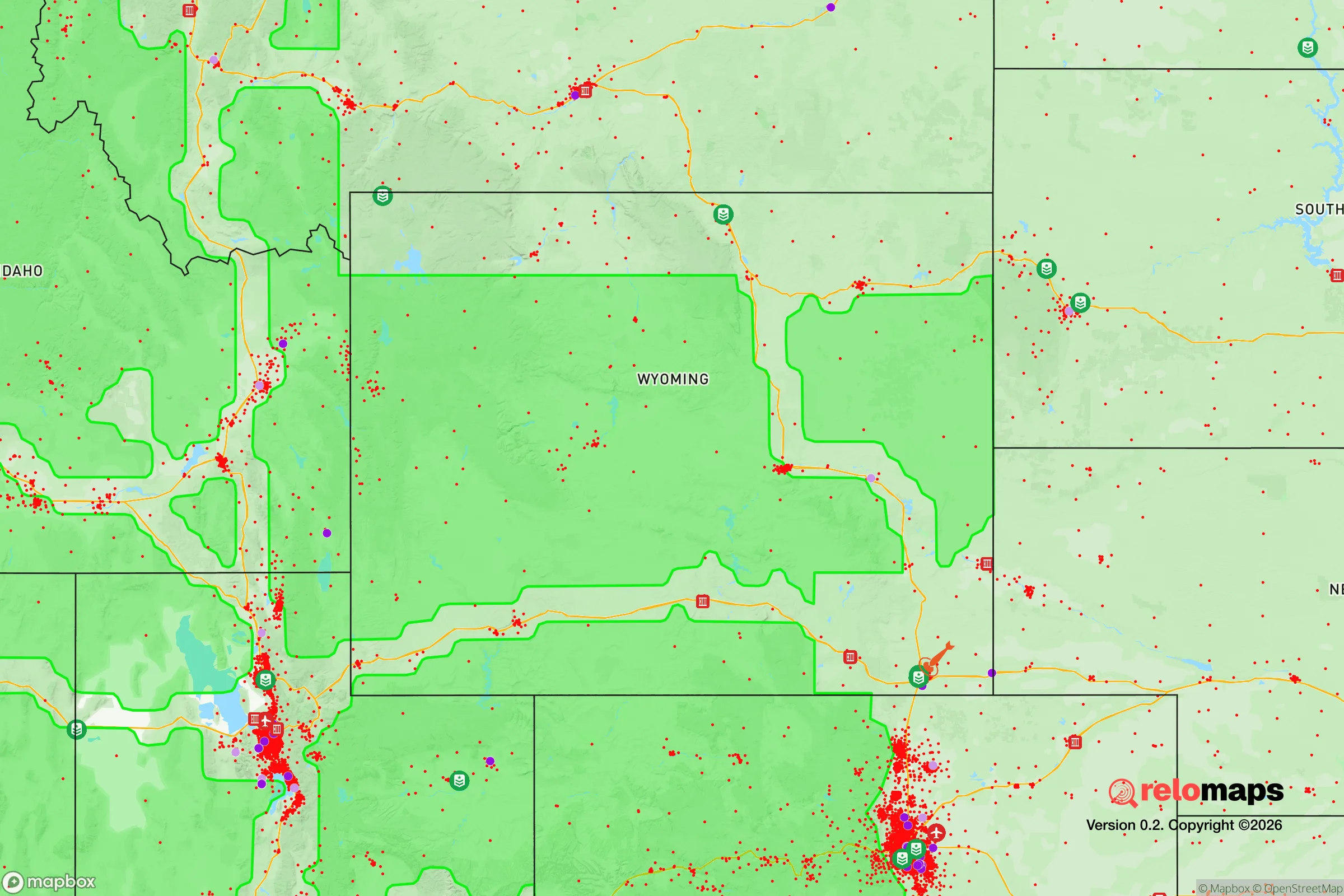
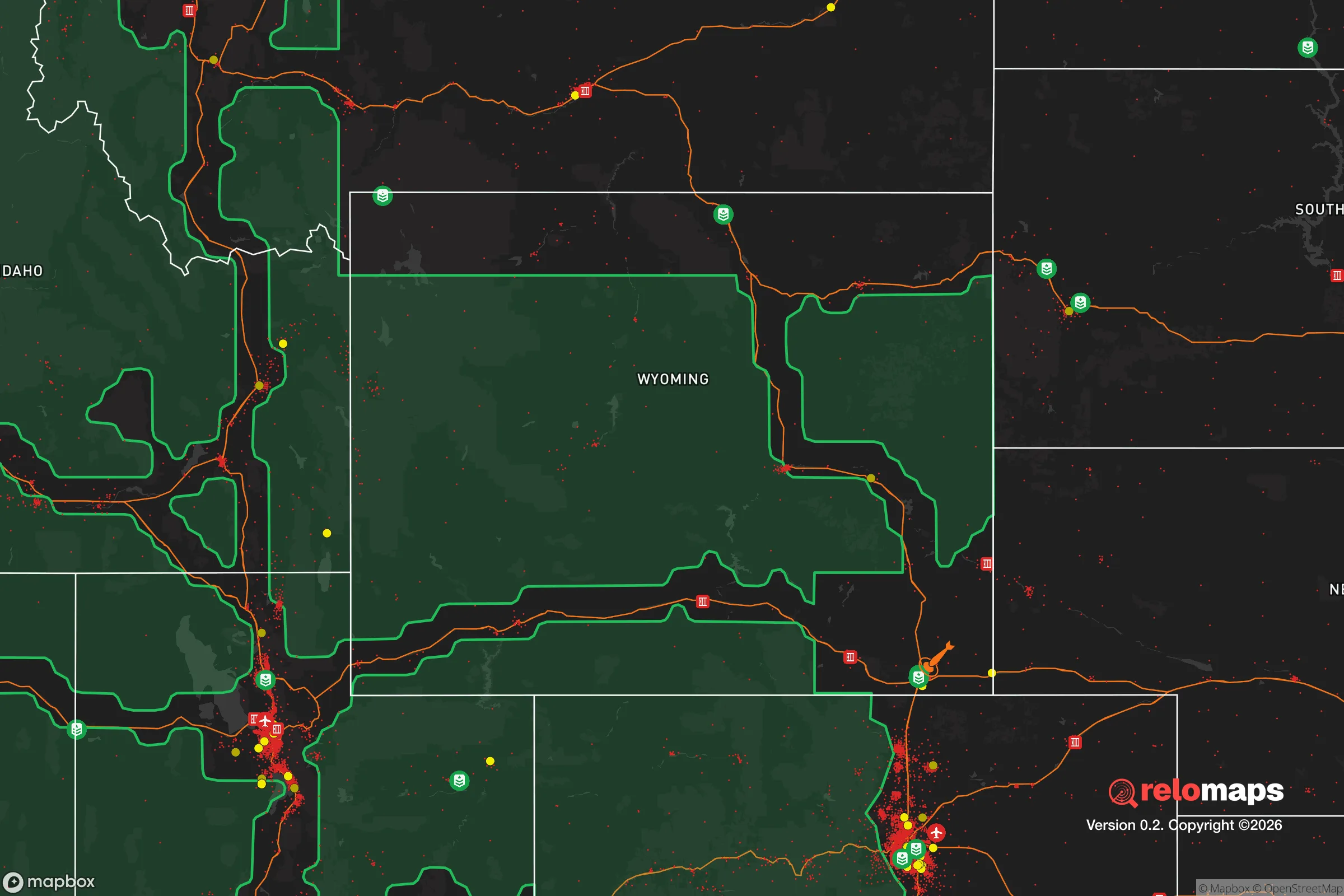


Important Note: For informational purposes only. This does not mean nothing bad ever happens in the green zones. Please use common sense. This is based on public data and modeled with AI. We tried to take a conservative approach but mistakes happen. We update this regularly as new information becomes available.
Solar Generator Recommendations
Backup power matters more here than in safer locations. We've picked three solar generators across budgets and capacity tiers — start with the budget unit if you only need a few essentials, or step up if you want to run a fridge and HVAC for days at a time.

Jackery Portable Power Station Explorer 300
Budget OptionPower on the Go: Weighing only 11 lbs, it's convenient to set up and store with book-sized foldable solar panels

BLUETTI Portable Power Station AC180
Designed for both indoor and outdoor scenarios, AC180 is highly capable as it has a robost capacity and continuous output power.

EF ECOFLOW DELTA Pro Ultra Power Station
Upgraded PickEcoFlow DELTA Pro Ultra is a whole-home energy system designed to grow with your family. Integrated with the Smart Home Panel 2, it scales to meet your evolving energy needs — keeping your home powered, intelligent, and secure through every stage of life.
We earn a commission, at no additional cost to you.
Strategic Assessment Analysis
Kemmerer, Wyoming, offers a strategic relocation option for those prioritizing resilience and self-sufficiency in an uncertain future. Its location in the remote southwestern corner of the state, roughly 120 miles from Salt Lake City and 80 miles from Rock Springs, provides a buffer from major population centers while still allowing access to essential services. The town sits along the Hams Fork River, a tributary of the Green River, and is surrounded by the Bridger-Teton National Forest and the Wyoming Range, offering natural resources and defensible terrain. For a prepper or survivalist mindset, Kemmerer represents a balance of isolation and practicality—far enough from urban chaos to avoid immediate fallout, but close enough to supply chains to sustain a long-term strategy.
Geographic position and natural advantages for long-term security
Kemmerer’s geography is its strongest asset for a survivalist strategy. The town sits at an elevation of 6,900 feet, nestled in a valley between the Wyoming Range and the Salt River Range, providing natural barriers that limit easy access from outside threats. The surrounding Bridger-Teton National Forest offers vast tracts of public land for hunting, foraging, and timber, while the Hams Fork River and nearby Fontenelle Reservoir ensure a reliable water source—critical for any off-grid scenario. The area’s cold, high-desert climate (average January lows near 10°F) naturally deters casual visitors and reduces the risk of disease vectors common in warmer regions. For a relocator concerned with civic unrest, the lack of major highways (only U.S. Route 30 and 189 pass through) means Kemmerer is a strategic dead end—difficult to reach and easy to defend. The nearby Fossil Butte National Monument and vast BLM lands also offer remote retreat options for those needing to bug out further.
Risks, exposures, and proximity to fallout-relevant landmarks
Kemmerer is not without risks, and a serious assessment must account for its proximity to potential targets. The town is roughly 100 miles from the Idaho National Laboratory (INL), a major nuclear research facility near Idaho Falls. While INL is not a weapons-grade site, a catastrophic accident or targeted attack could produce localized fallout, though prevailing winds typically blow eastward, away from Kemmerer. More concerning is the Union Pacific rail line that runs through town, carrying hazardous materials including crude oil from the Bakken fields and chemicals from the nearby FMC Corporation trona mine. A derailment or sabotage event could contaminate the Hams Fork River, the town’s primary water source. Additionally, the Kemmerer coal-fired power plant (Naughton Plant) and the adjacent TerraPower nuclear demonstration reactor (under construction as of 2026) are local energy infrastructure that could become targets during civil unrest. The town’s population of roughly 2,600 means limited law enforcement resources—the Lincoln County Sheriff’s Office covers a vast area, and response times to remote incidents can exceed 30 minutes. For a survivalist, these risks are manageable with proper planning—stockpiling water filtration, maintaining alternative energy sources, and establishing a remote cache in the nearby mountains.
Practical resilience for a relocator: food, water, energy, and defensibility
Kemmerer’s practical resilience is solid but requires upfront investment. Water is abundant—the Hams Fork River flows year-round, and groundwater is accessible via wells, though testing for industrial runoff from the coal plant is advisable. The town’s municipal water system is gravity-fed from reservoirs in the Wyoming Range, meaning it could function without power for a time. Food security is moderate: the local grocery store (Ridley’s) stocks basics, but supply chains are thin—a major disruption could empty shelves within days. The surrounding area supports small-scale agriculture (hay, cattle, some vegetables), and the nearby Star Valley (30 miles north) is a Mormon farming community with surplus produce and livestock. Hunting is excellent—mule deer, elk, and pronghorn are plentiful, and fishing in the Hams Fork and Fontenelle Reservoir is reliable. Energy resilience is a mixed bag: the Naughton Plant provides cheap electricity, but its coal supply is vulnerable to rail disruptions. The TerraPower reactor, once operational, could offer stable power, but its construction timeline is uncertain. Solar is viable (over 200 sunny days per year), but winter snow cover reduces output—a backup generator or small wind turbine is wise. Defensibility is Kemmerer’s standout feature: the valley is narrow, with only two main roads in and out (U.S. 30 from the east and WY 189 from the south). Chokepoints at the town’s edges can be monitored easily, and the surrounding mountains offer natural cover for retreat. The local population is predominantly conservative, with a strong Mormon presence, meaning community cohesion and mutual aid are likely in a crisis—but outsiders should expect a cautious reception until trust is built.
The overall strategic picture for Kemmerer is one of calculated trade-offs. It offers a rare combination of natural resources, defensible terrain, and distance from major targets, making it a strong candidate for a long-term survivalist relocation. The risks—proximity to INL, rail hazards, and limited local infrastructure—are real but manageable with preparation. For a conservative-leaning individual or family seeking to weather civic unrest, economic collapse, or mass casualty events, Kemmerer provides a solid foundation. The key is to arrive with a plan: secure a water source, stockpile six months of supplies, establish relationships with local ranchers and hunters, and maintain a low profile. The town’s isolation is both its greatest strength and its greatest challenge—you’ll be safe from the chaos of the cities, but you’ll need to be self-reliant in a harsh, beautiful landscape that doesn’t forgive mistakes. If that sounds like your kind of resilience, Kemmerer is worth a serious look.

* Values derived from national, state, county, city and local statistics and may differ in a specific area. Last updated: 2026-04-21T11:35:45.000Z
Narrative content on this page is AI-generated and may contain mistakes. Verify any details that matter before acting on them.
ReloMaps may earn a commission from affiliate links at no extra cost to you.

