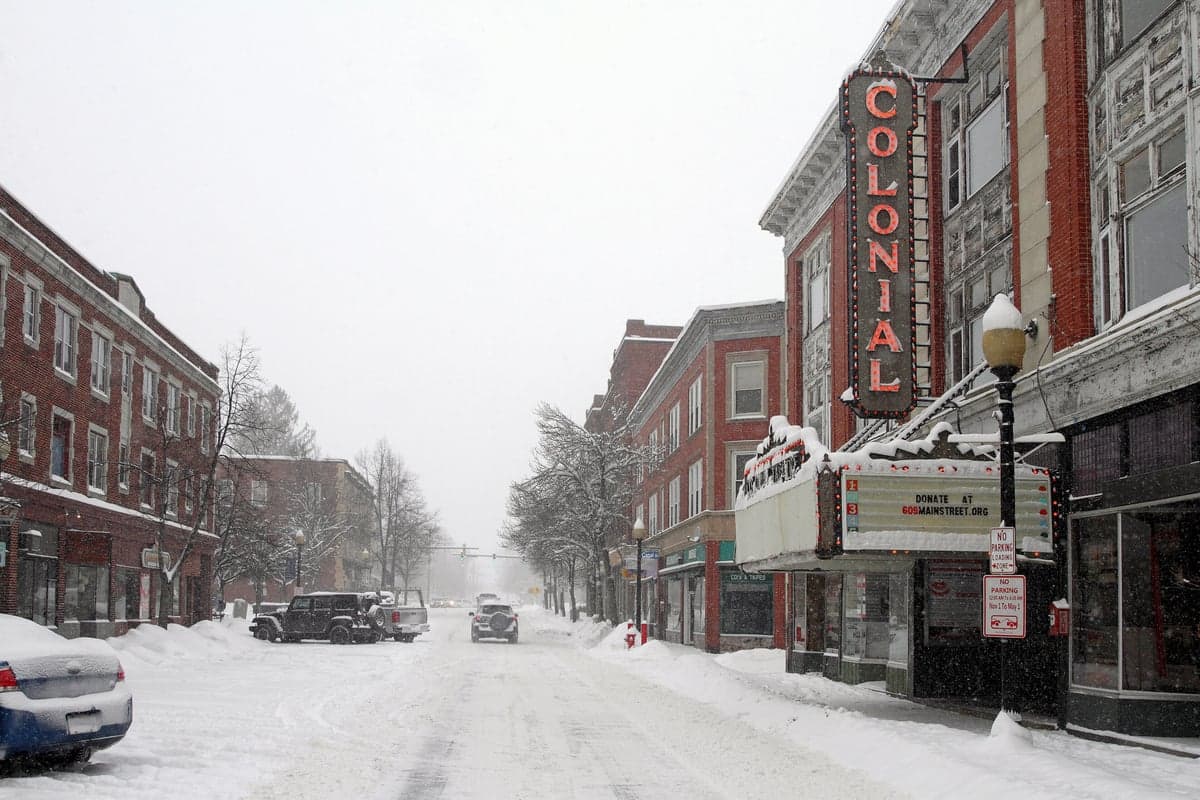
Photo: Wikipedia
Political ClimatePolitical Climate in Laconia, NH
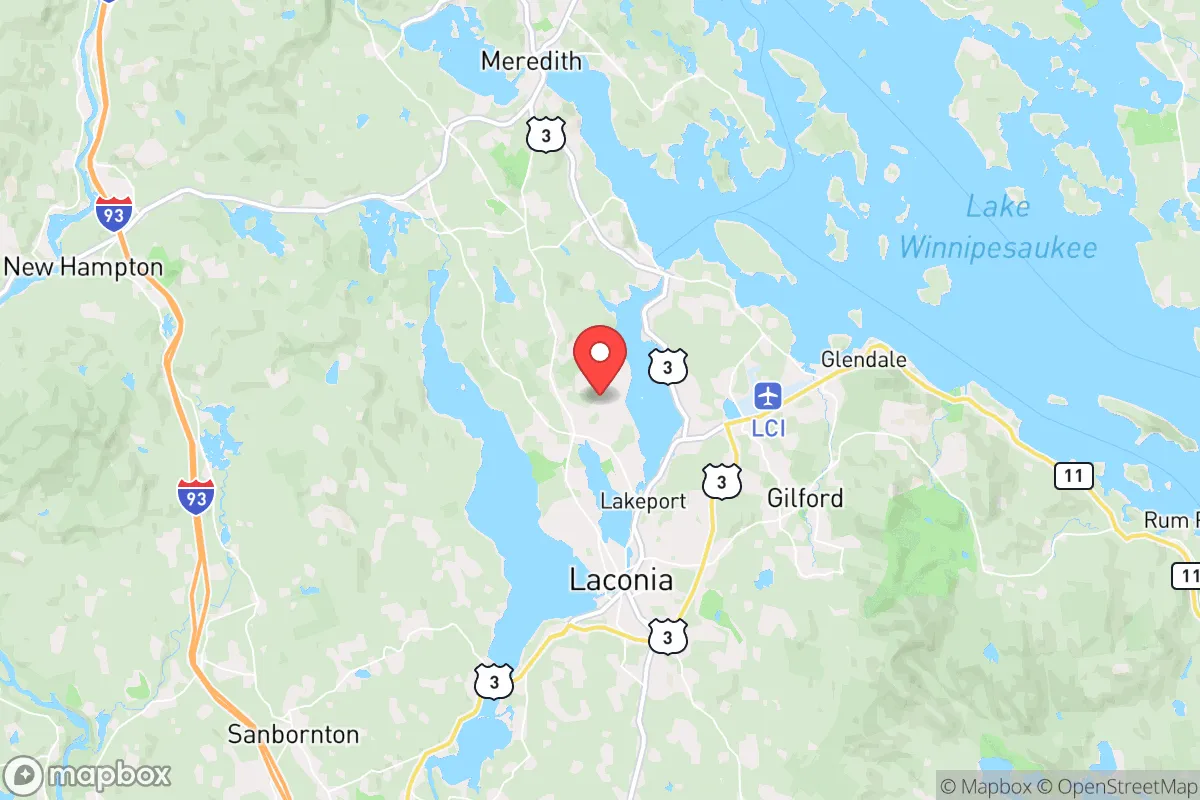
District shown is the primary district for this city’s centroid. Cities may span multiple districts.
Local Political AnalysisPolitical Analysis of Laconia, NH
Laconia, New Hampshire, sits in a bit of a political tug-of-war, and if you’ve been around here long enough, you’ve felt the shift. The Cook PVI clocks it at D+2, meaning it leans slightly Democratic on paper, but don’t let that number fool you—this isn’t some deep-blue stronghold. In reality, Laconia’s voting patterns have been drifting leftward over the last decade, especially in presidential years, but the surrounding towns like Gilford, Meredith, and Belmont are still reliably conservative. You’ll find plenty of folks here who value their Second Amendment rights, distrust heavy-handed state mandates, and remember when the city council didn’t feel the need to weigh in on every national culture war issue. The trajectory? It’s a slow creep, not a sprint, but the progressive influence from the Lakes Region’s seasonal transplants and younger renters is starting to show up in local elections and zoning debates.
How it compares
Drive ten minutes north to Gilford or south to Belmont, and you’re in solidly red territory—those towns vote Republican by double digits in most races. Laconia itself is the outlier, the urban-ish hub where you get a mix of old mill families, state workers, and a growing number of remote workers from Massachusetts who brought their politics with them. Compared to Concord (D+9) or Portsmouth (D+18), Laconia is still a relative moderate, but it’s no longer the quiet, live-and-let-live place it was twenty years ago. The city council has seen more debates over things like diversity commissions and climate resolutions, which would have been laughed off the agenda back in the ‘90s. If you’re used to the no-nonsense, “keep your laws off my property” vibe of rural New Hampshire, Laconia can feel like it’s hedging its bets—trying to attract tourists and new residents without fully embracing the progressive agenda that’s reshaping the Seacoast.
What this means for residents
For the average homeowner or small business owner, the political drift means you’re going to see more local ordinances that nibble at personal freedoms. Think rental registration schemes, noise complaints weaponized against short-term rentals, and school board meetings where critical race theory debates pop up even though the curriculum hasn’t changed. Property taxes are already a sore spot—Laconia’s rate is higher than surrounding towns—and every new progressive initiative tends to come with a price tag. On the flip side, the D+2 lean means the city isn’t a total lost cause; you can still find like-minded neighbors at the hardware store or the VFW, and the state’s famous “Live Free or Die” ethos isn’t dead yet. The real concern is the long game: if the trend continues, Laconia could start mirroring the policy overreach seen in places like Keene or Hanover, where zoning and fees make it harder to run a simple business or own a piece of land without government permission.
Culturally, Laconia still holds onto its working-class roots—Bike Week is still a big deal, and the gun shows at the fairgrounds draw crowds—but you’ll notice more “Coexist” bumper stickers and pride flags downtown than you did a decade ago. The city’s biggest policy distinction is its willingness to accept state and federal grants for “sustainable development,” which often come with strings attached that limit local control. If you’re considering a move here, keep an eye on the school board races and the planning board meetings; that’s where the real battle for Laconia’s soul is happening. The old guard is still around, but they’re tired, and the newcomers are organized. It’s not a bad place to raise a family yet, but you’ll want to get involved if you want to keep it that way.

State Political ClimatePolitical Climate in New Hampshire
State Political AnalysisPolitical Environment in the State
New Hampshire has long been a fascinating political outlier in New England, but the picture for conservatives is increasingly complicated. The state leans Republican in presidential years more often than not—voting for Trump in 2016 and 2024, while flipping to Biden by a razor-thin 7,000 votes in 2020—but its state legislature and governor’s mansion have been a mixed bag. Over the last 10-20 years, the Granite State has shifted from a reliably purple swing state to one where the GOP holds the governor’s office (Chris Sununu, then Kelly Ayotte) and both chambers of the legislature, yet the state’s growing progressive enclaves in the southeast are pulling the cultural and policy needle leftward. The dominant coalition is a rural, libertarian-leaning conservative base in the north and west, clashing with a well-funded, educated, and increasingly activist liberal bloc in the Merrimack Valley and Seacoast.
Urban vs. rural divide
The political map of New Hampshire is a tale of two landscapes. The rural north—places like Berlin, Lancaster, and Colebrook—vote Republican by margins of 60-70%, driven by a strong Second Amendment culture, low taxes, and a distrust of Boston-style governance. The western border, including Keene and Claremont, leans left but is surrounded by deep-red towns. The real battleground is the southeast: Manchester, Nashua, Portsmouth, and the Seacoast corridor. Manchester, the largest city, is a classic swing city—its working-class wards vote red, but its downtown and university-adjacent areas are trending blue fast. Nashua, the second-largest city, has become a Democratic stronghold thanks to an influx of Massachusetts transplants and a growing Hispanic population. Portsmouth is the state’s most liberal city, with a heavy concentration of tech workers, artists, and out-of-state retirees who brought their coastal politics with them. The key suburban counties—Hillsborough and Rockingham—are where elections are won and lost. Rockingham County, once reliably red, has been drifting purple as bedroom communities like Salem and Derry absorb commuters from Boston. The rural-urban divide here isn’t just about population density; it’s about a fundamental clash between a live-and-let-live Yankee libertarianism and a more activist, government-centric progressivism.
Policy environment
On paper, New Hampshire’s policy environment is a conservative dream. There is no state income tax, no sales tax, and no capital gains tax—a trifecta that keeps the state’s tax burden among the lowest in the nation. Property taxes are high (averaging around 2.2% of home value), but that’s the trade-off. The state has a right-to-work law, meaning you can’t be forced to join a union as a condition of employment. The regulatory posture is generally light, especially for small businesses, though environmental regulations on shoreline development and wetlands can be burdensome. Education policy is a mixed bag: school choice is limited to charter schools and a modest education freedom account program for low-income families, but the state’s public schools are among the best in the nation, which keeps the teachers’ union powerful. Healthcare is dominated by Dartmouth-Hitchcock and a few large hospital systems, and while there’s no Medicaid expansion sunset, the state has resisted a full-blown single-payer push. Election laws are relatively clean: same-day voter registration is allowed, but voter ID is required, and the state has no early voting by mail (absentee only with an excuse). The state’s motto, “Live Free or Die,” is still taken seriously in policy, but the cracks are showing.
Trajectory & freedom
Over the last five years, New Hampshire has been a tug-of-war between expanding and contracting personal freedom. On the positive side for conservatives, the state passed constitutional carry in 2017 (no permit needed to carry a concealed firearm), and in 2021, Governor Sununu signed a law banning “vaccine passports” and prohibiting employers from mandating COVID-19 vaccines. The state also passed a parental bill of rights in 2022, requiring schools to notify parents about curriculum changes and medical services offered to minors. On the concerning side, the state’s red flag law (passed in 2020) allows courts to temporarily seize firearms from individuals deemed a threat, and there’s been a steady push to expand it. In 2023, the legislature passed a 15-week abortion ban, but Governor Sununu signed it with a carve-out for rape, incest, and fatal fetal anomalies—a compromise that satisfied no one. The state also legalized recreational marijuana in 2017, but the rollout has been slow and heavily regulated, with local opt-outs common in conservative towns. Property rights are strong, but the state’s shoreline protection act and wetlands regulations can make building or renovating near water a nightmare. The trajectory is clear: the rural north is holding the line, but the southeast is importing progressive policies through the ballot box and the courts.
Civil unrest & political movements
New Hampshire is not a hotbed of civil unrest, but it has its flashpoints. The Free State Project, a movement of libertarians who moved to the state to shrink government, has been a visible force since the early 2000s, with a strong presence in Keene and the Monadnock Region. They’ve successfully pushed for marijuana legalization, gun rights, and school choice, but their influence is waning as the state’s population grows more diverse. On the left, the Indivisible movement and 350 New Hampshire have organized large protests against pipelines, climate inaction, and the abortion ban. The most visible flashpoint in recent years was the 2020 election integrity controversy: the state’s same-day voter registration system was criticized by conservatives for potential fraud, leading to a failed push for stricter ID laws. Immigration politics are relatively quiet—New Hampshire has no sanctuary city policies, but Manchester and Nashua have seen small pro-immigrant rallies. The state’s secessionist streak is real but fringe: the “New Hampshire Independence Movement” has no serious traction. What a new resident would notice is the general civility—people here are polite even when they disagree—but the undercurrent is tense, especially in the suburbs where the culture war over schools and COVID mandates is still simmering.
Projection
Looking 5-10 years out, New Hampshire is on a knife’s edge. The demographic trend is clear: the state is growing slowly (about 0.5% per year), and the growth is concentrated in the southeast, driven by Massachusetts expats fleeing high taxes but bringing their liberal voting habits with them. The rural north is shrinking and aging. If the current trajectory holds, the state will likely flip to a Democratic trifecta (governor, house, senate) within a decade, especially if the GOP fails to moderate on social issues like abortion and marijuana. However, the state’s libertarian DNA is strong, and the Free State Project’s influence, while waning, has created a permanent conservative infrastructure. The wild card is the state’s electoral college—New Hampshire’s four electoral votes are still in play, but the state legislature is gerrymandered to favor rural areas, which could slow the blue shift. A new resident moving in now should expect to see the state become more like Colorado: a purple state with a blue-trending urban core and a red rural hinterland, where the culture war is fought in school boards and town halls rather than the statehouse. The tax advantage will remain, but the regulatory environment will likely tighten, especially on energy and housing.
For a conservative considering a move to New Hampshire, the bottom line is this: you’ll find a state that still respects your wallet and your gun rights, but you’ll need to be politically active to keep it that way. The rural towns and small cities are still safe havens, but the southeast is a battleground. If you value low taxes, personal liberty, and a live-and-let-live culture, New Hampshire is one of the best bets in the Northeast—but don’t expect it to stay that way without a fight. The best advice is to pick a town north of the Merrimack River or west of the Connecticut River, where the “Live Free or Die” spirit still runs deep, and get involved in local politics before the transplants turn your new home into Massachusetts North.
* Values derived from national, state, county, city and local statistics and may differ in a specific area. Last updated: 2026-05-01T20:38:10.000Z
Narrative content on this page is AI-generated and may contain mistakes. Verify any details that matter before acting on them.
ReloMaps may earn a commission from affiliate links at no extra cost to you.

