Photo: Wikipedia
Demographics of Laramie, WY
Affluence Level in Laramie, WY
A middle-class area roughly in line with national averages across income, home values, education, and employment.
People of Laramie, WY
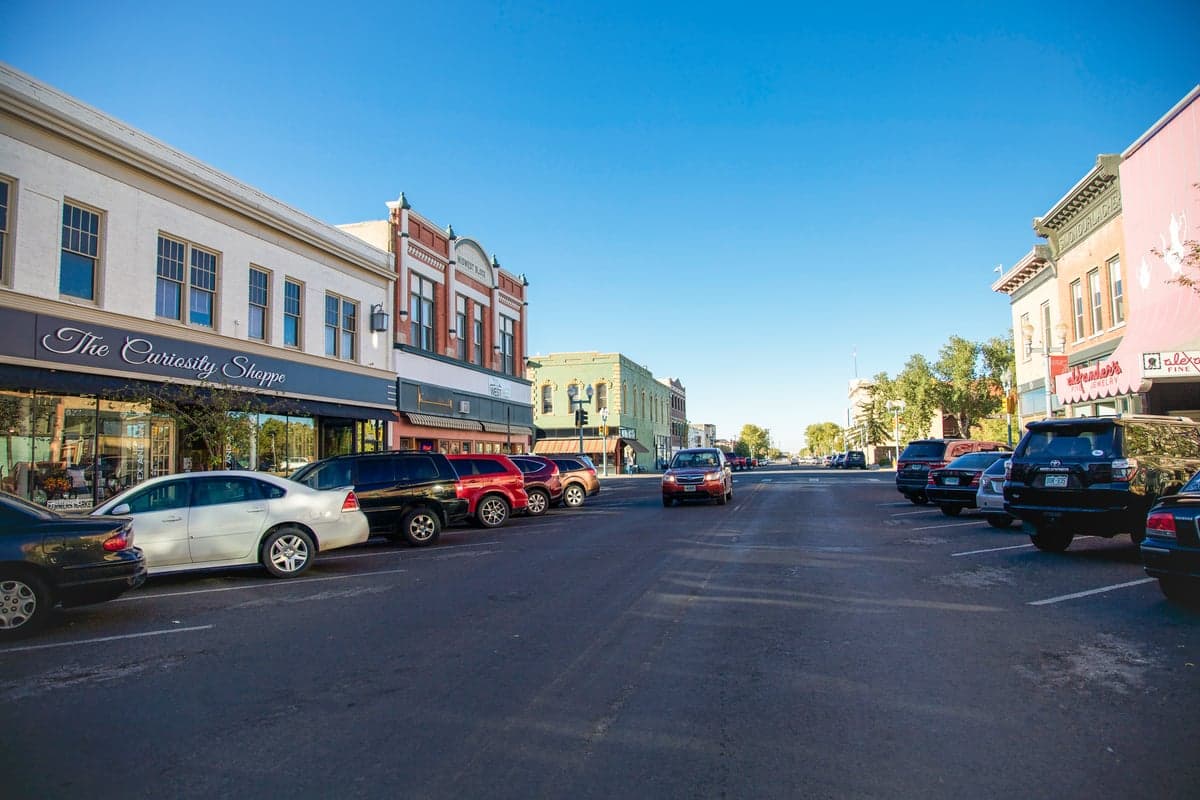
Today, Laramie is a city of 31,848 residents defined by its dual identity as a working ranching hub and a university town anchored by the University of Wyoming. The population is 78.6% white, with a notable Hispanic community at 11.7%, and smaller but growing East/Southeast Asian (2.4%) and Indian subcontinent (1.8%) populations. The city’s character is shaped by a high college-educated share of 55.8%, a 6.0% foreign-born rate, and a political culture that leans conservative relative to other Wyoming towns, though the university injects a moderate-liberal minority. Laramie’s people are spread across distinct neighborhoods that trace their origins to specific settlement waves, from railroad workers to academics to immigrant professionals.
How the city was settled and grew
Laramie was founded in 1868 as a Union Pacific Railroad division point, drawing its first wave of residents—Irish and Chinese laborers who built the tracks and the town itself. The Chinese workers, numbering several hundred, were housed in a segregated camp along the rail corridor near what is now the Downtown Historic District, though most were driven out by anti-Chinese violence in the 1870s. The Irish and later German and Scandinavian immigrants settled in the West Side neighborhoods around Grand Avenue, building modest frame houses near the rail yards and stockyards. The establishment of the University of Wyoming in 1886 brought a second wave: faculty, administrators, and their families, who built homes in the University Heights area east of campus, a district of early 20th-century bungalows and Craftsman houses that remains a professional-class enclave. Ranching families, many of Anglo-Protestant stock from the Midwest, filled the surrounding valleys and established the South Side neighborhoods near the Laramie River, where livestock operations and feedlots operated into the mid-20th century. By 1950, Laramie’s population was nearly entirely white, with a small Hispanic presence from seasonal ranch labor.
Modern era (post-1965)
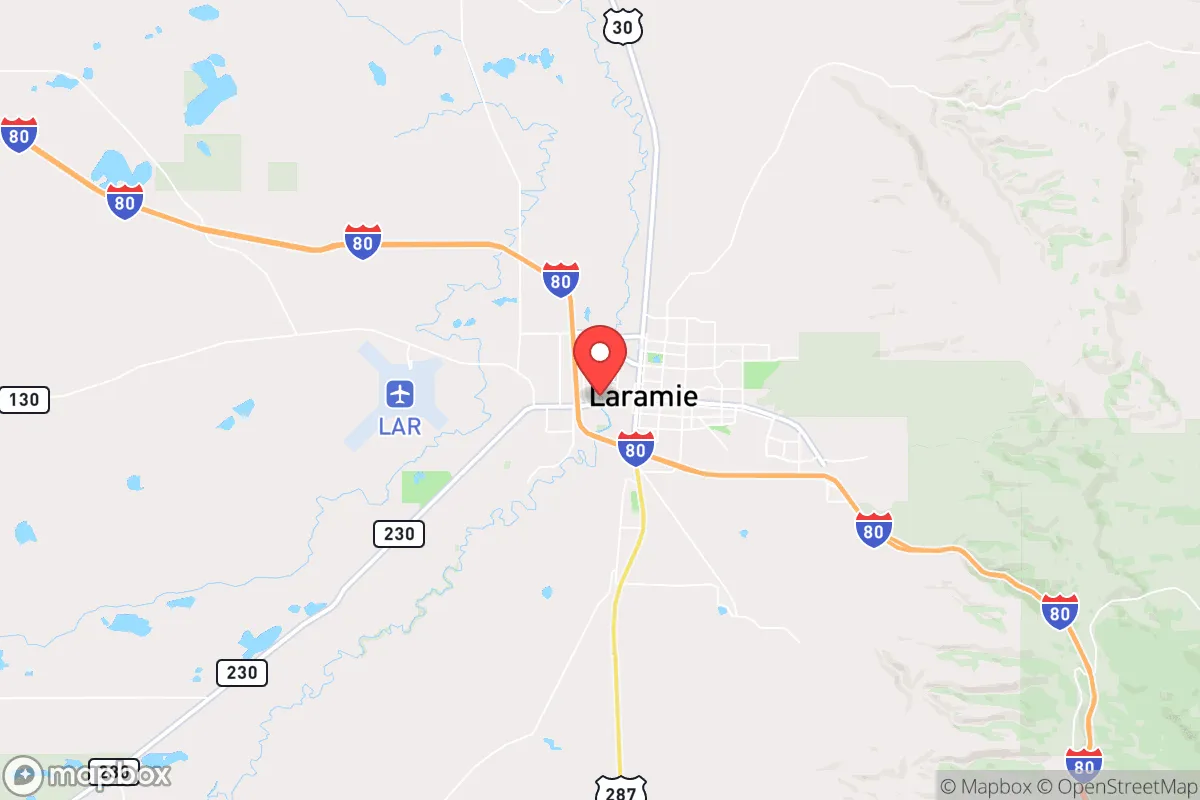
The 1965 Hart-Cellar Act and subsequent immigration reforms had a modest but measurable effect on Laramie. The foreign-born share rose from under 2% in 1970 to 6.0% today, driven primarily by two groups: Hispanic immigrants from Mexico and Central America, and a growing professional class from East/Southeast Asia and the Indian subcontinent. Hispanic families, many working in construction, hospitality, and the university’s maintenance and food-service sectors, concentrated in the North Side neighborhoods near the Interstate 80 corridor and in the West Laramie area, where older, affordable housing stock and proximity to industrial jobs created a distinct enclave. East/Southeast Asian residents—primarily Chinese, Korean, and Vietnamese—arrived from the 1980s onward as graduate students and faculty in STEM fields, settling in the University Heights and the newer Grand Avenue Corridor subdivisions east of campus. Indian subcontinent residents, largely professionals in engineering, medicine, and information technology, followed a similar pattern, clustering in the East Laramie neighborhoods around the Ivinson Avenue extension, where mid-2000s townhome developments catered to university-affiliated families. The Black population remains small at 1.2%, concentrated among university faculty and staff in the University Heights area. Suburbanization since the 1990s has pushed newer, mostly white families into the Thunderbird Hills and Pilot Butte subdivisions on the city’s eastern edge, creating a socio-economic divide between older, denser neighborhoods near downtown and newer, larger-lot subdivisions farther out.
The future
Laramie’s population is projected to grow slowly, reaching roughly 35,000 by 2040, driven by university enrollment and remote-worker in-migration from Colorado and the West Coast. The Hispanic share is likely to continue rising, potentially reaching 15-18% by 2040, as families in the North Side and West Laramie enclaves grow through natural increase and continued immigration. East/Southeast Asian and Indian subcontinent communities are expected to plateau or grow modestly, as the university’s graduate programs and tech-adjacent sectors (like the Wyoming Technology Business Center) attract a steady but limited stream of professionals. The white majority is slowly declining as a share, but remains dominant in the newer subdivisions and in the ranching hinterlands. The city is not tribalizing into sharply divided enclaves—most neighborhoods remain majority-white—but the North Side and West Laramie are becoming distinctly Hispanic-majority zones, while University Heights and East Laramie are the most ethnically diverse. The biggest demographic shift is age: Laramie has a high proportion of young adults (students) and a growing cohort of retirees drawn by low property taxes and outdoor recreation, creating a bifurcated population of transients and long-term residents.
For someone moving in now, Laramie offers a stable, slow-growing community where the university and ranching economies anchor a conservative-leaning culture, but with enough diversity—especially in the North Side and University Heights—to provide ethnic food, cultural events, and a mix of political views. The city is becoming slightly more diverse and slightly more suburban, but remains a place where most residents know their neighbors and the dominant identity is still “Wyoming” rather than any single ethnic or religious group.

* Values derived from national, state, county, city and local statistics and may differ in a specific area. Last updated: 2026-04-21T11:27:14.000Z
Narrative content on this page is AI-generated and may contain mistakes. Verify any details that matter before acting on them.
ReloMaps may earn a commission from affiliate links at no extra cost to you.

