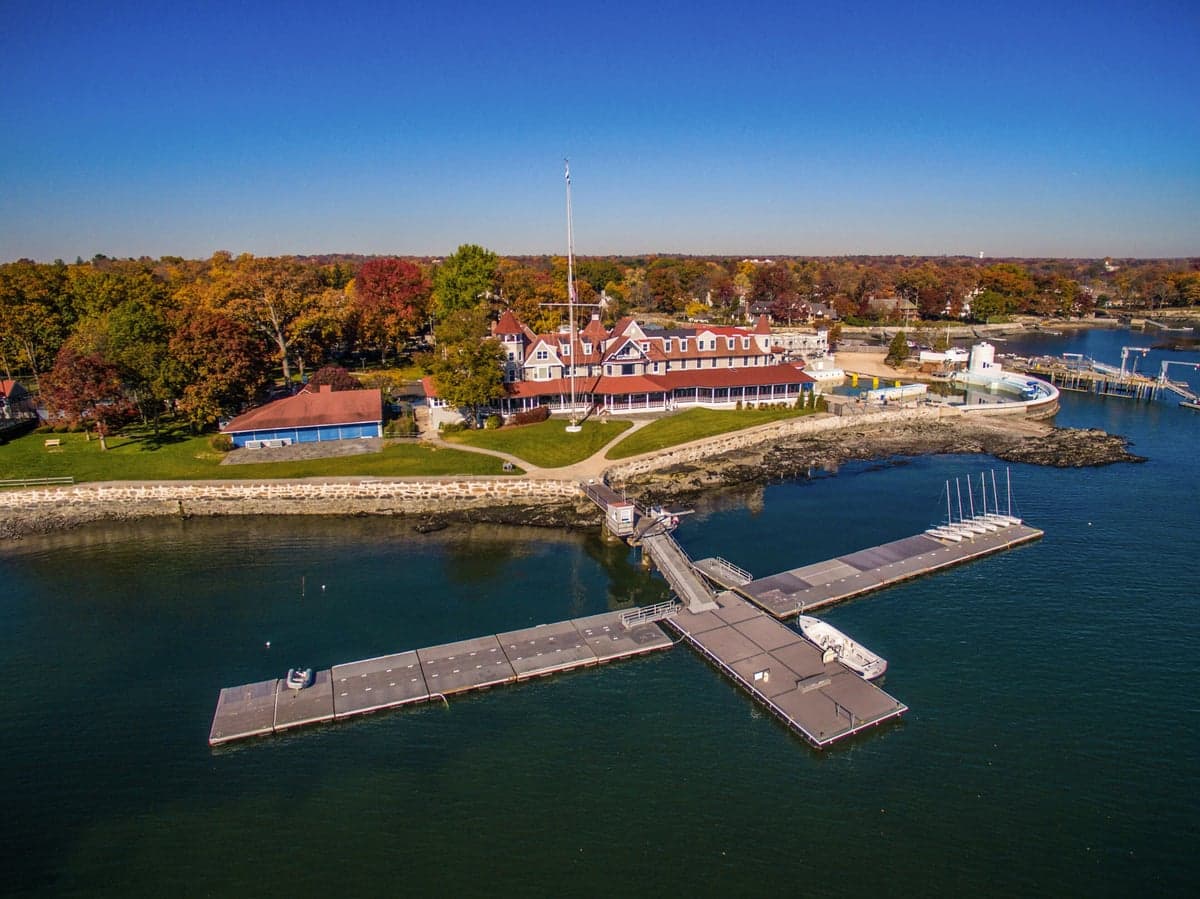
Photo: Wikipedia
Demographics of Larchmont, NY
Affluence Level in Larchmont, NY
A wealthy area with high-earning, well-educated households. Incomes, home values, and educational attainment meaningfully outpace national averages.
People of Larchmont, NY
Today, Larchmont, New York, is a densely settled, affluent village of 6,542 residents, characterized by its 80.7% white population, a highly educated workforce (83.3% college-educated), and a notably low foreign-born share of just 4.6%. Its identity is that of a classic, established Westchester County commuter suburb, with a strong sense of local tradition, high property values, and a demographic profile that has remained remarkably stable compared to neighboring communities. The village’s population is overwhelmingly native-born, with the largest minority groups being Hispanic residents (8.8%) and East/Southeast Asian residents (2.7%), while the Black (2.3%) and Indian subcontinent (0.2%) populations are very small.
How the city was settled and grew
Larchmont’s population history is not one of industrial immigration but of planned suburban development. Originally part of the town of Mamaroneck, the area was sparsely farmed through the 19th century. The transformative moment came in the 1880s with the arrival of the New Haven Railroad, which turned Larchmont into a commuter haven for wealthy New York City businessmen. The village was formally incorporated in 1891. The first major wave of residents were upper-middle-class Anglo-Saxon Protestants who built large estates and summer homes, particularly in the Flint Park and Chatsworth neighborhoods, areas still known for their grand, historic homes and leafy streets. A second, smaller wave of Irish and Italian immigrants arrived in the early 20th century, not as residents of the village proper, but as domestic workers and tradespeople who settled in the adjacent, slightly more modest area of Larchmont Manor and along the Boston Post Road corridor. The village’s character was set early: it was a white, Protestant, and wealthy enclave, a pattern that persisted through the mid-20th century with little change.
Modern era (post-1965)
Unlike many American suburbs, Larchmont did not experience a dramatic demographic transformation after the 1965 Hart-Cellar Act. The foreign-born population remains very low at 4.6%, indicating that international immigration has not been a major driver of change. Instead, the village’s modern population story is one of domestic stability and selective in-migration. The most notable shift has been the gradual arrival of Jewish families, who began moving into Larchmont in the 1970s and 1980s, particularly into the Tudor Heights and Pine Brook neighborhoods, drawn by the excellent school system and proximity to Manhattan. This group now forms a significant and integrated part of the community. The small Hispanic population (8.8%) is concentrated in the more affordable multi-family homes and apartments near the Larchmont train station and along the eastern edge of the village, often working in local service industries. The East/Southeast Asian community (2.7%) is a more recent, post-2000 arrival, composed largely of professionals in finance and tech who have purchased homes in the Chatsworth and Flint Park areas. The Black population (2.3%) and Indian subcontinent population (0.2%) remain very small, reflecting the village’s high housing costs and lack of a historical anchor community for these groups.
The future
Larchmont’s population is heading toward continued homogenization, not tribalization into distinct enclaves. The village’s extreme housing costs—median home prices well over $1.5 million—act as a powerful demographic filter, limiting in-migration to high-income households, which in the current market are overwhelmingly white and East/Southeast Asian. The Hispanic population is plateauing, as the service-sector jobs that drew earlier waves are increasingly filled by workers commuting from more affordable towns further north in Westchester. The small Indian subcontinent and Black populations are unlikely to grow significantly without a major increase in housing supply or a shift in the local economy. The next 10-20 years will likely see Larchmont become slightly more East/Southeast Asian and remain overwhelmingly white, with a very stable, high-income, and highly educated character. The village is not diversifying rapidly; it is solidifying its identity as an exclusive, traditional suburb.
For a conservative-leaning individual or family moving in now, Larchmont represents a choice for stability, safety, and top-tier public schools in a community that has resisted rapid demographic change. It is a place where the population is not growing or diversifying quickly, but rather consolidating around its historic identity as a wealthy, white, and well-educated commuter village. The trade-off is clear: you gain a predictable, high-amenity environment, but you join a community that is among the least diverse in Westchester County, with little indication that this will change in the foreseeable future.

* Values derived from national, state, county, city and local statistics and may differ in a specific area. Last updated: 2026-04-23T02:53:11.000Z
Narrative content on this page is AI-generated and may contain mistakes. Verify any details that matter before acting on them.
ReloMaps may earn a commission from affiliate links at no extra cost to you.

