Political ClimatePolitical Climate in Leawood, KS
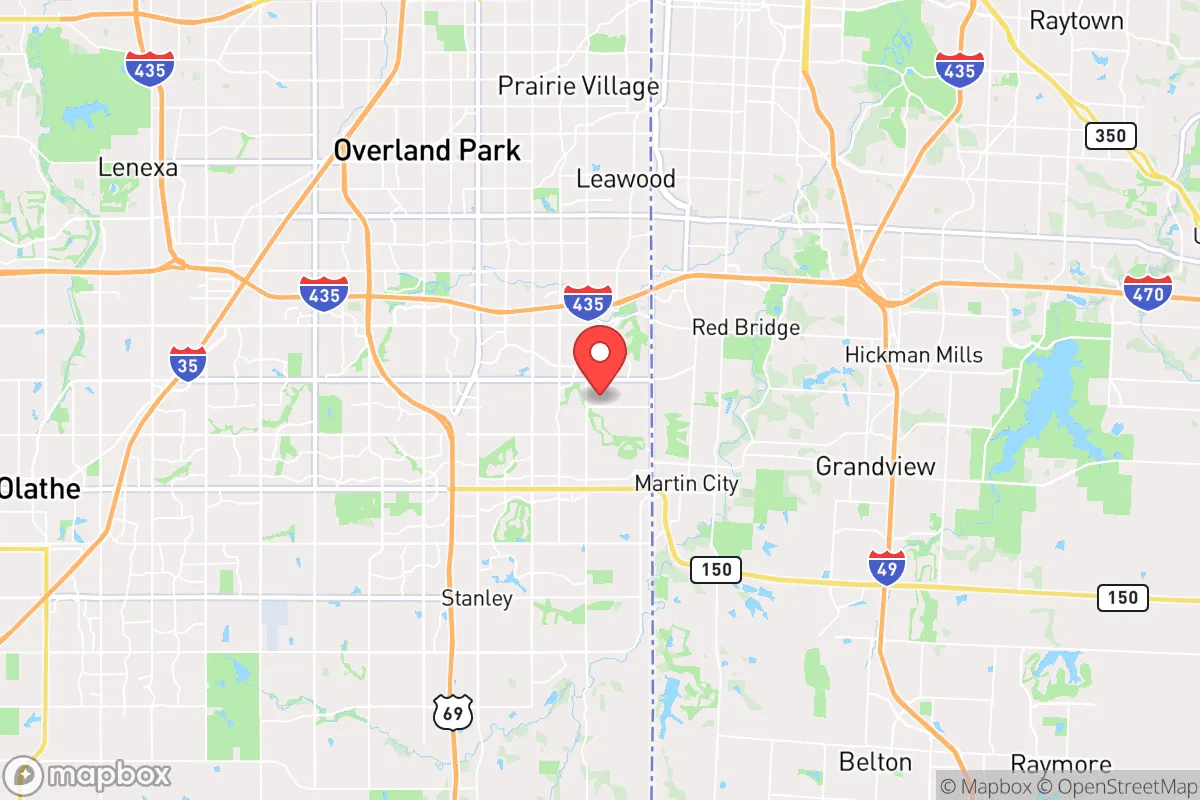
District shown is the primary district for this city’s centroid. Cities may span multiple districts.
Local Political AnalysisPolitical Analysis of Leawood, KS
Leawood, Kansas, sits in a political bubble that’s increasingly out of step with the rest of Johnson County and the state. While the area has historically been a reliable Republican stronghold, the Cook PVI of D+2 tells you everything you need to know about the shift happening here. In the last few presidential cycles, Leawood has trended blue, driven largely by an influx of professionals from the Kansas City metro and a growing progressive tilt among younger homeowners. It’s not a radical change overnight, but the trajectory is clear: what was once a safe conservative suburb is now a battleground neighborhood where your vote for limited government feels less and less like the majority.
How it compares
Drive ten minutes west to Olathe or fifteen minutes south to Spring Hill, and you’re back in solidly red territory—places where the county commission still talks about property tax caps and school choice without apology. Leawood, by contrast, shares more political DNA with nearby Prairie Village or Mission Hills, where local elections often hinge on social issues and zoning regulations that feel like government overreach. The contrast is stark: in Leawood, you’ll see yard signs for candidates who support expanding Medicaid and green energy mandates, while just over the county line in Miami County, folks are still fighting to keep the government out of their healthcare decisions. It’s a reminder that Leawood’s political climate isn’t representative of Kansas as a whole—it’s an outlier, and not necessarily in a good way for those who value personal freedoms.
What this means for residents
For a long-time resident, the biggest concern is how this political drift translates into real-life policy. Leawood’s city council has become more willing to impose regulations on everything from short-term rentals to lawn watering schedules, all in the name of “community standards.” There’s a growing appetite for progressive social policies too—think diversity initiatives in local schools and tighter gun ordinances that go beyond state law. If you’re someone who believes the government should stay out of your backyard and your business, these changes feel like a slow erosion of the liberties that made this area attractive in the first place. The property taxes here are already among the highest in Johnson County, and with a progressive council, you can expect more spending on programs you might not support. It’s not a crisis today, but the direction is concerning for anyone who values fiscal restraint and individual choice.
Culturally, Leawood still holds onto some of its conservative roots—you’ll find plenty of churches and family-owned businesses that lean right—but the public square is shifting. The local school board has become a flashpoint, with debates over curriculum transparency and parental rights that mirror national fights. In the near term, expect more tension as the progressive wing pushes for policies that prioritize equity over excellence. Long-term, if the trend holds, Leawood could become a place where conservative voices feel increasingly marginalized, forced to either adapt or move to communities that still respect the principle of limited government. For now, it’s a place to keep an eye on—and maybe a place to think twice about if you value your freedoms more than the latest social experiment.

State Political ClimatePolitical Climate in Kansas
State Political AnalysisPolitical Environment in the State
Kansas has long been a reliably red state, but the picture is more nuanced than a simple partisan label suggests. Over the past 20 years, the state has shifted from a solidly conservative stronghold to a more volatile battleground where deep-red rural and exurban areas clash with a growing, increasingly progressive corridor anchored by Kansas City and Lawrence. The overall lean remains Republican, but the margins have tightened, and the state’s political trajectory is now defined by internal fractures rather than monolithic control.
Urban vs. rural divide
The political map of Kansas is a tale of two worlds. The eastern third of the state, particularly the Kansas City metro area (Johnson, Wyandotte, and Douglas counties), is the engine of Democratic strength. Johnson County, once a reliably Republican suburb, has been trending left for a decade—Biden won it by 8 points in 2020, a stark contrast to its 20-point Romney margin in 2012. Lawrence, home to the University of Kansas, is the state’s most liberal city, consistently delivering 70%+ Democratic votes. Meanwhile, Wichita (Sedgwick County) remains a swing area, leaning Republican but with a sizable moderate bloc that occasionally breaks for Democrats in statewide races. The rest of the state—vast stretches of the Flint Hills, the western plains, and small towns like Dodge City, Garden City, and Hays—votes overwhelmingly Republican, often by 70-80% margins. This rural-urban split means that statewide elections are decided by turnout in Johnson County and the Wichita suburbs, while the legislature remains heavily gerrymandered to favor rural conservatives.
Policy environment
Kansas’s policy environment reflects its conservative lean, but with notable exceptions. The state has no income tax on Social Security benefits and a flat income tax rate of 5.7% (down from a top rate of 6.45% in 2012). Property taxes are moderate, though local levies vary widely. The state’s regulatory posture is generally business-friendly, with right-to-work laws and limited zoning in most rural areas. Education policy is a flashpoint: the state’s school funding formula has been repeatedly litigated, with the Kansas Supreme Court ordering increases that conservatives argue bypass legislative authority. In 2024, the legislature passed a school choice expansion allowing education savings accounts for low-income families. Healthcare policy is mixed—Kansas has not expanded Medicaid under the Affordable Care Act, a decision that leaves roughly 150,000 low-income adults in a coverage gap. Election laws have tightened: the 2021 election integrity law (HB 2183) requires photo ID for all ballots, limits drop boxes, and shortens the mail-in ballot window. These policies are popular with conservatives but have drawn legal challenges from voting rights groups.
Trajectory & freedom
On personal freedom, Kansas is a mixed bag trending in the right direction on some fronts but concerning on others. The state has strong Second Amendment protections: constitutional carry became law in 2015, and there are no state-level magazine capacity limits or waiting periods. In 2023, the legislature passed a law prohibiting enforcement of federal gun regulations that lack a state equivalent (the Second Amendment Protection Act). Parental rights were strengthened in 2024 with a law requiring school districts to notify parents of any curriculum involving human sexuality and to obtain parental consent for student surveys on sensitive topics. However, the state’s tax burden remains a concern—while income taxes have been cut, sales taxes are high (6.5% state rate, plus local add-ons up to 10%), and property taxes have risen faster than inflation. Medical freedom took a hit in 2022 when voters rejected a constitutional amendment that would have removed all protections for abortion, preserving a state court ruling that protects the procedure. This was a major defeat for conservatives and signaled that Kansans are wary of government overreach even on culturally charged issues. The state also has no medical marijuana law, though neighboring Missouri and Oklahoma have legalized it, creating pressure for reform.
Civil unrest & political movements
Kansas has seen its share of political turbulence, though it rarely makes national headlines. The most visible flashpoint in recent years was the 2022 abortion amendment vote, which drew massive turnout and national attention. The “No” campaign, funded heavily by out-of-state progressive donors, won by 18 points, a result that shocked many conservatives and energized the state’s Democratic and moderate Republican coalition. On the right, the Kansas Republican Party has fractured between establishment conservatives and a more populist, anti-establishment wing that has pushed for school choice, election integrity, and opposition to vaccine mandates. In 2023, a group of parents in Johnson County organized against school board policies on diversity and gender identity, leading to several recall elections. Immigration politics are less heated than in border states, but the western Kansas meatpacking towns (Garden City, Dodge City) have seen tensions over housing and labor, with some local officials pushing for stricter enforcement. There is no serious secession or nullification movement, though some rural counties have passed symbolic resolutions declaring themselves “Second Amendment sanctuaries.” Election integrity remains a live issue: the 2020 and 2022 cycles saw no major fraud cases, but conservative activists continue to push for hand-counting of ballots and tighter voter roll maintenance.
Projection
Over the next 5-10 years, Kansas is likely to become more politically competitive, not less. The key driver is in-migration: Johnson County is growing fast, attracting professionals from the coasts who tend to be more moderate or liberal. The Kansas City metro’s expansion is slowly turning the state’s most populous county into a Democratic stronghold, which will make statewide races tighter. At the same time, rural areas are depopulating, shrinking the Republican base. The legislature will remain Republican-controlled due to gerrymandering, but the governor’s race and U.S. Senate seats will be toss-ups. On policy, expect continued fights over school funding, tax cuts, and abortion. The state’s flat tax may be further reduced, but property tax relief will be a major issue as home values rise. Medical marijuana is likely to pass within five years, given public support and regional pressure. The biggest wild card is the Kansas Supreme Court: the governor appoints justices, and a Democratic governor could shift the court left, leading to more rulings that frustrate conservatives on education and abortion. For a conservative moving in, the state offers a generally favorable environment today, but the trend lines suggest a slow drift toward purple—especially in the eastern suburbs.
For a new resident, the bottom line is this: Kansas is still a good place for conservatives who value low taxes, gun rights, and local control, but you need to pick your location carefully. If you want a reliably red community, look to the western half of the state or the Wichita exurbs. If you move to Johnson County, you’ll find excellent schools and a strong economy, but you’ll also be living in a politically mixed area where your vote matters less and your neighbors may not share your values. The state’s trajectory is toward more competition, not less, so expect the political climate to become more contentious over the next decade. If you’re looking for a place where conservative principles are deeply entrenched and unlikely to change, Kansas still delivers—but the cracks are showing, and they’re widening.
* Values derived from national, state, county, city and local statistics and may differ in a specific area. Last updated: 2026-05-01T06:59:59.000Z
Narrative content on this page is AI-generated and may contain mistakes. Verify any details that matter before acting on them.
ReloMaps may earn a commission from affiliate links at no extra cost to you.

