Photo: Wikipedia
Demographics of Lenexa, KS
Affluence Level in Lenexa, KS
An upper-middle-class area. Household wealth, education levels, and homeownership run ahead of national benchmarks.
People of Lenexa, KS
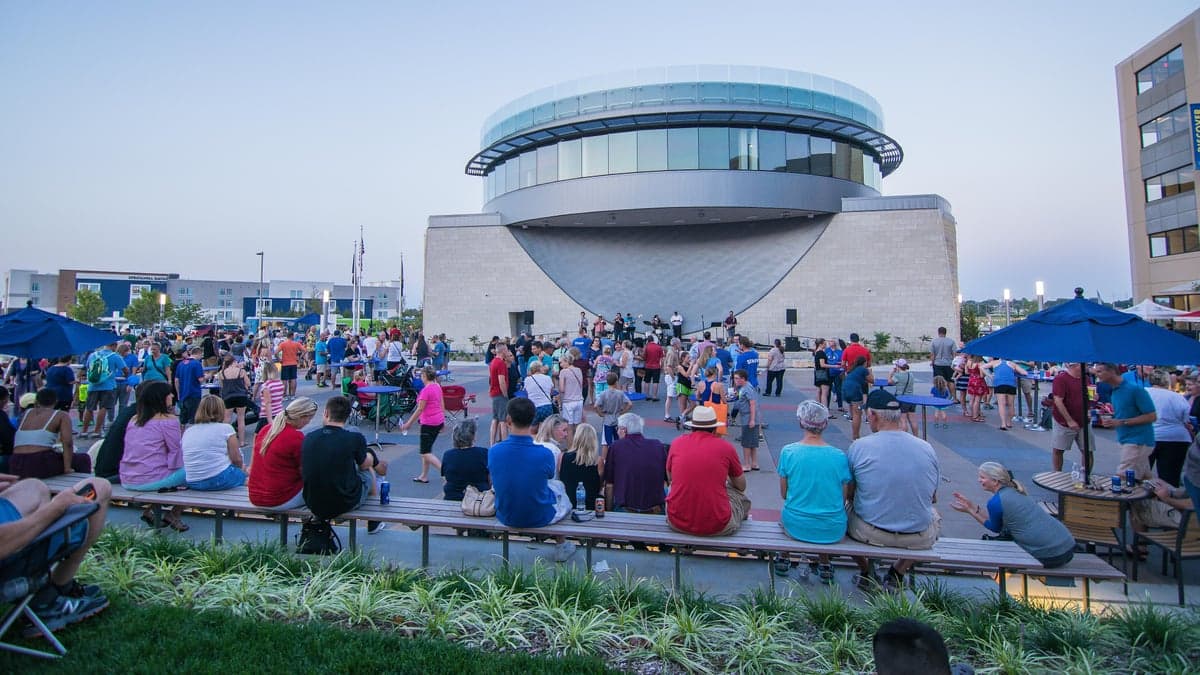
Lenexa, Kansas is a suburban city of 57,986 residents that blends a strong Midwestern family identity with a notably high education level — 56.8% of adults hold a bachelor’s degree or higher, nearly double the national average. The population is predominantly white (74.9%), with a Hispanic share of 9.8%, a Black share of 6.6%, and smaller East/Southeast Asian (3.1%) and Indian-subcontinent (1.2%) communities. The foreign-born population is low at 4.0%, reflecting a city shaped more by domestic migration from within the Kansas City metro and the broader Midwest than by international immigration.
How the city was settled and grew
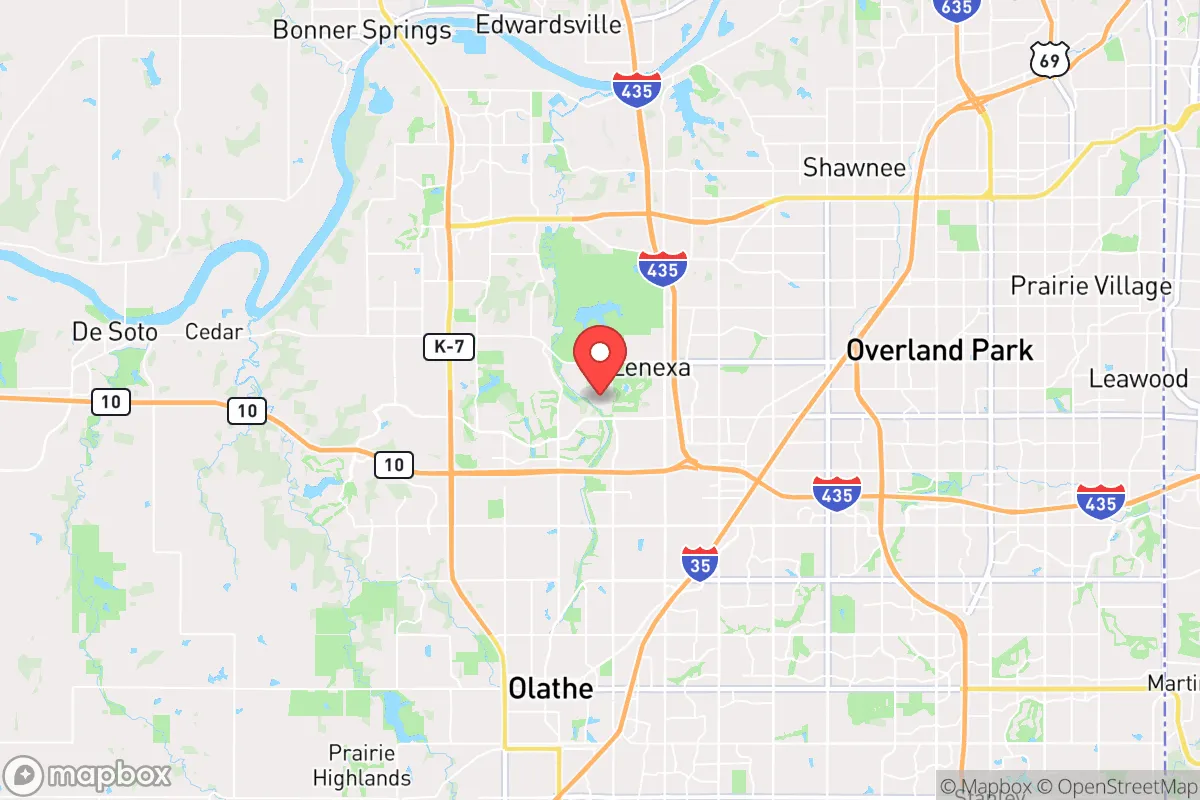
Lenexa’s human history begins not with pioneers crossing the plains but with railroad land grants and a deliberate act of incorporation in 1907. The city was founded as a stop on the Missouri Pacific Railroad, and its earliest residents were farmers and railroad workers drawn by cheap land and access to the Kansas City market. The original settlement clustered around what is now Old Town Lenexa, the historic downtown core along Santa Fe Trail Drive, where grain elevators, a depot, and small wood-frame houses housed the first generation of mostly Anglo-American families from the eastern U.S. and German immigrants who had moved west. Through the 1920s and 1930s, Lenexa remained a tiny agricultural hamlet — the 1930 census counted just 543 people. The city’s growth was slow and steady, with no major immigrant wave until after World War II. The post-war boom brought returning GIs and their families, who built ranch-style homes in neighborhoods like Lackman Acres and Lenexa Hills, drawn by cheap land, new highways (I-35 opened in the 1960s), and the promise of suburban space. These mid-century arrivals were overwhelmingly white, native-born, and employed in manufacturing, construction, and the growing service economy of Johnson County.
Modern era (post-1965)
After the 1965 Hart-Cellar Act and the broader suburbanization of Johnson County, Lenexa’s population began to diversify slowly. The city’s growth accelerated dramatically after 1970 — from about 5,000 residents in 1970 to over 40,000 by 2000 — driven almost entirely by domestic in-migration from within the Kansas City metro and from other Midwestern states. The new arrivals were largely white-collar professionals and their families, attracted by the city’s excellent schools (Shawnee Mission School District) and its growing base of corporate headquarters and light industry. The Hispanic population, now 9.8%, began to grow in the 1990s and 2000s, settling primarily in the West Lenexa area near I-35 and 87th Street Parkway, where older apartment complexes and starter homes offered affordable entry points. The Black population (6.6%) is more dispersed but has a visible presence in neighborhoods like Pinehurst and Southlake, areas developed in the 1980s and 1990s with larger single-family homes. The East/Southeast Asian community (3.1%) — primarily Vietnamese and Korean families — concentrated in the Lackman corridor near 95th Street, where a small cluster of Asian grocery stores and restaurants has emerged. The Indian-subcontinent community (1.2%) is newer, growing since 2010, and tends to settle in newer subdivisions like Prairie Trails and Woodland Hills, drawn by tech and engineering jobs at companies like Garmin and Cerner in nearby Olathe and Overland Park. Notably, Lenexa has not experienced the rapid ethnic succession seen in older suburbs; its diversity has grown incrementally, and the city remains majority-white and majority-native-born.
The future
Lenexa’s population is heading toward slow, steady diversification rather than rapid change. The white share has declined from about 85% in 2000 to 74.9% today, a trend that will likely continue as the metro area’s Hispanic and Asian populations grow and as younger, more diverse families move into newer developments. The city’s low foreign-born rate (4.0%) suggests that international immigration will remain a minor factor; most future growth will come from domestic migration within the Kansas City region, particularly from families seeking good schools and relatively affordable housing compared to Johnson County’s pricier eastern suburbs. The Indian-subcontinent and East/Southeast Asian communities are growing but from small bases, and they are not forming distinct ethnic enclaves — instead, they are assimilating into the broader suburban fabric. The Hispanic population is the fastest-growing group, but at 9.8% it remains far below the national suburban average. Lenexa is not tribalizing into separate ethnic zones; rather, it is slowly becoming a more diverse, still majority-white, highly educated suburb where most residents share a common lifestyle of commuting, school involvement, and homeownership.
For someone moving in now, Lenexa offers a stable, family-oriented environment with a population that is becoming more diverse but remains overwhelmingly native-born, college-educated, and politically moderate-to-conservative. The city’s demographic trajectory is one of gradual change, not disruption — a place where new arrivals, whether from other parts of the metro or from abroad, are absorbed into a well-established suburban culture. The bottom line: Lenexa is a solid, upwardly mobile suburb where the people are defined less by ethnic background and more by shared values of education, homeownership, and community stability.

* Values derived from national, state, county, city and local statistics and may differ in a specific area. Last updated: 2026-04-30T05:13:29.000Z
Narrative content on this page is AI-generated and may contain mistakes. Verify any details that matter before acting on them.
ReloMaps may earn a commission from affiliate links at no extra cost to you.

