 Popular
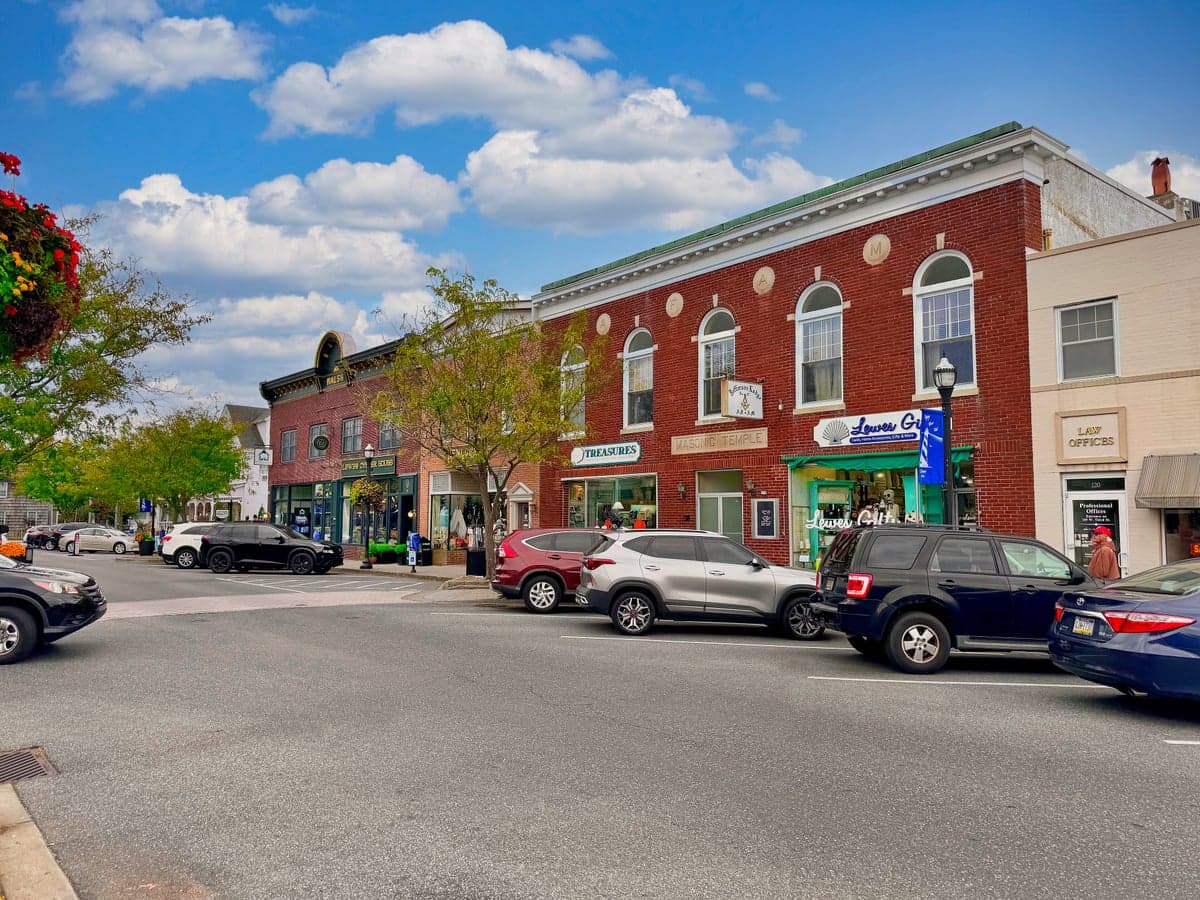
Photo: Wikipedia
Demographics of Lewes, DE
Affluence Level in Lewes, DE
An upper-middle-class area. Household wealth, education levels, and homeownership run ahead of national benchmarks.
People of Lewes, DE
Lewes, Delaware, is a small, historically white coastal city of 3,415 residents, distinguished by its exceptionally low foreign-born population of just 0.4% and a high college attainment rate of 65.2%. The city’s character is shaped by deep-rooted families, a strong sense of local heritage, and a demographic profile that is 93.8% white, with very small Hispanic (1.4%), Black (1.0%), and Indian-subcontinent (0.5%) communities, and no recorded East/Southeast Asian population. This is a place where the population is stable, aging, and largely native-born, with a quiet, preservation-minded identity that appeals to retirees, second-home owners, and professionals seeking a slower pace.
How the city was settled and grew
Lewes was founded in 1631 by Dutch settlers as the short-lived Zwaanendael colony, but the permanent population began with English and Welsh farmers and mariners in the late 17th century, drawn by land grants from William Penn and the strategic location at the mouth of the Delaware Bay. The original settlement clustered around what is now Historic Lewes, a district of 18th- and 19th-century homes along Second and Third Streets, where the descendants of these early families—many with surnames like Maull, Prettyman, and Waples—still own property. The 19th century brought a wave of German and Irish immigrants who worked in the shipbuilding and oyster industries, settling in the Shipcarpenter Square area and along Savannah Road, where modest workers’ cottages remain. By 1900, the population was overwhelmingly white and native-born, with a small Black community concentrated near Blockhouse Pond, a historically African American neighborhood that formed around the AME church on Franklin Avenue. The city’s growth remained slow through the mid-20th century, as the economy shifted from maritime trades to tourism and seasonal living, with new residents—mostly white retirees and summer visitors—building homes in the Anglers Colony subdivision near the canal.
Modern era (post-1965)
After the 1965 Immigration and Nationality Act, Lewes saw virtually no influx of foreign-born residents; the foreign-born share today is a negligible 0.4%, far below the national average. Instead, the city’s modern growth has been driven by domestic in-migration of white retirees and second-home buyers from the Mid-Atlantic, particularly from the Washington, D.C., and Philadelphia suburbs. These newcomers have concentrated in newer developments like Bay Vista and Kings Creek Country Club, gated communities with golf courses and waterfront access that are almost entirely white and affluent. The historic Black population around Blockhouse Pond has shrunk to just 1.0% of the city’s total, as younger generations moved to larger cities and property values rose. The small Hispanic community (1.4%) is largely composed of service workers in the hospitality and landscaping industries, living in rental units scattered along Route 9, while the Indian-subcontinent population (0.5%) is primarily professionals employed at the nearby Beebe Healthcare system, residing in the Beacon Shores area. No East/Southeast Asian community has formed, with the data showing 0.0% for that group. The city’s college education rate of 65.2% reflects the high proportion of professionals and retirees with advanced degrees, a figure that has risen steadily since 2000 as older, less-educated residents have been replaced by wealthier in-migrants.
The future
Lewes’s population is heading toward further homogenization, with the white share likely to remain above 90% for the foreseeable future, given the city’s high housing costs (median home price over $500,000) and limited rental stock. The foreign-born population is not expected to grow significantly, as the city lacks the industrial or agricultural jobs that attract immigrant labor in other parts of Sussex County. The small Hispanic and Indian-subcontinent communities may plateau or slowly increase as service and healthcare sectors expand, but they are unlikely to form distinct ethnic enclaves; instead, they will remain dispersed and assimilated. The most notable demographic trend is the aging of the population: the median age is already above 55, and the city’s school-age population is shrinking, with Cape Henlopen School District reporting declining enrollment. New development is concentrated in age-restricted communities like The Villages of Red Mill Pond, which will reinforce the retiree character. The city is not tribalizing into distinct enclaves but rather becoming a more uniformly white, affluent, and older place, with little racial or ethnic diversity.
For a conservative-leaning mover, Lewes offers a stable, safe, and culturally homogeneous environment where the population is rooted, educated, and civically engaged. The city is becoming a quieter, more exclusive version of its former self—a place for those who value tradition, low crime, and a predictable social fabric, but not for those seeking diversity or a youthful, dynamic community. The bottom line: Lewes is a white, aging, and affluent coastal enclave that is slowly shrinking in total population, with little demographic change on the horizon.

* Values derived from national, state, county, city and local statistics and may differ in a specific area. Last updated: 2026-04-30T06:38:45.000Z
Narrative content on this page is AI-generated and may contain mistakes. Verify any details that matter before acting on them.
ReloMaps may earn a commission from affiliate links at no extra cost to you.

