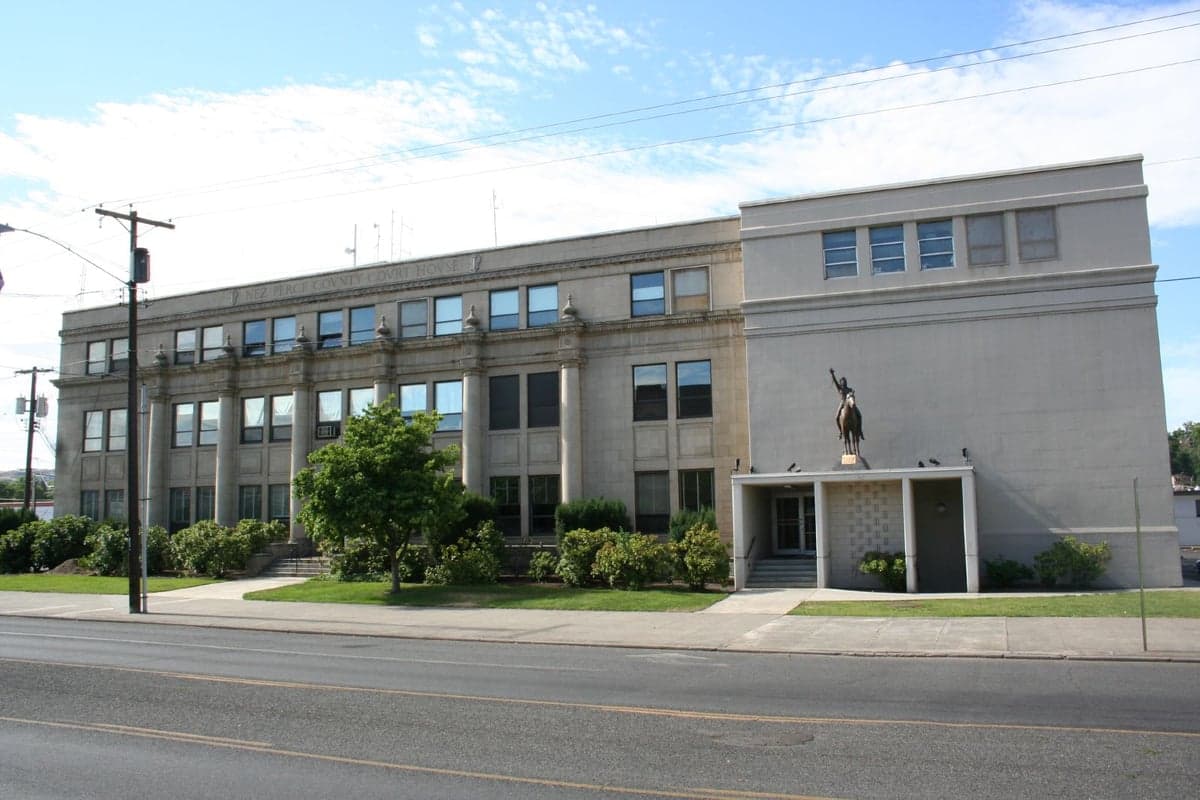
Photo: Wikipedia
Strategic Assessment of Lewiston, ID
Deep buffer from population centers and strategic targets. Low natural disaster risk and minimal exposure to border or coastal threats.
What does the Strategic Assessment tell us?
Our Strategic Assessment grades tactical survivability of an area. Major population centers, military targets, fallout zones, natural disasters, and border exposure all drive risk — lower exposure means a more defensible position in a crisis.
This is heavily inspired by Joel Skousen's Strategic Relocation book. Highly recommended you checkout the book ($)What does this tell us?
Our Strategic Assessment grades tactical survivability of an area. Major population centers, military targets, fallout zones, natural disasters, and border exposure all drive risk — lower exposure means a more defensible position in a crisis.
This is heavily inspired by Joel Skousen's Strategic Relocation book. Highly recommended you checkout the book ($)Strategic Pillars

Key Distances
Regional Safe Places
Below is our recommended "safe zones" in Idaho and the surrounding area based on our strategic heuristics. For most people, it's unrealistic to live in a “safe zone” full-time due to work, family or other personal reasons. They tend to be more rural. However, many of these areas are perfect for second homes and retreat properties that double as a vacation home or even a short-term rental.
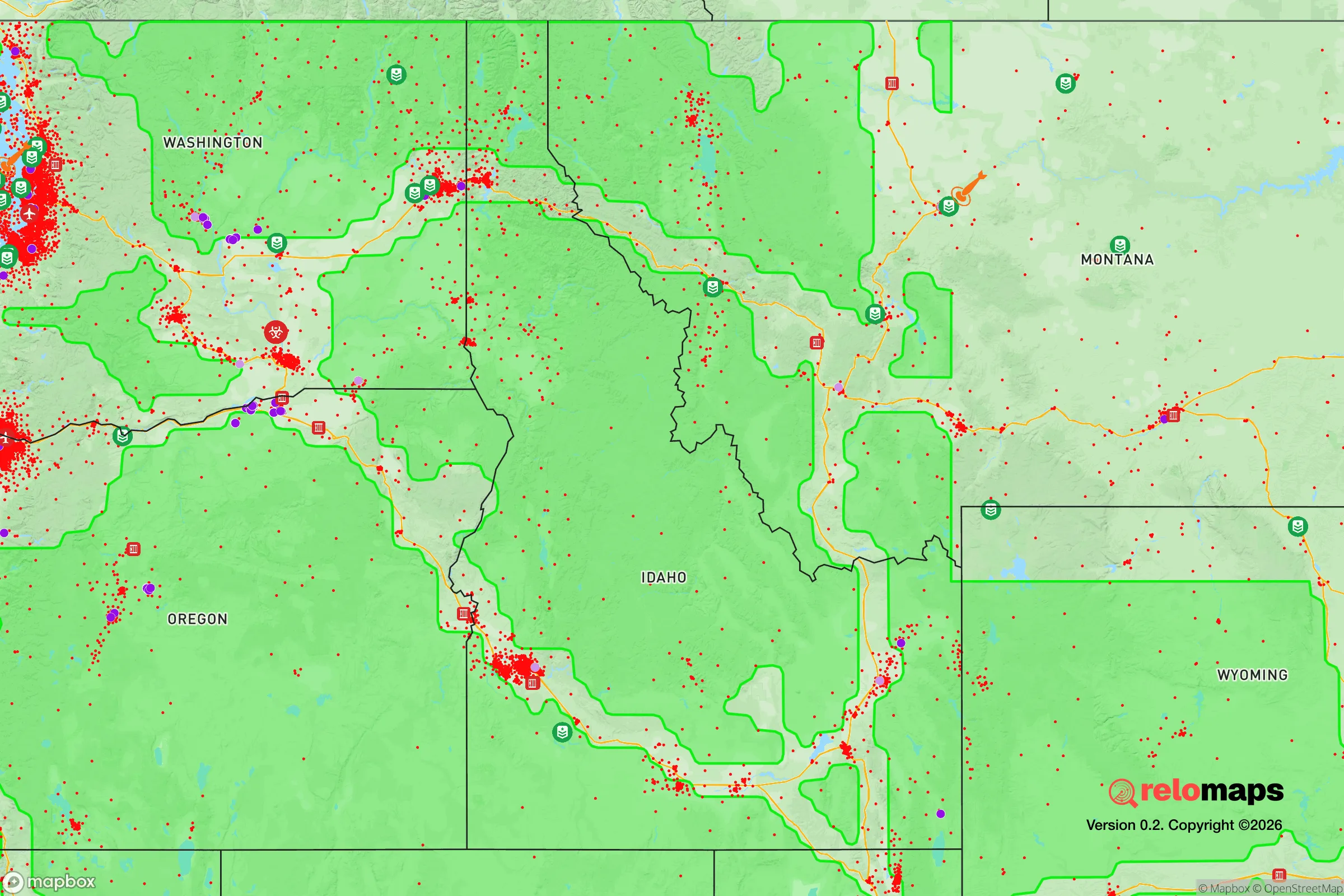
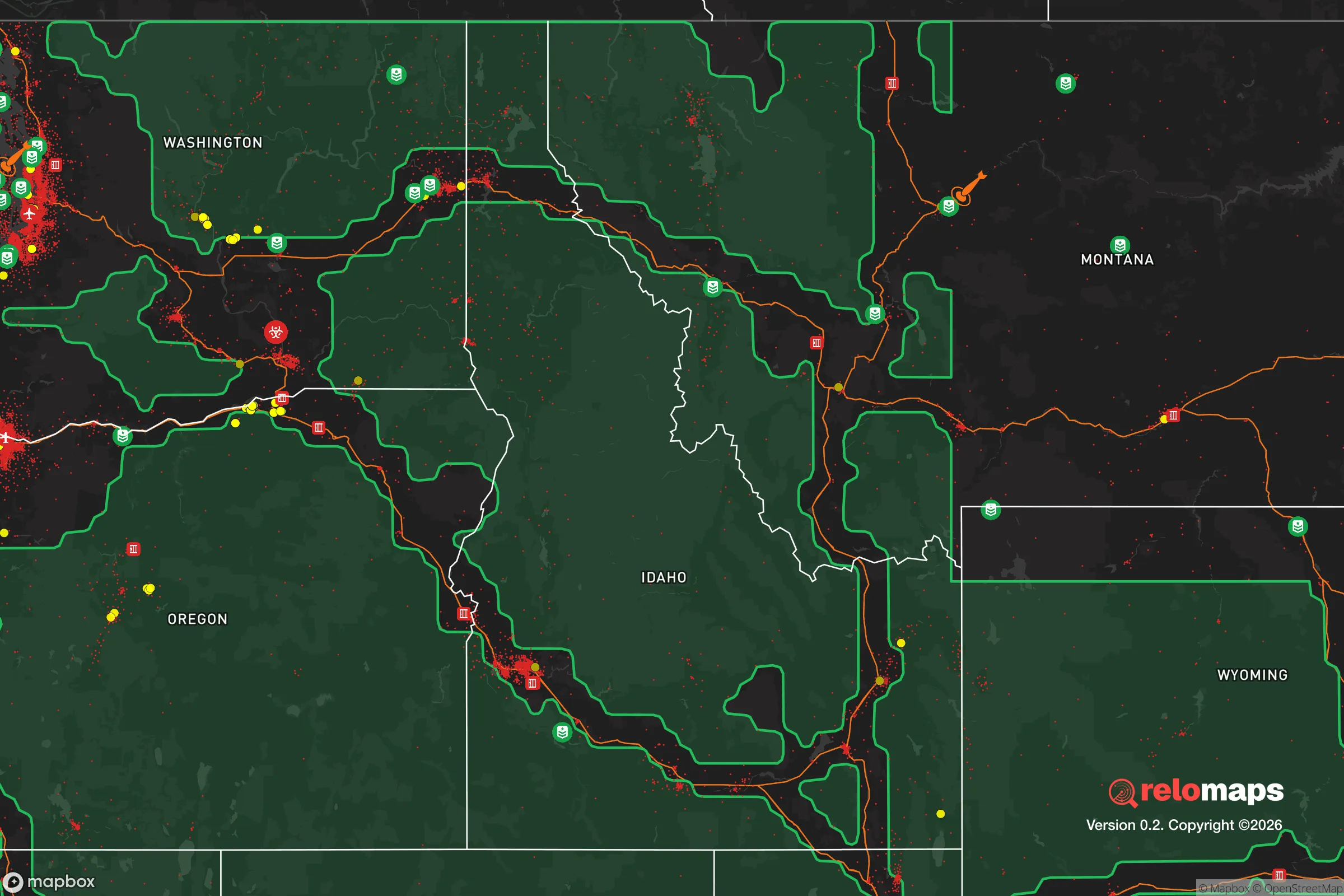


Important Note: For informational purposes only. This does not mean nothing bad ever happens in the green zones. Please use common sense. This is based on public data and modeled with AI. We tried to take a conservative approach but mistakes happen. We update this regularly as new information becomes available.
Solar Generator Recommendations
Backup power matters more here than in safer locations. We've picked three solar generators across budgets and capacity tiers — start with the budget unit if you only need a few essentials, or step up if you want to run a fridge and HVAC for days at a time.

Jackery Portable Power Station Explorer 300
Budget OptionPower on the Go: Weighing only 11 lbs, it's convenient to set up and store with book-sized foldable solar panels

BLUETTI Portable Power Station AC180
Designed for both indoor and outdoor scenarios, AC180 is highly capable as it has a robost capacity and continuous output power.

EF ECOFLOW DELTA Pro Ultra Power Station
Upgraded PickEcoFlow DELTA Pro Ultra is a whole-home energy system designed to grow with your family. Integrated with the Smart Home Panel 2, it scales to meet your evolving energy needs — keeping your home powered, intelligent, and secure through every stage of life.
We earn a commission, at no additional cost to you.
Strategic Assessment Analysis
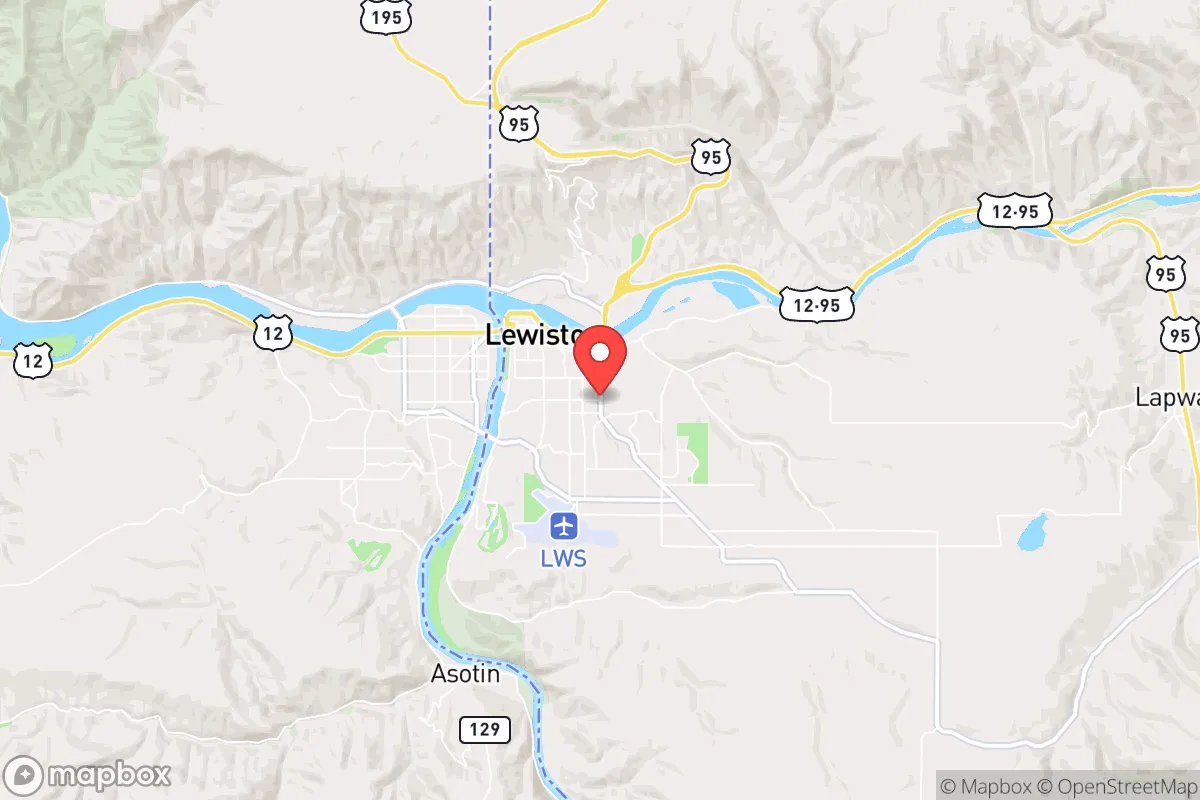
Lewiston, Idaho, sits as one of the more strategically overlooked nodes in the inland Northwest, offering a blend of geographic isolation and practical infrastructure that appeals to those thinking seriously about resilience. Its position at the confluence of the Snake and Clearwater Rivers provides a natural moat and a reliable water source, while its distance from major population centers like Seattle, Portland, and Spokane reduces exposure to the cascading effects of urban collapse. For a relocator assessing long-term stability, Lewiston presents a credible balance of remoteness and functional access to essential resources, though it is not without its own vulnerabilities that demand honest evaluation.
Geographic position and natural advantages for long-term security
Lewiston’s location is its primary strategic asset. The city sits in a deep river canyon, shielded by the surrounding Palouse hills and the Craig Mountains, which provides a degree of natural defensibility and microclimate stability. The Snake River, a major tributary of the Columbia, offers a perennial water source that is less susceptible to drought than many western basins. The surrounding region is agricultural heartland—wheat, lentils, and barley dominate the Palouse—meaning local food production is not a theoretical exercise but a present reality. Within a 50-mile radius, you have the Nez Perce Reservation, the Clearwater National Forest, and the Hells Canyon National Recreation Area, all of which offer hunting, fishing, and foraging potential. The Lewiston-Nez Perce County Airport is a small but functional regional hub, and the city is served by US-12 and US-95, which connect to I-90 and I-84 but do not funnel traffic through major metropolitan chokepoints. This combination of water, arable land, and limited through-access makes Lewiston a strong candidate for a relocation base focused on self-sufficiency.
Risks, exposures, and proximity to fallout-relevant landmarks
No location is a fortress, and Lewiston has specific exposures that a prepper must weigh. The most significant is the Lewiston Orchards area, which sits atop a known groundwater contamination plume from historical industrial activity—a reminder that even remote areas carry legacy pollution risks. More critically, the city is within 100 miles of the Hanford Site in Washington, a decommissioned nuclear production facility with massive underground waste tanks. While a catastrophic release from Hanford is low-probability, the prevailing winds blow east-to-west, meaning fallout from a worst-case scenario would likely travel toward the Tri-Cities and not directly over Lewiston. Still, proximity to a nuclear waste site is a non-zero risk that demands a prepper’s attention. Additionally, Lewiston lies in a seismically active region—the Wallowa-Idaho seismic zone—with the potential for moderate earthquakes (magnitude 5-6) that could disrupt infrastructure. The city’s river canyon location also creates a risk of landslides and flash flooding during heavy rain or rapid snowmelt. On the human threat side, Lewiston is far from major urban centers, but it sits near the Nez Perce Reservation and the Clearwater River, which are routes for drug trafficking and occasional civil unrest. The 2022 stabbing attack at the University of Idaho in Moscow (just 30 miles north) is a reminder that even small college towns are not immune to mass casualty events. For a conservative relocator, the key takeaway is that Lewiston’s isolation reduces exposure to urban riots and supply chain disruptions, but it does not eliminate geological or industrial hazards.
Practical resilience for a relocator: food, water, energy, and defensibility
For someone serious about self-reliance, Lewiston offers a workable foundation. Water is the strongest asset: the Snake River is a year-round flow, and the city’s municipal supply comes from the Clearwater River and local wells. A private well in the surrounding county is feasible, with water tables generally reliable. Food is abundant locally—the Palouse is one of the most productive wheat-growing regions in the world, and the area has a strong network of farmers’ markets, co-ops, and small-scale livestock operations. The Lewiston Farmers Market runs from May to October, and the Nez Perce County Fair is a hub for local produce and meat. For long-term storage, the dry climate (around 12 inches of annual precipitation) reduces spoilage risk compared to the humid South. Energy is a mixed picture: Lewiston is served by Avista Utilities, which draws from hydroelectric dams on the Snake and Clearwater rivers, giving the area a relatively stable grid. However, the dams themselves are potential targets for sabotage or natural failure. Solar is viable—the region gets about 200 sunny days per year—but the canyon location can create shading issues on south-facing slopes. Defensibility is where Lewiston shines. The city is compact (population ~34,000), with a single major highway (US-95) running north-south through the canyon. The terrain funnels traffic, making it easier to monitor access points. The surrounding hills provide natural observation points, and the river creates a barrier to the east. For a small group or family, a homestead in the nearby Craig Mountains or Hells Canyon area offers near-total isolation while remaining within a day’s drive of the city for resupply. The Lewiston Police Department and Nez Perce County Sheriff’s Office are professional and well-funded relative to the population, but in a prolonged crisis, law enforcement will be stretched thin—so personal security planning is essential.
The overall strategic picture for Lewiston is one of cautious optimism for the prepared relocator. It is not a bunker—it has real vulnerabilities, including a nuclear waste site upwind, seismic risk, and a drug corridor running through the region. But its natural water supply, agricultural hinterland, and defensible terrain make it a far better bet than most suburban or exurban options in the Pacific Northwest. For a conservative individual or family looking to step off the grid without stepping into the wilderness, Lewiston offers a realistic middle ground: enough infrastructure to maintain a modern life, enough isolation to ride out a crisis, and enough local resources to build genuine self-sufficiency. The key is to arrive with a plan—secure a well, stockpile food, and establish relationships with local farmers and tradesmen before the situation demands it. Lewiston won’t save you from every scenario, but it gives you a fighting chance in the ones that matter most.

* Values derived from national, state, county, city and local statistics and may differ in a specific area. Last updated: 2026-05-03T20:23:45.000Z
Narrative content on this page is AI-generated and may contain mistakes. Verify any details that matter before acting on them.
ReloMaps may earn a commission from affiliate links at no extra cost to you.

