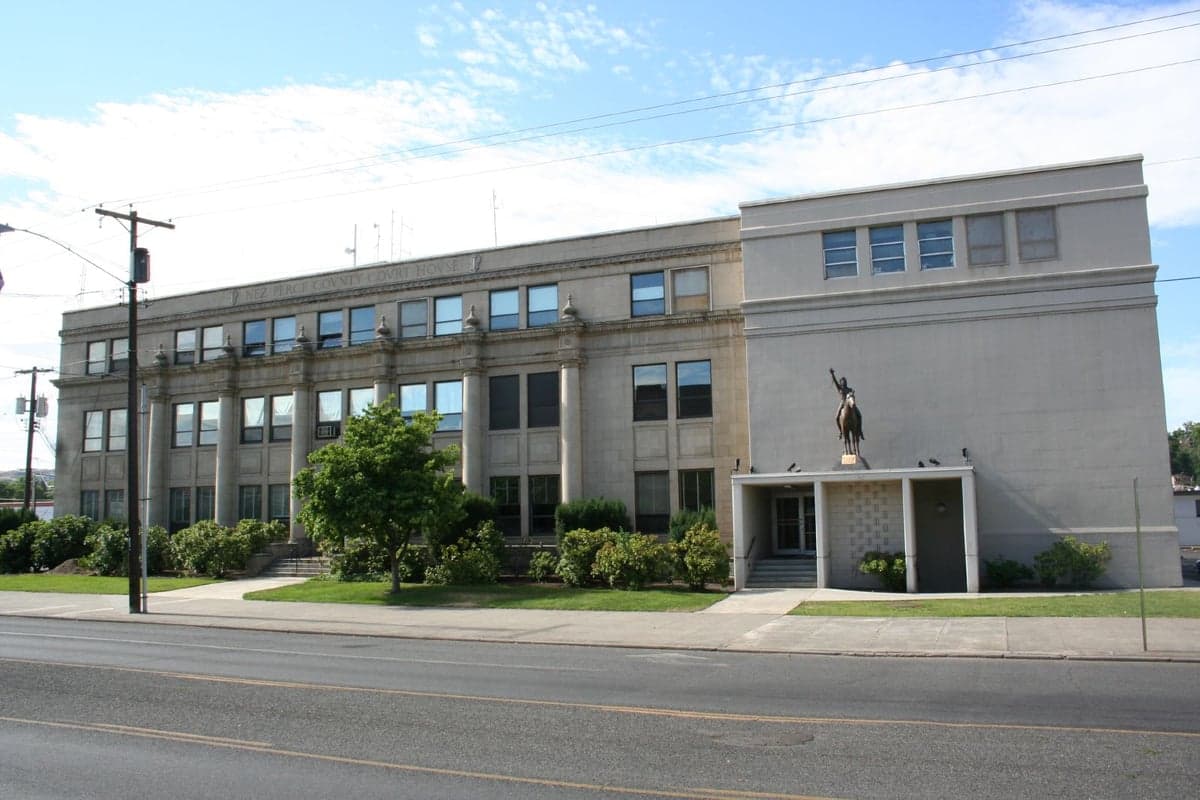
Photo: Wikipedia
Political ClimatePolitical Climate in Lewiston, ID
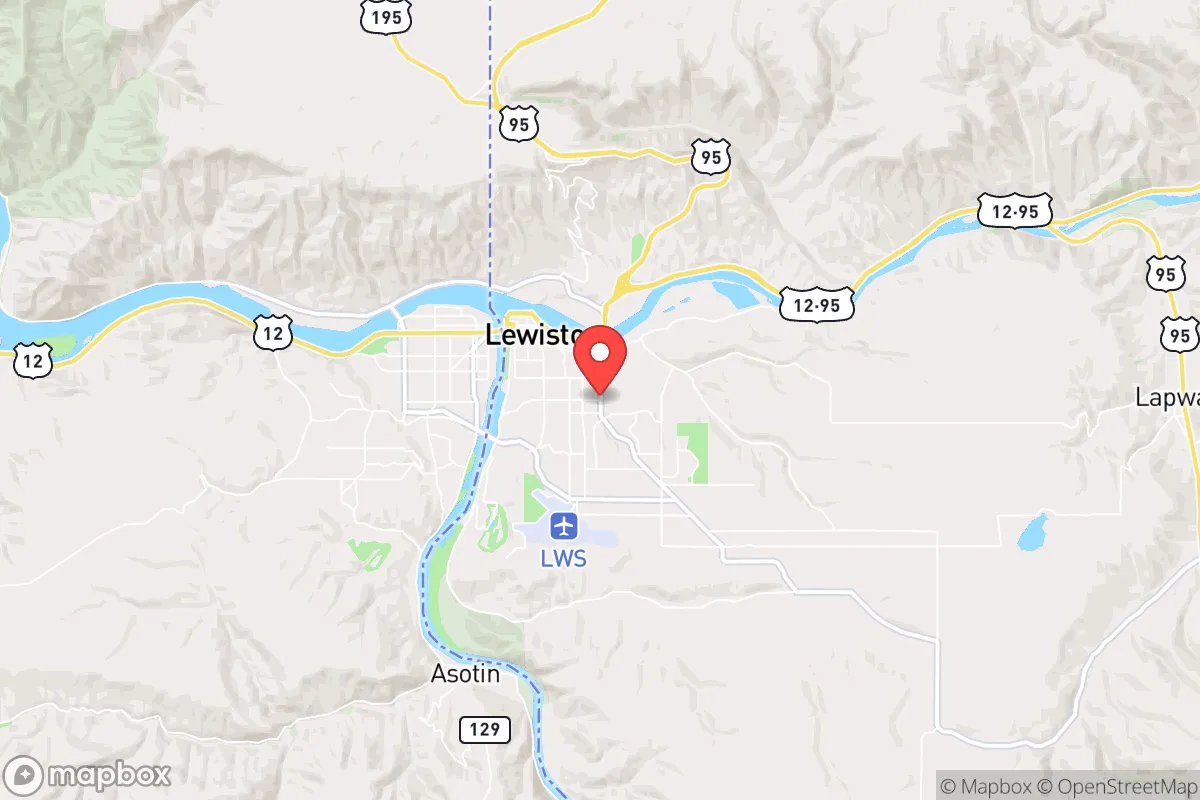
District shown is the primary district for this city’s centroid. Cities may span multiple districts.
Local Political AnalysisPolitical Analysis of Lewiston, ID
Lewiston, Idaho, has long been a rock-solid conservative stronghold, and honestly, that’s one of the main reasons a lot of us choose to live here. With a Cook PVI of R+22, the area leans heavily Republican, and that’s not just some abstract number—it reflects a deep-rooted belief in limited government, personal responsibility, and keeping the feds out of our local business. The political trajectory here has been remarkably stable over the decades, though you can feel a subtle tension as more folks move in from places like California or Seattle, bringing with them ideas that don’t always mesh with the local way of life. For now, the conservative majority holds firm, but there’s a growing sense among long-time residents that we need to stay vigilant to protect the freedoms we’ve always enjoyed.
How it compares
When you look at the political landscape around here, Lewiston stands out as a bit of an island compared to some of the neighboring towns. Just across the river in Clarkston, Washington, you’ll find a noticeably more progressive vibe—it’s a stark contrast, with Washington state’s policies on taxes, gun control, and land use feeling like a whole different world. Head south to Grangeville or east to Kamiah, and you’re back in deep-red territory, where the values align closely with Lewiston’s. But the real eye-opener is Moscow, about 30 miles east, home to the University of Idaho. That town leans left, and you can see it in everything from local ordinances to the general attitude toward government intervention. For us in Lewiston, that contrast is a constant reminder of what we’re trying to avoid: the kind of overreach that starts with “well-intentioned” regulations and ends with you needing permission to build a shed on your own property.
What this means for residents
For the average person living here, the conservative tilt means a lot of practical freedoms that folks in other parts of the country are losing. You won’t find a lot of red tape when it comes to things like home-based businesses, firearm ownership, or even how you want to educate your kids. Property taxes are reasonable, and the local government generally takes a hands-off approach, trusting residents to make their own choices. That said, there’s a growing concern about the long-term trend. As the area grows—and it is growing—there’s pressure from developers and outside interests to adopt more progressive policies, like stricter zoning or environmental mandates that sound good on paper but end up costing you time and money. The key here is staying involved in local elections and school board meetings, because that’s where the real battles over personal freedom are fought. If you value being left alone to live your life without a bunch of bureaucratic nonsense, Lewiston is still a great place, but you can’t take it for granted.
Culturally, Lewiston has a distinct identity that sets it apart from the more progressive pockets in the region. There’s a strong emphasis on self-reliance, community support, and a general skepticism of government solutions to every problem. You see it in the way neighbors help each other out during a tough winter without waiting for a government program, and in the local opposition to things like mask mandates or vaccine passports that cropped up during the pandemic. The policy distinctions here are clear: lower taxes, fewer regulations, and a presumption of freedom rather than a presumption of compliance. That’s the Lewiston way, and while the winds of change are blowing, most of us are determined to keep it that way for as long as we can.

State Political ClimatePolitical Climate in Idaho
State Political AnalysisPolitical Environment in the State
Idaho has long been one of the most reliably Republican states in the nation, with a partisan lean that has only deepened over the past two decades. The state’s dominant coalition is a blend of rural conservatives, libertarian-leaning ranchers, and a growing wave of out-of-state transplants seeking lower taxes and fewer restrictions. In the 2024 presidential election, Donald Trump carried Idaho by over 30 points, and Republicans hold every statewide office and supermajorities in both legislative chambers. However, the political landscape is not monolithic — the explosive growth of the Boise metro area and the influx of newcomers from blue states are slowly reshaping the state’s internal dynamics, creating a subtle but real tension between the old-guard libertarian-conservative base and a newer, more suburban Republican cohort.
Urban vs. rural divide
The political map of Idaho is starkly divided between its fast-growing urban corridors and its vast, deeply conservative rural expanse. Ada County (Boise) and Canyon County (Nampa, Caldwell) are the population engines, and while both are Republican, they are not equally conservative. Ada County, home to Boise’s tech and government sectors, has trended purple in recent cycles — Trump won it by only 8 points in 2024, down from 12 in 2020. Canyon County, by contrast, remains a GOP stronghold, voting +35 for Trump, driven by its agricultural base and a surge of conservative transplants from California. The rural counties — Lemhi, Custer, Butte, and Clark — routinely vote 80-90% Republican, with many precincts seeing zero Democratic votes. The divide is not just partisan but cultural: Boise’s urban core has seen the rise of progressive activism around housing and environmental issues, while rural Idahoans view the state’s growth with suspicion, fearing that newcomers will import the very policies they fled.
Policy environment
Idaho’s policy environment is a model of limited government, with a few notable exceptions that frustrate even the most conservative residents. The state has a flat income tax of 5.8% (down from 6.5% in 2022) and no corporate income tax on pass-through entities, making it a low-tax haven relative to the West Coast. Property taxes are locally controlled and relatively low, though they have risen with home values. The regulatory posture is aggressively pro-business: there is no state-level occupational licensing for dozens of trades, and the state has a “right-to-farm” law that shields agricultural operations from nuisance lawsuits. On education, Idaho has a robust school choice landscape — the Empower Parents program provides up to $7,500 per child for private school tuition, tutoring, or homeschooling expenses, funded by a 2023 tax credit expansion. Healthcare is a mixed bag: the state did not expand Medicaid until 2020 (via ballot initiative), and the legislature has since tried to impose work requirements. Election laws are among the most secure in the nation — voter ID is required, same-day registration is not allowed, and the state uses paper ballots with mandatory audits. However, the legislature’s 2024 passage of a law banning ranked-choice voting and limiting ballot initiatives has drawn criticism from both left and right as a preemptive strike against future citizen-led measures.
Trajectory & freedom
Idaho is arguably becoming more free in several key areas, but the trajectory is not without warning signs for liberty-minded residents. On the positive side, the state has expanded gun rights significantly: in 2023, the legislature passed a constitutional carry law (no permit needed to carry concealed), and in 2024 it enacted a “Second Amendment Preservation Act” that prohibits state cooperation with federal firearm confiscation orders. Parental rights were strengthened with the Parental Rights in Education Act (2023), which requires schools to notify parents of any curriculum involving sexuality or gender identity and bans classroom instruction on these topics in K-5. Medical autonomy saw a win with the 2024 passage of a law allowing direct primary care agreements without state insurance mandates. However, there are concerning trends: the state’s Property Tax Relief Act (2024) was a temporary band-aid that did not address the underlying growth in local government spending, and the legislature’s 2025 attempt to preempt local zoning laws (to allow more housing) was watered down by suburban opposition. The biggest red flag for freedom advocates is the state’s increasing willingness to use its police power — the 2024 ban on public camping in all cities, even on state land, has led to a surge in arrests of homeless individuals, raising questions about whether the state is trading one form of overreach for another.
Civil unrest & political movements
Idaho has seen relatively little civil unrest compared to coastal states, but the political movements here are intense and organized. The most visible flashpoint is the anti-government and “constitutionalist” movement, centered in the rural panhandle around Bonner County and Boundary County, where groups like the “Idaho Liberty Caucus” have held annual gatherings advocating for nullification of federal laws and even secession rhetoric. In 2023, a standoff in Sandpoint over a proposed library drag show drew hundreds of protesters on both sides, with the county sheriff refusing to enforce a court order to allow the event — a clear example of local officials pushing back against perceived federal overreach. On the left, the Idaho Women’s March in Boise drew 5,000 participants in 2024, but these events are dwarfed by the annual Idaho Freedom Rally at the state capitol, which draws 10,000+ attendees advocating for gun rights and limited government. Immigration politics are less heated than in border states, but the 2024 passage of a law requiring local law enforcement to cooperate with ICE (HB 123) has created friction in Twin Falls, where the dairy industry relies heavily on immigrant labor. Election integrity controversies have been minimal — Idaho’s paper ballot system and strict voter ID laws have prevented the kind of disputes seen in other states, though a 2025 audit found no evidence of fraud in any county.
Projection
Over the next 5-10 years, Idaho’s political trajectory will be defined by the collision of two forces: continued in-migration of conservative-leaning families from California, Oregon, and Washington, and the gradual urbanization of the Treasure Valley. The newcomers are overwhelmingly Republican, but they are often suburban Republicans who prioritize school quality and property values over the libertarian ethos of the old guard. This will likely lead to a softening of the state’s hardline positions on issues like zoning reform (to allow more housing) and education funding (to keep up with growth). The rural-urban divide will widen, with rural counties becoming even more conservative as they lose population, while Ada County inches toward swing-state status. The biggest wildcard is the state’s water supply — the Eastern Snake Plain Aquifer is being depleted, and a future water crisis could force the state to impose restrictions that anger both farmers and developers. For a new resident, the Idaho of 2035 will likely be more suburban, more diverse (though still overwhelmingly white), and slightly less libertarian — but still far freer than any coastal state. The key question is whether the state can manage its growth without sacrificing the very policies that made it attractive in the first place.
For someone moving to Idaho today, the bottom line is this: you are choosing a state that is still fundamentally conservative and free, but the cracks are showing. The low taxes and light regulation are real, but so is the pressure from growth. If you value gun rights, parental control over education, and a government that mostly stays out of your life, Idaho is still one of the best bets in the nation. Just be prepared for the traffic in Meridian to get worse, the property taxes to creep up, and the occasional culture war flare-up in your local library board meeting. The freedom is still here — but it’s not guaranteed forever.
* Values derived from national, state, county, city and local statistics and may differ in a specific area. Last updated: 2026-05-03T20:23:45.000Z
Narrative content on this page is AI-generated and may contain mistakes. Verify any details that matter before acting on them.
ReloMaps may earn a commission from affiliate links at no extra cost to you.

