Photo: Wikipedia
Demographics of Lihue, HI
Affluence Level in Lihue, HI
An upper-middle-class area. Household wealth, education levels, and homeownership run ahead of national benchmarks.
People of Lihue, HI
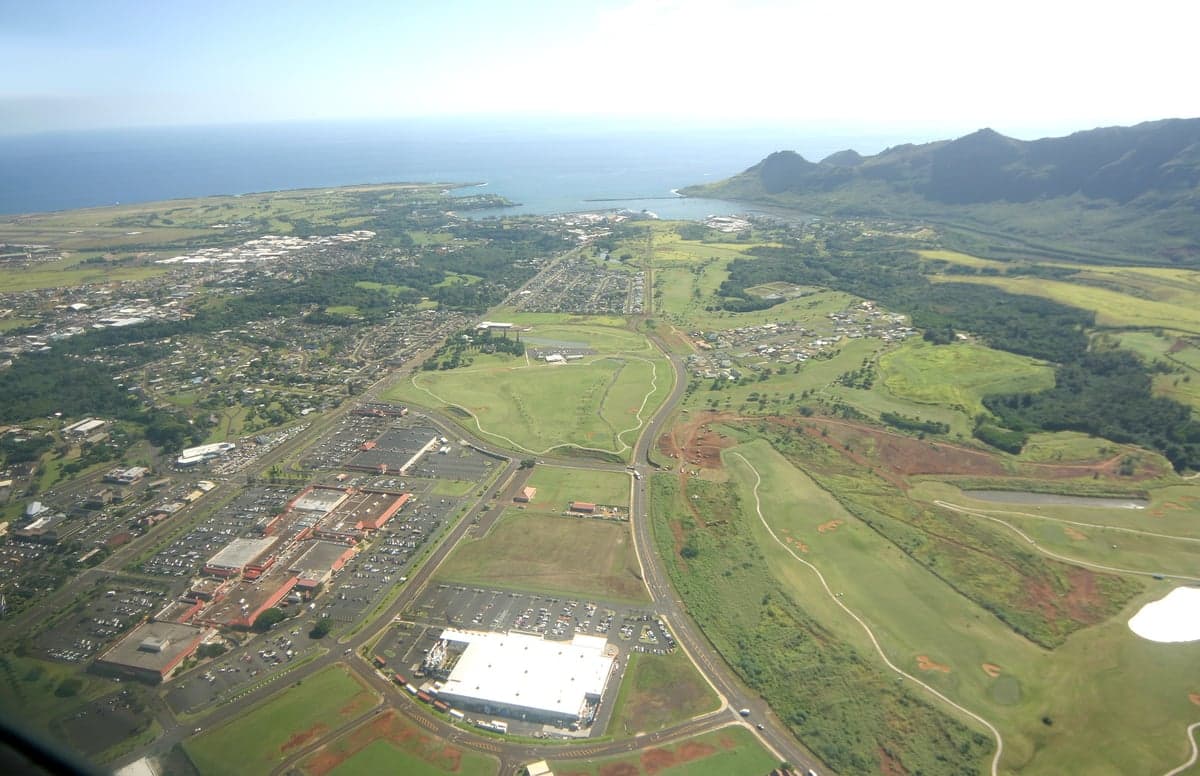
Lihue’s 7,847 residents form a distinctive community where East and Southeast Asian ancestry (38.7%) remains the largest single group, followed by a White population of 17.7% and a Hispanic share of 15.2%. The city is notably dense for Kauai’s urban core, with a highly educated workforce—40.5% hold a college degree—and a very low foreign-born rate of 4.5%, reflecting generations of established families rather than recent immigration. Lihue feels less like a tourist hub and more like a working administrative center, where local government, healthcare, and retail anchor daily life.
How the city was settled and grew
Lihue’s population history is inseparable from the sugar plantation economy that dominated Kauai from the mid-19th century. The Lihue Plantation Company, founded in 1849, drew the first major wave of workers from China and Japan, who arrived as contract laborers between the 1860s and 1890s. These groups settled in what became known as the Lihue Mill Camp area, a cluster of plantation housing near the old sugar mill along Nawiliwili Road. By the early 1900s, Portuguese and Puerto Rican laborers were brought in to diversify the workforce and break labor solidarity; they established enclaves in Puhi, just west of downtown, where modest plantation cottages still stand. The Japanese community, in particular, became the backbone of Lihue’s population, building temples and community halls in the Rice Street corridor, which remains the historic Japanese commercial district. Sugar dominated until the 1960s, and the plantation camp system kept ethnic groups geographically distinct—Chinese near the mill, Japanese along Rice Street, and Portuguese/Puerto Rican families in Puhi and Hanamaulu to the north.
Modern era (post-1965)
The 1965 Immigration and Nationality Act ended the national-origins quotas that had favored European immigration, but Lihue saw little direct impact—its foreign-born share today is just 4.5%, far below the national average. Instead, the post-1965 story is one of domestic migration and suburbanization. As sugar declined in the 1970s and 1980s, Lihue’s economy shifted toward county government, tourism support, and healthcare, drawing workers from other parts of Kauai and the mainland. The Kukui Grove area, anchored by the island’s largest shopping center built in 1982, became a new residential node for middle-class families, many of them multi-generational Asian and White households. The Hispanic population, now 15.2%, grew primarily through mainland migration from California and the Southwest, settling in newer subdivisions like Lihue Heights and the Nawiliwili harbor area. The Black population remains very small at 2.4%, concentrated in no single neighborhood. Notably, the Indian subcontinent population is recorded at 0.0%, meaning Lihue has no visible Indian community—a sharp contrast to many mainland cities of similar size. The Asian population, overwhelmingly Japanese and Filipino in origin, has plateaued as younger generations leave for Oahu or the mainland for education and jobs, while the White share has held steady through retiree in-migration.
The future
Lihue’s population is aging and slowly homogenizing. The Asian plurality is shrinking as older Japanese-American residents pass away and their children do not return, while the Hispanic share is likely to grow modestly through continued mainland migration. The city is not tribalizing into new ethnic enclaves—newer subdivisions like Kauai Village are mixed by design—but the historic plantation neighborhoods remain ethnically distinct by inertia. The foreign-born rate will likely stay low because Kauai lacks the entry-level service jobs that attract new immigrants; most newcomers are domestic retirees or remote workers. Over the next 10–20 years, Lihue will become slightly more Hispanic and slightly less Asian, but the core character—a stable, educated, government-and-healthcare town with deep Japanese roots—will persist.
For a conservative-leaning mover, Lihue offers a low-crime, family-oriented community where neighborhood identity is tied to plantation history rather than recent immigration. The population is not diversifying rapidly, and the dominant Asian culture is long-assimilated and English-dominant. This is a place where the past still shapes the present, and where moving in means joining a stable, established social order rather than a rapidly changing one.

* Values derived from national, state, county, city and local statistics and may differ in a specific area. Last updated: 2026-05-15T21:56:32.000Z
Narrative content on this page is AI-generated and may contain mistakes. Verify any details that matter before acting on them.
ReloMaps may earn a commission from affiliate links at no extra cost to you.

