Photo: Wikipedia
Demographics of Longview, TX
Affluence Level in Longview, TX
A below-average socioeconomic profile. Incomes, home values, and educational attainment trail the U.S., with higher poverty and unemployment.
People of Longview, TX
The people of Longview, Texas, today number 82,765, forming a community that is roughly half White (51.5%), with substantial Black (21.8%) and Hispanic (21.0%) populations, and a small but growing East/Southeast Asian (1.0%) and Indian (0.6%) presence. The city’s identity is rooted in its role as a regional hub for East Texas oil, timber, and healthcare, giving it a pragmatic, work-oriented character. With only 22.8% of adults holding a college degree, Longview remains a blue-collar and middle-class city where family ties and church communities shape daily life. The foreign-born share is low at 6.6%, indicating that most growth comes from domestic migration rather than international immigration.
How the city was settled and grew
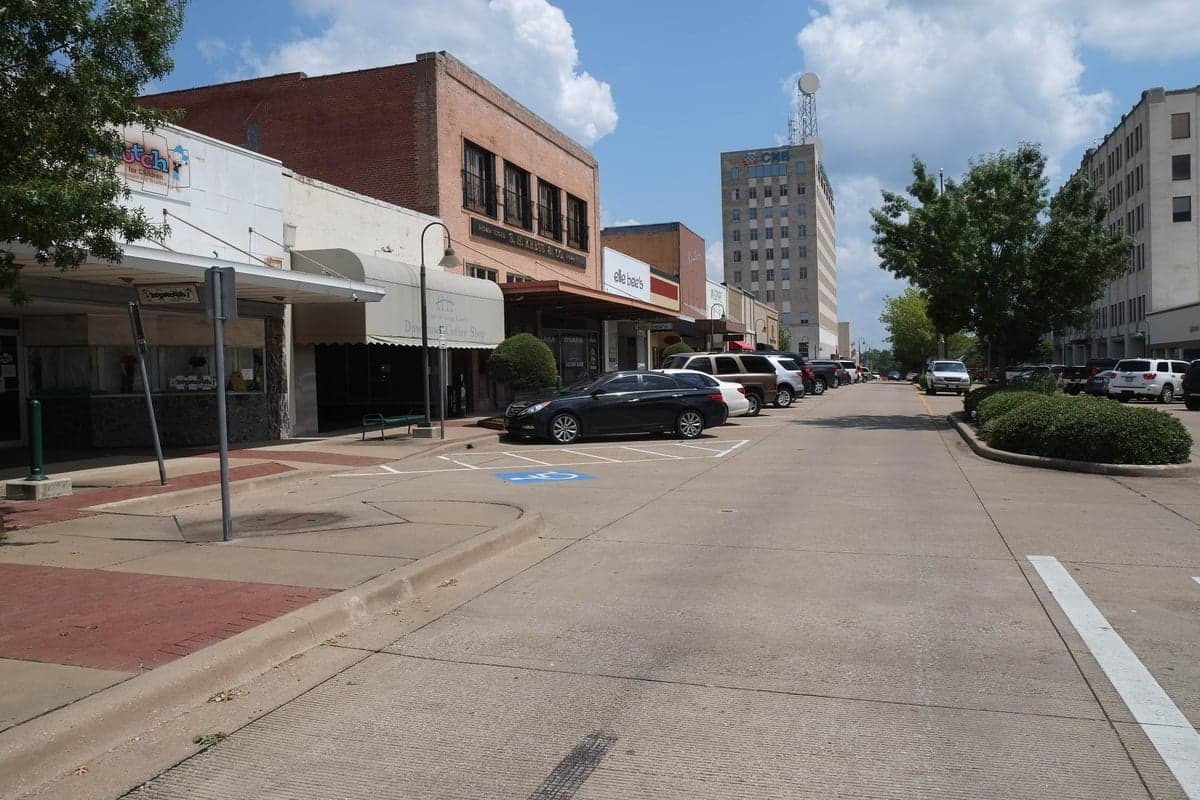
Longview was founded in 1870 as a railroad town on the Texas and Pacific Railway, drawing its first wave of settlers from the American South—primarily White farmers and merchants from states like Tennessee, Arkansas, and Mississippi. These early residents built the downtown core around the rail depot, establishing a commercial district that still anchors the city. The discovery of the East Texas Oil Field in 1930 transformed Longview overnight, triggering a boom that brought thousands of White and Black workers from across the South. Black families, many fleeing Jim Crow violence and seeking industrial jobs, settled in the Mobberly and Broughton neighborhoods, which became the historic heart of Longview’s African American community. By mid-century, the city’s population had swelled to roughly 24,000, with a rigidly segregated housing pattern: Whites in the north and west, Blacks in the east and south.
Modern era (post-1965)
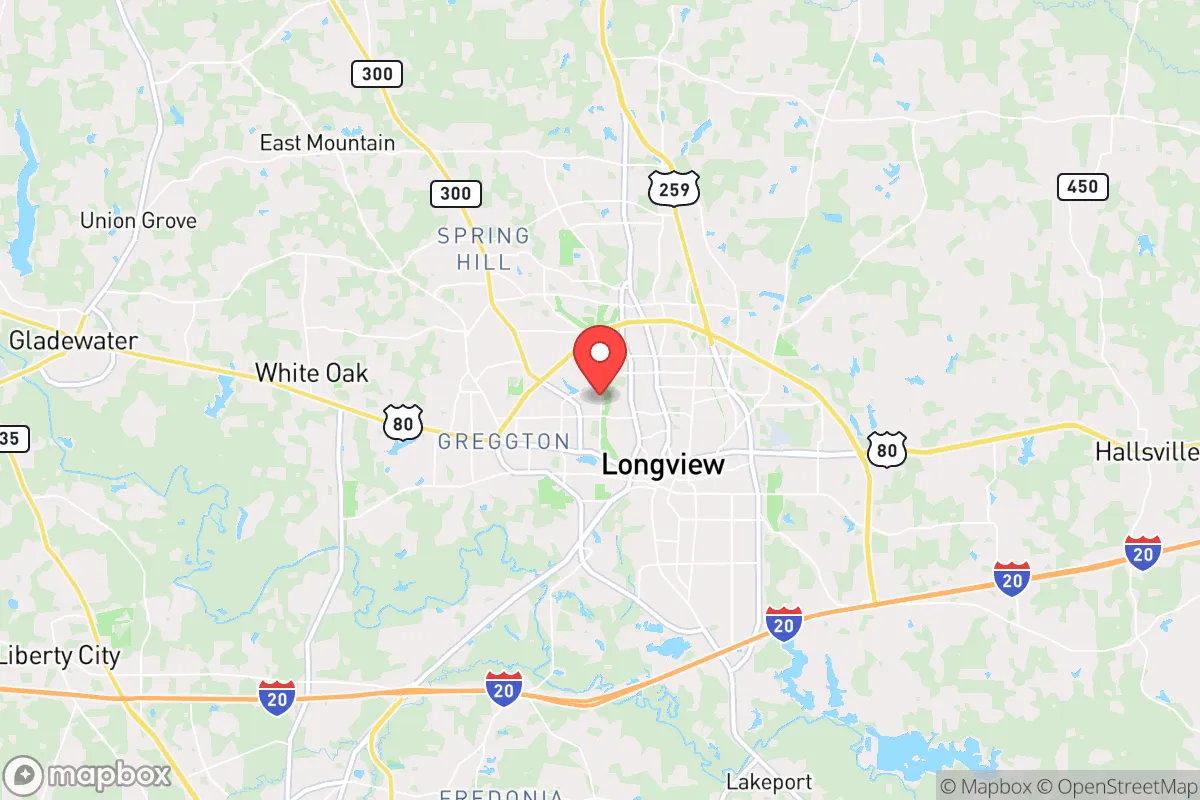
The 1965 Immigration and Nationality Act had a muted effect on Longview compared to larger Texas cities; the foreign-born share remained below 5% through the 1990s. Instead, the post-1965 story is one of domestic in-migration and suburbanization. White families began moving to newer subdivisions like Spring Hill and Pine Tree in the 1970s and 1980s, creating de facto school districts that remain predominantly White today. Hispanic migration accelerated after 1990, driven by construction and service jobs in the oil and gas sector. Hispanic families concentrated in the Judson Road corridor and the northwest side, where a growing network of Spanish-language churches and tiendas emerged. The Black population, which had been stable at roughly 25% since the 1970s, began a slow decline after 2000 as younger Black professionals moved to Dallas or Houston for better opportunities. East/Southeast Asian and Indian communities remain small but visible, with families often settling in the Lakeport area near LeTourneau University, drawn by engineering and technical jobs.
The future
Longview’s population is slowly diversifying, but the trend is toward moderate homogenization by income rather than sharp ethnic tribalization. The Hispanic share is projected to rise to roughly 25% by 2035, driven by natural increase and continued domestic migration from South Texas and Mexico. The White share will continue to decline gradually, while the Black share is likely to plateau or shrink slightly as out-migration to larger metros persists. East/Southeast Asian and Indian communities are growing from a tiny base—each now under 1.5%—and are expected to double in size over the next decade as LeTourneau University and local hospitals recruit skilled workers. The city is not experiencing the rapid ethnic enclave formation seen in Houston or Dallas; instead, new arrivals tend to disperse across the south side and newer subdivisions near Interstate 20. The foreign-born share will likely rise to 8–9% by 2035, still well below the national average.
For someone moving to Longview now, the city offers a stable, family-oriented environment where most residents share a common set of values around work, faith, and community. The population is becoming slightly more diverse but remains overwhelmingly native-born and English-dominant. The key dynamic to watch is whether the city can retain its young adults—particularly Black and Hispanic graduates—who currently leave for larger job markets. If local employers in healthcare, manufacturing, and logistics can offer competitive wages, Longview may avoid the hollowing-out seen in many smaller Southern cities. For now, it is a place where newcomers are welcomed into existing neighborhoods rather than forming new enclaves, and where the pace of change is slow enough to feel familiar to anyone from the American South.

* Values derived from national, state, county, city and local statistics and may differ in a specific area. Last updated: 2026-05-08T17:33:36.000Z
Narrative content on this page is AI-generated and may contain mistakes. Verify any details that matter before acting on them.
ReloMaps may earn a commission from affiliate links at no extra cost to you.

