Photo: Wikipedia
Demographics of Lorain, OH
Affluence Level in Lorain, OH
A low-income area with significant economic hardship. Household wealth and educational attainment are well below national averages.
People of Lorain, OH
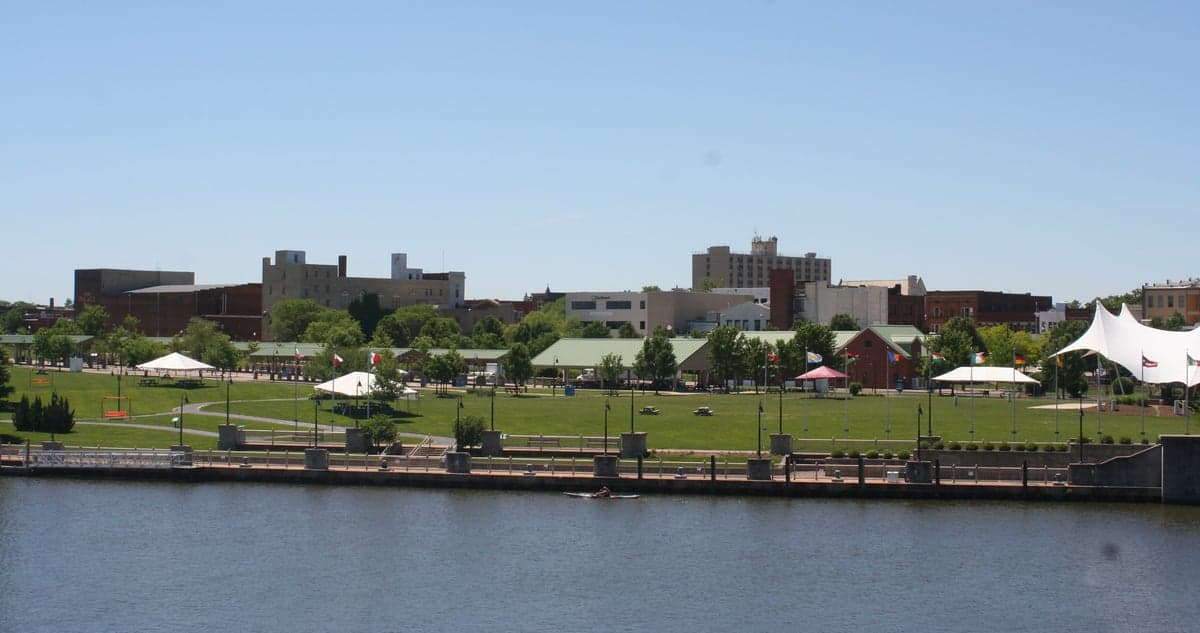
The people of Lorain, Ohio, today form a working-class, majority-minority city of 65,207, defined by its industrial roots and a distinctive tri-ethnic character: a shrinking white population (50.3%), a large and growing Hispanic community (27.4%), and a significant Black population (16.3%). The city is notably less diverse in other dimensions—only 1.1% of residents are foreign-born, and East/Southeast Asian (0.6%) and Indian-subcontinent (0.0%) communities are negligible. With just 14.3% of adults holding a college degree, Lorain remains a blue-collar city where the legacy of steel and shipbuilding still shapes daily life, even as the population has declined by roughly a third since its 1970 peak.
How the city was settled and grew
Lorain’s population history is a story of industrial recruitment. Founded in 1807 as a small farming village, the city exploded after 1894 when the Johnson Steel Rail Company (later U.S. Steel’s Lorain Works) opened along the Black River. The first major wave of settlers were German and Irish immigrants who dug the canals and laid the rails, settling in the South Lorain neighborhood near the mills. By the 1910s, the steel mills recruited heavily from Southern and Eastern Europe—Poles, Slovaks, Italians, and Hungarians—who built dense ethnic enclaves in East Lorain and the Oakwood Park area, each with its own Catholic parish and fraternal hall. The Great Migration brought Black workers from the Deep South starting in the 1920s, who concentrated in the West Side near the shipyards and later in the Central Lorain corridor along Broadway. By 1950, Lorain was a classic “immigrant city” where nearly a third of residents were foreign-born, and the neighborhoods were a patchwork of ethnic clubs, bakeries, and churches.
Modern era (post-1965)
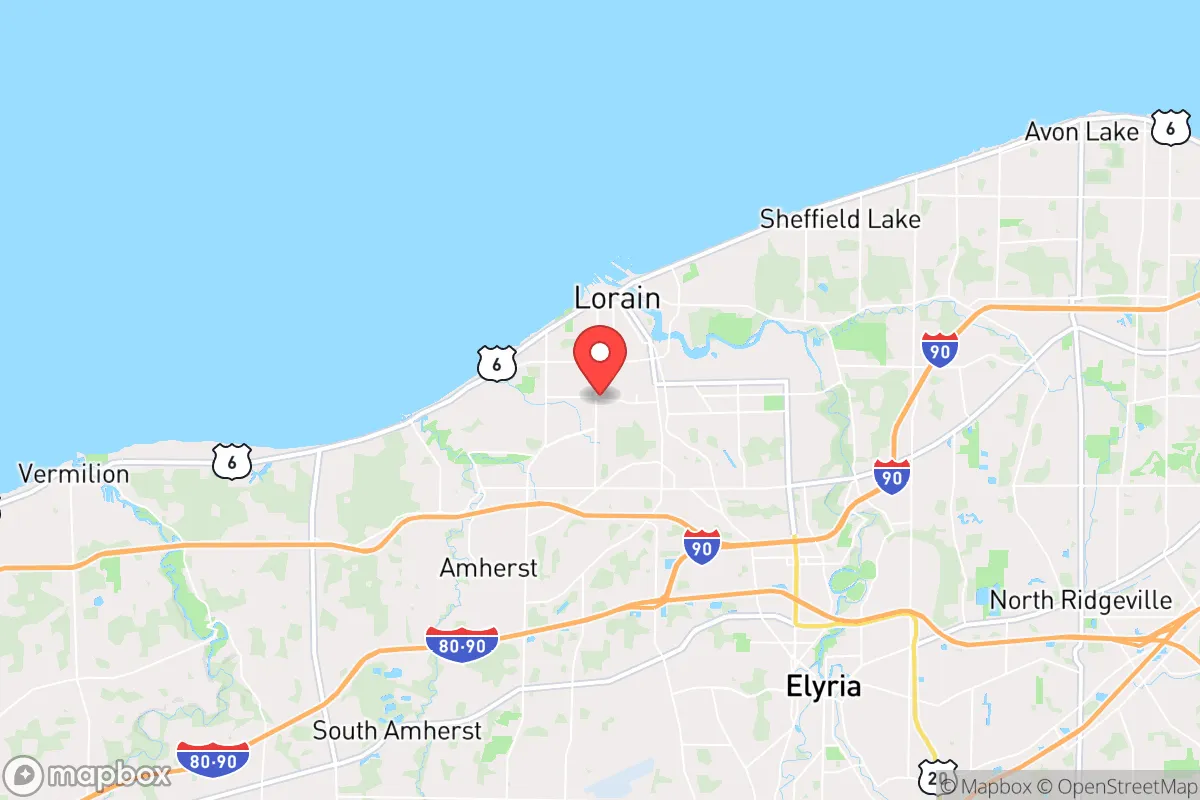
The post-1965 era brought two transformative shifts. First, the Hispanic influx began in earnest during the 1970s and 1980s, driven by Puerto Rican migration (U.S. citizens, not foreign-born) and later by Mexican and Central American workers recruited for the declining steel mills and agricultural work in nearby Lorain County. This community settled overwhelmingly in South Lorain, which today is the city’s most densely Hispanic neighborhood—over 60% Hispanic—with bodegas, Pentecostal storefront churches, and Spanish-language signage. Second, the white ethnic population began a steady exodus to suburban towns like Amherst, Avon, and North Ridgeville, accelerating after the 1970s steel industry contractions. The Black population, which peaked at around 20% in the 1990s, has slightly declined to 16.3% as some middle-class families followed the white flight to the suburbs. The foreign-born share collapsed from its historic highs to just 1.1% today, reflecting the end of mass immigration from Europe and the fact that most Hispanic growth comes from U.S.-born Puerto Ricans and later-generation Mexican Americans. The Oakwood Park and East Lorain neighborhoods, once solidly Polish and Italian, are now racially mixed but trending older and whiter than the city average.
The future
Lorain’s demographic future points toward continued Hispanicization and overall population decline. The white population, already a bare majority at 50.3%, is aging and not being replaced by young families; the median age for whites in Lorain County is over 45. The Hispanic share (27.4%) is the only growth segment, driven by higher birth rates and continued in-migration from Puerto Rico and Mexico, and is projected to approach 35-40% by 2040 if current trends hold. The Black population is stable but not growing, as younger Black residents tend to leave for larger job markets in Columbus or Atlanta. The city is not tribalizing into hostile enclaves—South Lorain is heavily Hispanic, the West Side remains majority Black, and the eastern neighborhoods are still predominantly white—but these lines are hardening as the white population contracts. The 1.1% foreign-born share is unlikely to rise significantly because Lorain lacks the refugee resettlement programs or high-skilled job base that attract new immigrants to other Ohio cities. The next decade will likely see Lorain become a majority-Hispanic city with a significant Black minority and a shrinking white elderly population, resembling nearby cities like Painesville or Sandusky.
For someone moving in now, Lorain is becoming a predominantly Hispanic working-class city with a strong sense of place but limited economic mobility. The industrial base that once drew the world is gone, replaced by healthcare, logistics, and service jobs that do not require a college degree. The city offers affordable housing and a tight-knit community feel, but the population decline and low educational attainment (14.3% college-educated) signal that Lorain is not a destination for upwardly mobile professionals. It is a place where roots run deep, and new arrivals—especially those who speak Spanish or are comfortable in a majority-minority environment—will find a resilient, if shrinking, community.

* Values derived from national, state, county, city and local statistics and may differ in a specific area. Last updated: 2026-04-21T19:05:19.000Z
Narrative content on this page is AI-generated and may contain mistakes. Verify any details that matter before acting on them.
ReloMaps may earn a commission from affiliate links at no extra cost to you.

