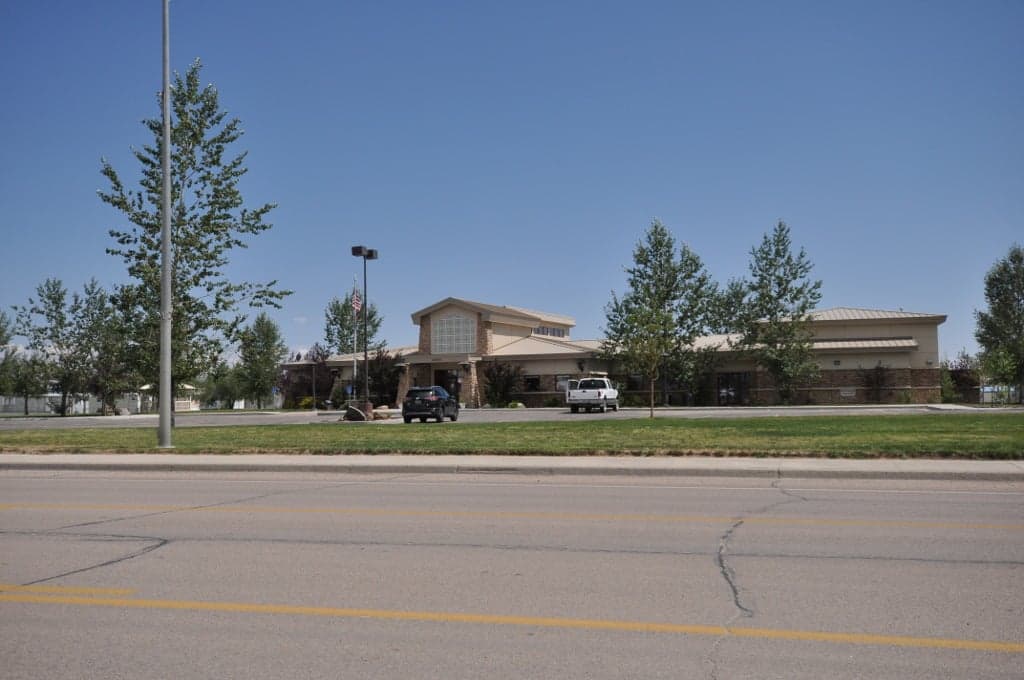
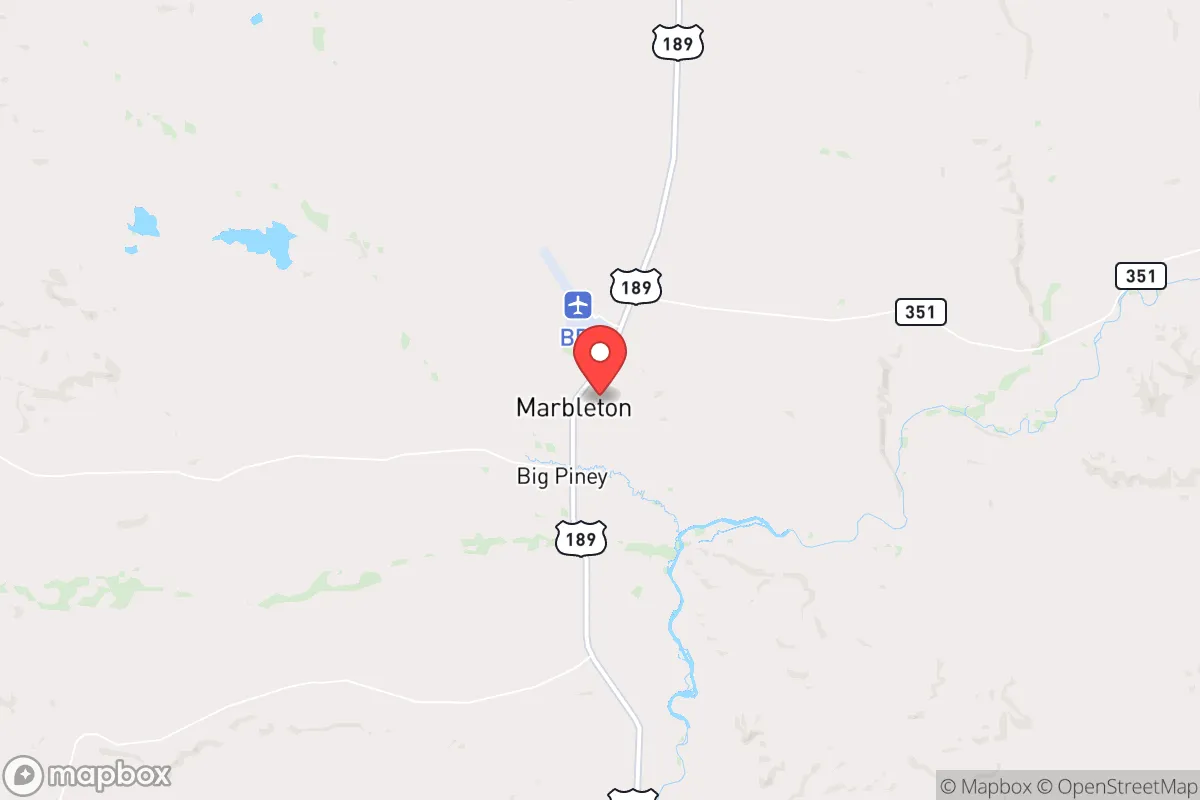
Photo: Wikipedia
Demographics of Marbleton, WY
Affluence Level in Marbleton, WY
A below-average socioeconomic profile. Incomes, home values, and educational attainment trail the U.S., with higher poverty and unemployment.
People of Marbleton, WY
Marbleton, Wyoming, is a small, tightly-knit community of 1,209 residents where a predominantly white population (79.8%) coexists with a significant and growing Hispanic minority (17.1%). The town’s character is defined by its working-class roots in resource extraction and a very low college attainment rate (9.5%), creating a culture that values practical skills and self-reliance over formal education. With a foreign-born population of 12.7%—nearly all of whom are Hispanic—Marbleton is experiencing a quiet demographic shift that is reshaping its neighborhoods and civic life. This is a place where the old ranching and mining families are being joined by a new wave of immigrant labor, creating a community in transition.
How the city was settled and grew
Marbleton was founded in the early 20th century as a railroad and ranching hub, with its first permanent settlers arriving around 1900 to work the vast cattle ranches of the upper Green River Valley. The original population was almost entirely of Northern European descent—primarily English, Irish, and Scandinavian homesteaders who took up land under the Homestead Act. These founding families built the first homes in what is now Old Town Marbleton, the historic core along Pine Street, where many of the original wood-frame houses still stand. A second wave arrived during the 1940s and 1950s, drawn by the construction of the nearby Fontenelle Dam and the expansion of the local timber industry. These workers, also mostly white and from the rural Midwest, settled in the Mill District around the old sawmill site, creating a neighborhood of modest post-war bungalows that remains a distinct working-class enclave today.
Modern era (post-1965)
The most significant demographic change in Marbleton began in the 1990s, when the town’s agricultural and construction sectors started recruiting Hispanic laborers, many from northern Mexico and the southwestern U.S. This wave accelerated after 2000, driven by the region’s oil and gas boom in the nearby Pinedale Anticline natural gas field. Today, the Hispanic population stands at 17.1%, and these families have concentrated in the Southside Addition, a newer subdivision of manufactured homes and modest single-family houses built on the town’s southern edge. A smaller cluster of Hispanic households has also formed in Riverbend, a neighborhood along the Green River where older, lower-cost rental properties are common. The white population, meanwhile, has aged and shrunk slightly, with many younger white residents leaving for college or jobs in larger cities like Rock Springs or Salt Lake City. The foreign-born share of 12.7% is almost entirely Hispanic, and the town’s Black, Asian, and Indian populations remain at 0.0%, reflecting Marbleton’s lack of the diversity found in Wyoming’s larger towns.
The future
Marbleton’s population is trending toward a more Hispanic and more family-oriented character, though the overall headcount is projected to remain stable or decline slightly as the white population continues to age out. The Hispanic community is growing through both immigration and higher birth rates, and their children now make up a significant share of the local elementary school enrollment. This group is slowly assimilating into the town’s civic fabric—Hispanic-owned businesses have opened on Pine Street, and bilingual signage is increasingly common in the Downtown Commercial District. However, the town is not tribalizing into hostile enclaves; rather, it is experiencing a gradual, organic blending, with intermarriage and shared community events (like the annual Marbleton Rodeo) bridging the two groups. The next 10-20 years will likely see the Hispanic share rise to 25-30% of the population, while the white share declines to around 70%. The college-educated rate of 9.5% is unlikely to rise significantly, as Marbleton offers few white-collar jobs and remains a blue-collar community at heart.
For someone moving in now, Marbleton offers a stable, low-cost, and safe environment where the dominant culture is still rooted in Western ranching and resource-extraction traditions, but where a growing Hispanic presence is adding new cultural and economic vitality. The town is becoming a more bilingual, more family-centered place, but it remains deeply conservative and resistant to rapid change. New residents should expect a community where everyone knows their neighbors, where church and family are central, and where the biggest challenge is economic opportunity—not social conflict.

* Values derived from national, state, county, city and local statistics and may differ in a specific area. Last updated: 2026-04-21T11:24:42.000Z
Narrative content on this page is AI-generated and may contain mistakes. Verify any details that matter before acting on them.
ReloMaps may earn a commission from affiliate links at no extra cost to you.

