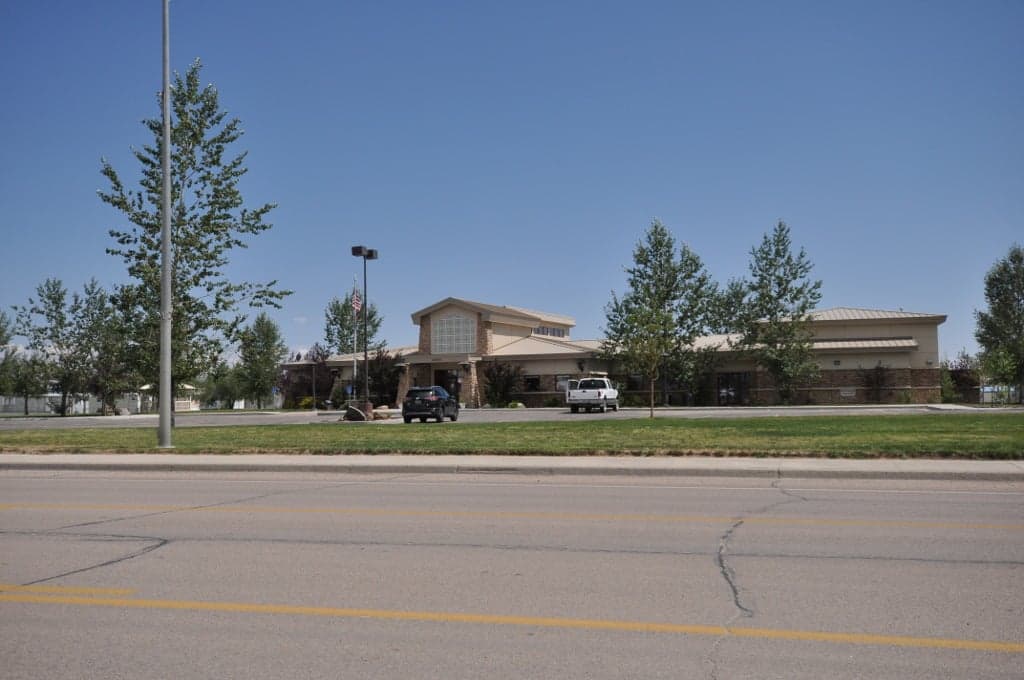
Photo: Wikipedia
Political ClimatePolitical Climate in Marbleton, WY
District shown is the primary district for this city’s centroid. Cities may span multiple districts.
Inherited from parent state — no local data available.
Local Political AnalysisPolitical Analysis of Marbleton, WY
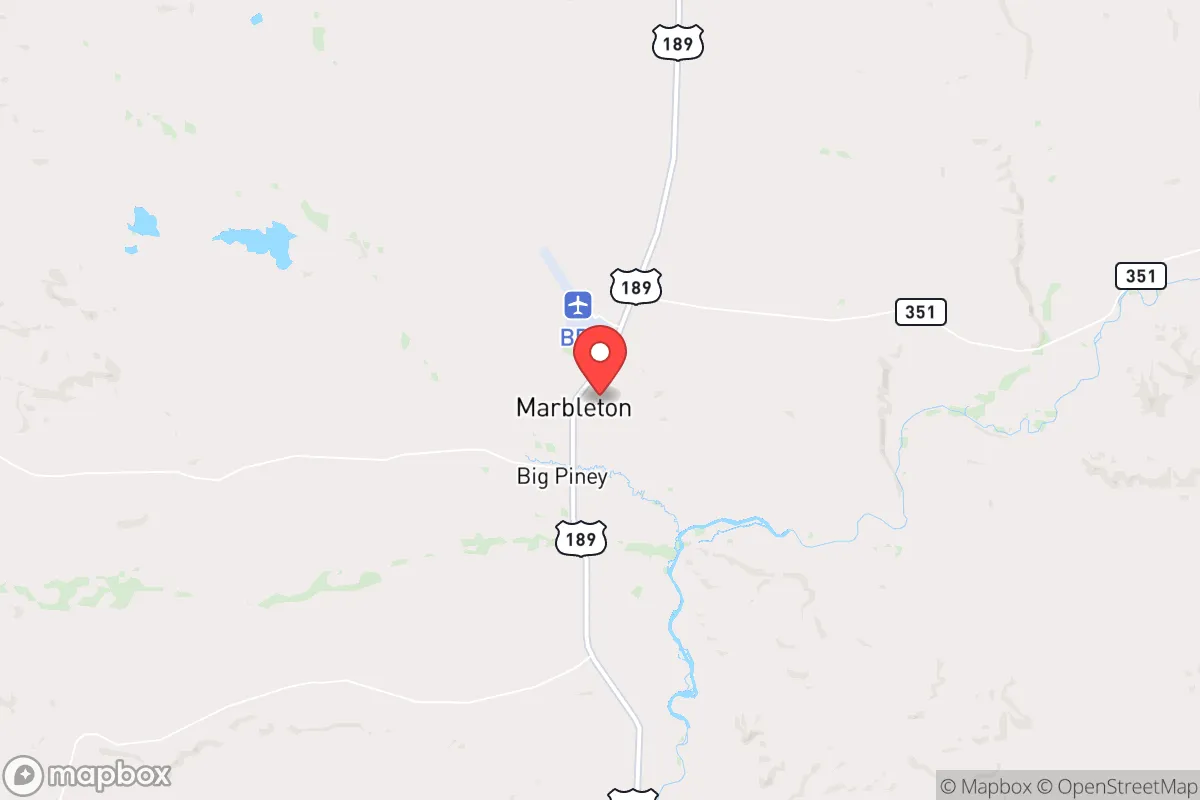
Marbleton, Wyoming, sits deep in the heart of Sublette County, and politically, it’s about as solidly conservative as you’ll find anywhere in the Lower 48. The Cook PVI of R+23 tells you the math, but it doesn’t capture the feel—this is a place where the Second Amendment isn’t debated, where energy extraction is the backbone of the economy, and where the idea of government telling you what to do with your land or your business is met with a hard no. That R+23 number has actually held steady or ticked slightly redder over the last two cycles, even as some rural Western counties have seen a slow drift toward purple. Marbleton isn’t drifting.
How it compares
If you drive 30 miles north to Pinedale, you’ll find a similar conservative vibe, though Pinedale’s tourism and recreation economy brings in a slightly more transient, outdoorsy crowd that can lean a little more libertarian than straight Republican. The real contrast is 90 miles east to Lander or 120 miles south to Rock Springs. Lander has a noticeable progressive undercurrent, especially around the arts and the National Outdoor Leadership School, and Rock Springs has a more mixed working-class base that’s still red but has pockets of union-friendly Democrats. Marbleton and its twin town, Big Piney, don’t have that. The local school board, county commission, and even the planning and zoning board are uniformly conservative. There’s no real progressive infrastructure here—no local Democratic Party office, no activist groups pushing green energy mandates or diversity initiatives. That’s a big part of why people move here: to get away from that stuff.
What this means for residents
For someone living in Marbleton, the political climate translates directly into daily life. You’re not going to see mask mandates or business shutdowns from the county health officer—that fight never really took hold here. Property taxes are low, and there’s no county-level income tax. The local government’s philosophy is basically: keep the roads plowed, keep the sheriff funded, and stay out of the way. That’s a stark contrast to places like Jackson Hole, two hours west, where progressive county policies on housing, land use, and even short-term rentals have created a regulatory maze. Here, if you want to build a shop on your property or run a small guiding outfit, you can usually get it done without a year of permits and fees. The downside? There’s very little social safety net. If you lose your job in the gas fields, there’s not much in the way of county-run assistance. But most folks here would say that’s a feature, not a bug—personal responsibility and community charity are the expected fallbacks, not government programs.
The long-term concern for a place like Marbleton is the slow creep of federal overreach, especially on public lands and energy policy. The Bureau of Land Management manages huge swaths of Sublette County, and any new federal restrictions on drilling or grazing hit this economy hard. The recent push for 30x30 conservation goals and the administration’s pause on new oil and gas leases a couple years back sent a real chill through the local workforce. People here watch national politics closely because a policy change in Washington can mean a lost job in Marbleton faster than almost anything else. The cultural distinction is that this isn’t a performative conservatism—it’s lived. Neighbors help neighbors, nobody locks their doors, and the biggest political argument you’ll hear at the grocery store is whether the county should spend money on a new road grader. If that sounds like the kind of place where you can breathe free and raise a family without the government breathing down your neck, Marbleton might be exactly what you’re looking for.

State Political ClimatePolitical Climate in Wyoming
State Political AnalysisPolitical Environment in the State
Wyoming is, and has long been, one of the most reliably conservative states in the Union, with a Republican Party registration advantage that routinely exceeds 2-to-1 and a state legislature that is among the most conservative in the nation. Over the last 20 years, the state has only deepened its red hue, with every single county voting for Donald Trump in 2020 and 2024, and the state’s at-large congressional seat held by a Republican since 1979. The dominant coalition is a mix of rural ranchers, energy-sector workers, and a growing number of freedom-minded transplants from blue states, all united by a fierce commitment to limited government, gun rights, and local control. The trajectory has been a steady hardening of conservative orthodoxy, with recent legislative sessions pushing the state further right on everything from abortion to election integrity.
Urban vs. rural divide
The political map of Wyoming is not a story of urban vs. rural in the way you see in Colorado or Texas—there simply isn’t a large enough city to create a meaningful blue island. The largest metro, Casper (Natrona County), votes reliably Republican, though it has a small but vocal progressive minority centered around the college and hospital. Cheyenne (Laramie County), the capital and largest city, is the most moderate part of the state, with a Republican lean that is still solid but less intense than the rest—think 60-65% GOP instead of 75-80%. The real engine of Wyoming conservatism is the rural expanse: Sublette County, Lincoln County, and Park County (home to Cody and Powell) routinely deliver 80%+ Republican margins. The one notable outlier is Teton County (Jackson Hole), which is a wealthy, left-leaning enclave dominated by out-of-state money and a tourism economy—it’s the only county that occasionally votes Democratic, but its population is too small to shift statewide results. The divide is less about cities vs. farms and more about the tension between the extractive-industry, ranching heartland and the amenity-driven, transplant-heavy resort towns like Jackson and, to a lesser extent, Saratoga and Buffalo.
Policy environment
Wyoming’s policy environment is a dream for anyone fleeing high-tax, high-regulation states. There is no state income tax, no corporate income tax, and a relatively low sales tax (4% state rate, with local options up to 2%). Property taxes are among the lowest in the nation, though they have been creeping up in fast-growing counties like Teton and Laramie. The regulatory posture is aggressively pro-business, especially in energy—coal, oil, natural gas, and increasingly uranium and trona mining. Education policy is a mixed bag: the state funds schools well through mineral royalties, but there is a strong school choice movement, with a new Education Savings Account (ESA) program passed in 2023 that allows parents to use public funds for private or homeschool expenses. Healthcare policy is limited-government: no Medicaid expansion until 2021 (and only after a long fight), and a strong push for medical freedom, including a 2023 law prohibiting vaccine mandates by private employers. Election laws are among the most secure in the country: voter ID is required, same-day registration is not allowed, and the state uses paper ballots with hand-count audits in many counties. There is no mail-in voting unless you have an excuse, and drop boxes are limited.
Trajectory & freedom
Wyoming is becoming more free, not less, and the trend is accelerating. The 2022 and 2023 legislative sessions were a firehose of liberty-expanding bills. The state passed a near-total abortion ban (the “Life is a Human Right Act”) in 2023, with exceptions only for rape, incest, and life of the mother. Gun rights were strengthened with a permitless carry law in 2021, and a 2023 law prohibits any state or local enforcement of federal gun regulations that don’t exist in state law—a direct nullification play. Parental rights were codified in the “Parents’ Bill of Rights” (2023), which requires schools to notify parents of any medical or mental health services offered and prohibits instruction on gender identity or sexual orientation in K-3. Medical autonomy got a boost with a 2022 law banning mRNA vaccine mandates and a 2023 law protecting the right to refuse any medical treatment. Property rights were expanded with a 2023 law limiting eminent domain for carbon pipelines. The only area where freedom has arguably contracted is in the realm of land use—some counties have tightened zoning to slow the influx of out-of-state buyers, but that’s local, not state-level. The overall direction is unmistakably toward greater individual liberty, especially in the realms of health, education, and self-defense.
Civil unrest & political movements
Wyoming is not a place where you see frequent protests or civil unrest. The political culture is deeply civil and neighborly, even when disagreements are sharp. The most visible political movements are on the right: the Wyoming Freedom Caucus, a hardline conservative group in the state legislature, has been increasingly influential, pushing for further tax cuts, school choice, and nullification of federal overreach. On the left, the main organized force is the Wyoming Democratic Party, which is small but active in Cheyenne and Jackson, and there are occasional environmental protests against new oil and gas leases or coal mine expansions—usually small and peaceful. Immigration politics are not a major flashpoint because the state has a very small foreign-born population (around 3%), but there is strong support for border security and opposition to sanctuary policies—the state passed a law in 2023 requiring all law enforcement to cooperate with federal immigration authorities. Election integrity controversies are minimal; the state’s system is widely trusted, and there was no significant post-2020 dispute. The most notable flashpoint in recent years was the 2021 debate over the state’s coal future, with some activists pushing for a transition to renewables, but the legislature and governor remain firmly pro-coal. A new resident would notice a general lack of political tension in daily life—people disagree, but they don’t scream at each other.
Projection
Over the next 5-10 years, Wyoming will likely become even more conservative, driven by two demographic forces: the continued influx of freedom-minded migrants from California, Colorado, and the Pacific Northwest, and the out-migration of younger, more liberal-leaning residents who can’t find jobs outside the energy and tourism sectors. The in-migrants are overwhelmingly conservative, often libertarian-leaning, and they are accelerating the state’s rightward drift. The biggest wildcard is the energy transition: if federal policy under a future administration aggressively phases out coal and limits oil and gas leasing, Wyoming’s economy could take a hit, which might shift some voters toward populist or even anti-establishment candidates. But the cultural and political DNA is so deeply conservative that even economic pain is unlikely to flip the state blue—it would more likely produce a more radicalized, anti-Washington conservatism. The Freedom Caucus will continue to gain power, and you can expect further legislation on school choice, gun rights, and medical freedom. The only potential softening is in Teton County, which will continue to grow and become more liberal, but its influence will be offset by growth in conservative strongholds like Campbell County (Gillette) and Sweetwater County (Rock Springs). Someone moving in now should expect to find, in a decade, a state that is even more committed to limited government, personal liberty, and traditional values—but also one that is grappling with the economic realities of a post-carbon world.
Bottom line for a new resident: If you are moving to Wyoming for freedom, you are arriving at the right time. The state is actively expanding personal liberty in almost every domain—taxes, guns, education, health, and speech. You will not find a more welcoming environment for conservative values, but you should also be prepared for a small, isolated state with limited job diversity and a harsh climate. The politics are stable, the people are friendly, and the government mostly stays out of your way. Just don’t expect to change the state’s direction—it’s already heading where you want to go.
* Values derived from national, state, county, city and local statistics and may differ in a specific area. Last updated: 2026-04-21T11:24:42.000Z
Narrative content on this page is AI-generated and may contain mistakes. Verify any details that matter before acting on them.
ReloMaps may earn a commission from affiliate links at no extra cost to you.

