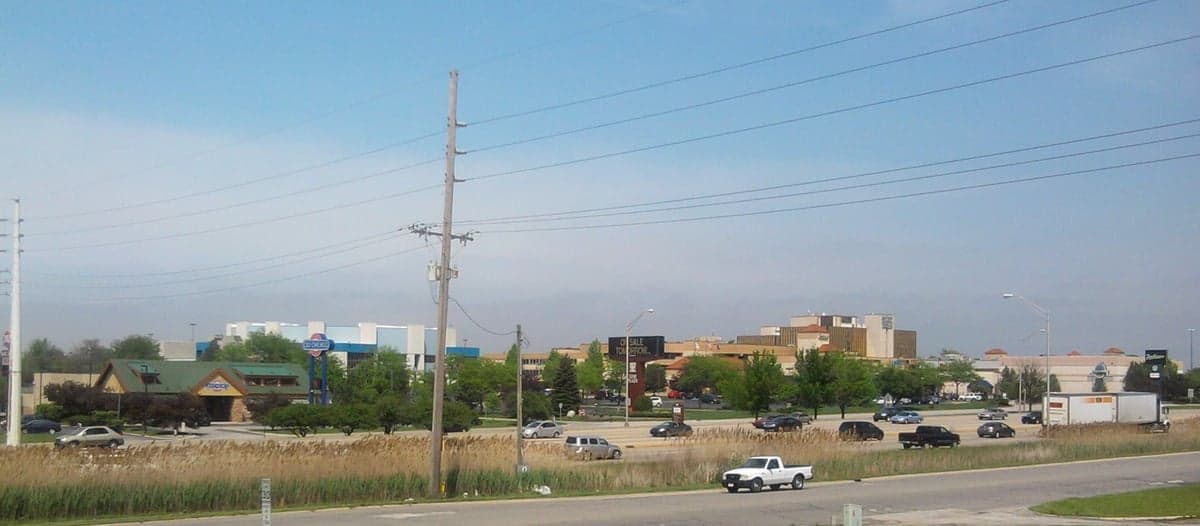
Photo: Wikipedia
Strategic Assessment of Merrillville, IN
Meaningful friction. Expect exposure to either population pressure, blast zones, or natural disaster risk. Consider buying a retreat property.
What does the Strategic Assessment tell us?
Our Strategic Assessment grades tactical survivability of an area. Major population centers, military targets, fallout zones, natural disasters, and border exposure all drive risk — lower exposure means a more defensible position in a crisis.
This is heavily inspired by Joel Skousen's Strategic Relocation book. Highly recommended you checkout the book ($)What does this tell us?
Our Strategic Assessment grades tactical survivability of an area. Major population centers, military targets, fallout zones, natural disasters, and border exposure all drive risk — lower exposure means a more defensible position in a crisis.
This is heavily inspired by Joel Skousen's Strategic Relocation book. Highly recommended you checkout the book ($)Strategic Pillars

Key Distances
Regional Safe Places
Below is our recommended "safe zones" in Indiana and the surrounding area based on our strategic heuristics. For most people, it's unrealistic to live in a “safe zone” full-time due to work, family or other personal reasons. They tend to be more rural. However, many of these areas are perfect for second homes and retreat properties that double as a vacation home or even a short-term rental.

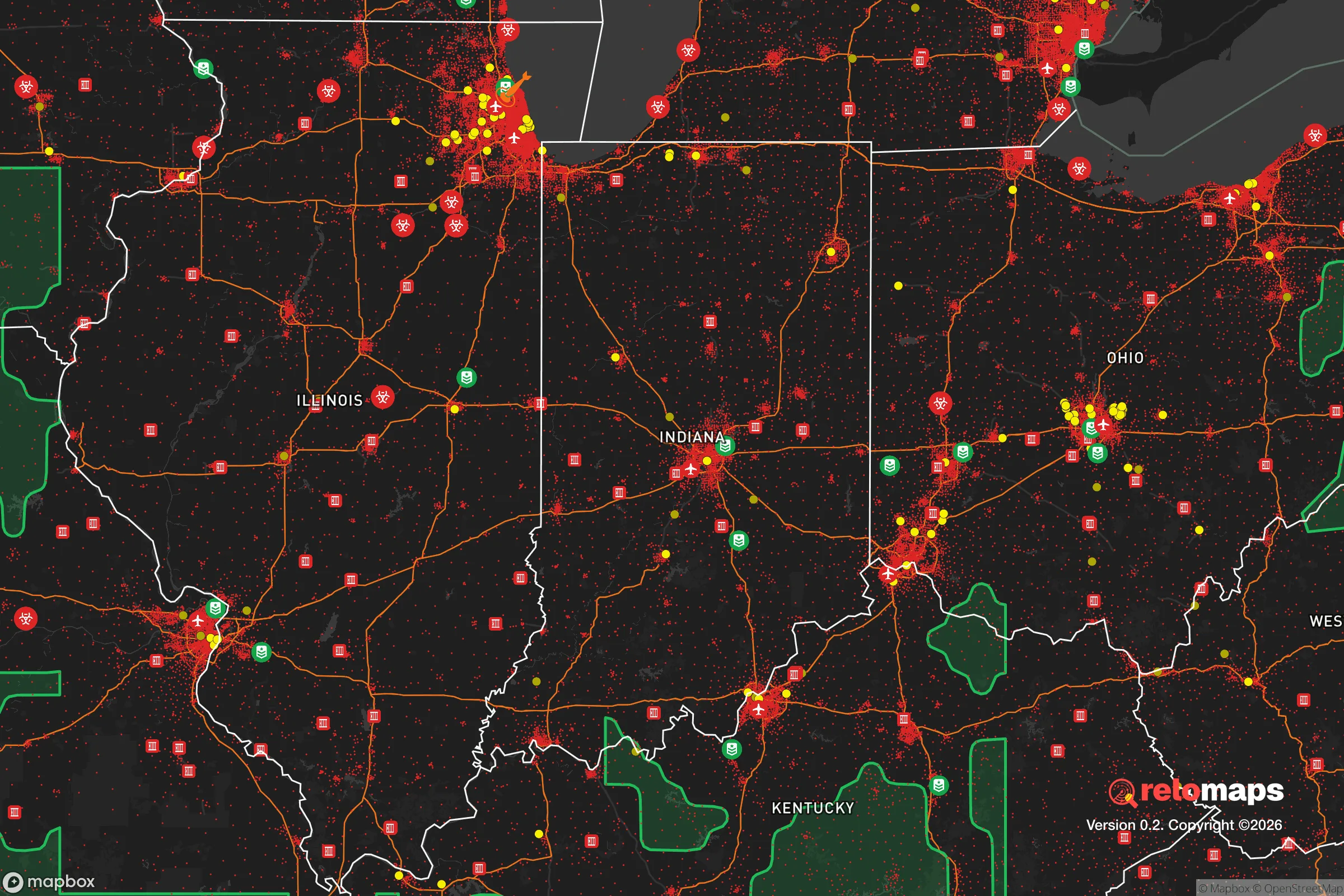


Important Note: For informational purposes only. This does not mean nothing bad ever happens in the green zones. Please use common sense. This is based on public data and modeled with AI. We tried to take a conservative approach but mistakes happen. We update this regularly as new information becomes available.
Solar Generator Recommendations
Backup power matters more here than in safer locations. We've picked three solar generators across budgets and capacity tiers — start with the budget unit if you only need a few essentials, or step up if you want to run a fridge and HVAC for days at a time.

Jackery Portable Power Station Explorer 300
Budget OptionPower on the Go: Weighing only 11 lbs, it's convenient to set up and store with book-sized foldable solar panels

BLUETTI Portable Power Station AC180
Designed for both indoor and outdoor scenarios, AC180 is highly capable as it has a robost capacity and continuous output power.

EF ECOFLOW DELTA Pro Ultra Power Station
Upgraded PickEcoFlow DELTA Pro Ultra is a whole-home energy system designed to grow with your family. Integrated with the Smart Home Panel 2, it scales to meet your evolving energy needs — keeping your home powered, intelligent, and secure through every stage of life.
We earn a commission, at no additional cost to you.
Strategic Assessment Analysis
Merrillville, Indiana, sits in a precarious strategic position that demands a clear-eyed assessment. Its location in Lake County, roughly 40 miles southeast of Chicago, offers a mix of genuine resilience advantages and significant exposure risks that any relocator with a prepper mindset must weigh carefully. The town benefits from solid infrastructure, access to freshwater from Lake Michigan, and a relatively low population density compared to the urban core, but its proximity to a major metropolitan area and critical industrial targets introduces vulnerabilities that cannot be ignored. For those seeking a balance between rural self-sufficiency and practical access to resources, Merrillville presents a nuanced case—one where preparation and awareness are non-negotiable.
Geographic position and natural advantages for long-term stability
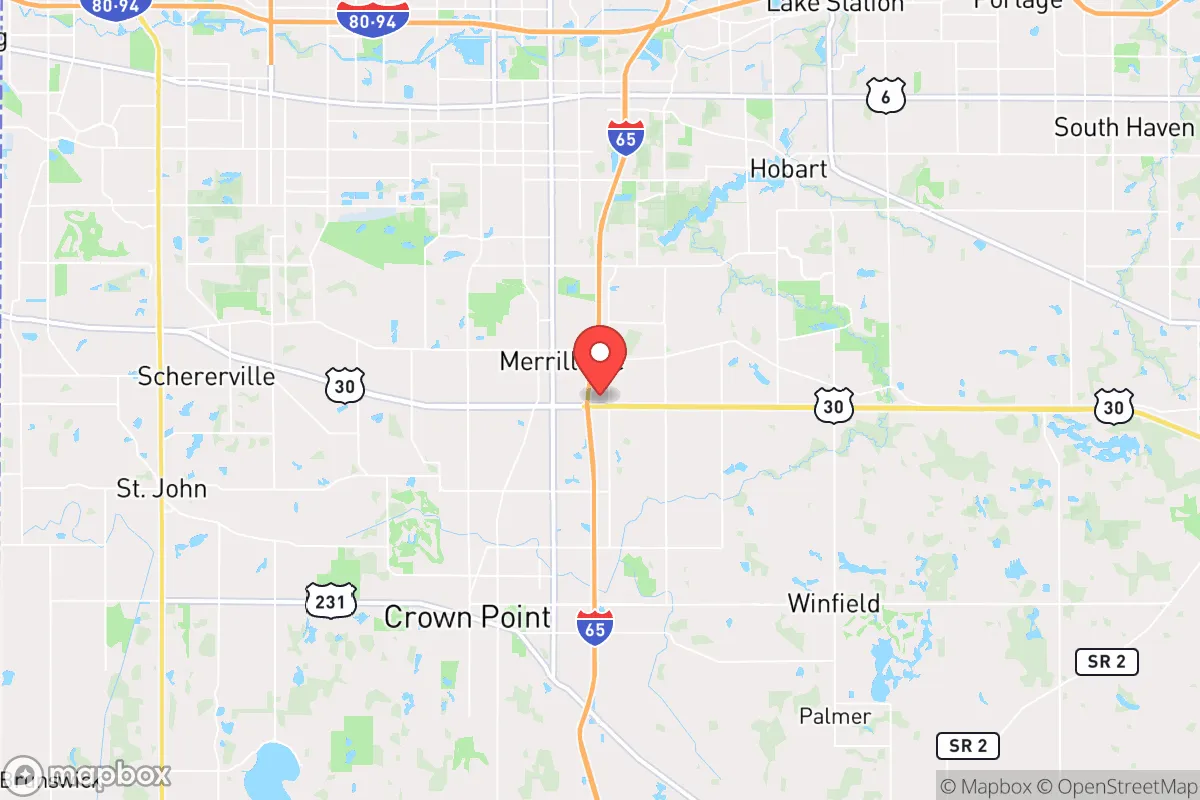
Merrillville’s geographic position is its strongest card. Situated in the Calumet Region, the town sits on relatively flat, well-drained land that is less prone to flooding than many parts of the Midwest. The nearby Lake Michigan shoreline, about 15 miles north, provides a massive, reliable freshwater source—a critical asset in any prolonged disruption. The area’s climate is temperate, with cold winters and warm summers, which supports basic agriculture and livestock if needed. The surrounding landscape is a mix of suburban development, farmland, and forested patches, offering multiple options for off-grid living or small-scale food production. The town’s location along Interstate 65 and U.S. Route 30 gives it solid road connectivity, but these same routes can become choke points during an evacuation. The natural advantages here are real: ample water, arable land, and a climate that doesn’t push extremes. For a relocator, these are the foundation of any long-term stability plan.
Risks, exposures, and proximity to fallout-relevant landmarks
The downsides are equally significant and demand honest scrutiny. Merrillville’s proximity to Chicago—a dense, politically volatile urban center—is a double-edged sword. In the event of civil unrest, mass casualty events, or a breakdown of social order, the city could become a source of refugees, supply chain disruptions, and secondary violence. The town is also within 50 miles of the BP Whiting Refinery, one of the largest oil refineries in the Midwest, and the Gary Works steel mill, both of which are high-value targets for sabotage or accidental disaster. The region’s industrial corridor along Lake Michigan, including chemical plants and rail yards, creates a concentrated risk zone for toxic spills, explosions, or targeted attacks. Additionally, the area lies within the fallout shadow of potential nuclear incidents at the LaSalle County Generating Station (about 70 miles southwest) or the D.C. Cook Nuclear Plant (about 50 miles east). While not directly in a primary blast zone, Merrillville could face contamination from prevailing winds carrying fallout eastward. The town’s flat terrain offers little natural shielding from blast waves or radiation. For a survivalist, these exposures mean that a robust bug-out plan and a well-stocked shelter are not optional—they are essential.
Practical resilience for a relocator: food, water, energy, and defensibility
On the practical side, Merrillville offers a mixed bag for daily resilience. The town’s water supply comes from the Indiana American Water system, which draws from Lake Michigan—a resilient source, but one vulnerable to contamination from upstream industrial activity or sabotage. A private well is not common in suburban subdivisions, so a relocator should plan for water storage, filtration, and a backup well if possible. Food access is decent: there are multiple grocery chains, but local farmland is within a 20-minute drive, and farmers’ markets operate seasonally. For long-term food security, establishing a garden or partnering with a local CSA is feasible. Energy reliability is average—the grid is maintained by NIPSCO, which has a mixed track record during storms. Solar panels are viable, though winter cloud cover reduces output. Natural gas is widely available, which is a plus for heating and cooking during grid outages. Defensibility is the weak point. Merrillville is a suburban town with open layouts, many cul-de-sacs, and limited natural cover. A single-family home on a standard lot offers little in the way of perimeter security. The town’s police force is professional but small, and response times in a widespread event could be long. For a relocator, the best approach is to choose a property on the outskirts—near farmland or forest—where you can establish a defensible perimeter, store supplies discreetly, and maintain a low profile. Community ties are also a factor: the area has a mix of long-term residents and commuters, so building a trusted network of like-minded neighbors is possible but requires effort.
The overall strategic picture for Merrillville is one of cautious viability. It is not a hardened bunker location, nor is it a remote homestead. It is a suburban node with real assets—freshwater, farmland access, and decent infrastructure—but also real liabilities in the form of urban proximity and industrial hazards. For a conservative-leaning relocator who values preparedness, the key is to treat Merrillville as a base of operations rather than a final redoubt. Stockpile supplies, develop a bug-out route to more rural areas in southern Indiana or Michigan, and invest in community relationships that can provide mutual aid. The town’s resilience depends less on its inherent safety and more on the foresight of those who choose to live there. If you go in with eyes open and a plan in hand, Merrillville can work. If you go in expecting the government to handle things, you will be disappointed. The choice is yours.

* Values derived from national, state, county, city and local statistics and may differ in a specific area. Last updated: 2026-04-22T09:49:01.000Z
Narrative content on this page is AI-generated and may contain mistakes. Verify any details that matter before acting on them.
ReloMaps may earn a commission from affiliate links at no extra cost to you.

