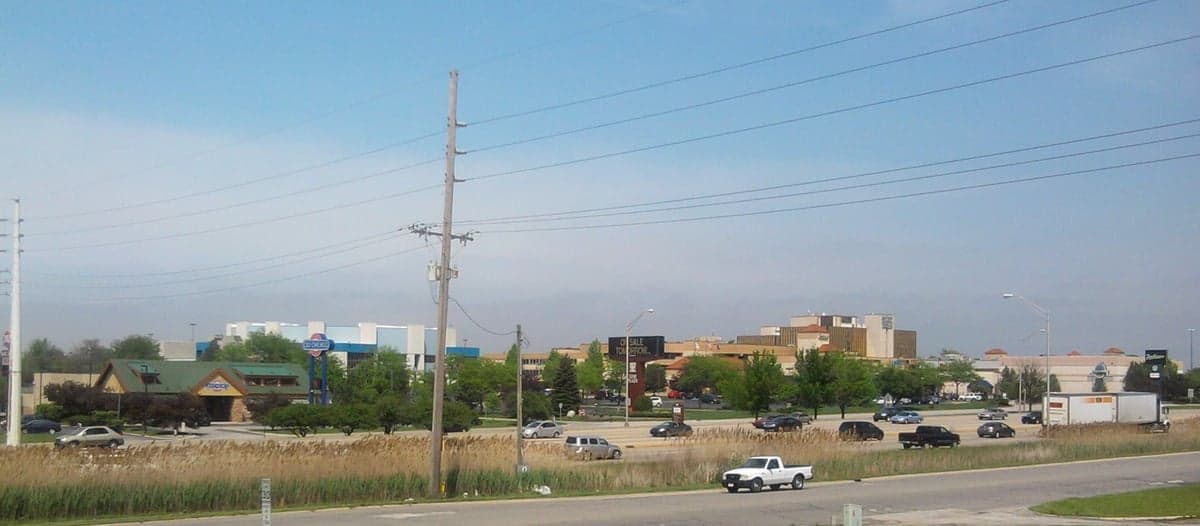
Photo: Wikipedia
Political ClimatePolitical Climate in Merrillville, IN
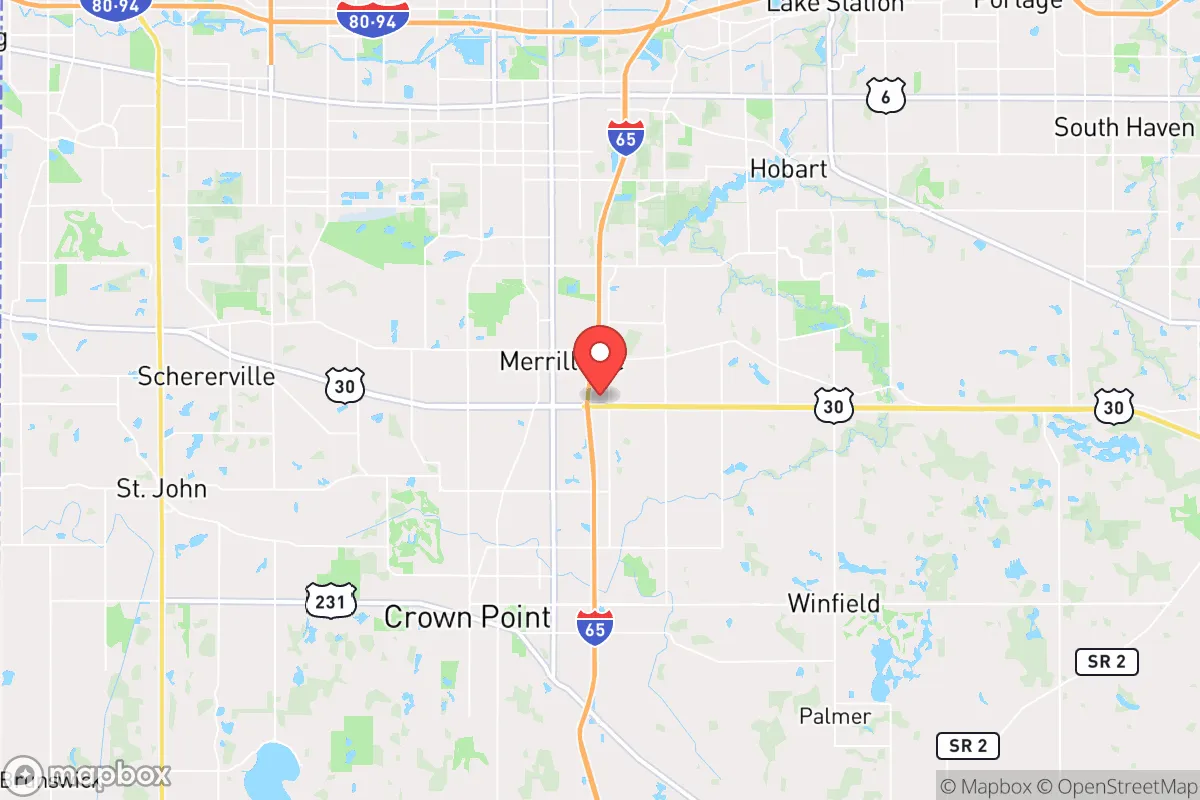
District shown is the primary district for this city’s centroid. Cities may span multiple districts.
Local Political AnalysisPolitical Analysis of Merrillville, IN
Merrillville, Indiana, sits in a political spot that’s shifted noticeably over the years, and if you’ve been around here long enough, you’ve felt it. The Cook PVI rating of D+1 tells you it’s a toss-up district on paper, but in practice, the town has been leaning further left in local elections and policy decisions, especially since the early 2020s. Lake County as a whole has long been a Democratic stronghold, but Merrillville used to have a stronger independent and conservative streak—folks who voted their conscience on taxes and school issues, not just party lines. That’s changing, and not necessarily for the better if you value limited government and personal freedoms.
How it compares
Drive ten miles west to Crown Point or fifteen miles south to Valparaiso, and you’ll find towns that still hold onto a more traditional, smaller-government mindset. Those areas vote reliably red, with school boards and city councils that push back on state-level mandates and keep property taxes in check. Merrillville, by contrast, has seen its local government embrace more progressive policies—think expanded public health orders during the pandemic that went beyond state guidance, and a school board that’s been quick to adopt diversity, equity, and inclusion programs that some parents feel sideline academic basics. Even neighboring Gary, which is heavily Democratic, has a more hands-off approach in certain areas because its budget is so tight. Merrillville’s growing tax base has given local officials room to experiment, and that’s a red flag for anyone wary of government overreach into how you raise your kids or run your business.
What this means for residents
For the average family or small business owner, the political tilt here means you’re going to see more regulations and fewer choices. The town council has been pushing for stricter rental inspection ordinances and zoning changes that make it harder to run a home-based business without jumping through hoops. If you value the freedom to decide what’s best for your property or your children’s education without a bureaucrat’s sign-off, Merrillville’s trajectory is concerning. The school system, while well-funded, has adopted curriculum changes that some parents feel prioritize social activism over reading and math. And with the county’s Democratic machine firmly in control, local elections often feel like a rubber stamp rather than a real choice. Longtime residents will tell you that twenty years ago, you could disagree with the mayor without being labeled an enemy of the community—now, the political climate is more polarized, and dissent is often met with pushback from local officials.
One cultural distinction that stands out is Merrillville’s embrace of regional transit and development projects that tie the town to Chicago’s political orbit. The push for expanded bus routes and commuter rail connections sounds good on paper, but it also opens the door for more state and federal strings attached to local decisions. If you’re a conservative who believes in local control and minimal interference, that’s a double-edged sword. The near-term outlook suggests Merrillville will continue to drift left, especially as younger, more progressive residents move in from the city. Long-term, unless there’s a grassroots push to reclaim local governance, the town risks becoming a mirror of the very policies that many folks moved here to escape. Keep an eye on school board and town council races—those are where the real battles over your freedoms will be fought.

State Political ClimatePolitical Climate in Indiana
State Political AnalysisPolitical Environment in the State
Indiana has been a reliably red state for decades, but it’s not the deep-red bastion many outsiders assume. The state has voted Republican in every presidential election since 2008, with Donald Trump winning by 11 points in 2024, but the margins have tightened in suburban counties as the Indianapolis metro area shifts leftward. Over the past 20 years, the GOP’s dominance has been sustained by rural and exurban turnout, while the state’s largest cities—Indianapolis, Fort Wayne, and Evansville—have become increasingly Democratic strongholds. The overall trajectory is a slow, uneven drift toward purple, driven by in-migration from blue states and generational turnover, but the state’s legislative and cultural center of gravity remains firmly conservative.
Urban vs. rural divide
The political map of Indiana is a textbook case of the urban-rural split. Marion County (Indianapolis) is the state’s Democratic powerhouse, delivering 60%+ margins for Joe Biden in 2020 and Kamala Harris in 2024, fueled by a growing professional class, minority communities, and young transplants. The surrounding ring counties—Hamilton, Hendricks, and Johnson—are the battlegrounds. Hamilton County, home to Carmel and Fishers, was once reliably red but has shifted to a lean-Republican tilt; in 2024, Trump won it by only 8 points, down from 18 points in 2016. This is where the state’s political future will be decided. Meanwhile, the rural north and south—places like Kosciusko County (Warsaw) and Dubois County (Jasper)—vote 70-80% Republican, driven by manufacturing, agriculture, and evangelical churches. The Michigan City and Gary areas in the northwest corner are solidly blue, but their population is stagnant or shrinking, limiting their statewide influence. The divide isn’t just about party ID—it’s about worldview: urban and suburban voters prioritize transit, public schools, and diversity initiatives, while rural voters focus on gun rights, property taxes, and local control.
Policy environment
Indiana’s policy environment is broadly conservative, with a few notable exceptions. The state has a flat income tax of 3.05% (down from 3.23% in 2024), with a scheduled phase-down to 2.9% by 2027, making it one of the more tax-friendly states in the Midwest. Property taxes are capped at 1% of assessed value for owner-occupied homes, a constitutional limit that keeps housing costs manageable. On education, Indiana has a robust school choice program: the Choice Scholarship voucher program serves over 70,000 students, and charter schools are widespread. However, the state’s public school funding formula has been criticized for underfunding rural districts while suburban districts like Carmel and Zionsville thrive. Healthcare policy is mixed—Indiana expanded Medicaid under the HIP 2.0 waiver, but the state has not adopted a public option or price controls. Election laws are restrictive: voter ID is required, early voting is limited to 28 days, and mail-in voting requires an excuse (though COVID-era no-excuse voting was allowed in 2020 and 2024). The state also has a “right to work” law and is a “shall-issue” state for concealed carry permits. Overall, the policy environment favors personal responsibility and limited government, but the state’s heavy reliance on property taxes and its Medicaid expansion are points of tension for fiscal conservatives.
Trajectory & freedom
Indiana has moved in a decidedly pro-freedom direction over the past decade, but the trend is not uniform. In 2022, Indiana became a constitutional carry state, allowing permitless carry of handguns—a major win for Second Amendment advocates. The same year, the state passed a near-total abortion ban (Senate Enrolled Act 1), with exceptions only for rape, incest, and life of the mother, which took effect in 2023 after a court challenge. On parental rights, Indiana passed a “Parents’ Bill of Rights” in 2023, requiring schools to notify parents about curriculum changes and medical services. However, the state has also expanded government power in ways that concern liberty-minded residents. The 2021 “critical race theory” ban (HEA 1442) restricts how race and gender are taught in K-12 schools, which some see as government overreach into curriculum. The state’s COVID-19 emergency powers were curtailed in 2021, limiting the governor’s ability to issue unilateral orders—a positive for those wary of executive overreach. On medical freedom, Indiana has not passed any broad vaccine mandate bans, but it did prohibit vaccine passports for government services. The net trajectory is mixed: the state has expanded gun rights and restricted abortion, but it has also increased government involvement in education and healthcare. For a conservative moving in, the trend is generally positive, but vigilance is needed to prevent future encroachments.
Civil unrest & political movements
Indiana has seen its share of political flashpoints, but they are less dramatic than in coastal states. The 2020 George Floyd protests in Indianapolis turned violent, with looting and fires along Monument Circle, leading to a heavy National Guard presence. Since then, the city has seen a rise in organized left-wing activism, particularly around racial justice and police reform, but it remains a minority voice statewide. On the right, the “Indiana Freedom Coalition” and local Moms for Liberty chapters have been active in school board meetings, pushing back against LGBTQ+ curriculum and critical race theory. Immigration politics are relatively quiet—Indiana is not a border state, and there are no sanctuary cities; in fact, the state passed a law in 2011 requiring local law enforcement to cooperate with ICE. Election integrity has been a hot topic: the 2020 election saw no major scandals, but the state’s Republican secretary of state has pushed for stricter voter roll maintenance. The most visible flashpoint for a new resident would be the annual “Right to Life” march at the Statehouse in January, which draws thousands, and the counter-protests that have grown in recent years. Overall, civil unrest is localized and episodic—not a daily concern for most residents.
Projection
Over the next 5-10 years, Indiana is likely to become more politically competitive, but not dramatically so. The Indianapolis suburbs—Carmel, Fishers, Noblesville—are growing fast, attracting young professionals from blue states who bring more moderate or liberal views. This will push the state toward a purple hue, especially in presidential elections. However, the rural and exurban areas are also growing, albeit more slowly, and they remain deeply conservative. The state’s population is projected to grow by about 5% by 2035, with most of that growth in the Indianapolis metro and the Fort Wayne area. The state’s political future hinges on whether the suburban shift accelerates or plateaus. If current trends hold, Indiana could become a toss-up state in presidential elections by 2032, but the state legislature will remain Republican-controlled due to gerrymandering. For a conservative moving in now, the next decade will bring more cultural battles over education and local governance, but the state’s core policies—low taxes, gun rights, school choice—are unlikely to be overturned. The biggest risk is that the state’s growing urban population could eventually flip the governorship or a Senate seat, leading to more moderate policies.
For a new resident, the bottom line is this: Indiana offers a solidly conservative policy environment with low taxes, strong gun rights, and school choice, but it is not immune to the cultural and demographic shifts reshaping the Midwest. If you’re moving here for freedom from government overreach, you’ll find it in the rural and exurban areas—places like Zionsville, Westfield, or the Lake Wawasee area. But if you settle in the Indianapolis suburbs, expect to see the same political battles over schools, taxes, and personal liberty that you’d find in any growing metro. The state is a good bet for conservatives who want a stable, affordable, and relatively free environment, but it requires staying engaged locally to keep it that way.
* Values derived from national, state, county, city and local statistics and may differ in a specific area. Last updated: 2026-04-22T09:49:01.000Z
Narrative content on this page is AI-generated and may contain mistakes. Verify any details that matter before acting on them.
ReloMaps may earn a commission from affiliate links at no extra cost to you.

