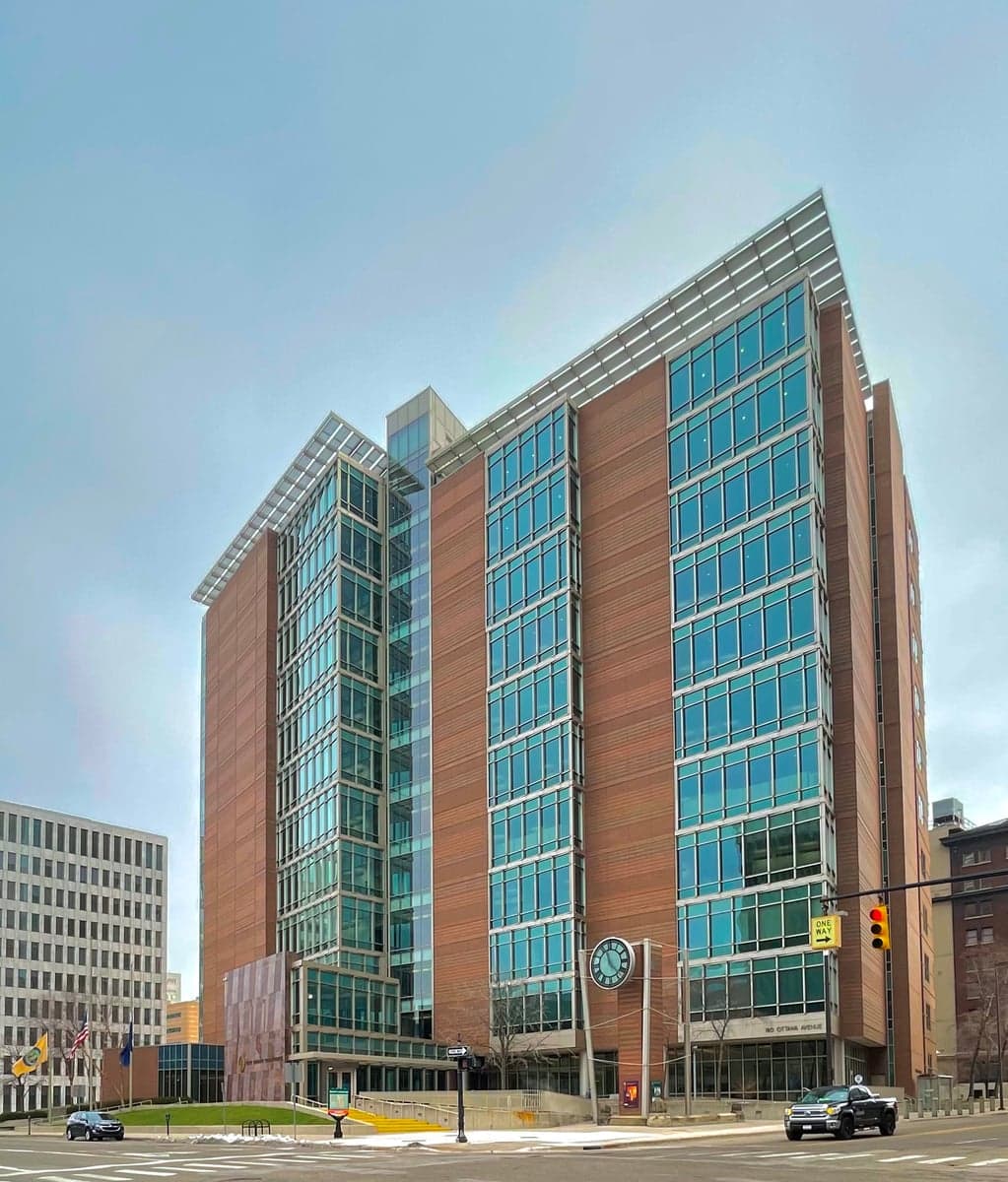
Photo: Wikipedia
Personal Sovereignty in Kent County
Strong independent fundamentals that actively favor personal liberty and low regulation.
What does Personal Sovereignty tell us?
Personal Sovereignty measures your capacity for self-reliance and independence with minimal government friction. Higher scores mean fewer barriers between you and the way you want to live... but it assumes you have the space you need and good neighbors.
What does this tell us?
Personal Sovereignty measures your capacity for self-reliance and independence with minimal government friction. Higher scores mean fewer barriers between you and the way you want to live... but it assumes you have the space you need and good neighbors.
State Policy
Energy independence: Importer (20% of energy produced in-state)
Personal Liberty
Homesteading

Personal Liberty Analysis
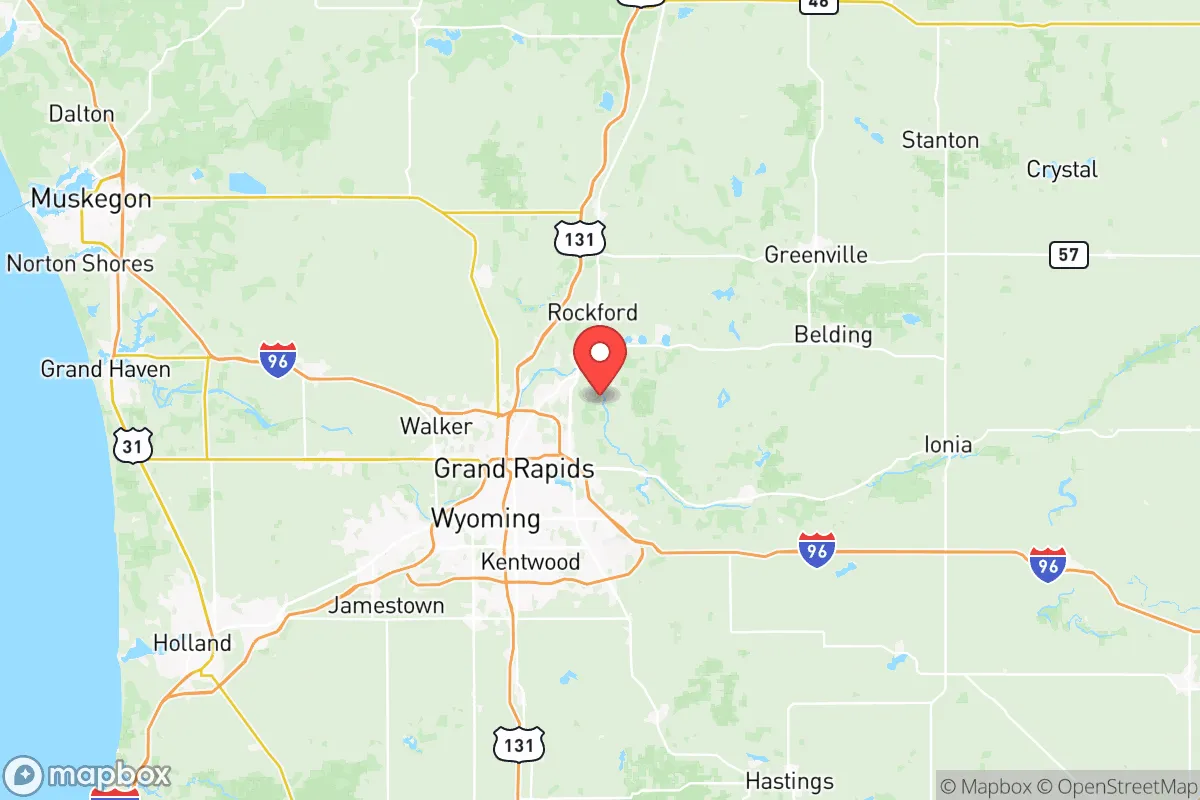
For conservative-leaning individuals and families prioritizing personal sovereignty, Kent County, Michigan presents a mixed picture that demands careful geographic targeting. While the county as a whole operates under Michigan’s state-level framework—which includes a right-to-work law, constitutional carry, and no state income tax on retirement income—the local regulatory environment varies dramatically between the urban core of Grand Rapids and the outlying townships. The key to maximizing autonomy lies in choosing the right jurisdiction within the county, as zoning codes, school board policies, and local law enforcement attitudes can either reinforce or undermine your personal freedoms.
Tax burden and regulatory posture across Kent County
Michigan’s state income tax is a flat 4.25%, and Kent County’s average property tax rate hovers around 1.5% of assessed value—moderate by national standards. However, the real sovereignty concern is local regulatory creep. In Grand Rapids proper, you’ll encounter the most progressive zoning and business licensing requirements, including rental inspection ordinances and energy benchmarking mandates that signal a preference for top-down control. Head north to Rockford or northeast to Cedar Springs, and the regulatory posture shifts dramatically. These townships operate with minimal commercial overlay districts and far fewer permitting hurdles for home-based businesses or accessory structures. The city of Wyoming, south of Grand Rapids, has aggressively pursued federal grant funding for “equity” initiatives, which often come with strings attached for local businesses and property owners. For those seeking to minimize government entanglement, the unincorporated townships of Alpine and Plainfield offer the lightest touch, with no municipal income tax and planning departments that prioritize property rights over progressive social engineering.
Self-defense and gun law specifics in Kent County
Michigan is a constitutional carry state as of 2023, meaning no permit is required to carry a concealed pistol for anyone legally allowed to possess a firearm. This is a bedrock sovereignty protection. However, Kent County’s sheriff’s office and local police departments vary in their practical support for gun rights. The Kent County Sheriff’s Office under Sheriff Michelle LaJoye-Young has maintained a pro-Second Amendment posture, issuing concealed pistol licenses (CPLs) efficiently for those who still want reciprocity with other states. But be aware: the city of Grand Rapids has a history of city council resolutions supporting “safe storage” ordinances and red flag law advocacy, even though state preemption prevents them from enacting their own gun control. In practice, this means you’ll face more scrutiny carrying in downtown Grand Rapids establishments, while Lowell and Sparta remain culturally gun-friendly, with multiple gun shops and ranges. The county’s 2024 election results showed a clear urban-rural split: Grand Rapids precincts voted heavily Democratic, while outlying townships like Alpine and Courtland delivered 60%+ margins for conservative candidates who explicitly campaigned on Second Amendment protections. For daily carry, the practical difference is negligible due to state preemption, but for building a network of like-minded individuals, the cultural climate in the northern and eastern townships is far more aligned with a self-defense mindset.
Self-reliance and homesteading viability in Kent County
For those serious about self-reliance—gardening, livestock, rainwater collection, and off-grid energy—Kent County’s zoning is the single most important factor. The city of Grand Rapids and its inner-ring suburbs like East Grand Rapids and Kentwood have minimum lot sizes of 6,000-10,000 square feet and prohibit livestock beyond small pets. Chickens are often banned outright or limited to 3-4 hens with no roosters. Move to Cedar Springs or Sand Lake in the northern part of the county, and you’ll find agricultural zoning with 2-5 acre minimums, where horses, goats, and even small-scale pig operations are permitted by right. The townships of Solon and Tyrone (northeast Kent) are particularly homestead-friendly, with no building permit fees for agricultural structures under 200 square feet and explicit allowances for alternative energy systems like solar panels and wind turbines. Off-grid feasibility is limited by Michigan’s building code, which still requires a septic system and well permit, but several townships in the Alpine and Courtland areas have no zoning ordinance at all for unincorporated parcels—meaning you can build a pole barn, install a composting toilet, and live without grid electricity as long as you meet state health codes. The key takeaway: if homesteading is your goal, avoid any property within the Grand Rapids urban growth boundary and target parcels zoned “Agricultural-Rural” in the northern and eastern townships.
Personal liberties in Kent County: parental rights, medical autonomy, speech, and property
Parental rights in Kent County are currently a battleground. The Grand Rapids Public Schools district has adopted “comprehensive sex education” curricula that include gender identity instruction without parental opt-out provisions, a clear overreach that has driven many conservative families to homeschooling or private Christian schools in Rockford and Lowell. The Forest Hills school district (eastern suburbs) has maintained a more traditional approach, with transparent curriculum policies and active parental advisory boards. Medical autonomy is protected under Michigan’s broad scope of practice laws, but the state’s vaccine mandate for school attendance remains in place, and Kent County’s health department aggressively enforces it. For those seeking medical freedom, the Cedar Springs area has a growing network of naturopathic and functional medicine practitioners who operate outside the insurance system. Free speech is generally robust, though Grand Rapids has a “hate speech” ordinance on the books that has been used to ticket street preachers—a chilling effect that doesn’t exist in the townships. Property rights are strongest in the unincorporated areas, where there are no historic district commissions or design review boards. In Alpine Township, you can paint your house any color, build a privacy fence without a permit, and park an RV in your driveway indefinitely. Compare that to East Grand Rapids, where the city can fine you for having a lawn that’s too tall or a fence that’s the wrong material. The sovereignty difference is night and day.
Overall, Kent County offers a tiered sovereignty landscape. The urban core of Grand Rapids and its inner suburbs are increasingly hostile to conservative values, with progressive school boards, activist planning departments, and cultural pressure against self-reliance. But the northern and eastern townships—Cedar Springs, Rockford, Lowell, Alpine, and Courtland—provide a refuge where state-level protections like constitutional carry and right-to-work are reinforced by local governments that respect property rights and parental authority. For the strategic relocator, the choice is clear: avoid the city limits and target the rural townships, where personal sovereignty is not just tolerated but actively protected. Compared to similarly sized counties in blue states like Illinois or New York, Kent County’s outlying areas rank among the most freedom-friendly in the Midwest for those willing to do their homework on zoning and school district boundaries.

* Values derived from national, state, county, city and local statistics and may differ in a specific area. Last updated: 2026-05-16T04:01:29.000Z
Narrative content on this page is AI-generated and may contain mistakes. Verify any details that matter before acting on them.
ReloMaps may earn a commission from affiliate links at no extra cost to you.

