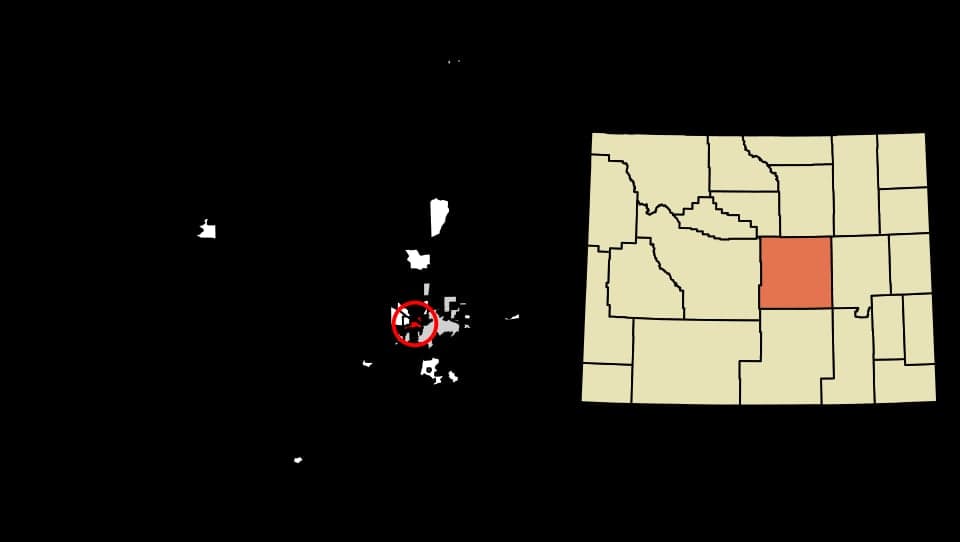
Photo: Wikipedia
Strategic Assessment of Mills, WY
Strong survivability profile. Good buffer from population centers, with manageable environmental and tactical risks.
What does the Strategic Assessment tell us?
Our Strategic Assessment grades tactical survivability of an area. Major population centers, military targets, fallout zones, natural disasters, and border exposure all drive risk — lower exposure means a more defensible position in a crisis.
This is heavily inspired by Joel Skousen's Strategic Relocation book. Highly recommended you checkout the book ($)What does this tell us?
Our Strategic Assessment grades tactical survivability of an area. Major population centers, military targets, fallout zones, natural disasters, and border exposure all drive risk — lower exposure means a more defensible position in a crisis.
This is heavily inspired by Joel Skousen's Strategic Relocation book. Highly recommended you checkout the book ($)Strategic Pillars

Key Distances
Regional Safe Places
Below is our recommended "safe zones" in Wyoming and the surrounding area based on our strategic heuristics. For most people, it's unrealistic to live in a “safe zone” full-time due to work, family or other personal reasons. They tend to be more rural. However, many of these areas are perfect for second homes and retreat properties that double as a vacation home or even a short-term rental.
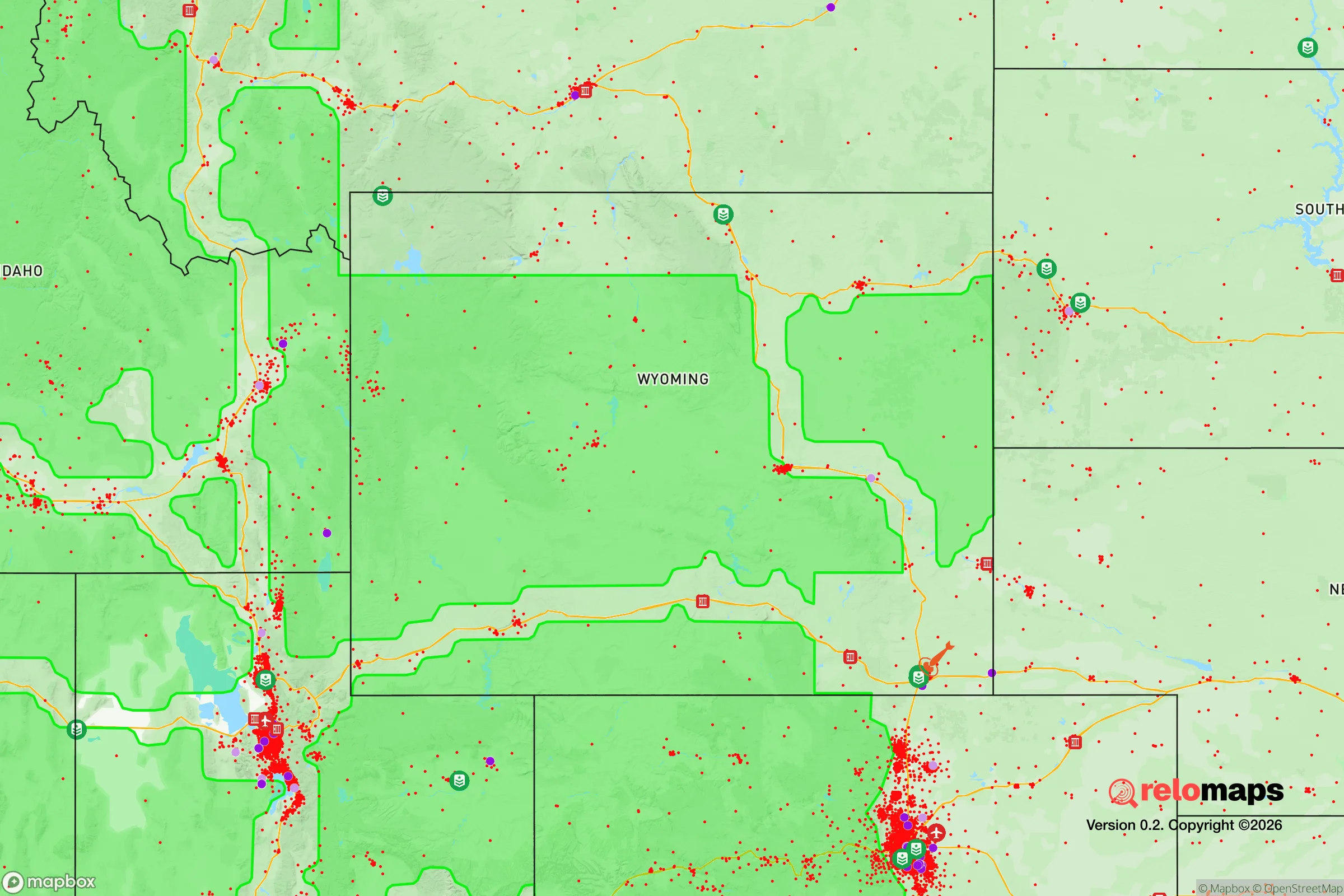
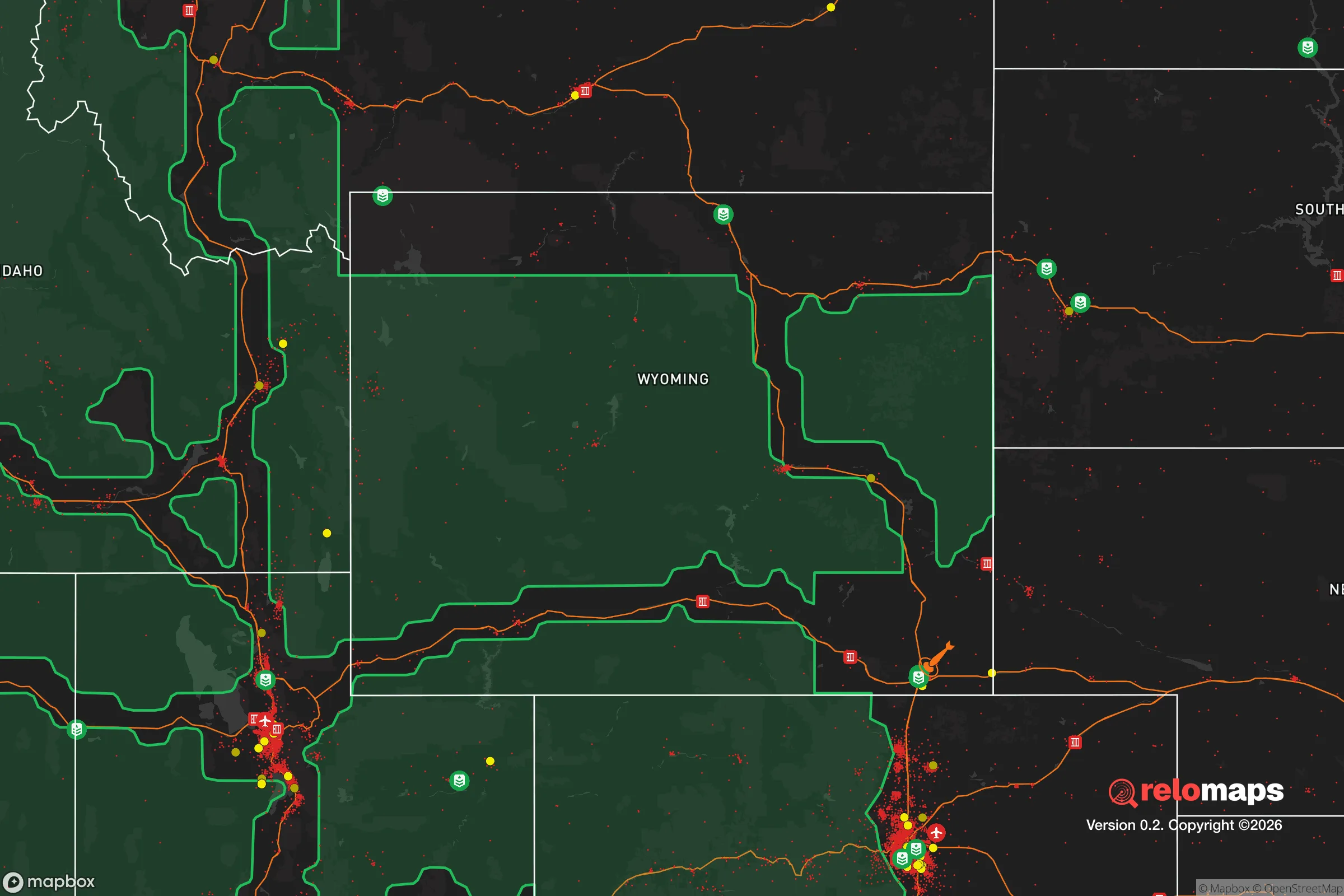


Important Note: For informational purposes only. This does not mean nothing bad ever happens in the green zones. Please use common sense. This is based on public data and modeled with AI. We tried to take a conservative approach but mistakes happen. We update this regularly as new information becomes available.
Solar Generator Recommendations
Backup power matters more here than in safer locations. We've picked three solar generators across budgets and capacity tiers — start with the budget unit if you only need a few essentials, or step up if you want to run a fridge and HVAC for days at a time.

Jackery Portable Power Station Explorer 300
Budget OptionPower on the Go: Weighing only 11 lbs, it's convenient to set up and store with book-sized foldable solar panels

BLUETTI Portable Power Station AC180
Designed for both indoor and outdoor scenarios, AC180 is highly capable as it has a robost capacity and continuous output power.

EF ECOFLOW DELTA Pro Ultra Power Station
Upgraded PickEcoFlow DELTA Pro Ultra is a whole-home energy system designed to grow with your family. Integrated with the Smart Home Panel 2, it scales to meet your evolving energy needs — keeping your home powered, intelligent, and secure through every stage of life.
We earn a commission, at no additional cost to you.
Strategic Assessment Analysis
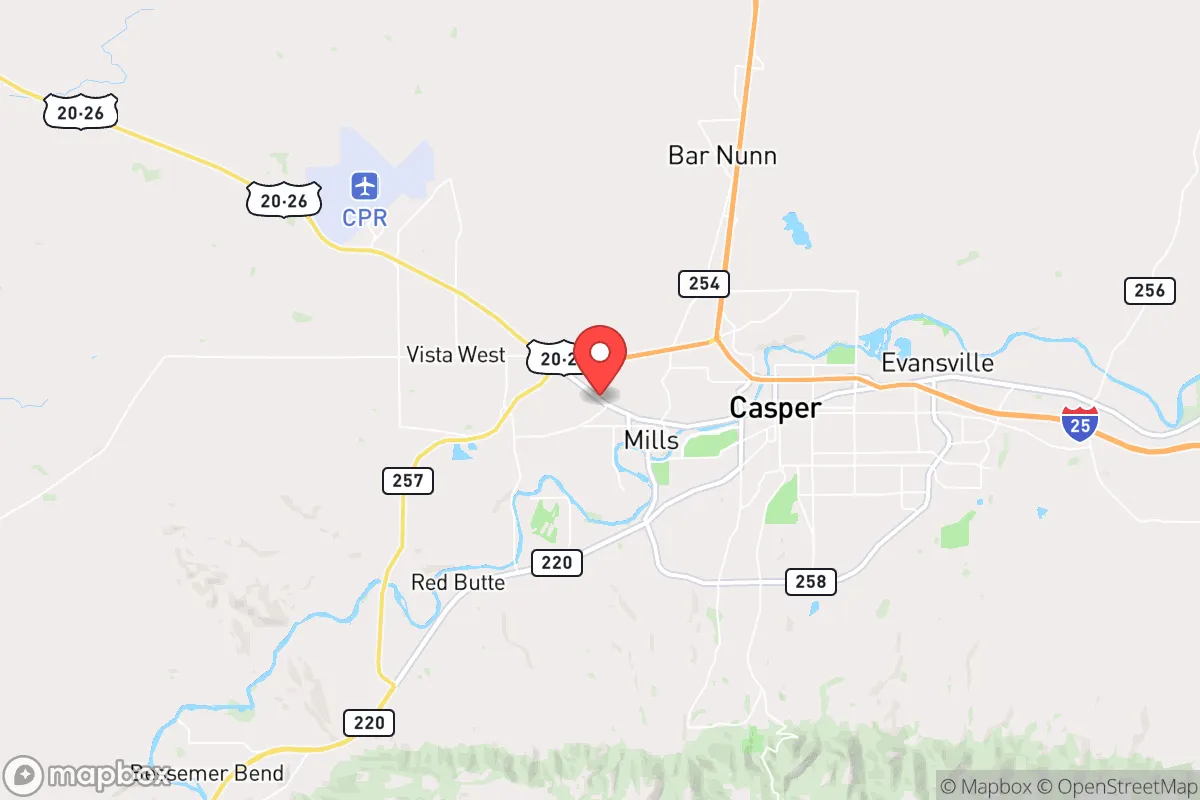
Mills, Wyoming, offers a surprisingly resilient strategic position for those prioritizing long-term security and self-sufficiency, largely due to its location within the sparsely populated Rocky Mountain region and its proximity to critical infrastructure. Sitting just west of Casper in Natrona County, this small town of roughly 4,000 people provides a buffer from the chaos of major metropolitan areas while still granting access to essential services and supply routes. For a relocator with a prepper mindset, Mills represents a calculated trade-off: it is not a remote bug-out location, but a defensible, resource-adjacent base that can sustain a family through civic unrest or regional disruptions, provided you understand its specific vulnerabilities and advantages.
Geographic position and natural advantages for long-term security
Mills sits in the North Platte River Valley, a natural corridor that historically served as a transportation and resource hub. The town’s elevation—around 5,100 feet—and semi-arid climate mean fewer natural disaster risks compared to coastal or tornado-prone regions. Wildfire is a seasonal concern, but the surrounding shortgrass prairie and sagebrush steppe reduce fuel loads compared to dense forests. The nearby Casper Mountain, rising to over 8,000 feet, offers a high-ground retreat and potential for hunting, timber, and water catchment. The North Platte River itself is a reliable surface water source, critical for any long-term resilience plan. The area’s low population density—Natrona County has about 80,000 people spread over 5,376 square miles—means that even a significant regional event would not produce the same cascading failures seen in dense urban centers. For a conservative-leaning individual concerned with federal overreach or societal collapse, this geographic isolation is a tangible asset: fewer people to compete with for resources, and fewer targets for centralized control.
Risks, exposures, and proximity to fallout-relevant landmarks
The most significant strategic drawback of Mills is its proximity to Casper, a city of roughly 60,000, and to several high-value infrastructure targets within a 50-mile radius. The area hosts a major oil refinery (the Sinclair Casper Refinery), a key natural gas processing plant, and the Casper-Natrona County International Airport, which also supports military operations. In a scenario involving civil unrest or a mass casualty event, these facilities could become focal points for looting, sabotage, or federal intervention. Additionally, the TransWest Express high-voltage transmission line and multiple pipeline corridors run through the region, making it a potential target for coordinated attacks. While Mills itself is not a primary target, its proximity to these assets means that fallout—both literal and figurative—could reach the town. The prevailing winds from the west and southwest could carry airborne contaminants from a refinery incident or a dirty bomb scenario at the airport. For the prepper, this means that a relocation to Mills must include a plan for rapid evacuation east or south, away from the industrial corridor, or a well-stocked shelter capable of filtering air for 72 hours. The town’s location on Interstate 25 is a double-edged sword: it provides quick egress but also a direct route for refugees fleeing larger cities like Denver (about 250 miles south) or Cheyenne (150 miles south). In a mass migration event, Mills could see a surge of transient populations, straining local resources and security.
Practical resilience for a relocator: food, water, energy, and defensibility
Water is the most critical resource, and Mills has a strong baseline. The town draws from the North Platte River and local groundwater wells, and the municipal supply is generally reliable. However, a prepper should not rely solely on the grid. Installing a rainwater catchment system is viable given the area’s 12-14 inches of annual precipitation, and a shallow well on private property can provide redundancy. The river itself is accessible for filtration, but be aware of upstream agricultural runoff and industrial discharge from the refinery. Food security is moderate: the growing season is short (about 120 days), but cold-hardy crops like potatoes, carrots, and kale do well. Local ranching means beef and lamb are available, and hunting for mule deer, pronghorn, and elk is legal with proper tags. The Casper area has several feed stores and farm supply outlets, so seed, tools, and livestock feed are obtainable without long supply chains. Energy resilience is a mixed picture. Natrona County has abundant wind and solar potential—over 300 sunny days per year—but the grid is vulnerable to winter storms and cyberattacks. A solar array with battery storage is a wise investment, and a backup propane generator is almost mandatory for winter heating. Defensibility is the weakest point. Mills is a flat, open town with no natural chokepoints. The layout is a typical small-town grid, with easy vehicle access from multiple directions. For a single individual or family, this means you cannot rely on terrain to protect you. Instead, you must build a hardened perimeter—reinforced doors, window film, and a clear line of sight from your home. The local law enforcement presence is small (Natrona County Sheriff’s Office and Mills Police Department), so in a prolonged crisis, you are largely on your own. Forming a neighborhood watch or mutual assistance group with like-minded neighbors is not optional; it is essential.
The overall strategic picture for Mills is one of calculated viability for the conservative prepper. It is not a fortress, but it is a functional base camp with access to water, energy, and supply routes that many more remote locations lack. The key is to treat Mills as a hub, not a final destination. Have a secondary bug-out location in the nearby mountains or on private land east of the river. Stockpile at least three months of food, water, and medical supplies, and invest in off-grid energy and water filtration. The town’s proximity to Casper’s resources—hardware stores, medical clinics, and fuel depots—is an advantage only as long as those systems remain intact. In a worst-case scenario, Mills could become a contested zone, but with proper preparation, it offers a realistic chance to ride out the storm and rebuild. For the relocator who values independence, community, and a low profile, Mills, Wyoming, deserves a serious look—just don’t expect it to save you without your own effort.

* Values derived from national, state, county, city and local statistics and may differ in a specific area. Last updated: 2026-05-04T02:46:35.000Z
Narrative content on this page is AI-generated and may contain mistakes. Verify any details that matter before acting on them.
ReloMaps may earn a commission from affiliate links at no extra cost to you.

