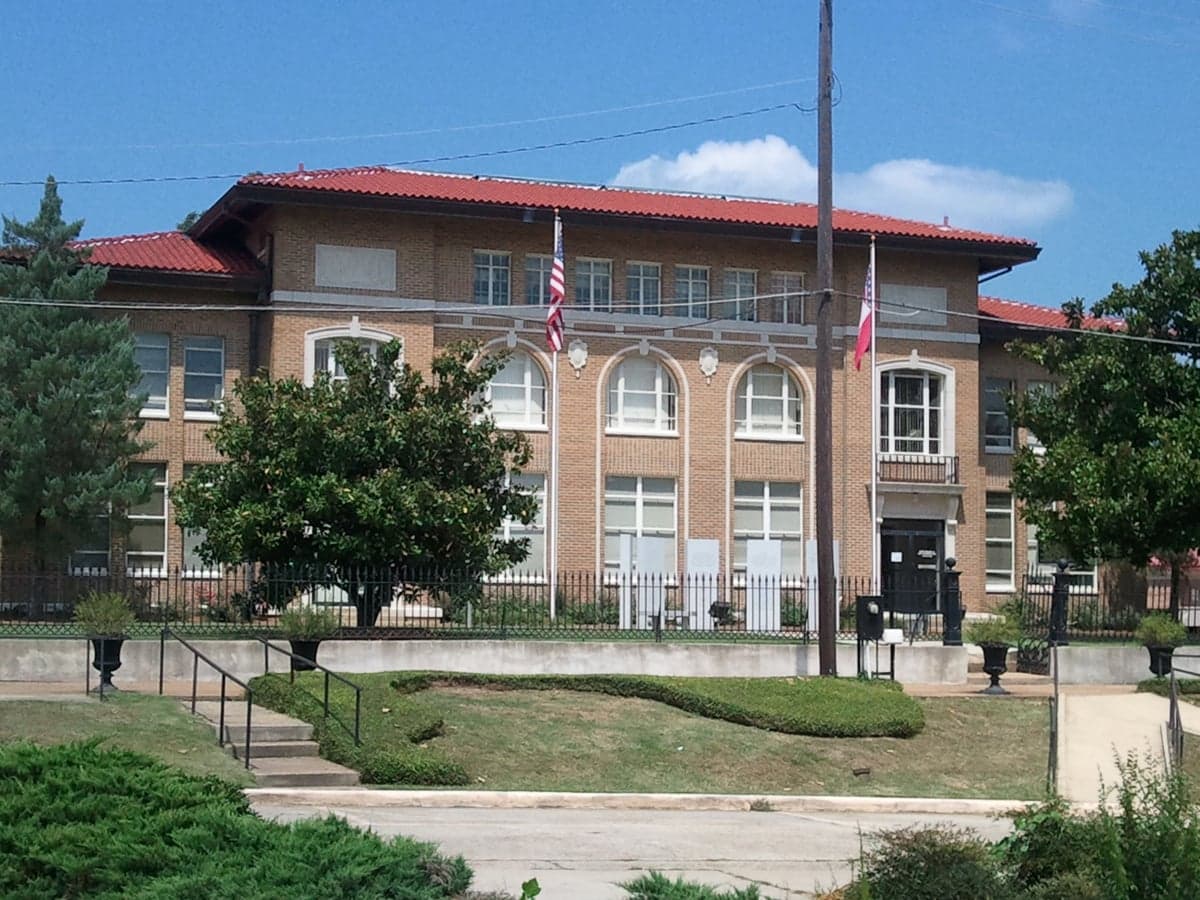
Photo: Wikipedia
Demographics of Rankin County
Affluence Level in Rankin County
A middle-class area roughly in line with national averages across income, home values, education, and employment.
People of Rankin County
Rankin County, Mississippi, is home to 158,218 residents, a predominantly white (71.6%) and Black (21.6%) population that has grown rapidly through suburban spillover from Jackson. With a foreign-born share of just 1.4%, it remains one of the least ethnically diverse counties in the Jackson metro area, yet its identity is defined less by its demographics and more by its role as a conservative, family-oriented bedroom community where 32.8% of adults hold a college degree. The county’s people are overwhelmingly native-born Mississippians, many of whom trace their roots to the same Scots-Irish and African American families that settled the pine hills and river bottoms two centuries ago.
Settlement & growth (pre-1960)
Before European contact, the area that became Rankin County was part of the ancestral homeland of the Choctaw people, who lived in scattered villages along the Pearl River and its tributaries. The Choctaw ceded the land to the United States in the 1830 Treaty of Dancing Rabbit Creek, opening the territory to white settlement. The first wave of Anglo-American settlers arrived in the 1830s and 1840s, overwhelmingly Scots-Irish and English yeoman farmers from the Carolinas, Georgia, and Tennessee. They were drawn by cheap, fertile land in the Pearl River floodplain and the promise of cotton cultivation. These early settlers founded the county seat of Brandon (1833) and the river town of Pelahatchie (1830s), which became early trading posts for cotton and timber.
By the 1850s, enslaved African Americans made up roughly half the county’s population, working the cotton plantations that lined the Pearl River. After the Civil War and emancipation, many freedmen remained in the county as sharecroppers and tenant farmers, forming the foundation of the Black communities that persist today in Florence and Pelahatchie. The post-Reconstruction era saw little new immigration; Rankin County remained a rural, agricultural society of white landowners and Black laborers well into the 20th century.
The first major demographic shift came in the 1940s and 1950s with the expansion of the Jackson metropolitan area. The construction of U.S. Highway 80 and later Interstate 20 connected Rankin County’s eastern towns to Jackson’s jobs, and the county began to attract white families leaving the capital city. The town of Pearl, incorporated in 1973 but growing rapidly from the 1950s onward, became the epicenter of this suburban wave. Pearl’s population exploded from a few hundred in 1950 to over 20,000 by 1990, fueled by white flight from Jackson and the construction of the Ross Barnett Reservoir, which made the county’s northern reaches desirable for lakefront homes.
Modern era (post-1965)
The 1965 Hart-Cellar Act had almost no effect on Rankin County. The county’s foreign-born population remains minuscule at 1.4%, and there are no significant immigrant enclaves. Instead, the post-1965 story is one of domestic migration: the continued suburbanization of white families from Jackson and the gradual movement of Black families into the county’s southern and eastern towns.
From the 1970s through the 2000s, Rankin County became the primary destination for white flight from Jackson’s public school desegregation and rising crime. The county’s white share peaked at around 80% in the 1990s, and it remains the whitest county in the Jackson metro area at 71.6%. The towns of Flowood and Brandon absorbed most of this growth, with Flowood transforming from a rural crossroads into a commercial hub anchored by the Dogwood Festival Market and the Rankin Medical Center. Brandon’s historic square was redeveloped into a retail and dining destination, catering to the county’s growing professional class.
Black population growth has been more modest but steady, rising from about 15% in 1990 to 21.6% today. This growth is concentrated in Florence and Pelahatchie, where older Black communities have been joined by families moving east from Jackson’s south side. The county’s Hispanic population, at 3.2%, is small but growing, driven by construction and service-sector jobs in Pearl and Flowood. East and Southeast Asian residents (0.6%) and Indian-subcontinent residents (0.6%) are present in tiny numbers, mostly professionals employed at the University of Mississippi Medical Center in Jackson or at Nissan’s Canton plant, commuting from subdivisions in Brandon and Flowood.
The county’s educational profile has risen sharply: 32.8% of adults now hold a bachelor’s degree or higher, compared to 20% in 2000. This reflects the in-migration of college-educated families from Jackson and other parts of Mississippi, drawn by Rankin County’s top-rated public schools—particularly the Rankin County School District, which consistently ranks among the best in the state.
The future
Rankin County’s population is projected to continue growing, driven by domestic in-migration from other parts of Mississippi and from other Southern states. The county is not homogenizing into a single identity; rather, it is tribalizing along geographic and socioeconomic lines. The northern lakefront communities around the Ross Barnett Reservoir are becoming wealthier and more exclusive, while Pearl and Flowood are diversifying modestly as they absorb Jackson’s spillover. Florence and Pelahatchie remain more rural and less affluent, with a higher Black population share.
The foreign-born population is likely to remain very low, as the county lacks the industrial or agricultural jobs that attract immigrants elsewhere in Mississippi. The Hispanic share may rise slowly through natural increase and second-generation growth, but it will not approach the levels seen in the Delta or along the Gulf Coast. The county’s cultural identity—conservative, evangelical Protestant, family-oriented—is being reinforced by in-migration, not diluted. New arrivals are overwhelmingly native-born Americans who choose Rankin County precisely because of its schools, low crime, and political alignment.
Over the next 10–20 years, the county will likely become slightly more diverse in terms of race and income, but its fundamental character as a white-majority, college-educated, Republican-leaning suburb will persist. The Black population share may rise to 25–28% as Jackson’s Black middle class continues to move east, but the county will remain far less diverse than the national average.
For someone moving in now, Rankin County offers a stable, predictable environment where demographic change is slow and cultural continuity is high. It is a place where the past—Scots-Irish roots, cotton fields, and segregated schools—is not erased but gradually overlaid by the present: subdivisions, strip malls, and a school system that draws families from across the region. The people of Rankin County are, in essence, the people who chose to stay in Mississippi while leaving Jackson behind.

* Values derived from national, state, county, city and local statistics and may differ in a specific area. Last updated: 2026-05-14T12:04:11.000Z
Narrative content on this page is AI-generated and may contain mistakes. Verify any details that matter before acting on them.
ReloMaps may earn a commission from affiliate links at no extra cost to you.

