
Photo: Wikipedia
Political ClimatePolitical Climate in Rankin County
Showing district-level results — no local-only data available.
Local Political AnalysisPolitical Analysis of Rankin County
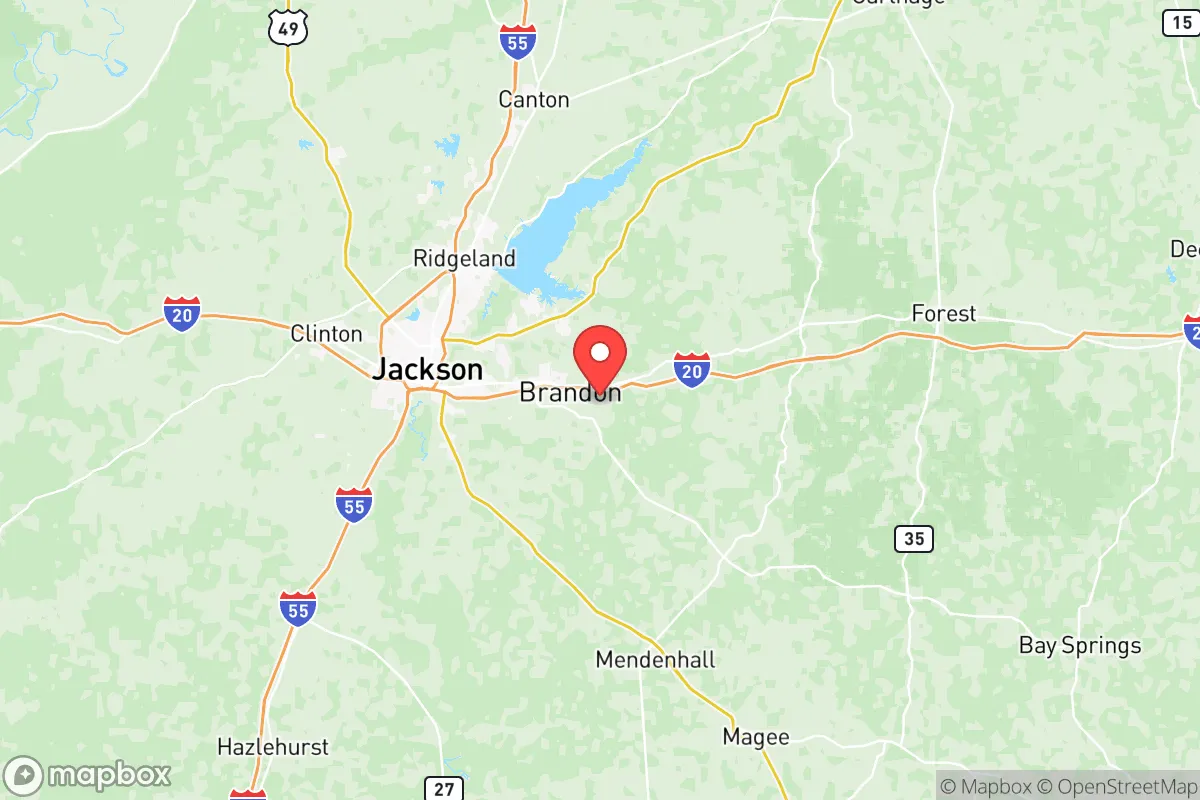
Rankin County, Mississippi, has long been a conservative stronghold, and honestly, it’s one of the few places left where you can still feel like common sense hasn’t completely left the building. With a Cook PVI of R+14, it’s significantly more Republican than the state of Mississippi as a whole, which sits at R+11. That three-point gap might not sound like much, but when you’ve lived here as long as I have, you see it in the way folks vote, the way they talk at the local diner, and the way they push back when Jackson tries to tell us how to live. The trajectory here is steady—if anything, the county has only gotten redder over the last decade, as more families move out from the city looking for lower taxes, better schools, and a government that stays out of their business.
How it compares
When you stack Rankin County up against the rest of Mississippi, the difference is clear. The state’s R+11 rating already makes it one of the most reliably Republican states in the South, but Rankin takes it a step further. That’s because places like Brandon and Flowood are about as red as they come—you’re talking precincts where Republican candidates routinely pull 70-75% of the vote. Meanwhile, Pearl is a bit more moderate, with some swing precincts near the Hinds County line where you’ll see a few more split tickets, but it’s still solidly conservative. The only real outlier is Ridgeland, which has a slightly younger, more suburban feel—you might see a few more independent voters there, but it’s not exactly a blue dot. Compare that to Hinds County (Jackson), which is deep blue, and you see why Rankin feels like a refuge for folks who want to keep their Second Amendment rights intact and their property taxes reasonable.
What this means for residents
For the people living here, the political climate means you don’t have to worry about the kind of government overreach you see in other parts of the country. There’s no talk of defunding the police, no push for sanctuary city policies, and no one trying to tell you what you can or can’t do with your own property. The county commission and local school boards are filled with folks who actually believe in limited government and personal responsibility. That said, there’s a growing concern among long-time residents—myself included—about the slow creep of progressive ideology. You see it in some of the newer subdivisions near Reservoir and Gluckstadt, where transplants from out of state sometimes bring different ideas about zoning, taxes, and even curriculum in the schools. It’s not a crisis yet, but it’s something to keep an eye on.
Culturally, Rankin County still holds onto the values that made Mississippi what it is: church on Sunday, family first, and a healthy skepticism of anyone who thinks they know better than you. The policy distinctions are real—lower taxes, fewer regulations, and a sheriff’s department that actually enforces the law. If you’re looking for a place where you can raise your kids without worrying about the latest social experiment, this is it. Just don’t expect it to stay that way if we don’t stay vigilant.

State Political ClimatePolitical Climate in Mississippi
State Political AnalysisPolitical Environment in the State
Mississippi is a deeply conservative state with a Cook PVI of R+11, meaning it votes roughly 11 points more Republican than the national average in presidential elections. The state has not voted for a Democratic presidential candidate since 1976, and the GOP has tightened its grip on state government over the past two decades, now holding supermajorities in both legislative chambers and every statewide office. While the overall partisan lean is rock-solid, the political climate is not monolithic — it’s shaped by a sharp urban-rural divide, a growing suburban realignment, and a policy environment that has moved aggressively toward limited government and cultural conservatism in recent years.
Urban vs. rural divide
The political map of Mississippi breaks down along predictable lines, but with some notable nuances. The state’s three major metro areas — Jackson, the Gulf Coast (centered on Biloxi and Gulfport), and the Memphis suburbs in DeSoto County — tell very different stories. Jackson, the capital and largest city, is a Democratic stronghold driven by a majority-Black population and a concentration of government workers and academic institutions. Hinds County, which contains most of Jackson, voted roughly 80% for Joe Biden in 2020. But Jackson’s influence is shrinking as the city loses population and its suburbs — places like Madison and Ridgeland — have become reliably Republican, with Madison County voting nearly 70% for Donald Trump. The Gulf Coast is more mixed: Harrison County (Biloxi/Gulfport) leans Republican but can be competitive locally, while Hancock County to the west is deeply red. The real engine of GOP dominance is the northern half of the state, particularly the Memphis exurbs in DeSoto County, which is now the state’s most populous county and votes about 75% Republican. Rural counties like Tishomingo, Itawamba, and Jones routinely deliver 80%+ margins for GOP candidates. The Delta region, stretching from Greenville to Clarksdale, remains heavily Democratic due to its large Black population, but its population is declining fast — a trend that only reinforces the state’s overall conservative trajectory.
Policy environment
Mississippi’s policy environment is among the most conservative in the country, reflecting a consistent legislative push to limit government reach and protect traditional values. The state has no state income tax on Social Security benefits and has been phasing down its personal income tax — the rate dropped from 5% to 4.7% in 2024, with a path to full elimination by 2030 under legislation signed by Governor Tate Reeves. Sales tax is 7% on most goods, but groceries are taxed at a reduced rate. Property taxes are relatively low, with no state-level property tax and local rates averaging around 0.8% of assessed value. On education, Mississippi has embraced school choice: the state’s Education Scholarship Account (ESA) program, expanded in 2024, allows families to use public funds for private school tuition, homeschooling, or tutoring. The state also has a near-total ban on abortion, triggered by the Dobbs decision, with no exceptions for rape or incest. Election laws are strict: voter ID is required, early voting was only introduced in 2024 (limited to in-person absentee without an excuse), and same-day registration is not allowed. Medical marijuana was legalized in 2022 after a ballot initiative, but the program is tightly regulated — no home grow, and only a limited number of dispensaries. On healthcare, Mississippi did not expand Medicaid under the Affordable Care Act, leaving roughly 75,000 residents in the coverage gap, a point of ongoing debate even among conservatives who worry about federal strings attached.
Trajectory & freedom
On balance, Mississippi has been moving toward more personal freedom in several key areas, though the direction is not uniform. The most significant expansion of liberty in recent years came with the passage of the Mississippi Freedom Act in 2023, which eliminated the requirement for a permit to carry a concealed firearm — constitutional carry, effective immediately. The state also passed a Parental Bill of Rights in 2022, codifying that parents have the fundamental right to direct their children’s upbringing, education, and healthcare, and requiring schools to notify parents of any medical or counseling services offered to minors. On medical freedom, Mississippi passed a law in 2023 prohibiting employers and government entities from mandating COVID-19 vaccines, and the state has resisted federal vaccine mandates for schoolchildren. Property rights were strengthened with the passage of a 2022 law limiting the use of eminent domain for economic development. However, there are areas where government overreach persists: the state’s medical marijuana program, while a step forward, is still heavily regulated compared to states like Oklahoma or Missouri. And on the tax front, while the income tax phase-down is a positive trend, the state’s sales tax on groceries remains regressive. The biggest concern for liberty-minded residents is the state’s alcoholic beverage control (ABC) system, which still gives the government a monopoly on liquor sales — a relic of post-Prohibition control that has proven stubborn to reform.
Civil unrest & political movements
Mississippi has not seen the kind of large-scale civil unrest that has rocked other states, but there have been notable flashpoints. The 2020 Black Lives Matter protests in Jackson were relatively small and peaceful compared to cities like Portland or Seattle, but they did lead to a push to remove the state flag (which happened in June 2020, replaced by a new design in 2021). That flag change remains a sore point for some conservatives who saw it as government-mandated symbolism. On the right, the Mississippi State Sovereignty Commission is a historical scar that still surfaces in debates about state power and federal overreach. More recently, the debate over election integrity has been active: in 2023, the legislature passed a law requiring all absentee ballots to be returned by mail or in person — no drop boxes — and limiting who can collect ballots. Immigration politics are less visible here than in border states, but the legislature passed a law in 2024 requiring local law enforcement to cooperate with federal immigration authorities and banning sanctuary city policies. The most visible political movement in the state right now is the school choice advocacy network, which has successfully pushed for ESA expansion and is now targeting full universal eligibility. You’ll see yard signs for local school board candidates who run on parental rights platforms, and the issue dominates local politics in suburbs like Madison and Ocean Springs.
Projection
Over the next 5-10 years, Mississippi is likely to become more conservative, not less. The key demographic driver is in-migration: the state is attracting retirees and remote workers from higher-tax, higher-regulation states like California, Illinois, and New York, drawn by low housing costs, no income tax (soon), and a cultural environment that aligns with traditional values. DeSoto County is the fastest-growing part of the state, and its politics are already deeply red. The Delta will continue to lose population, further diluting the Democratic vote. The biggest wildcard is Jackson: if the city’s water crisis and crime problems continue to drive middle-class families to the suburbs, the state’s urban Democratic base will shrink further. On policy, expect the income tax to be fully eliminated by 2030, and school choice to expand to near-universal eligibility. The biggest threat to the state’s freedom trajectory is federal overreach — if the EPA or DOJ targets Mississippi over environmental or civil rights issues, it could trigger a backlash that actually strengthens the state’s resolve. For a new resident, the bottom line is this: Mississippi is a state where the government is generally on your side when it comes to guns, taxes, and parental rights, but you’ll still deal with a clunky ABC system and a sales tax that hits your grocery bill. If you’re moving here, you’re betting that the trend toward smaller government continues — and so far, the data supports that bet.
Bottom line for a new resident: Mississippi offers a political environment where conservative values are not just tolerated but actively codified into law. You’ll find lower taxes, strong gun rights, school choice, and a government that mostly stays out of your personal decisions. The trade-offs are a limited healthcare safety net, a state-controlled liquor system, and a sales tax that applies to food. If those trade-offs don’t bother you, you’ll find a state that’s trending in the right direction — and one where your vote actually counts in primaries and local elections.
* Values derived from national, state, county, city and local statistics and may differ in a specific area. Last updated: 2026-05-14T12:04:11.000Z
Narrative content on this page is AI-generated and may contain mistakes. Verify any details that matter before acting on them.
ReloMaps may earn a commission from affiliate links at no extra cost to you.

