
Photo: Wikipedia
Strategic Assessment of Warren County
Workable tactical position. Some exposure to population density or targets, but generally defensible in a crisis.
What does the Strategic Assessment tell us?
Our Strategic Assessment grades tactical survivability of an area. Major population centers, military targets, fallout zones, natural disasters, and border exposure all drive risk — lower exposure means a more defensible position in a crisis.
This is heavily inspired by Joel Skousen's Strategic Relocation book. Highly recommended you checkout the book ($)What does this tell us?
Our Strategic Assessment grades tactical survivability of an area. Major population centers, military targets, fallout zones, natural disasters, and border exposure all drive risk — lower exposure means a more defensible position in a crisis.
This is heavily inspired by Joel Skousen's Strategic Relocation book. Highly recommended you checkout the book ($)Strategic Pillars

Key Distances
Strategic Assessment Analysis
Warren County, Mississippi, anchored by the historic river city of Vicksburg, presents a compelling case for those prioritizing strategic relocation in an era of increasing uncertainty. Its position along the Mississippi River offers both a formidable natural barrier and a vital transportation artery, while its distance from major metropolitan chaos provides a buffer that many preppers and conservative-minded individuals find increasingly valuable. The county’s resilience isn’t just about geography—it’s about a community that has weathered sieges, floods, and economic shifts, retaining a self-reliant character that’s hard to find closer to the coasts or the urban core.
Geographic position and natural advantages for long-term security
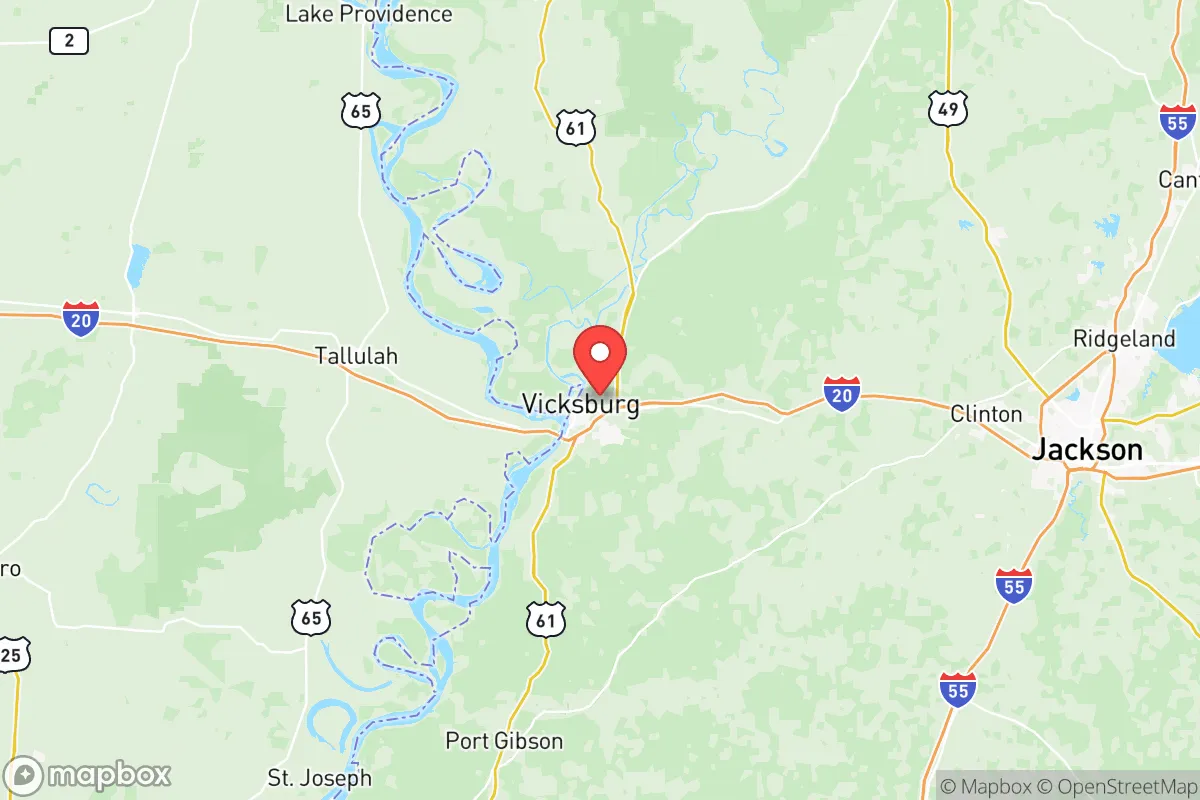
Warren County sits at a strategic crossroads where the Mississippi River meets the Yazoo River, roughly 45 miles west of Jackson and 240 miles north of New Orleans. This location offers a rare combination of isolation and accessibility. The river itself acts as a natural moat to the west, while the surrounding bluffs and loess hills provide elevated ground that’s less prone to the flooding that plagues lower-lying Delta counties. The area’s position in the humid subtropical zone means reliable rainfall—averaging around 55 inches annually—which supports robust agriculture and private wells. For a relocator, this translates to a lower risk of drought-induced water scarcity compared to the arid West. The county’s 487 square miles include significant tracts of hardwood forest and bottomland, offering cover, timber for construction, and game for hunting. The presence of the Vicksburg National Military Park and the surrounding bluffs also means large, protected green spaces that are unlikely to see dense development, preserving a buffer zone around the population centers of Vicksburg, Redwood, and Bovina.
Risks, exposures, and proximity to fallout-relevant landmarks
No strategic assessment is complete without a hard look at vulnerabilities. Warren County’s primary risk comes from its industrial and transportation infrastructure. The Mississippi River is a major corridor for barge traffic carrying chemicals, petroleum, and agricultural products. The Vicksburg Bridge (I-20) and the Old Vicksburg Bridge (rail) are chokepoints that could become targets or accident sites. More critically, the county is within 50 miles of the Grand Gulf Nuclear Station in Claiborne County—a single-unit boiling water reactor that, while well-regulated, represents a low-probability but high-consequence risk. A major incident there could render parts of Warren County uninhabitable for a period, depending on wind patterns. Additionally, the Port of Vicksburg handles significant volumes of coal, coke, and chemicals, and the nearby Ergon Refining facility in Vicksburg processes crude oil. These are not just economic assets; they are potential fallout magnets in a crisis scenario. On the positive side, Warren County is far from the nation’s major population centers—no Houston, no Atlanta, no Chicago—which means it’s unlikely to be a primary target in a conflict. The nearest major military installation is Camp Shelby near Hattiesburg, about 120 miles southeast, which is distant enough to avoid direct spillover but close enough to provide a potential security buffer if needed. Flooding remains the most frequent natural hazard, particularly in low-lying areas near the river and creeks like Glass Bayou and Stouts Bayou. The 2011 and 2019 floods demonstrated that the Yazoo Backwater Area can remain inundated for months, a serious concern for anyone with property in those zones.
Practical resilience for a relocator: food, water, energy, and defensibility
For a family or individual looking to build a self-sufficient lifestyle, Warren County offers tangible advantages. Water is abundant. The Mississippi River Valley Alluvial Aquifer provides reliable groundwater, and many rural properties can sustain private wells at depths of 100-300 feet. Surface water from the river and its tributaries is plentiful but requires treatment. Food production is viable: the growing season runs from March to October, and the fertile loess soil supports gardens, orchards, and small livestock operations. Local farmers’ markets in Vicksburg and the surrounding area provide a network for barter and trade. Energy resilience is mixed. Entergy Mississippi provides grid power, but outages during storms are common. Solar potential is moderate—the area gets about 210 sunny days per year, below the national average but sufficient for a well-designed off-grid system with battery backup. Wood heating is a practical option given the abundant timber. Defensibility is where Warren County shines. The terrain—bluffs, ravines, and river bends—offers natural chokepoints and observation points. Rural properties north of I-20 and east of the river are particularly defensible, with limited road access and good line of sight. The county’s population density is low (about 46,000 people total, with roughly half in Vicksburg proper), meaning that in a crisis, you’re not competing with millions for resources. The local culture is heavily influenced by hunting, fishing, and outdoor skills, so neighbors are more likely to be assets than liabilities. The Warren County Sheriff’s Office and Vicksburg Police Department are professional but not overbearing, and the general sentiment leans toward self-reliance rather than dependency on government aid.
The overall strategic picture for Warren County is one of calculated trade-offs. It’s not a remote mountain redoubt—you’re still within a few hours of Jackson, Memphis, and Baton Rouge, which means you can access medical care, supplies, and transportation hubs when things are stable. But when things aren’t stable, the river, the bluffs, and the distance from primary target zones give you a solid foundation. The industrial risks are real but manageable with proper planning—know your wind patterns, avoid the floodplains, and keep a bug-out route east toward the higher ground of the Jackson Prairie. For the conservative prepper who values community, land, and a slower pace, Warren County offers a rare combination of strategic depth and practical livability. It’s not perfect—nowhere is—but it’s a place where you can dig in, build relationships, and ride out the storm with a fighting chance.

* Values derived from national, state, county, city and local statistics and may differ in a specific area. Last updated: 2026-05-21T01:03:08.000Z
Narrative content on this page is AI-generated and may contain mistakes. Verify any details that matter before acting on them.
ReloMaps may earn a commission from affiliate links at no extra cost to you.

