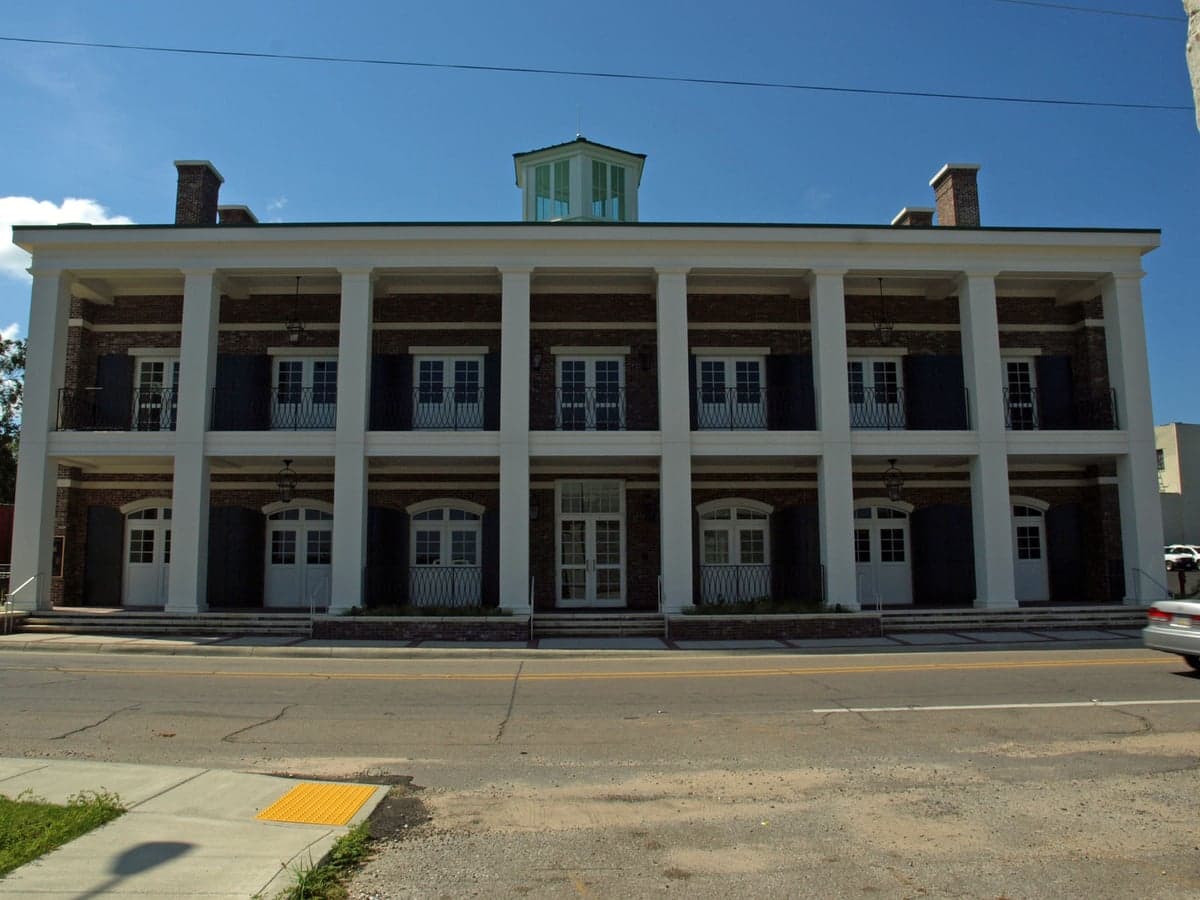
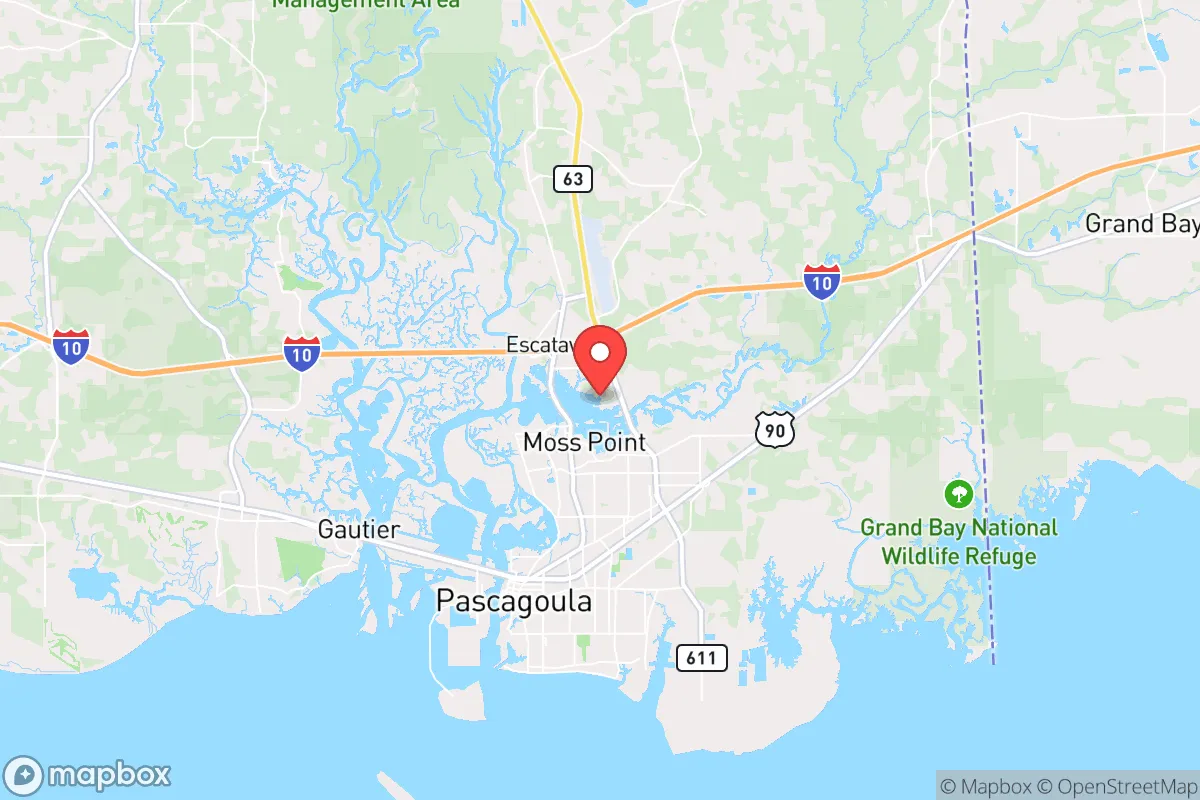
Photo: Wikipedia
Demographics of Moss Point, MS
Affluence Level in Moss Point, MS
A below-average socioeconomic profile. Incomes, home values, and educational attainment trail the U.S., with higher poverty and unemployment.
People of Moss Point, MS
Moss Point, Mississippi, is a small, historically industrial city of 12,066 residents where the population is overwhelmingly Black (73.3%) and native-born (only 0.7% foreign-born), with a modest White minority (18.6%) and a small Hispanic presence (3.8%). The city’s identity is rooted in its working-class heritage along the Pascagoula River, shaped by the shipbuilding and paper mill industries that drew successive waves of workers. With a college attainment rate of just 15.2%, Moss Point’s population is less formally educated than state averages, reflecting a community built on blue-collar labor rather than professional or immigrant-driven growth. The city today is characterized by deep family roots, a strong sense of place, and a demographic stability that contrasts with the rapid changes seen in larger Gulf Coast metros.
How the city was settled and grew
Moss Point’s human history begins in the early 19th century as a small river settlement serving the timber and turpentine trades. The arrival of the Pascagoula River’s deep-water access and the construction of the Pascagoula Street Railway in the 1880s turned the area into a manufacturing hub. The first major population wave came with the establishment of the Moss Point Lumber Company and later the International Paper Company mill, which drew White workers from rural Mississippi and Alabama into neighborhoods like Kreole and East Moss Point. These early mill workers, mostly of Scots-Irish and English descent, built modest company housing and established the city’s Protestant church network. A second, larger wave arrived during the World War II shipbuilding boom at nearby Ingalls Shipbuilding in Pascagoula. This brought thousands of Black workers from the Mississippi Delta and southwest Alabama, who settled in historically Black neighborhoods such as Big Point and Pellum. These areas developed their own commercial strips, schools, and churches, forming the backbone of Moss Point’s African American community. By 1960, the city’s population had grown to roughly 8,000, split roughly evenly between White and Black residents, with the White population concentrated in Kreole and the Black population in Big Point and Pellum.
Modern era (post-1965)
The post-1965 period brought dramatic demographic change to Moss Point, driven by White flight to suburban Jackson County and the decline of the paper mill industry. The Immigration and Nationality Act of 1965 had negligible effect here—Moss Point’s foreign-born population remains below 1%—but domestic migration reshaped the city. Between 1970 and 1990, the White population fell from roughly 45% to under 25%, as families moved to newer subdivisions in Gautier and Ocean Springs. This exodus concentrated the remaining White population in the Kreole and Helena neighborhoods, while Black residents expanded into previously White areas like East Moss Point and the Riverfront District. The Hispanic population, now 3.8%, began arriving in the 1990s, primarily as construction and service workers drawn by the post-Hurricane Katrina rebuilding boom. These families settled mostly in the Kreole area and along Highway 63, but remain a small, dispersed community without a distinct ethnic enclave. The Asian population (0.1%) and Indian population (0.0%) are negligible, reflecting the city’s lack of professional or tech-sector employment. The Black population has stabilized at 73.3%, making Moss Point one of the most predominantly Black cities in Mississippi outside the Delta.
The future
Moss Point’s population is heading toward continued homogenization rather than diversification. The city lost roughly 15% of its population between 2000 and 2020, and the trend is likely to continue as young adults leave for job markets in Gulfport, Biloxi, or Mobile. The Hispanic community, while growing slowly, remains too small to significantly alter the city’s ethnic balance. The White population is aging and declining, concentrated in Kreole and Helena, while the Black population is younger but also shrinking due to out-migration. No new immigrant communities are emerging, and the foreign-born share is likely to remain below 1%. The city is not tribalizing into distinct enclaves so much as consolidating into a predominantly Black, working-class community with a small White minority in the north and a tiny Hispanic presence scattered across the south. The next 10-20 years will likely see further population decline, with the city becoming older and more economically homogeneous.
For someone moving in now, Moss Point offers a stable, deeply rooted community where family connections and church life dominate, but economic opportunity and demographic diversity are limited. The city is becoming a quieter, more insular place—a tight-knit, predominantly Black working-class town with little in-migration and a shrinking tax base. New residents should expect a low-cost, low-change environment where the population is more likely to age in place than to be transformed by newcomers.

* Values derived from national, state, county, city and local statistics and may differ in a specific area. Last updated: 2026-05-04T13:00:18.000Z
Narrative content on this page is AI-generated and may contain mistakes. Verify any details that matter before acting on them.
ReloMaps may earn a commission from affiliate links at no extra cost to you.

